

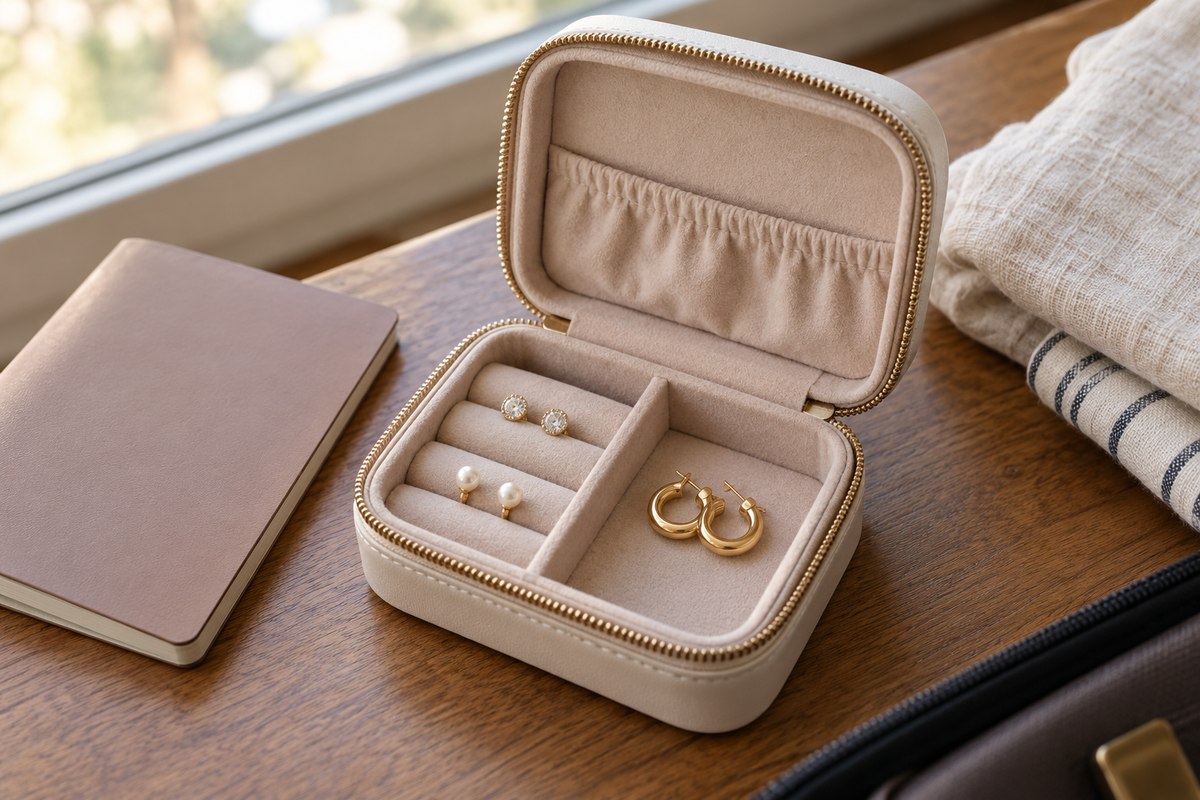
An earring case can look spacious while it’s empty and feel quite different once the lid closes over a row of studs. The front, post and back all need room. A hoop or a long drop needs a space that suits its shape, too.
Start with the earrings you plan to take and check the case around them. You may already have suitable small boxes or pouches. Check whether they protect the complete pieces and keep each pair’s parts together when you pack and unpack.
Check the space with the lid closed
Lay out the actual pairs before choosing their compartments. Look at the height of the fronts, the length of the posts and the space behind a stud panel. Close the empty panel first if you need to understand where it sits inside the case.
Then fit one pair and close the lid gently. Stop if it presses on a front, catches a post or needs force to shut. Check the closed case as well as the open tray.
For hoops, allow room for the full shape with the closure operating as the maker intends. Avoid squeezing a hoop into a slot that changes its shape. Drops and connector chains need a layout where their moving parts can lie without catching the neighboring pair.
Pack earrings with suitable padding in a separate box or case to help protect them from scratches and impact. A soft pouch separates surfaces, but you still need to consider what might press against it inside your bag. Place fragile or projecting designs where the surrounding packing won’t bear down on them.
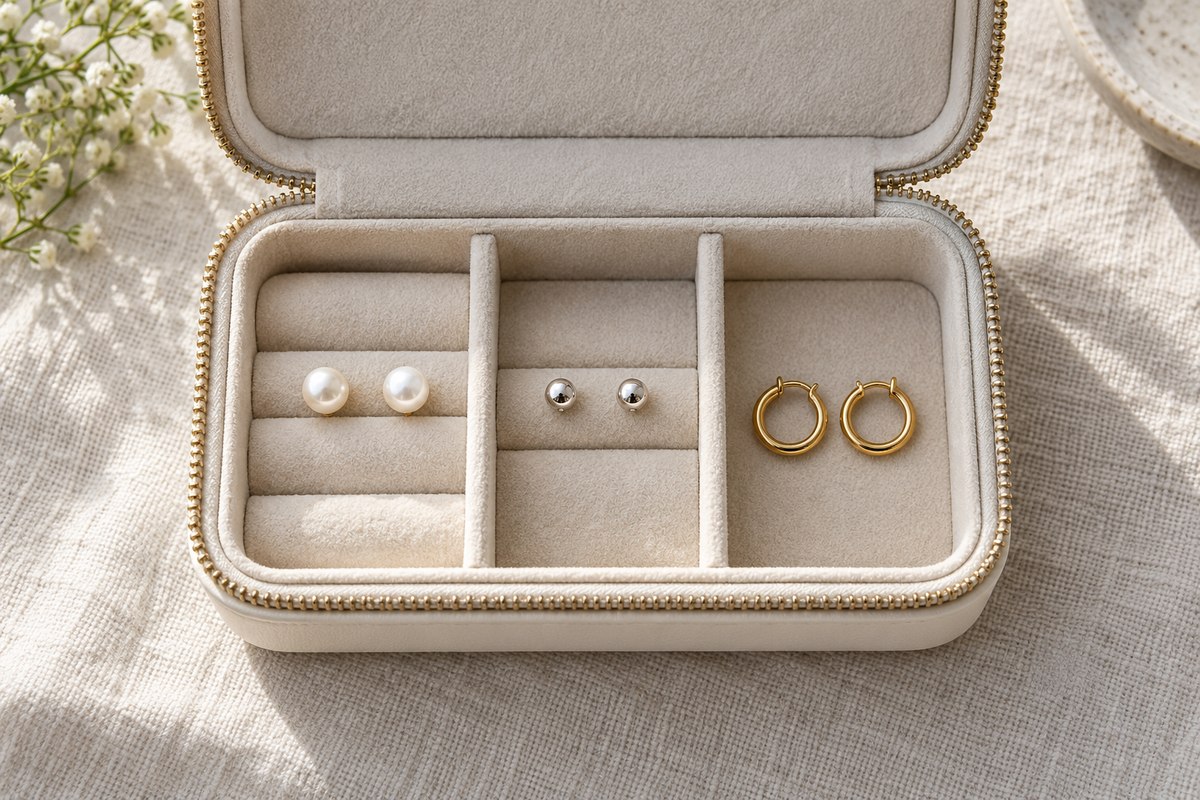
Let the materials decide what can share a space
Treat earrings with pearls or other delicate details differently from plain metal pieces. A compartment divider only helps if the pieces on either side can’t spill across it. Look at how the divider meets the lid and whether small backs can escape into the next section.
GIA advises keeping pearls away from rough or sharp objects and storing them in a soft pouch or case. Its pearl care guidance also warns about chemicals and high heat. Give pearl earrings their own protected space and keep that space away from leaking cosmetics or perfume.
Sterling silver may have different storage needs. GIA recommends an anti-tarnish bag or cloth for silver. Follow the earring maker’s instructions for a mixed-material pair rather than assuming that one insert or cleaning product suits every piece in the case.
Our guide to metals that tarnish can help you read care instructions before packing. If a listing calls an earring waterproof, our guide to that wording explains why the exact construction and care limits still matter.
| Design | Space to check | Care detail to keep with it |
|---|---|---|
| Stud with projecting front | Clearance above the front and behind its post | Intended back and component materials |
| Hoop | Full shape with its closure secured as intended | Maker's closure and cleaning instructions |
| Long drop or connector chain | Room for moving parts without crossing a neighboring piece | Part compatibility and finish care |
| Pearl earring | Separate soft protection from sharp or rough pieces | Pearl and setting care; no steam or ultrasonic cleaning |
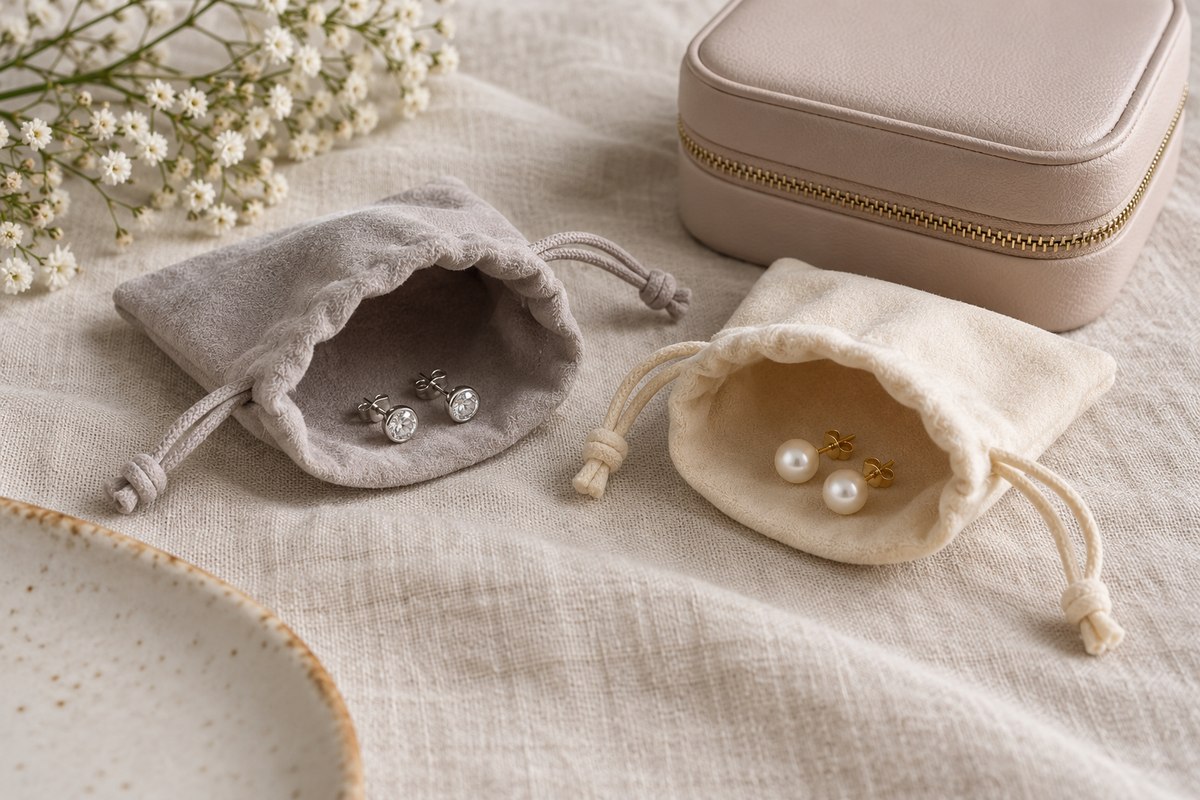
Keep the right back with the right earring
Before putting away each pair, check that its own backs and other removable parts are accounted for. Use a small closed section for any parts the maker says should travel separately. Keep a note of which pair they belong to.
Don’t mix unfamiliar spare backs into one pile and rely on color to identify them later. A silver-colored back doesn’t tell you its composition or whether it fits a particular post. A replacement also needs its own material check if you have a known allergy.
Take a photograph of the packed case if it helps you remember where each pair belongs. Save the relevant listing or maker instructions alongside it, especially for closures that you don’t use every day. You can refer to those instructions when you’re away instead of guessing how an unfamiliar fitting works.
Our earring back guide explains common closure types. For threaded or threadless pieces, keep the manufacturer’s compatibility information with the jewelry. Similar-looking ends and posts aren’t enough to establish that parts belong together.
Set up one place to put earrings down
At your destination, choose a clear, dry surface where you can open the case and handle small parts. Keep the case away from the edge and work over a clean cloth or tray. Open one compartment at a time so you can see what comes out and what goes back.
Follow the maker’s cleaning instructions after wearing the pair. Let any moisture dry as directed before closing it inside its storage space. For cultured pearls, GIA recommends routine wiping with a very soft, clean cloth and rules out steam and ultrasonic cleaning.
If you have fully healed, compatible piercings and want a compact set of styles to compare, browse our stud earrings category. Choose by the listing’s dimensions, materials and closure rather than assuming that every small stud will suit you or the case.
This packing advice concerns stored jewelry. Keep following your qualified piercer’s aftercare instructions for a healing piercing; a trip isn’t a reason to remove or change its jewelry without appropriate advice.
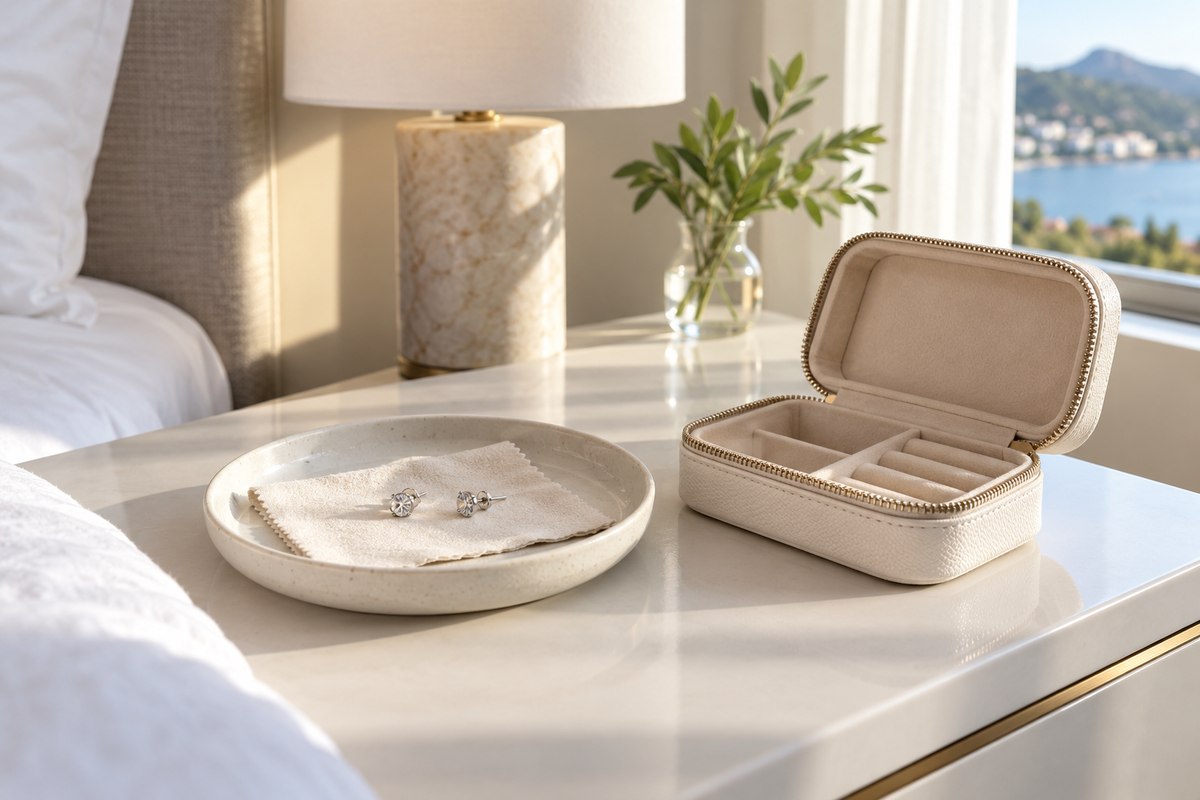
Before you zip the case again
Look at each space before leaving. Check that the pairs and their intended backs are there, no chain crosses a divider and the lid closes without pressure. If a post has bent or a closure no longer works properly, set that pair aside for a jeweler’s assessment.
Leave a damaged pair in its case until it has been assessed. If an ear develops a recurring rash, consult a dermatologist. Seek prompt medical advice for severe, worsening or otherwise concerning symptoms.
Questions about travel earring storage
Can I use the box the earrings came in?
Yes, if it still closes securely, holds the complete pair without pressure and suits the maker’s storage instructions. Check its condition and the space around the posts before relying on it for a trip.
Does an anti-tarnish insert make a travel case waterproof?
No. Check the case’s own construction and stated limits. An insert doesn’t establish that a zipper, seam or outer shell will keep out a leaking bottle.
Should every pair go in one large pouch?
A shared open space can let pieces rub or catch against one another. Use suitable separate spaces or individual soft containers, with enough outer protection for the designs you’re taking.
Can I use a household organizer for small earrings?
Check the actual fit, the lining and whether every compartment closes securely. Avoid a box with residue or rough surfaces, and don’t use storage space needed for medication. A small slot still needs room for the whole earring.

Related posts
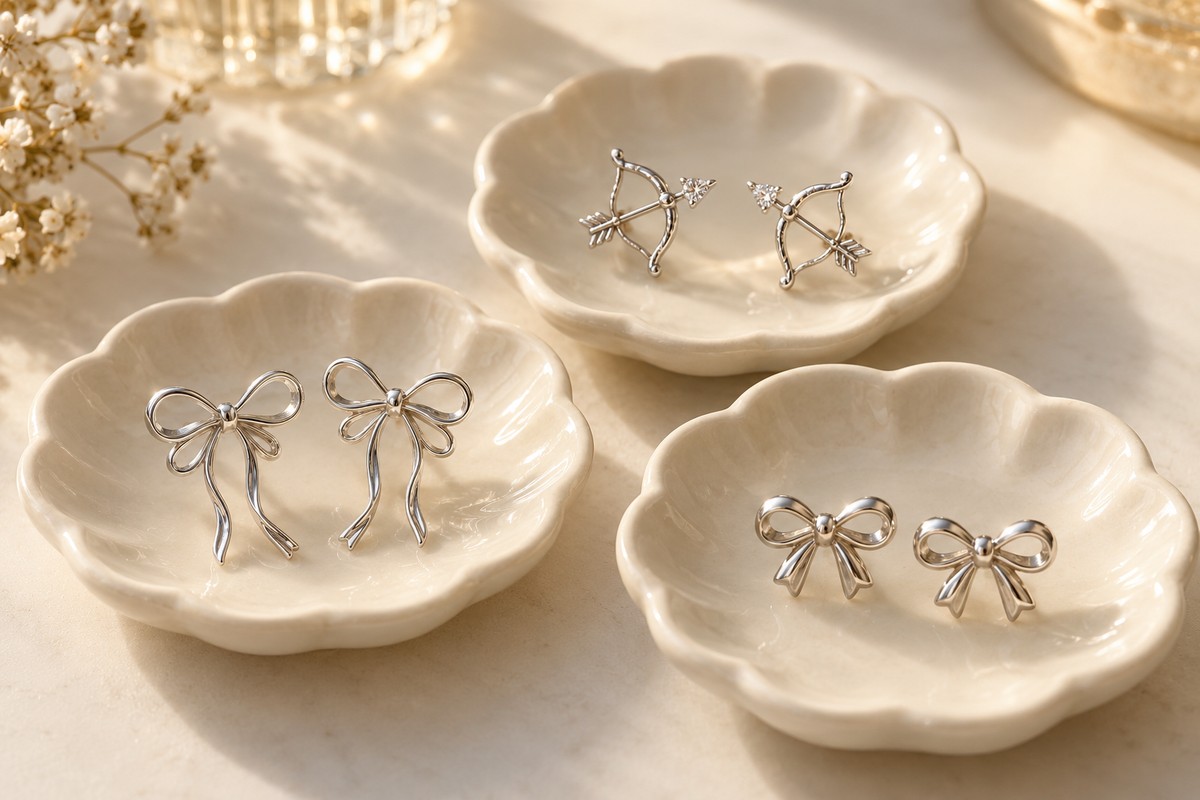
Ribbon Bow Earrings or Arrow-and-Bow Studs? Choose the Motif First
Bow earrings can mean a ribbon knot or an archery design. Refine your search, compare three real pairs, and decide how the motif works with your outfit.
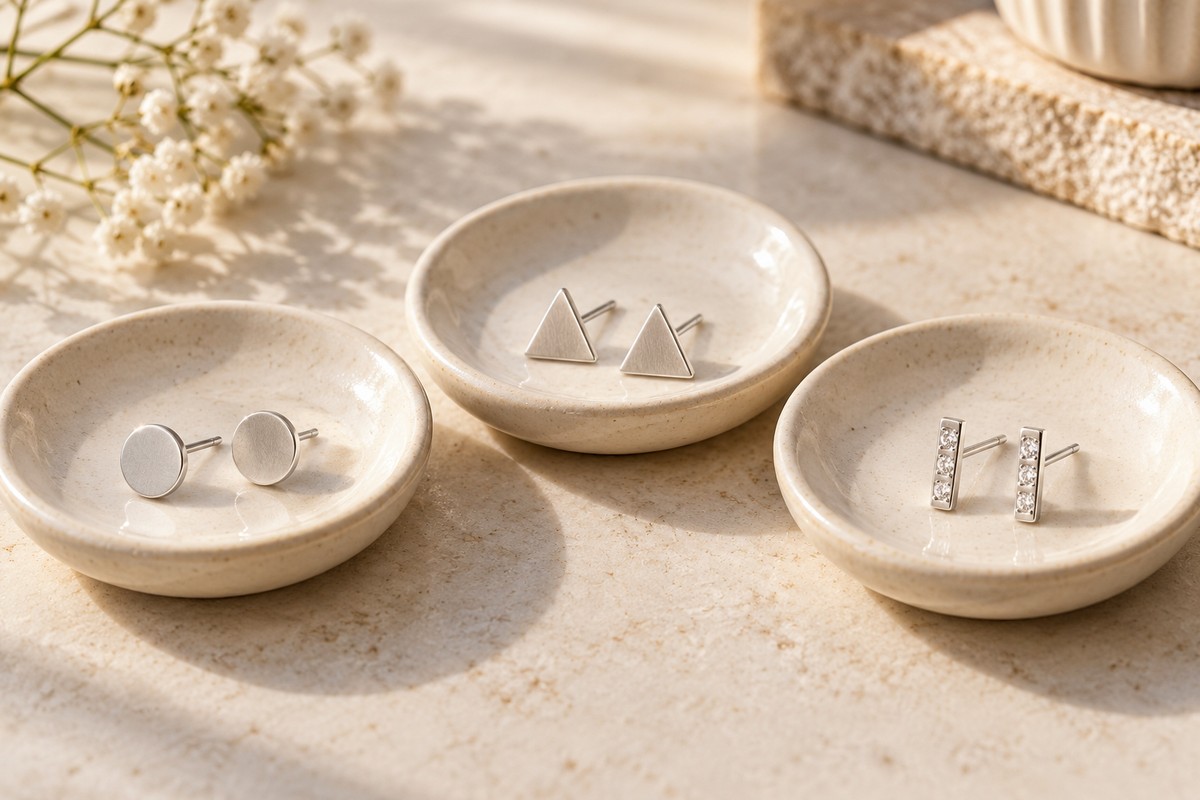
Minimal Geometric Earrings: Round, Triangle or Bar?
Compare round, triangle and bar earrings with the lines in your clothing. Use simple shape, open-space and accessory choices to build a look you enjoy.
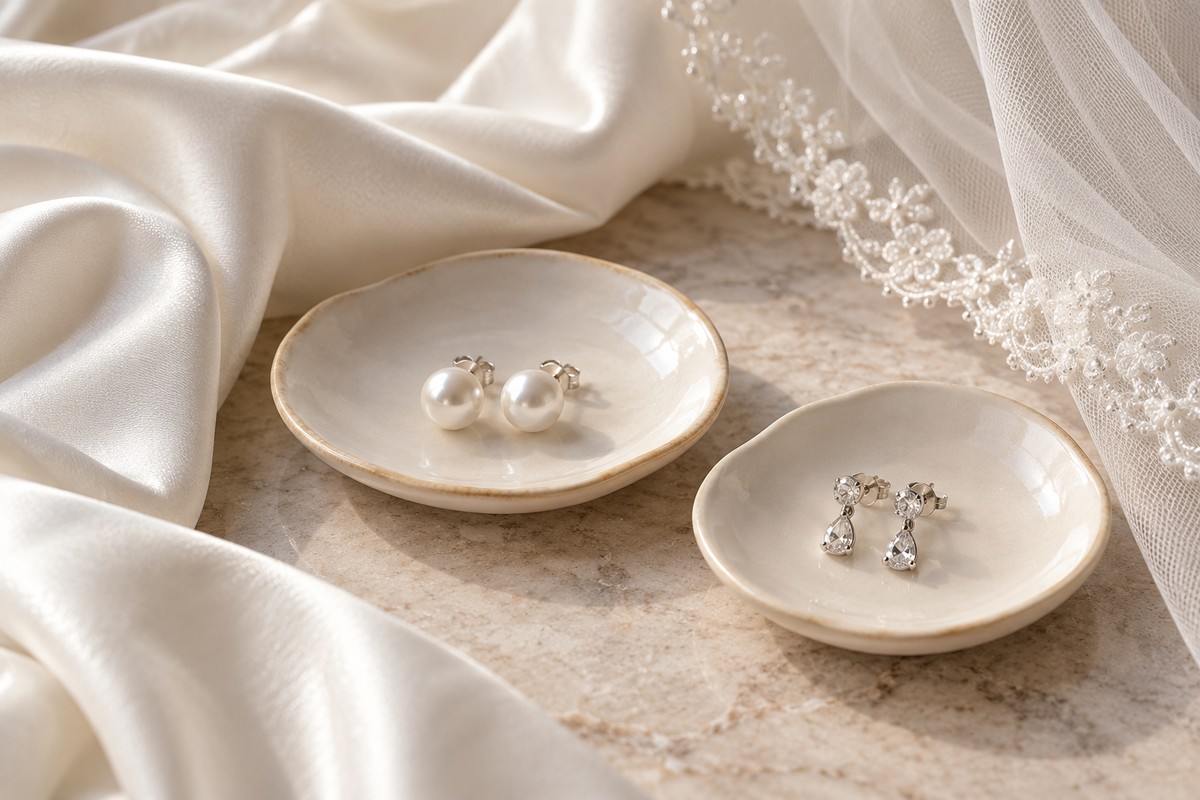
Wedding Earrings for Sensitive Ears: Rehearse the Whole Outfit
Try wedding earrings with your planned hairstyle, veil, neckline and outer layer. Compare photographs, notice catching and prepare a familiar backup pair.