

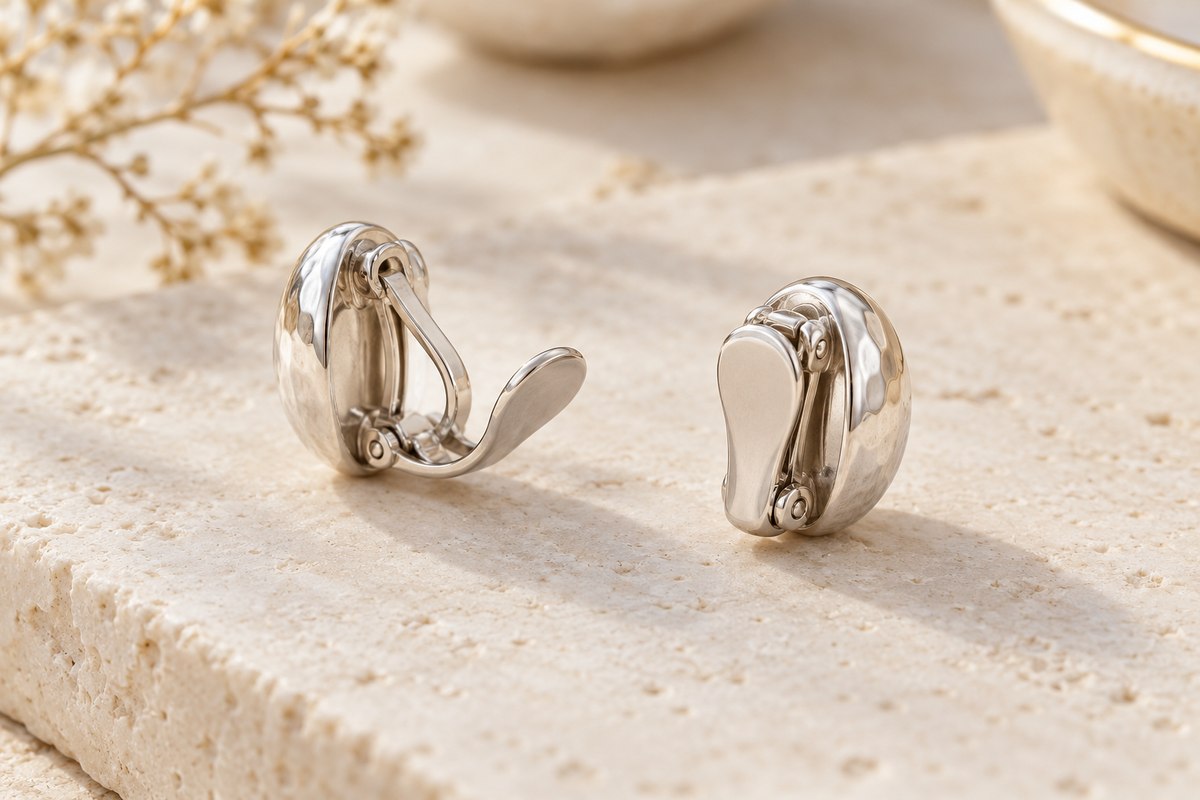
A front-view photo can make a clip-on earring look almost identical to a pierced stud. The back shows a different fitting. The clip has to suit your lobe, the parts touching your skin need a clear material description, and you need to know how that particular mechanism opens.
Clip-ons give people without pierced ears another way to wear earrings. They can also appeal to someone who simply wants a different style. They don’t come with a universal comfort promise, and the word “clip” doesn’t tell you whether a fitting is adjustable.
Request a photograph of the open back
Before buying, ask to see the closure open and closed. Look for a straight post as well as a clip. Some earrings combine the two and still require a piercing.
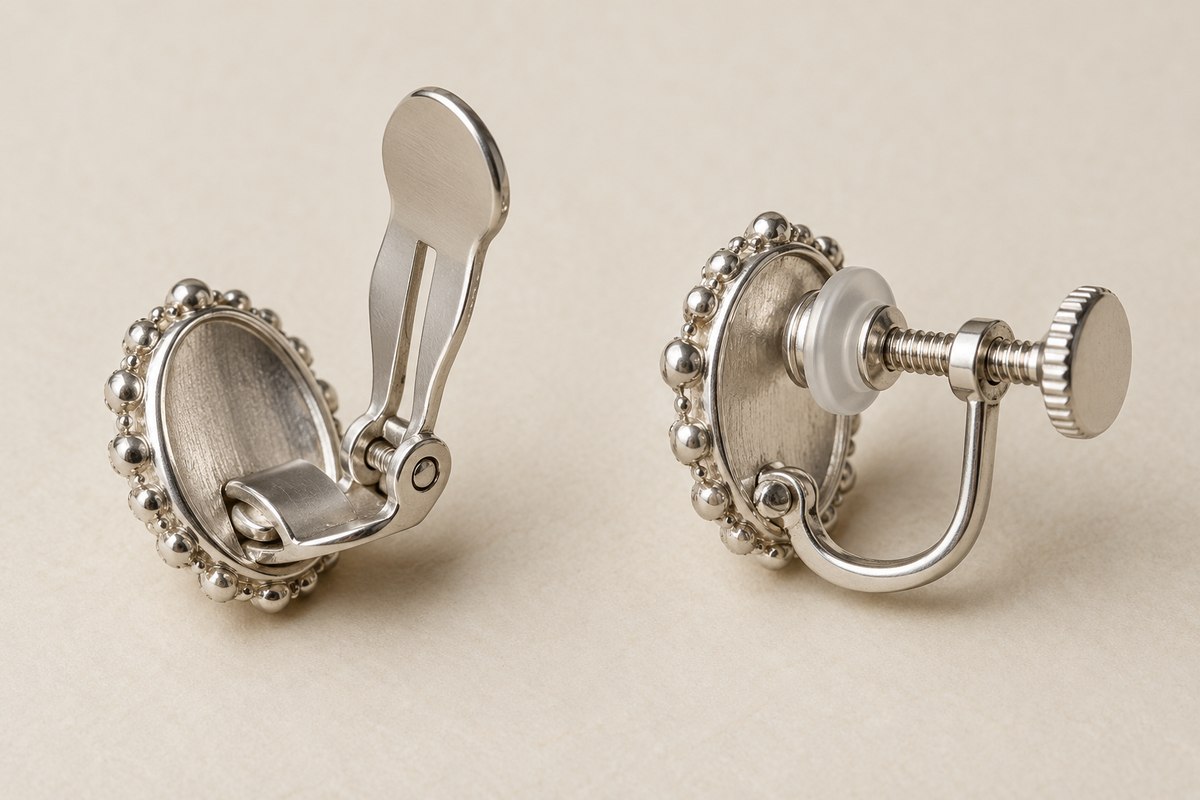
Atelier Shinji Ginza’s own fitting guide illustrates that distinction: its spring clip with a post is listed separately from its non-pierced spring clip and spring screw fittings. Its fixed spring clip requires workshop calibration, while the spring screw version has a user-adjustable screw. These are examples of one maker’s mechanisms, not instructions for every earring sold under those names.
Ask the seller which fitting is on the pair you’re ordering. A photograph of a similar style, a general clip-on category label or the name of the front design may leave that question open.
Our guide to types of earring backs can help with the vocabulary. Pay particular attention to “screw-back”: ask whether the screw adjusts a non-pierced clip or secures a back on a post that goes through a piercing.
| Visible detail | What to confirm | What not to assume |
|---|---|---|
| Clip plus straight post | Does this pair require a piercing? | A clip-looking back always means non-pierced |
| Fixed spring closure | Does the maker allow wearer adjustment? | Every hinge can be bent at home |
| Adjustable screw on a non-pierced clip | Which screw controls the opening, and how is it released? | More tightening guarantees a better fit |
| Cushioned contact area | Which parts still touch the lobe, and what are they made from? | A pad confirms the composition of the metal |
Find out what the maker allows you to adjust
An adjustable screw gives you a way to change the opening. That doesn’t mean you should tighten it as far as it will turn. Ask for the maker’s fitting and removal instructions, including how to support the front while operating the closure.
A spring clip may have no adjustment intended for the wearer. If the seller says it needs a jeweler’s adjustment, follow that advice. Don’t make a fixed hinge fit by forcing it with household pliers. A damaged mechanism is a repair question, even if the decorative front still looks fine.
For a vintage pair, ask whether the closures have been inspected and whether any pads have been replaced. Request a close view of the hinge and the surfaces that contact the lobe. A recognizable style name doesn’t establish the condition of a used fitting.
Ask for a clear explanation of the closure before ordering. You should be able to put on and remove the pair using its intended mechanism before committing to wearing it for an event.
Check the contact surfaces separately
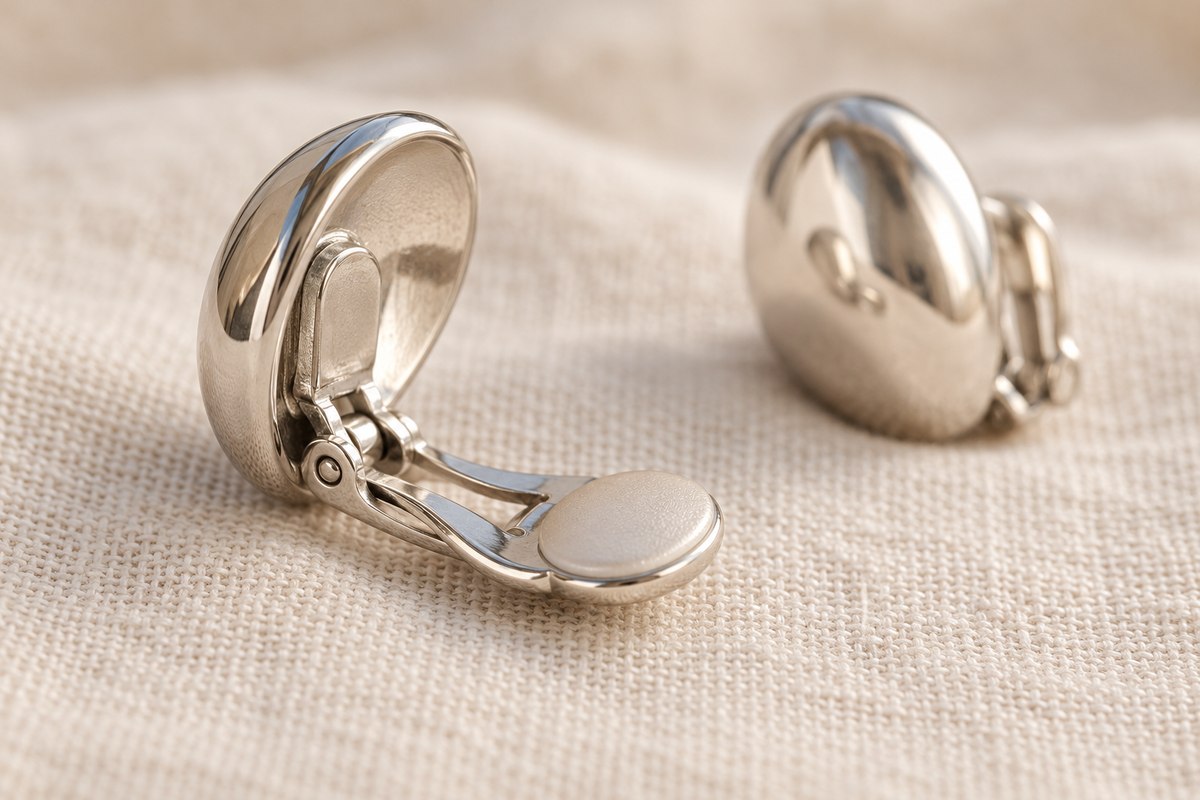
A clip-on avoids putting a post through a piercing, but parts of the earring still touch your skin. Ask about the front contact area, the rear pad or plate, and any metal edge around it. The decorative body’s material may differ from the clip’s material.
If the listing mentions a cushion, find out what it is made from, whether it is removable and which replacement is intended for that fitting. Don’t assume a cushion covers every possible point of contact or confirms that the underlying metal is suitable for a known allergy.
The American Academy of Dermatology identifies nickel as a cause of allergic contact dermatitis. A lack of piercings doesn’t remove the need to ask about a metal you know you react to. Our guide to nickel-free and hypoallergenic wording explains why a broad label may leave important details unanswered.
Keep any written material confirmation. If the answer only names the front, ask a follow-up about the closure before treating the question as settled.
Try the fit before the occasion
When the pair arrives, read its instructions and inspect both closures before wearing them. Try the earrings at home while you can remove them easily. Check each ear separately rather than assuming that the same adjustment will suit both sides.
Pay attention to whether the pair stays where you place it, whether the front tips and whether the closure presses uncomfortably. Remove the earrings if they pinch, hurt or irritate your skin. A secure clip still needs to feel comfortable on your ear.
There isn’t one fitting or wearing time that works for everyone. An adjustable clip can still be the wrong shape for a particular lobe. The front’s appearance doesn’t tell you its weight. Ask for weight per earring and read our earring weight and comfort guide when comparing larger designs.
For persistent discomfort, ask the seller or a jeweler whether the fitting can be assessed. For a recurring rash, consult a dermatologist. Seek prompt medical advice for severe, worsening or otherwise concerning symptoms rather than repeatedly adjusting an earring on irritated skin.
Keep alternatives tied to the look you want
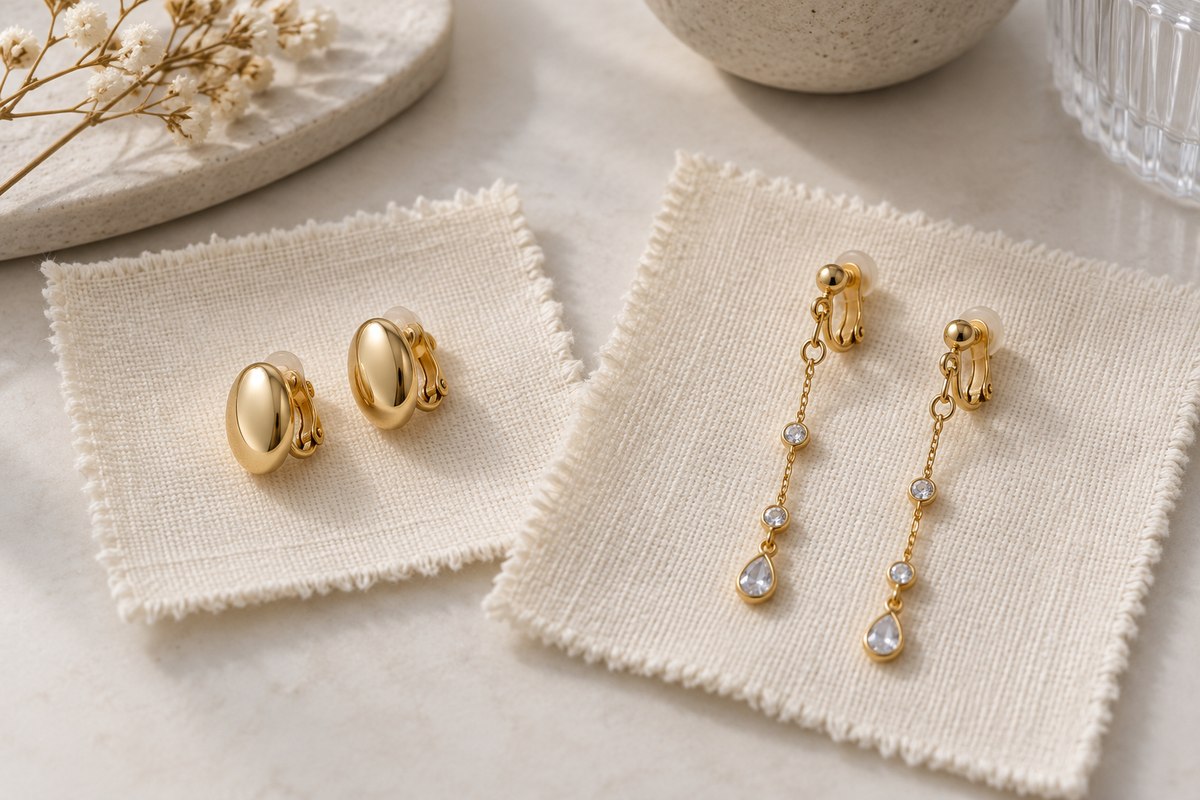
An ear cuff grips a different part of the ear from a lobe clip-on. A pierced stud has a different fitting again. Compare those options only if they suit how you intend to wear the jewelry. Our ear cuff guide explains that separate choice.
If you already have fully healed, compatible piercings and are comparing a small front, our stud earrings category can help you compare pierced designs. Check each listing for the actual closure. A standard stud doesn’t become a clip-on because its front has the look you want.
Before checkout, check that you have answers about the fitting, its contact materials, adjustment instructions and return terms. Those details are more useful than a promise that every wearer will find a particular clip comfortable.
Questions about clip-on earrings
Can I convert a pierced earring to a clip-on?
Ask a jeweler about the specific design. The available attachment, the weight and the finished position all need assessment. A converter isn’t automatically compatible with every post, hook or decorative front.
Should I add an extra cushion if a clip slips?
Ask the maker which pad, if any, belongs with that closure. An added layer changes the fit. It doesn’t establish that a loose or uncomfortable mechanism is suitable for your ear.
Can I choose clip-ons for a healing piercing?
Don’t use a clip to work around aftercare advice or cover an irritated piercing. Ask your qualified piercer about jewelry and pressure near the healing area before choosing another fitting.
What if one clip feels different from the other?
Remove the pair and compare the closures with the seller’s instructions. Ask about an inspection or fitting assessment rather than bending one side until it resembles the other.

Related posts
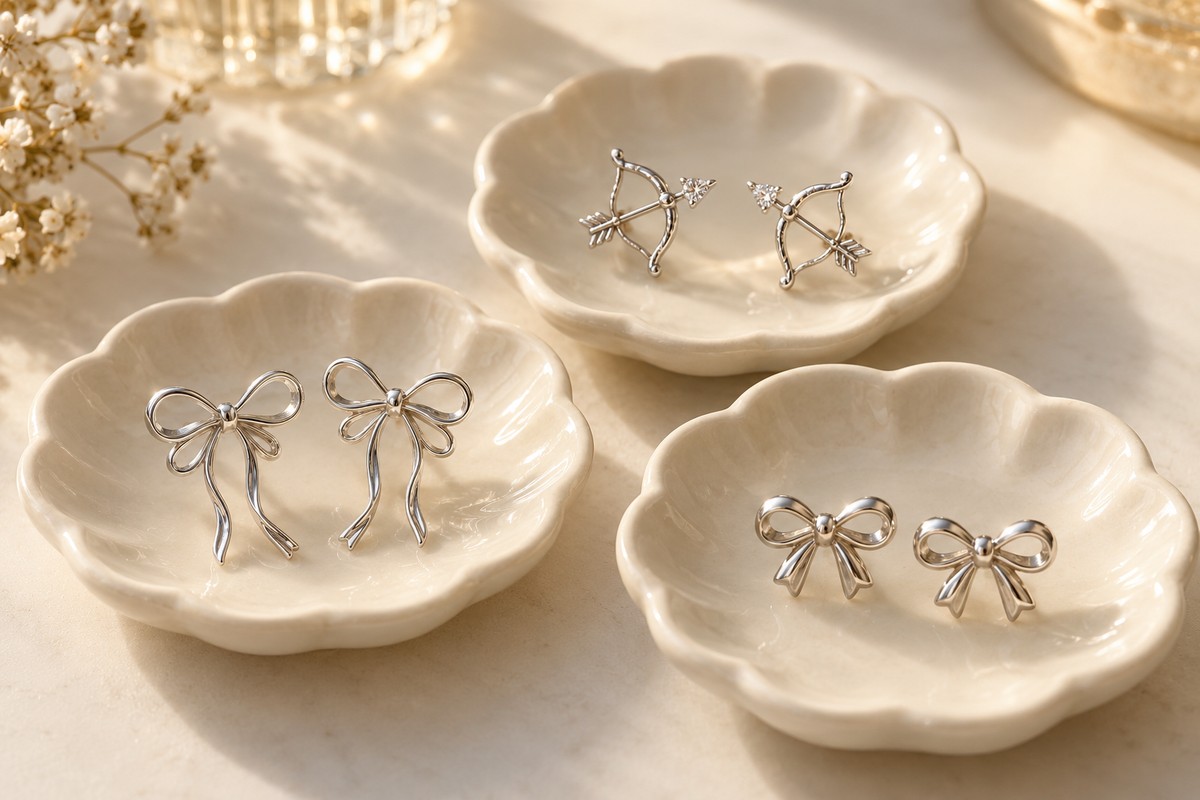
Ribbon Bow Earrings or Arrow-and-Bow Studs? Choose the Motif First
Bow earrings can mean a ribbon knot or an archery design. Refine your search, compare three real pairs, and decide how the motif works with your outfit.
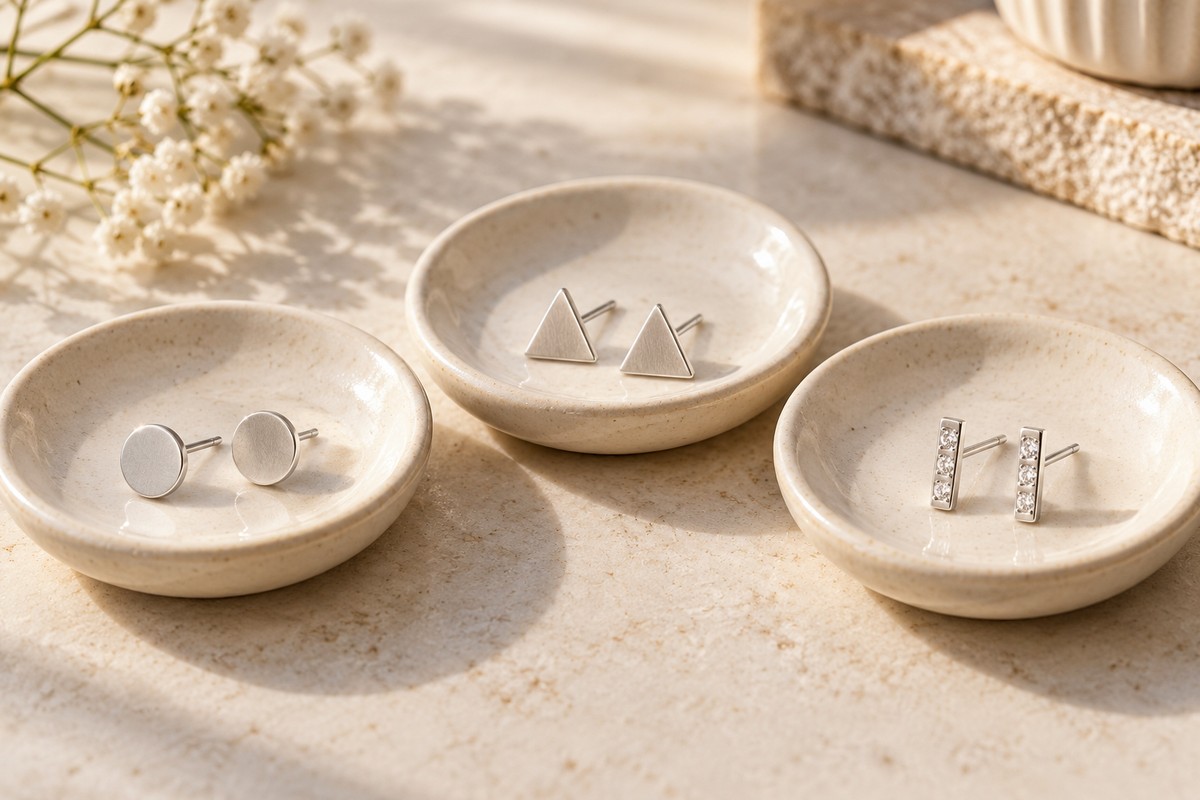
Minimal Geometric Earrings: Round, Triangle or Bar?
Compare round, triangle and bar earrings with the lines in your clothing. Use simple shape, open-space and accessory choices to build a look you enjoy.
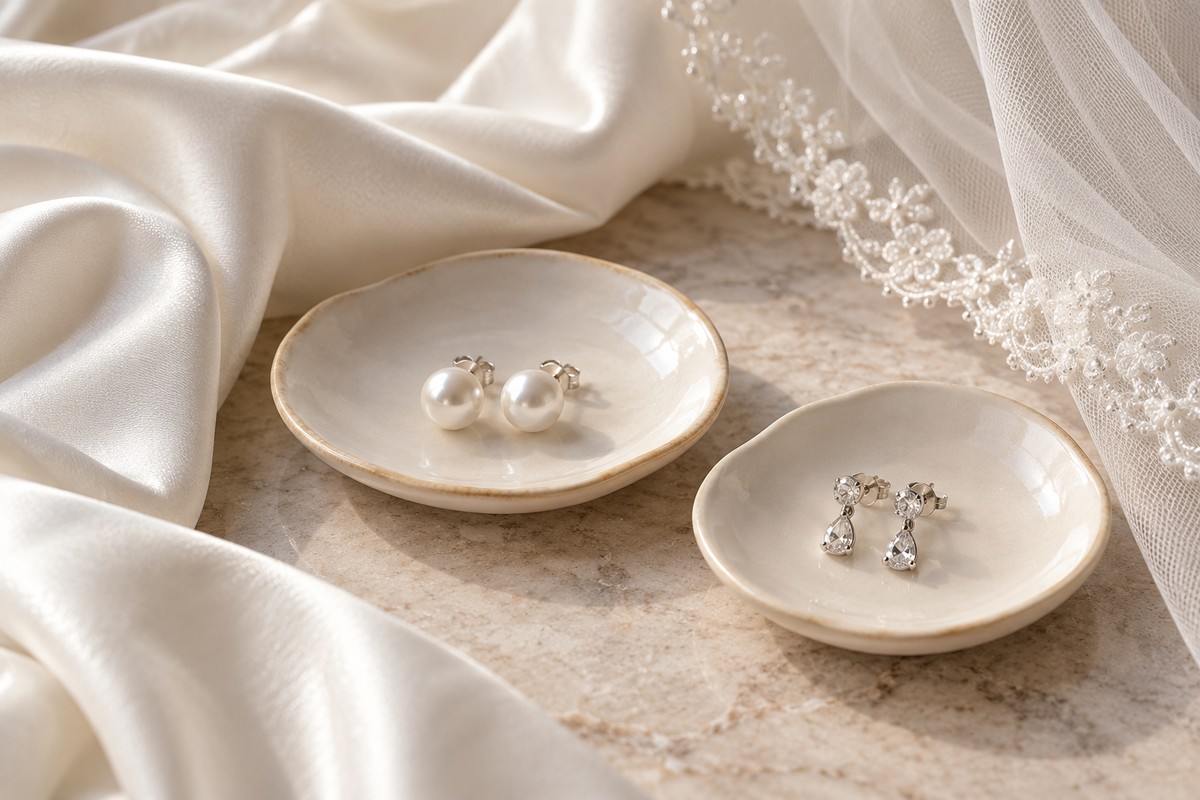
Wedding Earrings for Sensitive Ears: Rehearse the Whole Outfit
Try wedding earrings with your planned hairstyle, veil, neckline and outer layer. Compare photographs, notice catching and prepare a familiar backup pair.