

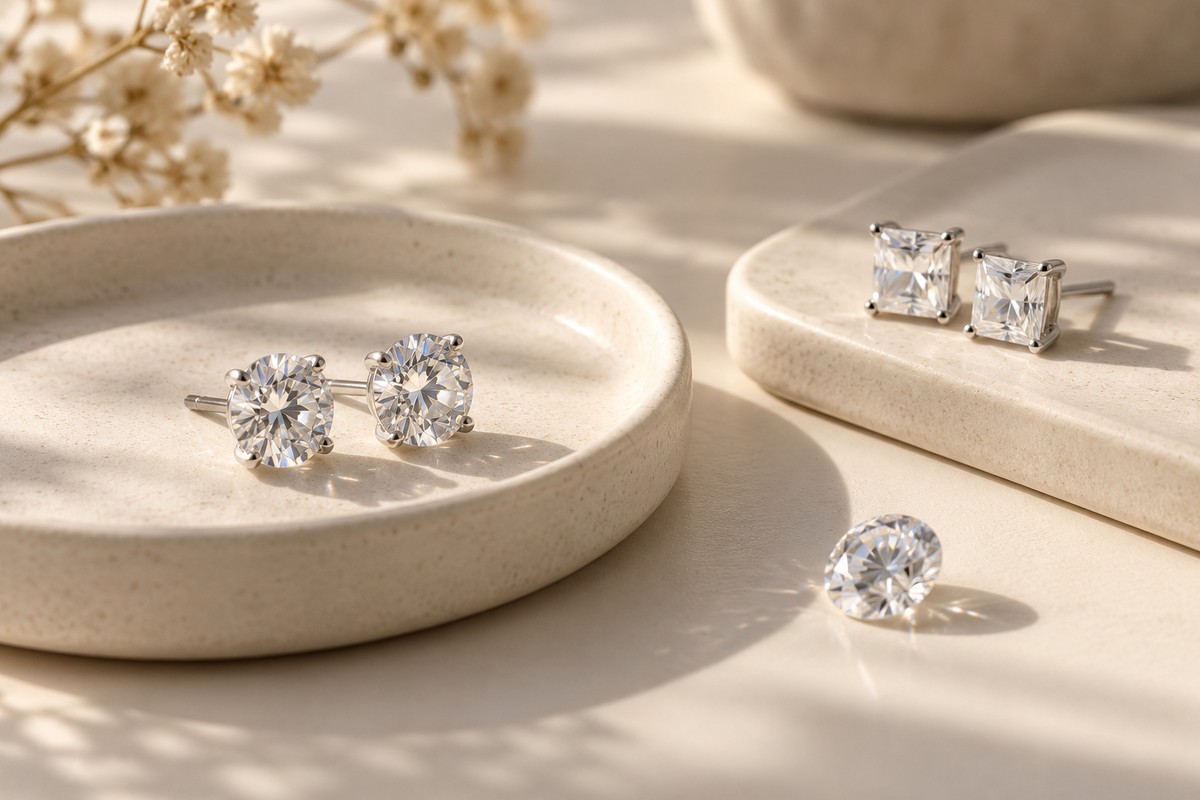
Before choosing moissanite or diamond earrings, read the metal description as well as the stone name. The gem is one part of the purchase. You still need to know what the post, setting and back are made of, and whether the complete earring fits your ear.
This guide is for shopping for fully healed piercings. Start with the material description, then compare the appearance and measurements. You should be able to identify both the decorative front and the parts that touch your skin.
Check which stone the seller names
Moissanite and diamond are different materials. GIA's explanation of diamond simulants places moissanite among stones that can resemble diamond without being diamond. Laboratory-grown diamonds belong to a different category: they are diamonds, while laboratory-grown moissanite is moissanite.
Phrases such as "diamond look" and "moissanite-style" leave the stone's identity open. If the title and specification disagree, ask the seller to confirm the material in writing before ordering. A photograph cannot settle that disagreement.
Our lab-grown and natural diamond guide covers diamond origin separately. For this purchase, first decide whether you want a particular gem or whether you are choosing a clear-stone look. The listing should make that choice clear.
Compare the appearance and the measurements
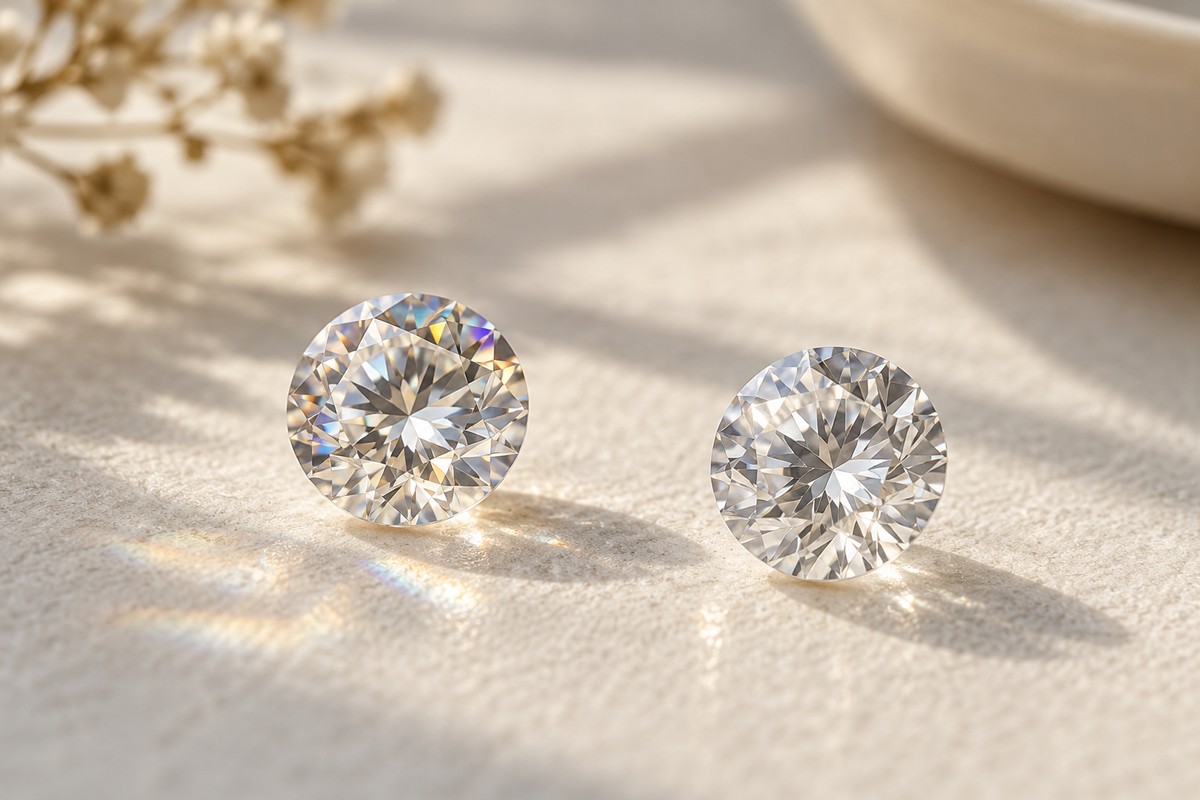
GIA describes moissanite as having stronger rainbow flashes, known as fire, than diamond. It also lists moissanite at 9.25 on the Mohs scale and diamond at 10. Those hardness numbers concern scratch resistance; they do not establish that a finished earring cannot be damaged.
Compare ordinary-light photographs with close-up sparkle videos. They can help you choose a look; they cannot authenticate the stone. If identification matters, ask what documentation is available and what it covers.
Request the visible stone dimensions in millimeters. Carat weight alone is a poor shortcut for comparing the face size of different gem materials. Ask for the full front dimensions too. The setting is part of what you see on your ear. Our earring size guide explains the separate measurements for the front, post and hoop.
Read the metal information alongside the stone name
Neither "diamond" nor "moissanite" identifies the metal touching your ear. Read the setting, post, back and any surface finish as separate details. A gold-colored photograph does not answer those questions.
The American Academy of Dermatology's nickel guidance explains that earrings and earring backs can be sources of nickel exposure. Paying more for a gemstone does not establish whether a particular pair suits a person with a metal allergy. Recurring or blistering rashes deserve a dermatologist's assessment.
For fit, the Association of Professional Piercers' advice on healed-piercing jewelry considers dimensions, material, style and finish. A titanium grade in a listing is useful information. It doesn't independently prove that the finished earring has been tested or will suit every wearer.
See how the questions apply to two listings
Our Moissanite Huggie Hoop listing names moissanite in its title, but its stone specification says "D-color moissanite-style stones." Ask us to clarify that wording if confirmed moissanite is essential to your purchase. This guide does not authenticate the stones from their name or photographs.
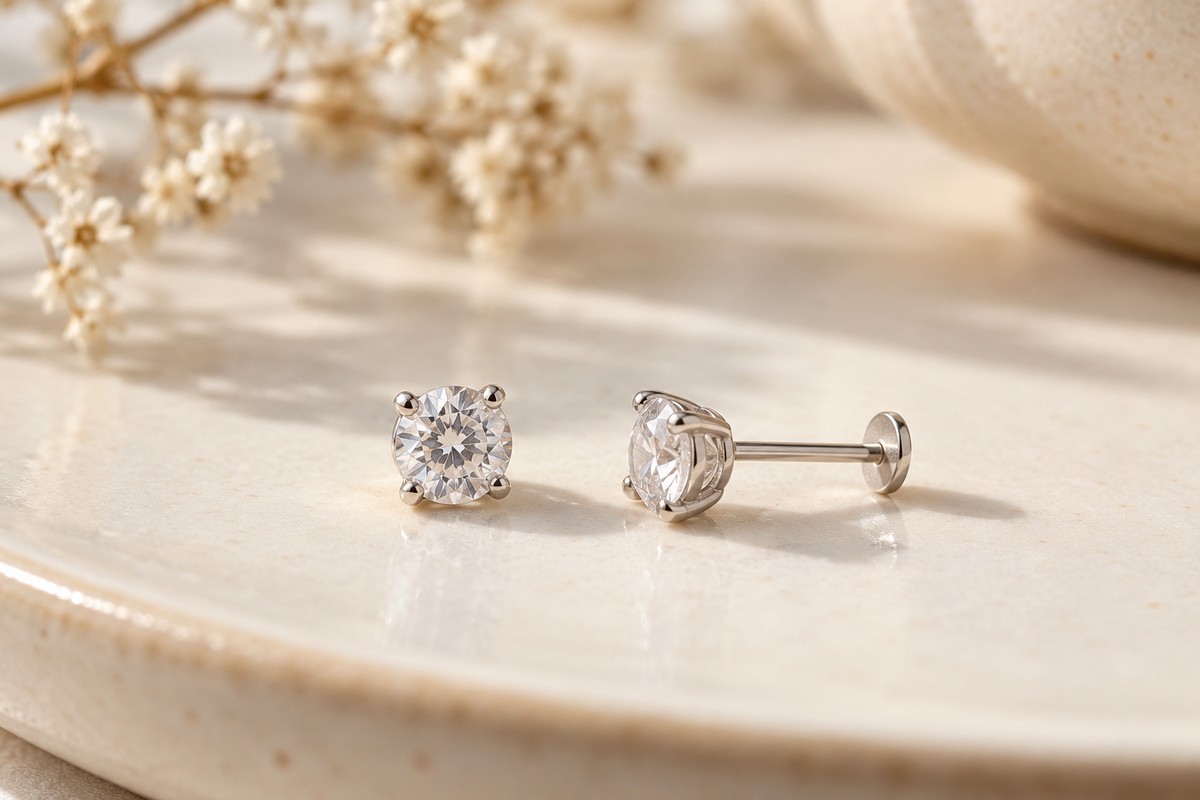
The fitting details name F136/G23 titanium alloy, five stones along the front curve, a hinged clasp and a 1.0 mm post. It gives a 12 mm hoop diameter without identifying it as an inner or outer measurement. Ask which diameter it means before judging how closely the hoop will sit. The listed quantity is one pair.
The Clear Zircon Heart Stud is a different option, listed with white zircon and G23 titanium alloy. It has an approximately 6 mm heart front, a 1.2 mm post diameter and an 8 mm post length, with a threaded flat back. It is also sold as a pair. A stud and a hoop can give you similar sparkle while needing different space and post dimensions.
Care for the complete earring
Use the care instructions for the whole piece. A gemstone's hardness does not tell you whether a coating, setting or other component tolerates a cleaning method.
Both listings ask you to keep the earrings dry and store them separately. The heart studs also specify a gentle wipe with a clean soft cloth after wear. If a stone appears loose or the closure stops working as described, set the pair aside and ask for an assessment before wearing it again.
Questions to ask before ordering
Does "D-color" prove that a stone is a diamond?
No. A color description does not establish gem identity. Ask for the named stone material and whether any accompanying report applies to the stones in the earrings you are buying.
Is a lower price proof that the listing is wrong?
Price cannot identify a gemstone. Compare what the seller actually specifies, including the metal, stone dimensions, fitting and whether the price covers one earring or a pair. Resolve unclear wording before buying.
Can I use these examples to choose jewelry for a new piercing?
Ask your piercer to select and fit jewelry for a fresh or still-healing piercing. These examples are for healed piercings, and neither a stone name nor a retail photograph establishes suitability for a new one.

Related posts
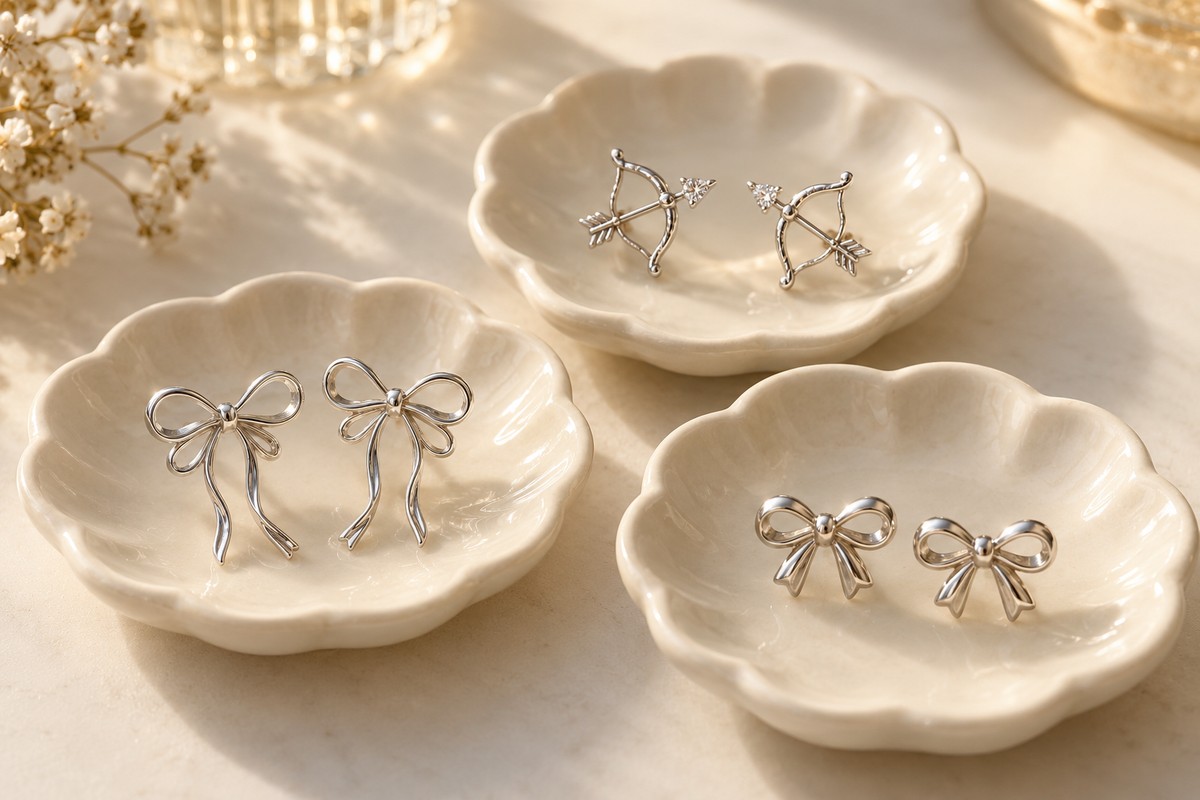
Ribbon Bow Earrings or Arrow-and-Bow Studs? Choose the Motif First
Bow earrings can mean a ribbon knot or an archery design. Refine your search, compare three real pairs, and decide how the motif works with your outfit.
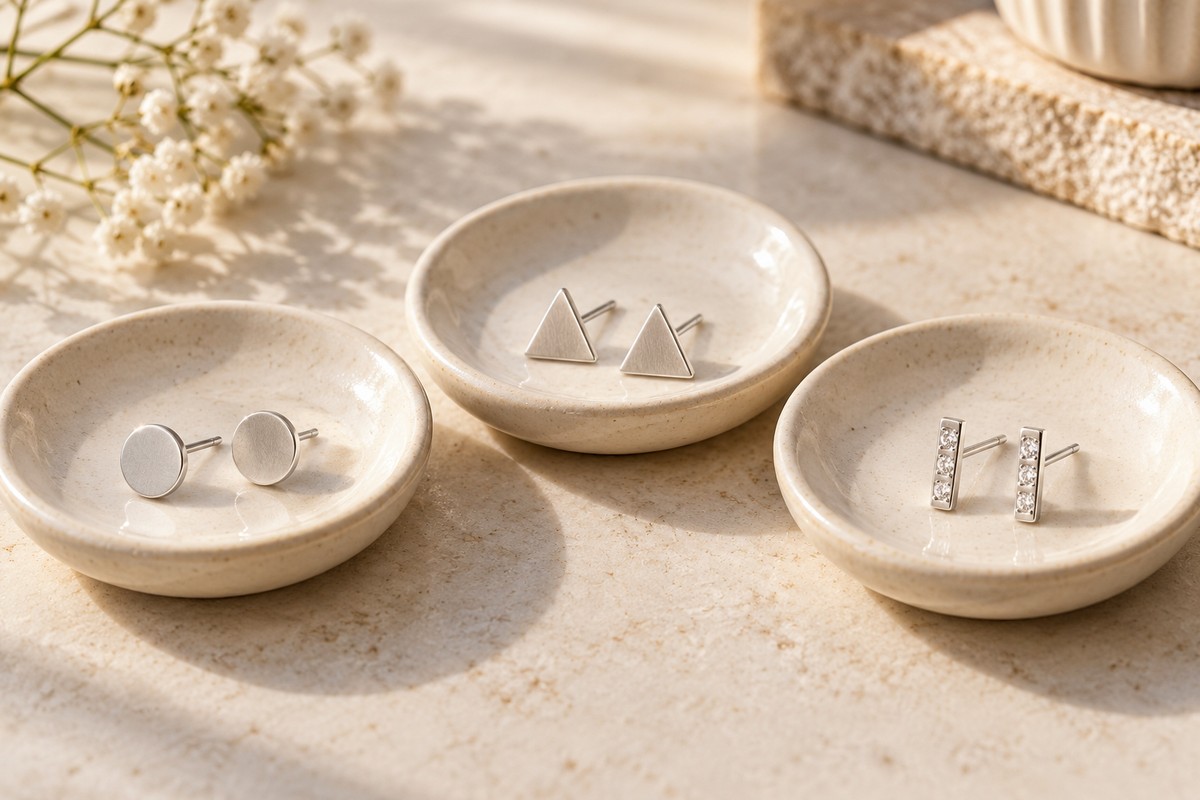
Minimal Geometric Earrings: Round, Triangle or Bar?
Compare round, triangle and bar earrings with the lines in your clothing. Use simple shape, open-space and accessory choices to build a look you enjoy.
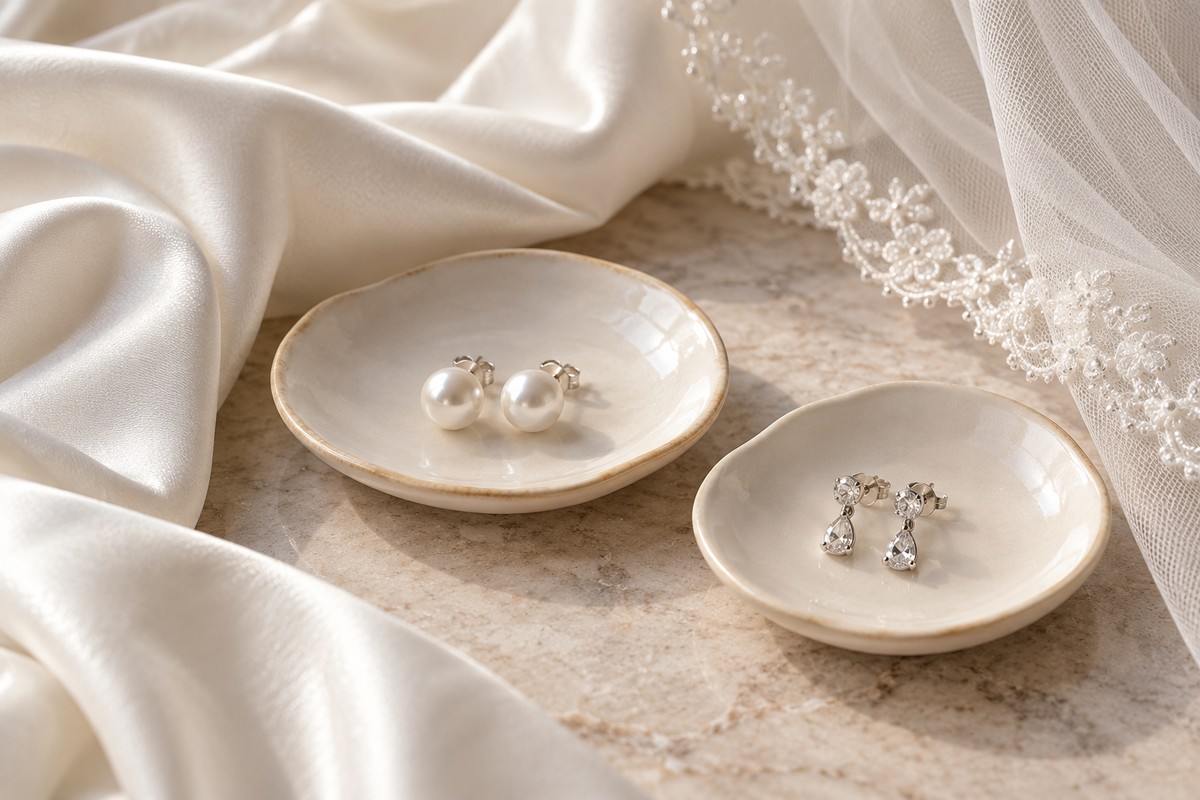
Wedding Earrings for Sensitive Ears: Rehearse the Whole Outfit
Try wedding earrings with your planned hairstyle, veil, neckline and outer layer. Compare photographs, notice catching and prepare a familiar backup pair.