

A dark mark around an earring hole can be on the jewelry, on the skin's surface, or in the skin itself. Those are different things. Before reaching for a stronger cleaner or a new pair of studs, look at where the color actually sits and whether anything else has changed.
Color alone cannot tell you the cause. If the area is increasingly painful, hot or swollen, has pus, or you feel unwell, seek prompt medical advice. The NHS guidance on infected piercings says to leave the jewelry in unless a doctor tells you to remove it.
Start with what you can see
In good light, note whether the dark color is on the front, the post or back, or the surrounding skin. You don't need to remove a healing piercing to investigate. A clear photo and a note about when you first noticed the mark can help when you speak with a piercer or clinician.
For an established, comfortable piercing, inspect earrings when you would normally take them out. Keep the jewelry and skin observations separate. A blackened section of metal doesn't prove the skin has the same problem, and an absence of pain doesn't prove a mark is harmless.
Write down which pair you wore, how long the mark has been there, and whether it is changing. Include any recent itching or irritation. This is useful history, not a home diagnosis.
Dark metal and surface residue are different from skin pigment
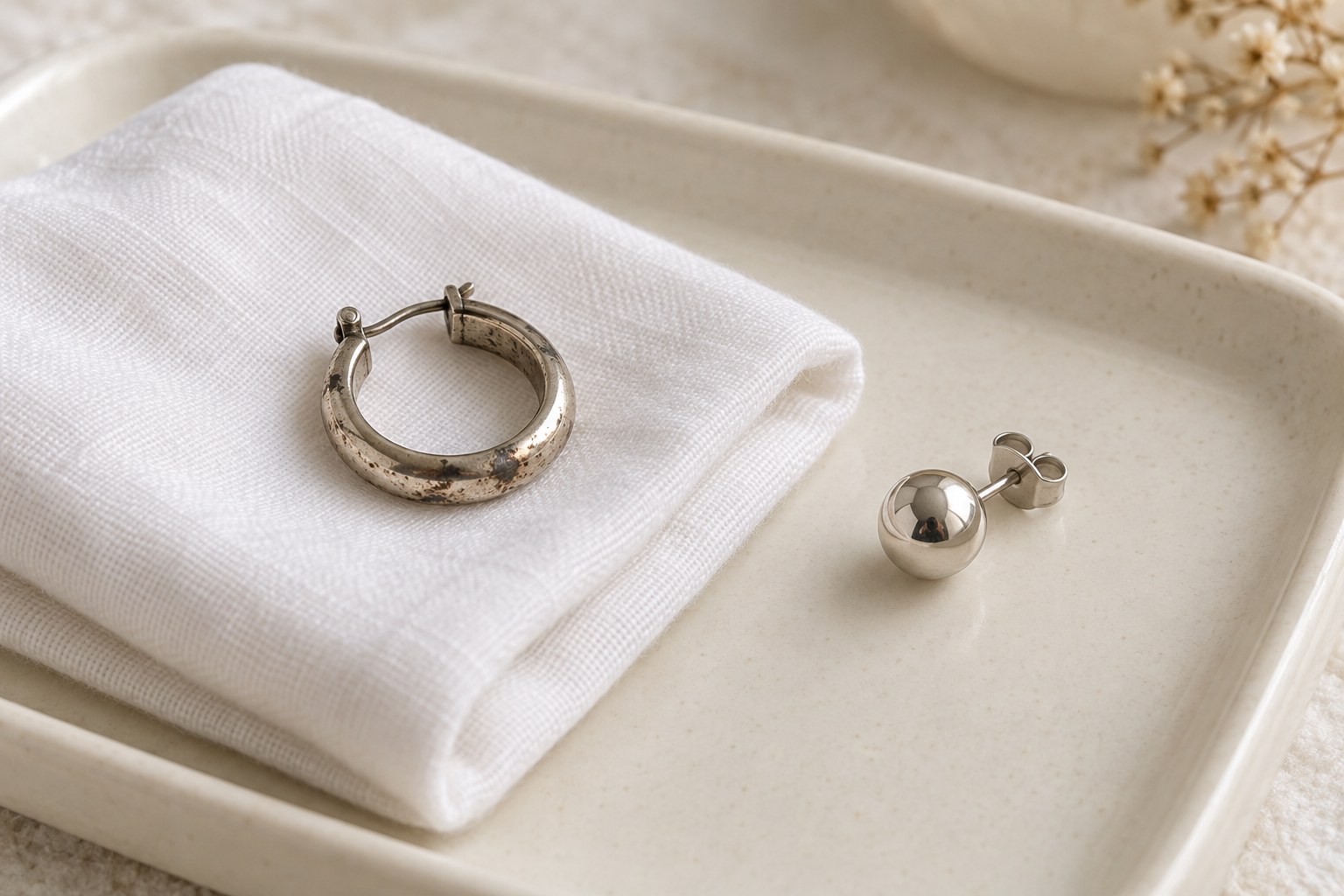
Silver can develop a dark tarnish layer. The Canadian Conservation Institute's explanation of silver tarnish describes a reaction with sulfur-containing compounds that produces silver sulfide. That explains a change on a silver object; it doesn't identify the cause of a dark mark on your ear.
Surface material that comes away with gentle routine washing is also different from color that remains within the skin. Don't keep rubbing to test the difference. If it stays, or you aren't sure what you're seeing, leave it alone and arrange an assessment.
Our guide to metals that tarnish covers the jewelry side of the question. Metal polish belongs off the skin and away from the piercing channel.
A mark can remain after irritation settles
DermNet's guide to postinflammatory pigmentation explains that skin can become darker after injury or inflammation. This can affect any skin tone, and the color may persist longer in darker skin. It is one possible explanation for a lingering mark, not a conclusion you can reach from its color.
A persistent, new or changing patch deserves a clinician's assessment. Avoid treating it with bleaching creams, acids or repeated scrubbing while you're guessing at the cause. Replacing an earring cannot establish why the skin changed.
Keep care gentle while you get advice
For a healing piercing, follow your professional's instructions. The Association of Professional Piercers' aftercare guidance advises against twisting jewelry, overcleaning and harsh products such as alcohol or peroxide. Don't scrape inside the opening or remove initial jewelry just to clean the post.
If symptoms make you suspect infection, medical advice takes priority over shopping or a home cleaning routine. A piercer can check the jewelry's fit; a healthcare professional can assess a skin change or possible infection. Our irritation, allergy and infection guide explains why these problems can be hard to tell apart.
Compare replacement jewelry after the problem is assessed
Once your piercing is fully healed and suitable for a change, keep a record of the material and measurements that work for you. Read the complete listing instead of choosing by metal color alone.
Our Outline Bow Flat Back Stud lists F136 titanium, a 1.2 mm post diameter, an 8 mm post length and an M0.9 internal thread. Those are the seller's specifications, not an independent material certificate or a treatment for discoloration.
A familiar-looking stud can still have a different fitting. Use our earring size guide to understand the measurements, then ask your piercer what suits your healed piercing. Don't force a thicker post through an opening or expect a particular metal to remove a skin mark.
Questions about dark earring holes
Should I take the earring out to let the hole breathe?
Don't use that as a treatment. Healing piercings need appropriate jewelry left in place, and suspected infection needs medical advice. The NHS advises leaving jewelry in unless a doctor directs otherwise.
Is a dark mark without pain definitely tarnish?
No. Tarnish is a change on metal. A persistent skin mark needs its own assessment, even if it doesn't hurt.
Will titanium make the dark color disappear?
There is no basis for promising that. A different material may be part of a professional's jewelry recommendation, but the cause of the skin change needs to be understood first.

Related posts

Ear Piercing Costs: What Your Quote Should Include
Compare ear-piercing quotes by the number of holes, complete jewelry, follow-up services and other charges, with specific official studio examples.
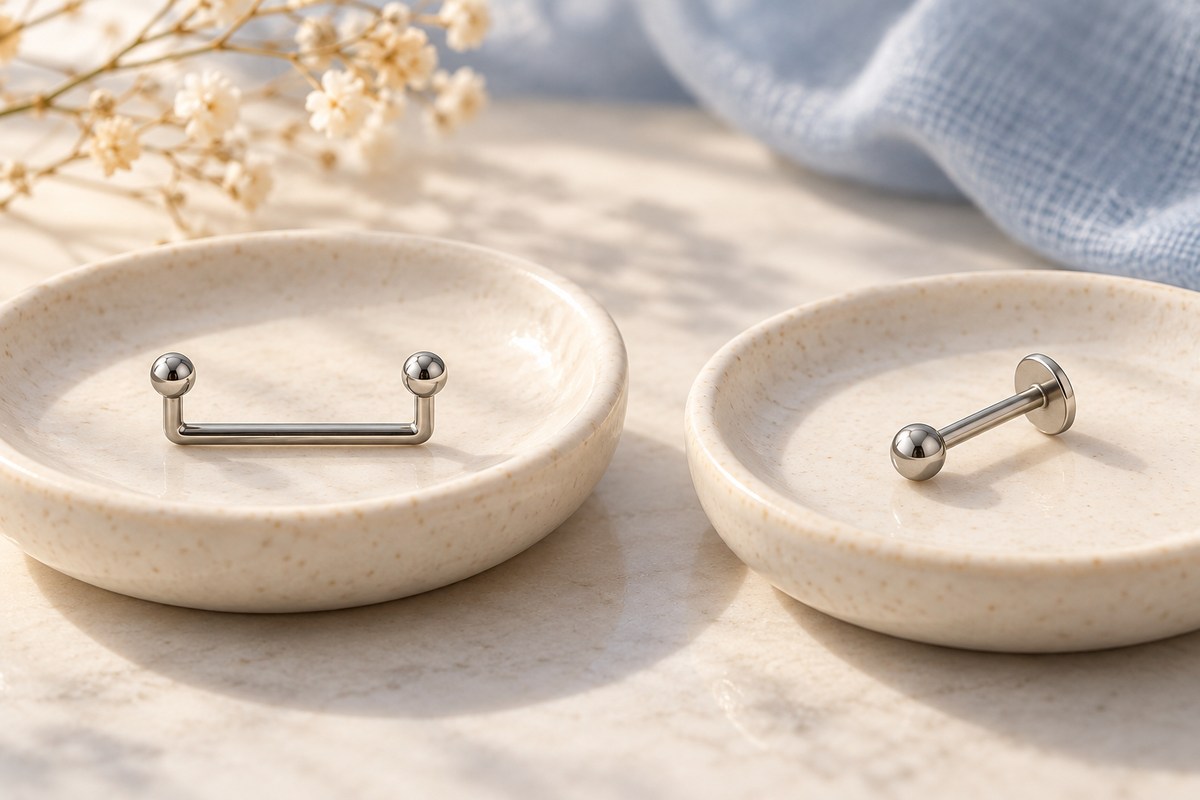
Surface Tragus vs Tragus: Why the Jewelry Is Different
Learn how surface bars, labret studs and surface anchors differ, and what to confirm before buying jewelry for a piercing beside the tragus.
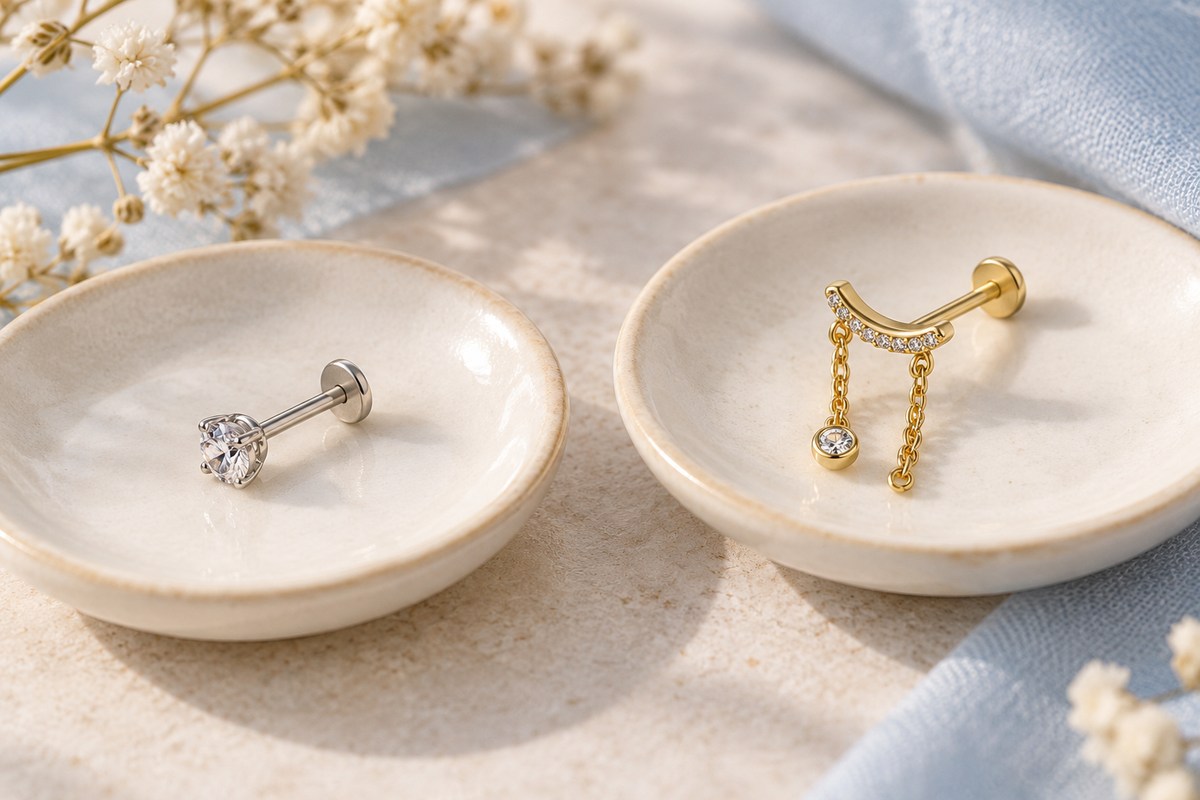
Vertical Helix vs Hidden Helix: Check the Jewelry Direction
Compare vertical and hidden helix descriptions, check what product photographs leave out, and read jewelry specifications for a fully healed piercing.