

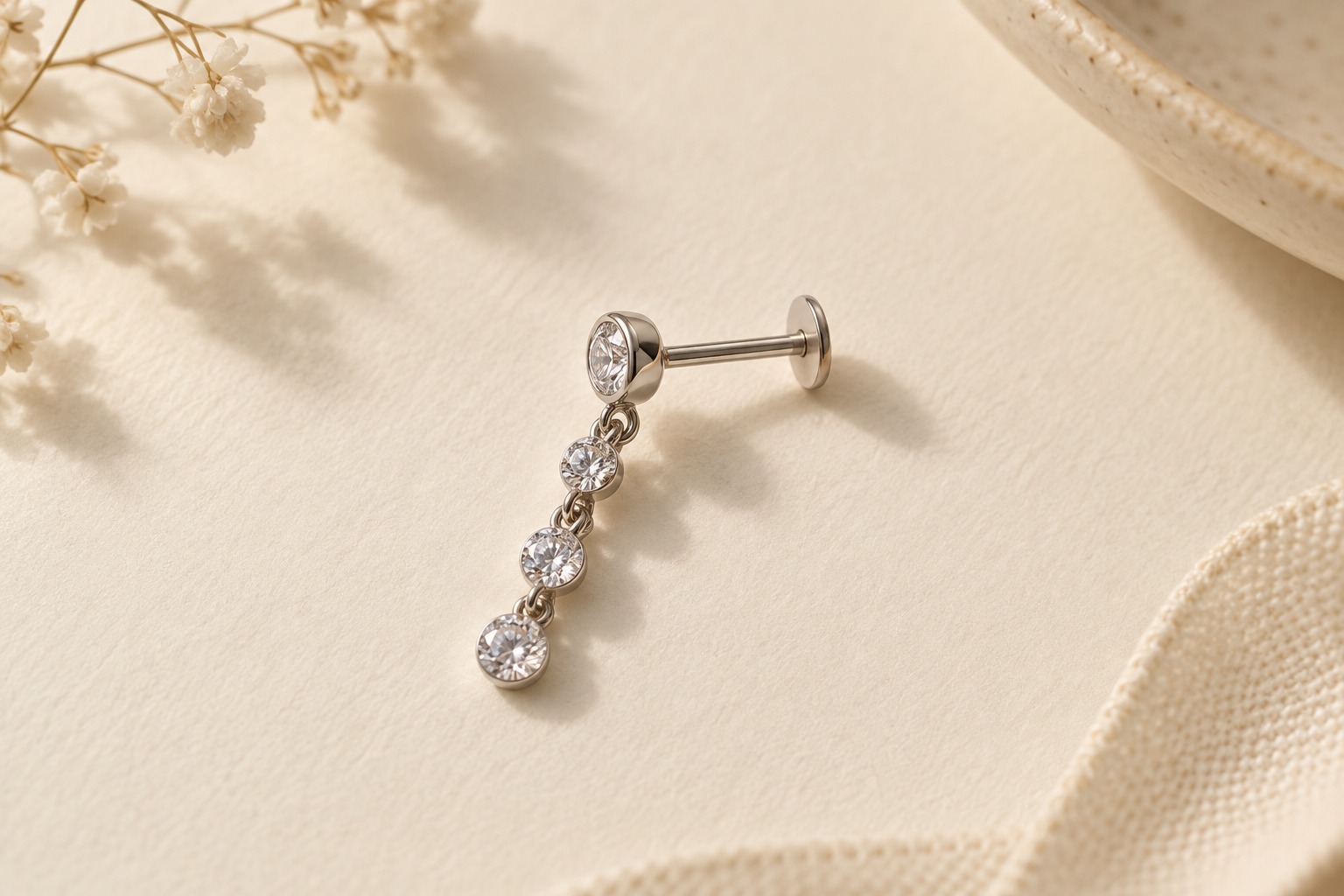
A small drop tucked into the upper ear can be hard to identify in a photograph. You see the crystal and the chain, but the attachment point may disappear behind a fold. Before saving that look to your shopping list, find out where the piercing actually goes.
A faux rook and a traditional rook can create a similar visual effect through different placements. That difference matters when choosing the post, backing and hanging decoration. The product examples here are for discussing possible styling in compatible, fully healed piercings; neither is a confirmed faux rook recommendation.
Find the piercing behind the drop
In its ear-piercing trends article, STUDS describes a faux rook as an upper inner-cartilage piercing with a drop that suggests the appearance of a rook. It avoids passing through the thick rook fold itself. A traditional rook passes through that fold.
“Faux” refers to the resemblance. It still involves a real piercing. Bring your reference photo to a piercer and ask them to identify the entry point, exit point and likely jewelry construction before deciding which appointment to book.
Our rook piercing guide covers the traditional placement in more detail. Here, the useful question is how the hanging detail will sit in the space you want to fill.
Show your piercer what you like about the picture
Point out the part you want to recreate. Perhaps it's one crystal suspended near the inner fold, or a longer line that leaves the surrounding cartilage visible. A close-up of the whole ear is more useful for that conversation than a tightly cropped picture of the gemstone.
The Association of Professional Piercers' guide to choosing a piercer recommends a consultation that includes an anatomy inspection and a discussion of jewelry, risks, healing and aftercare. Ask whether your reference look suits your ear and what would need to change.
Keep the planned appearance separate from the jewelry chosen for a fresh piercing. Let the piercer decide whether the decorative piece belongs in the initial plan or should wait. A shopping description cannot answer that for you.
Read the post measurements before the style name
Our Linear Crystal Drop flat-back earrings have an internally threaded flat-back post. The listing specifies a 0.8 mm post diameter and a 6 mm wearable length. Those numbers describe the fitting, not the length of the hanging crystal design.
The listing uses the material wording “F136/G23 titanium alloy.” Treat that as the seller's description and request supporting material documentation if a particular standard is part of your requirements.
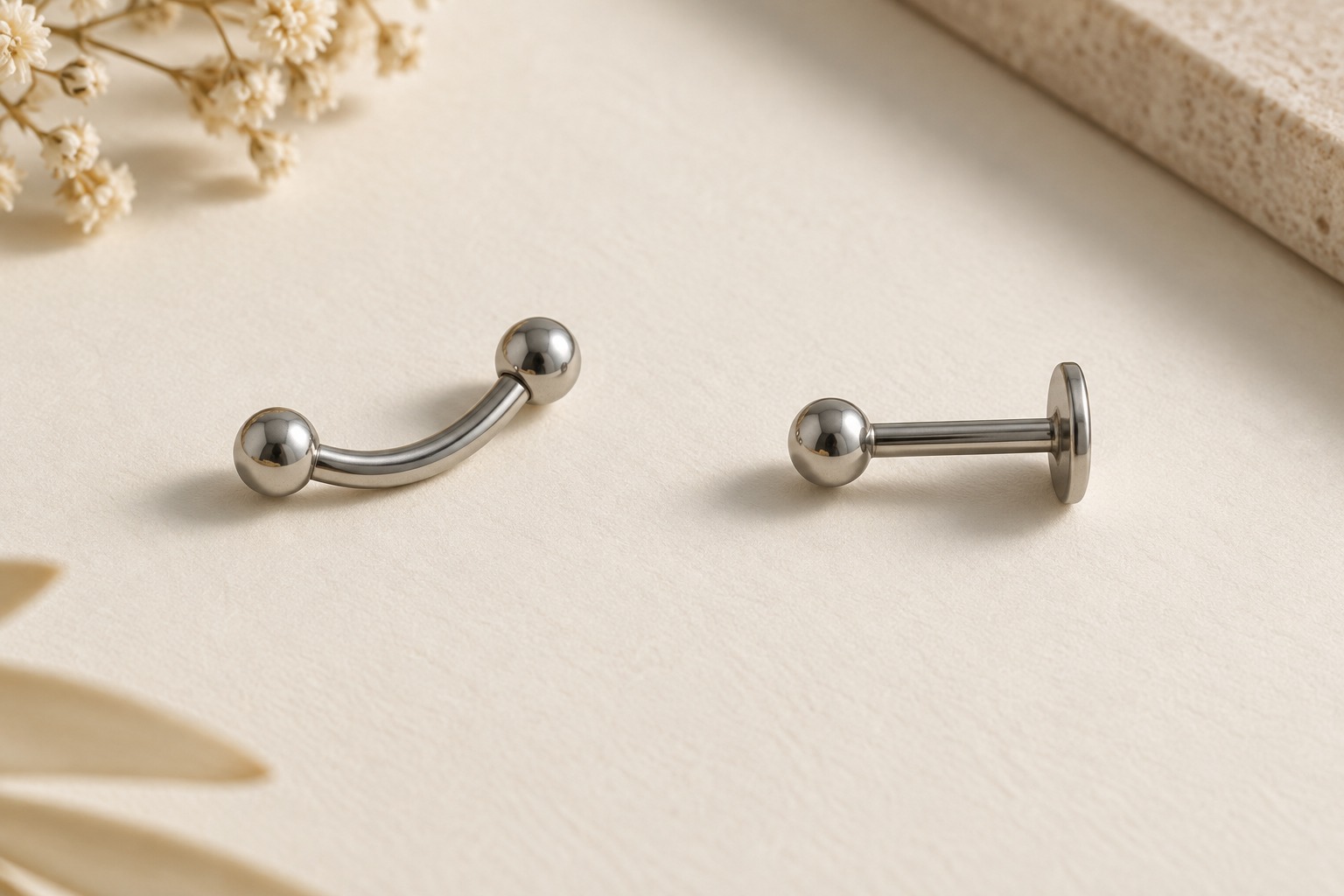
Bring those specifications to your piercer alongside the product photographs. Ask whether the complete earring could suit an existing healed placement. Its flat back and drop shape do not establish faux rook compatibility, and it should not be treated as interchangeable with a curved barbell fitted for a traditional rook.
A hidden-helix design needs its own assessment
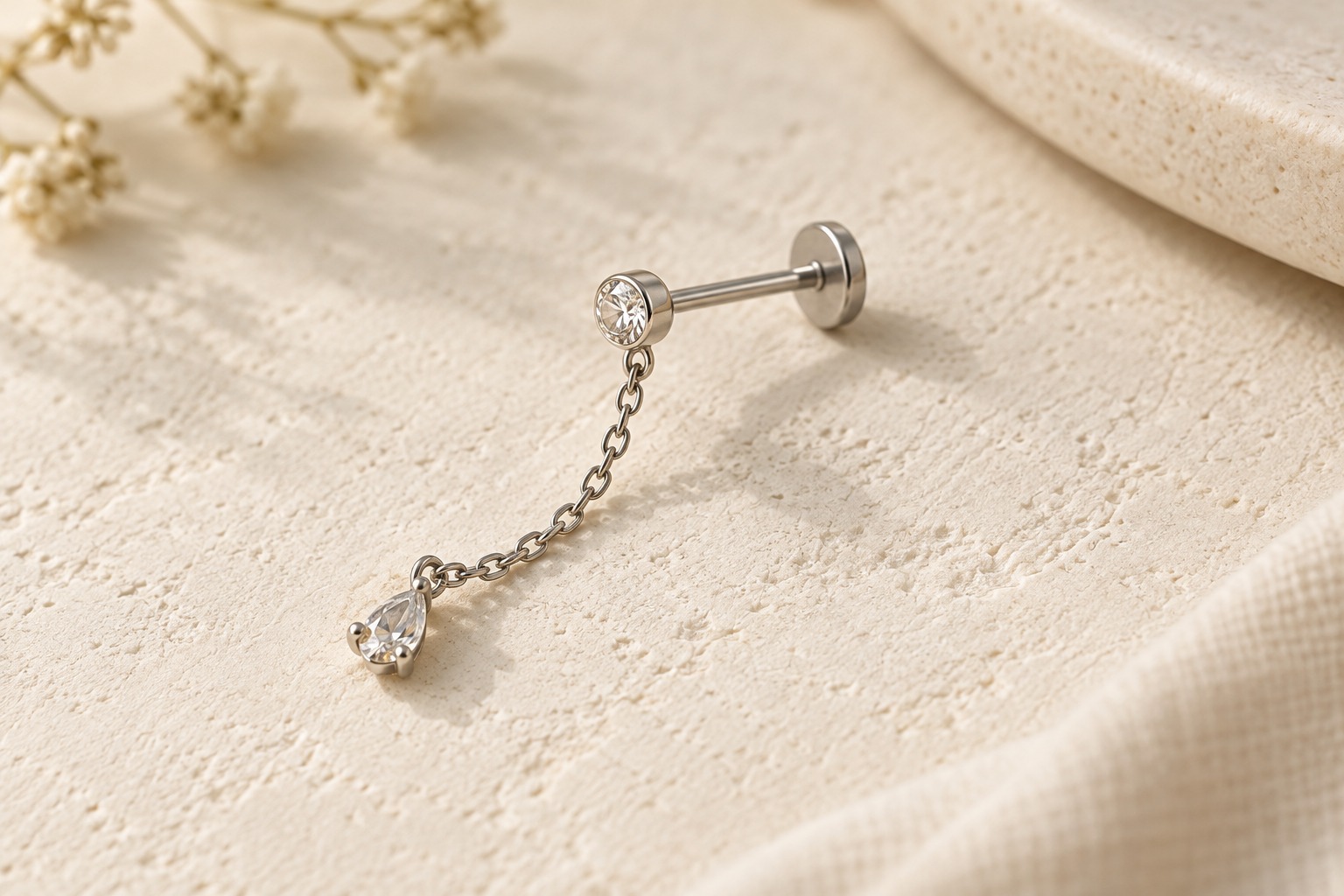
Our Hidden Helix Crystal Chain Drop earrings illustrate another way of concealing an attachment. Their description places a curved bridge behind the upper helix fold, with two chains and a crystal drop below it. The intended use is a compatible, healed upper-helix piercing.
This listing specifies titanium and a 0.8 mm by 6 mm post. It does not establish an ASTM F136 material grade. The curved bridge is also part of the fit, so matching the post measurements alone is insufficient.
Use this piece as a separate styling option to discuss. Its hidden attachment does not make it a faux rook earring, and the product name cannot tell you whether the bridge will sit properly on your ear.
Ask for the measurements you cannot see
Neither listing supplies a chain or drop length or a weight per earring. Request the full hanging length, decorative width and complete weight before ordering for a confined upper-ear space. A photograph beside a ruler can help you picture the proportions.
Ask your piercer where the decoration would rest and whether it could contact neighboring jewelry. If you like the look but the fitting is unsuitable, keep the photo as a visual reference while considering another piece.
For a healing piercing, the APP's aftercare guidance advises avoiding unnecessary movement and direct sleeping pressure on cartilage. Follow your piercer's care and follow-up instructions. Seek medical attention if you suspect an infection.
Choose the placement with your piercer first. Once the fitting details and missing measurements are settled, you can compare drops by the amount of space and movement you actually want.
For other front shapes, browse our flat-back earrings collection with your confirmed fitting details in hand.

Related posts

Ear Piercing Costs: What Your Quote Should Include
Compare ear-piercing quotes by the number of holes, complete jewelry, follow-up services and other charges, with specific official studio examples.
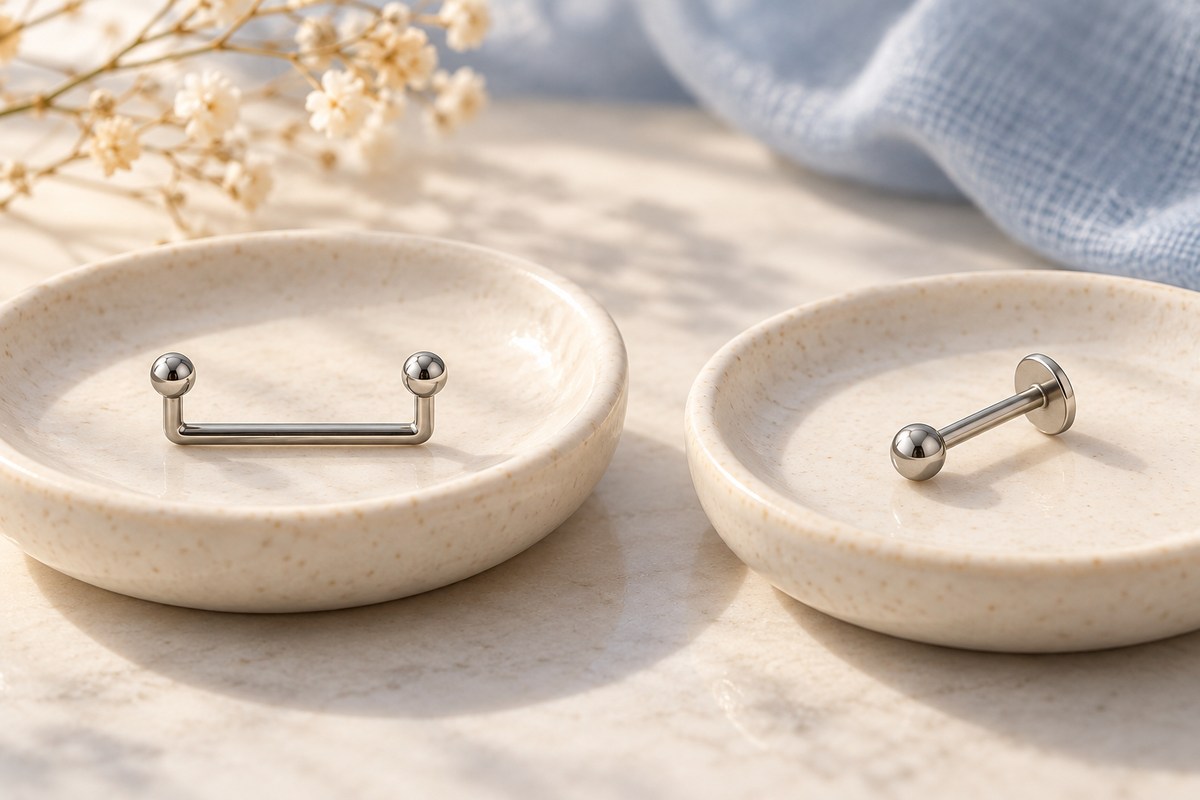
Surface Tragus vs Tragus: Why the Jewelry Is Different
Learn how surface bars, labret studs and surface anchors differ, and what to confirm before buying jewelry for a piercing beside the tragus.
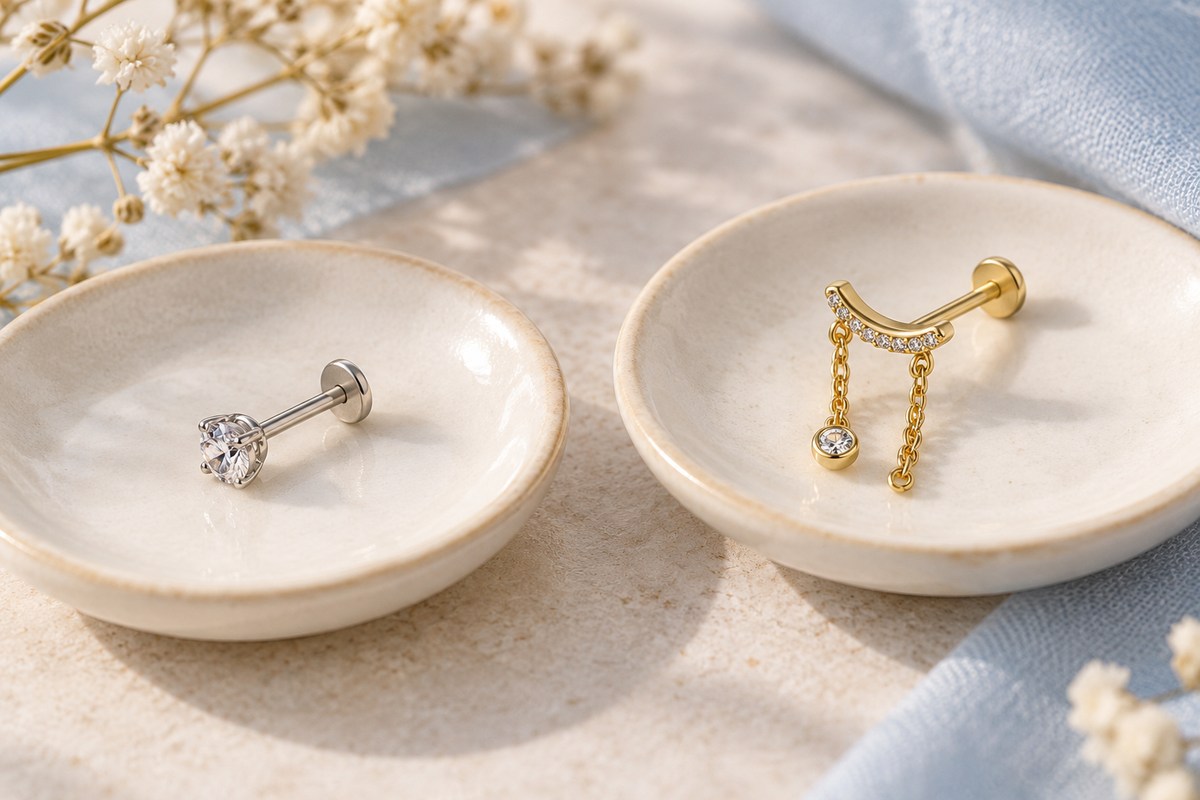
Vertical Helix vs Hidden Helix: Check the Jewelry Direction
Compare vertical and hidden helix descriptions, check what product photographs leave out, and read jewelry specifications for a fully healed piercing.