

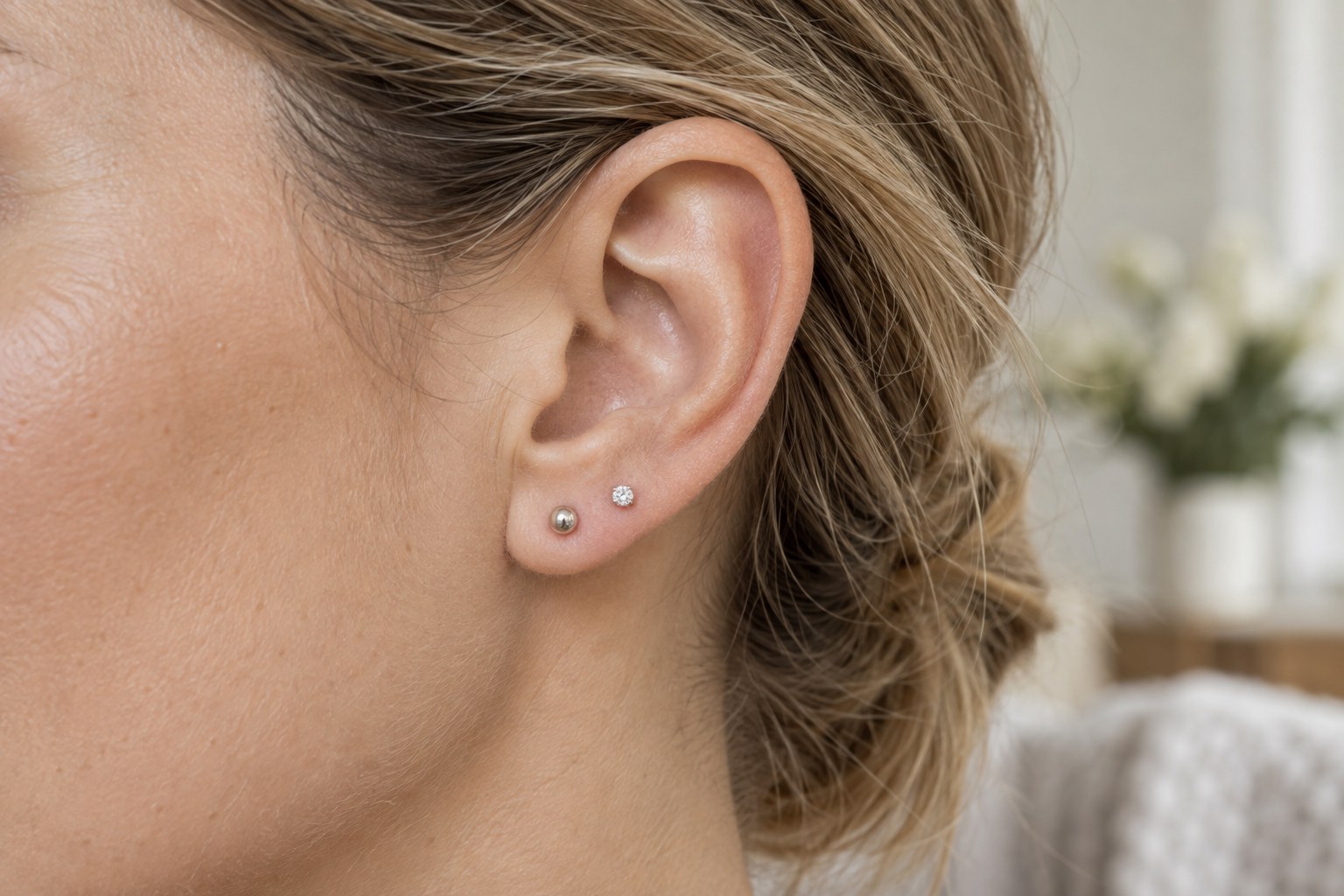
A second or third lobe piercing is easier to picture when you bring the earrings into the conversation. A tiny dot and a wide flower need different amounts of visible space. The back of each earring needs room too. Before booking another hole, think about the pieces you want to wear beside it.
This guide is about planning a row of separate lobe piercings and choosing everyday jewelry after they have healed. A piercer needs to assess placement and select the initial jewelry. The retail examples below are for compatible healed piercings, not a starter-jewelry prescription.
Bring your everyday earrings to the consultation
Take clear photographs of the jewelry you usually wear in your first hole, including the back and side. Bring measurements if you have them. A close-up of an empty ear leaves out the part that will eventually occupy the space.
Tell the piercer whether you want to keep wearing a broad stud in your first hole, add a second small stud, or eventually have three earrings in a row. Bring a picture if you find it hard to describe the result. It can help you show the piercer how much space you want around each front.
Avoid settling on a fixed distance from a photograph. Ask the piercer to assess your available tissue, existing channels and the position of the new marks. Look at both ears before proceeding. Matching the overall appearance may involve discussing differences between the two ears rather than reproducing a measurement.
Leave room for the whole earring
The decorative front extends beyond the piercing channel. A round stone has a different outline from a cluster with projecting corners. Two fronts that look separate from the front may have backs that compete for room.
Ask to discuss the intended front widths and the space behind your lobe. Include anything that regularly sits against the area, such as headphones. Describe your routine instead of trying to calculate the placement yourself from jewelry dimensions.
Our earring size guide separates front size, post diameter and wearable length. Keep those three measurements on your shopping list. A small-looking stud can still have a post that is too thick or the wrong length for a particular hole.
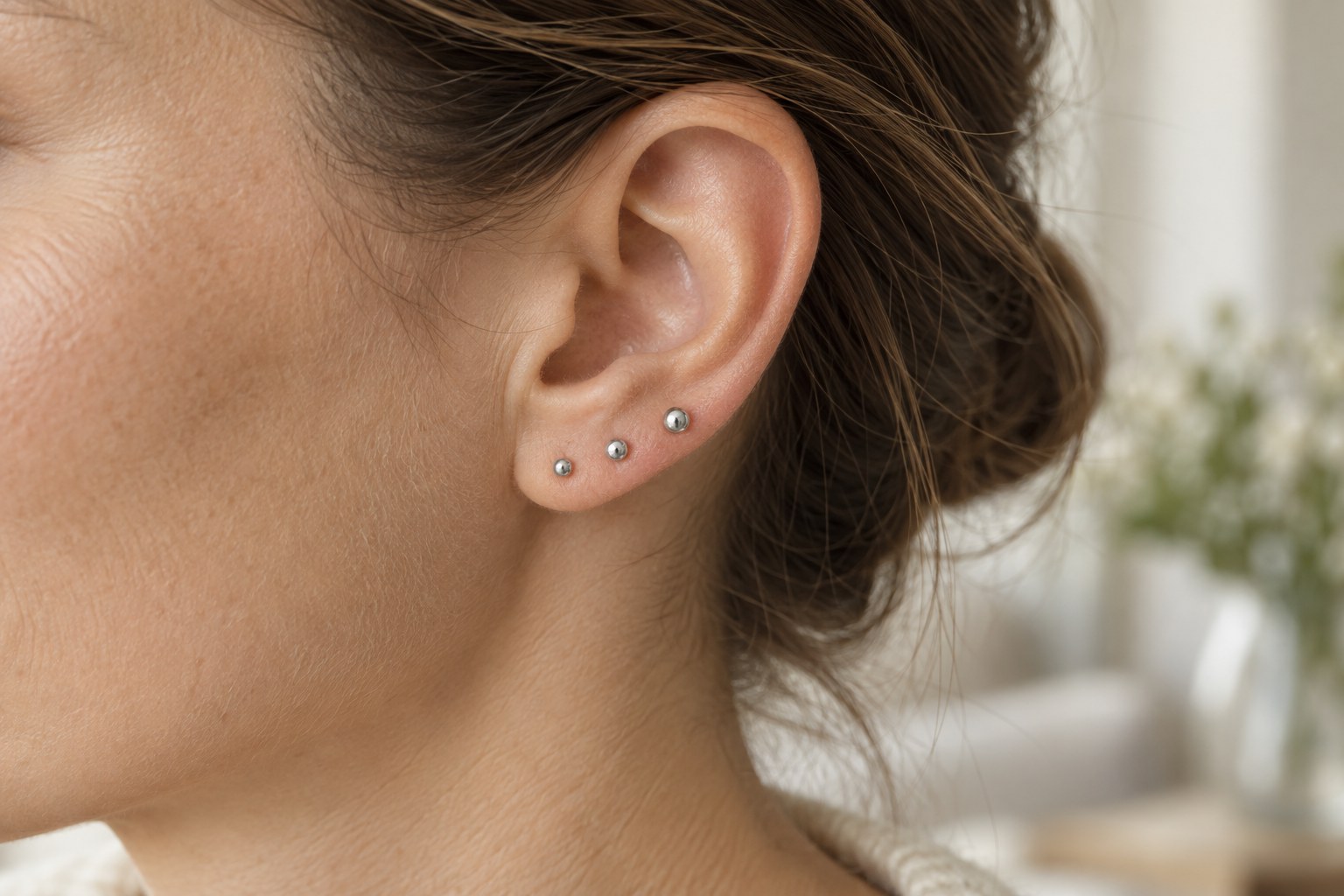
Plan the sequence before you book
If you want both a second and third hole, ask your piercer whether to do them together or in stages. Your anatomy, current piercings and ability to manage aftercare belong in that decision. There isn't a universal number of new holes that suits everyone.
Bring up any activity that requires you to remove earrings. Planning around sports or a work rule is easier before you have a fresh piercing. Our guide to earrings during sports explains why removal rules need to be part of that conversation.
The Association of Professional Piercers explains that initial jewelry must fit the anatomy and allow for swelling. Jewelry that is too tight or too long can cause problems. A 6 mm retail post is therefore not a default choice for a fresh second or third lobe piercing, even if a healed first hole wears that length comfortably.
Compare two small fronts for healed holes
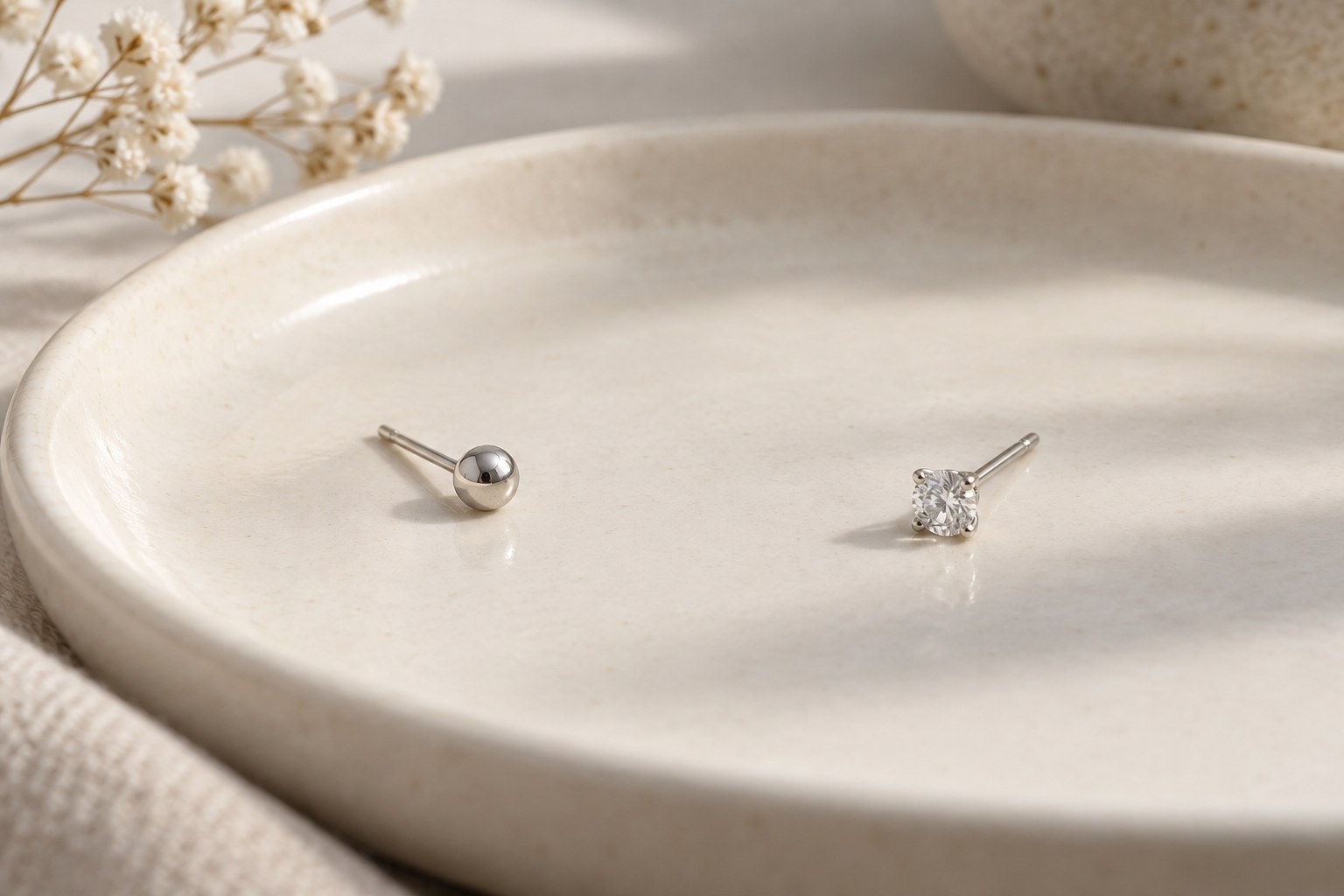
For a simple row, start by comparing the outline of two pieces before choosing the whole row. The Small Solitaire listing gives an approximately 3 mm face and a 0.8 mm post diameter with 6 mm wearable length. Its round front is a useful size reference when looking at other styles.
The Petite Crystal Cluster listing gives an approximately 2.6 by 2.3 mm face, with the same listed post diameter and wearable length. It has a threadless push-pin flat back. Compare its outline beside a round solitaire.
These dimensions do not establish that either piece fits your second or third hole. Check each piercing separately. Nor do matching post measurements establish that fronts and posts from different designs can be swapped. Ask about component compatibility and the closure instructions before buying replacements.
The product listings describe titanium, with G23 and F136 wording that is not consistent across every title and specification. Treat that wording as a listing claim. Ask for documentation if you need a particular material standard; a product title alone is not certification.
Keep the styling plan separate from healing
You might eventually want a larger first stud and two smaller accents behind it. Save that idea without making an early jewelry change to complete the look. The APP notes that a piercing can seem healed on the outside while tissue inside remains fragile.
Follow your piercer's aftercare and follow-up advice. If size, style or material needs to change during healing, have a qualified piercer handle it. A piece that feels comfortable in an old first hole does not prove it is suitable for a newer second hole.
Once the piercings are healed, try the planned arrangement for normal daytime wear and notice whether the fronts or backs press together. Have an uncomfortable fit checked rather than tightening an earring or forcing the jewelry into position.
Questions before adding another lobe piercing
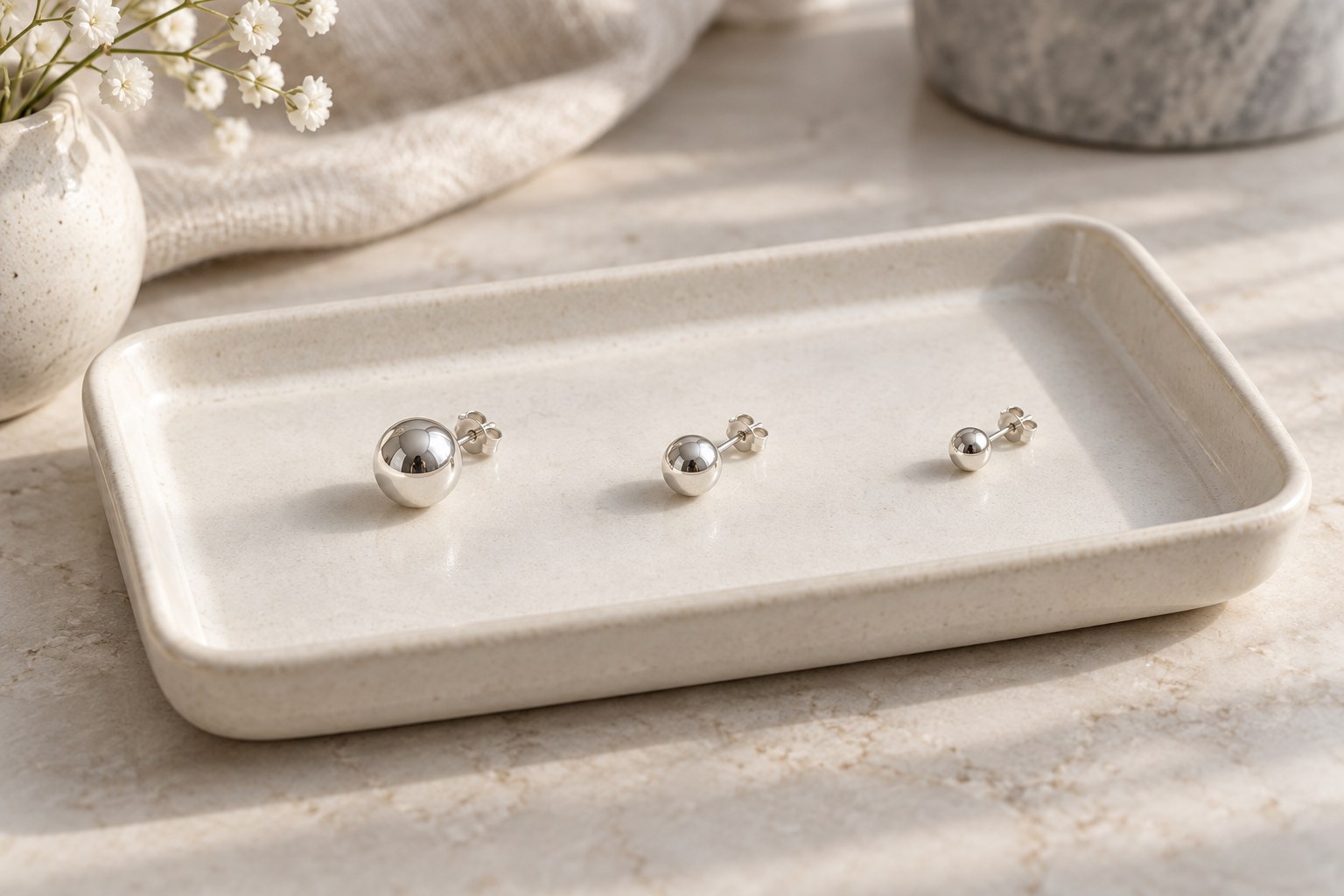
Can I use the same earrings in all three holes?
Only if each complete earring fits the individual healed piercing. Ask about the post diameter, wearable length and room for the front and back. A matching set can still need different fittings.
What if there isn't room for the third earring I want?
Take the actual dimensions to your consultation before adding the piercing. You may prefer a smaller decorative front or to keep two holes. Ask the piercer to explain the feasible placement options; don't treat squeezing in another design as the goal.
When should I start shopping for the final look?
You can collect ideas before the appointment. Buy the final everyday jewelry when your piercer can confirm the healed fit and the measurements you need. Keeping a note for each hole makes that shopping decision more useful than a general label such as "lobe stud."

Related posts

Ear Piercing Costs: What Your Quote Should Include
Compare ear-piercing quotes by the number of holes, complete jewelry, follow-up services and other charges, with specific official studio examples.
Surface Tragus vs Tragus: Why the Jewelry Is Different
Learn how surface bars, labret studs and surface anchors differ, and what to confirm before buying jewelry for a piercing beside the tragus.
Vertical Helix vs Hidden Helix: Check the Jewelry Direction
Compare vertical and hidden helix descriptions, check what product photographs leave out, and read jewelry specifications for a fully healed piercing.
One thought on “Second and Third Lobe Piercings: Planning Space for Everyday Earrings”