


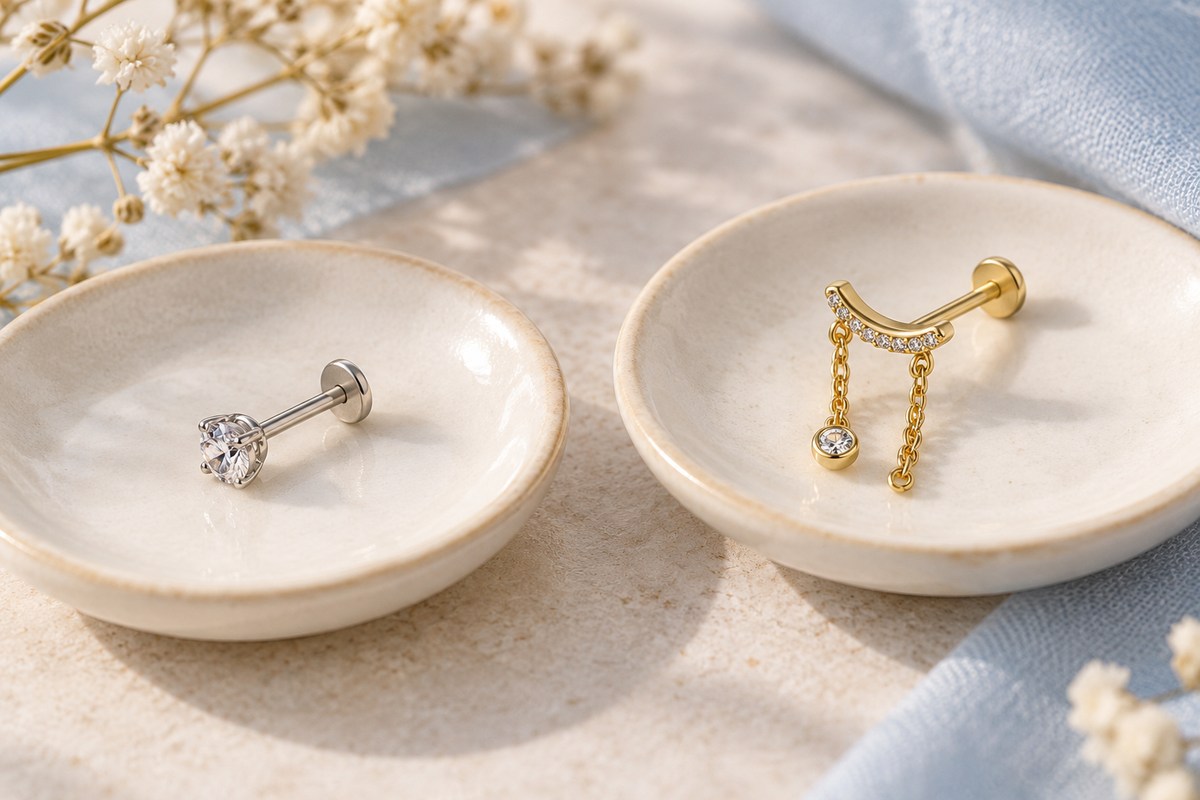
Two different earrings can look deliberate without buying a whole new collection. Start with one pair you already enjoy, then change just one side. A round crystal on one ear and a small cluster on the other is an easy experiment: the outline changes, while the scale stays close.
These are styling suggestions for fully healed piercings. Check the fit and material of each piece separately, even when the earrings look similar.
Choose one detail to repeat
Pick something the two earrings will share: a similar visible size, the same color, or a related shape. You don't need to match all three. Try that combination before changing another detail.
For a first attempt, keep the rest of your jewelry simple and compare the earrings in ordinary light. Take a photograph from a normal conversation distance. A close-up makes every tiny difference look prominent; a wider view helps you judge the overall effect.
You can also swap the two sides before deciding. Hair, your other piercings and the way you prefer to wear a necklace may change which arrangement you like. These are visual choices, not rules about which side should carry the larger earring.
Try a round front with a small cluster
The Small Solitaire listing gives an approximately 3 mm face. The Petite Crystal Cluster lists an approximately 2.6 by 2.3 mm face. Those measurements offer a concrete starting point for comparing two modest fronts with different outlines.
Wear one complete earring from each pair if both fit your healed piercings. Look at how the cluster's corners sit and whether either front catches your hair. A similar face size doesn't tell you how high a setting projects, so check side photographs too.
Both listings give a 0.8 mm post diameter and 6 mm wearable length. The cluster specifies a threadless push-pin flat back. Don't assume the solitaire uses the same mechanism, or that the two designs' fronts and posts are interchangeable. Confirm the closure of the version you choose.
The listed dimensions make the designs easier to compare. They don't establish your size. One ear may need a different wearable length from the other, and an earring that fits one healed channel is not automatically suitable for another.
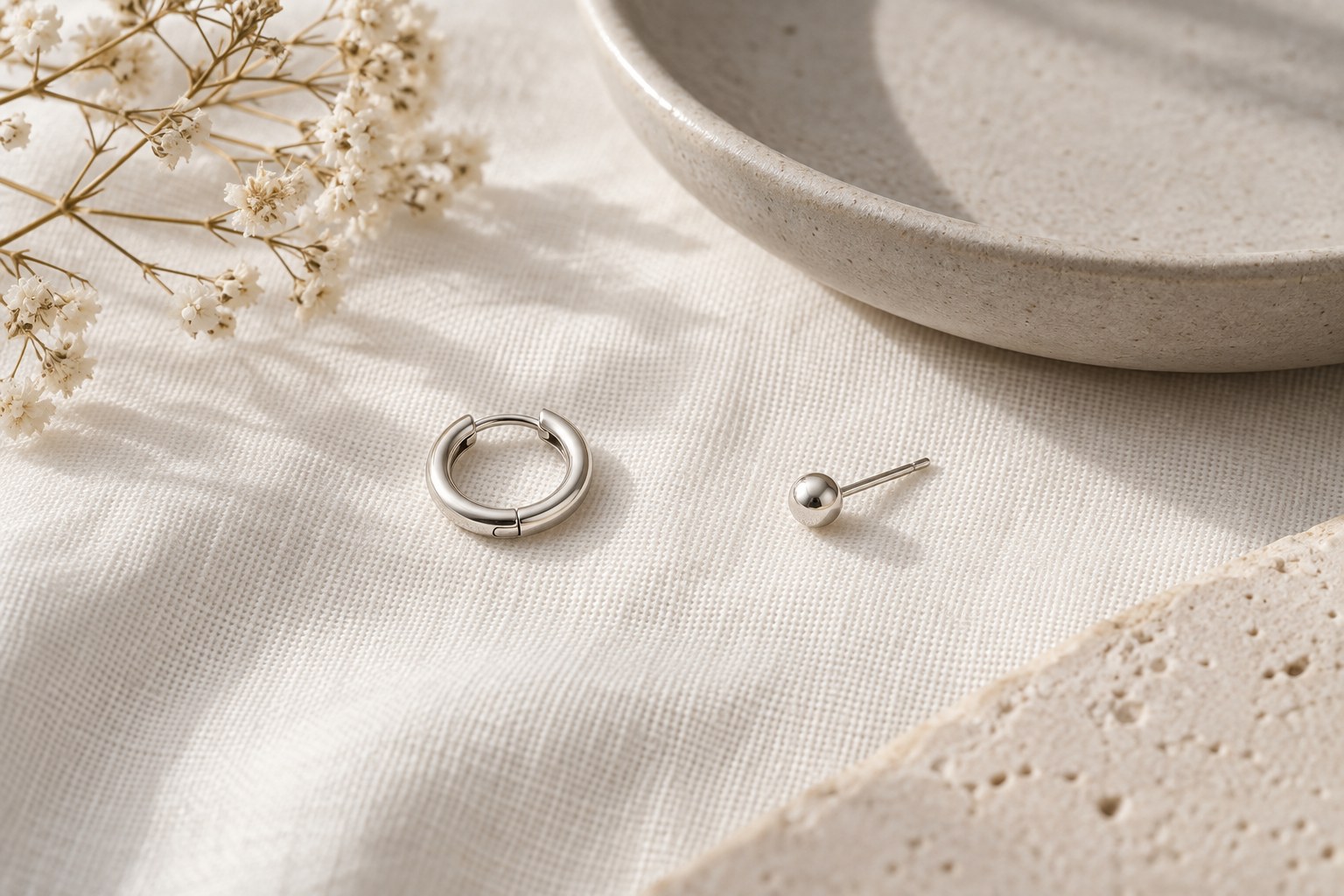
Pair one hoop with one stud
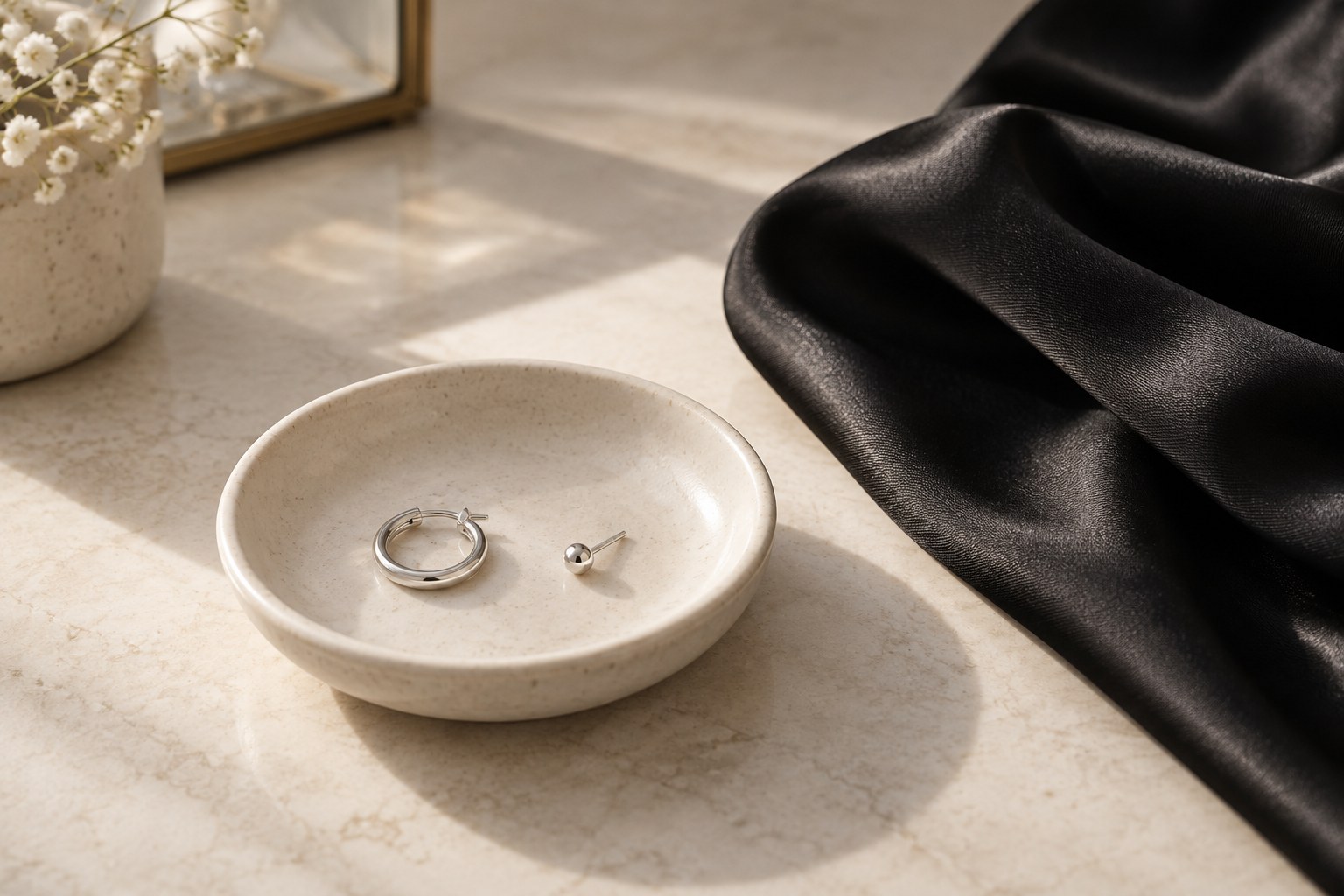
For a more visible difference, try a small hoop on one ear and a stud on the other. The hoop gives a curved outline while the stud stays close to the lobe. Lay the pieces beside each other first, then check each complete earring in its intended healed piercing.
The Seamless Clicker listing describes a hinged hoop with a 1.2 mm gauge and an 8 mm inner diameter, sold as a pair. Its post is thicker than the 0.8 mm stud examples above. Never force that thicker post through a piercing to complete a look; have a piercer confirm the fit.
The hoop's inner diameter describes the space inside the ring. It is a different measurement from a stud's wearable post length, so an 8 mm hoop is not simply a longer version of a 6 mm post. Check whether the ring clears your lobe without pressing against it. Our earring size guide explains these measurements in more detail.
If the hoop's fit is uncertain, keep the experiment within earrings you already know fit. You can still change the outline using two different studs.
Let each ear have its own arrangement
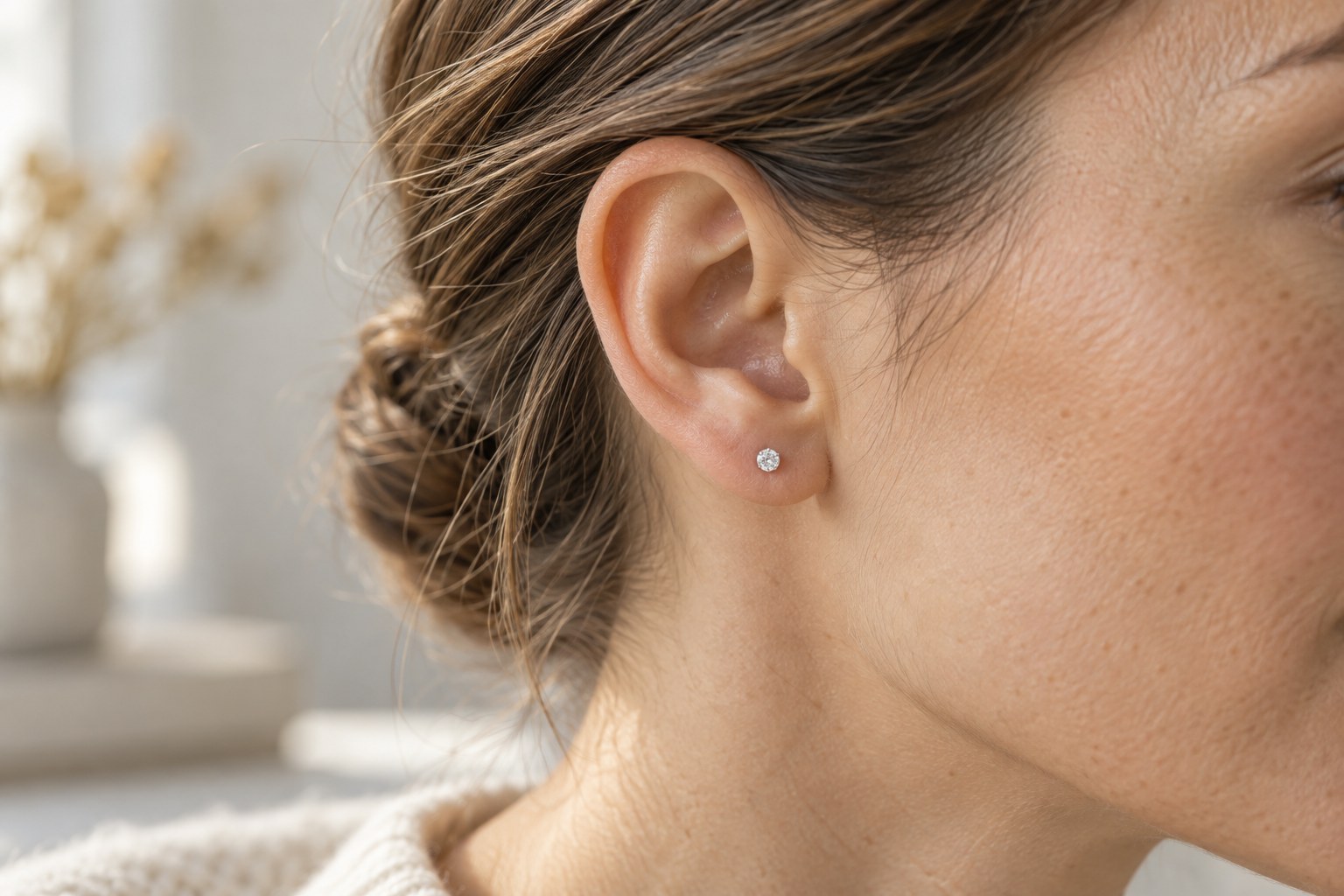
You do not need the same number of visible earrings on both sides. If your existing healed layout allows it, compare one stud on one ear with two smaller pieces on the other. Keep enough space for the decorations and backs to sit comfortably.
Start with the positions you already have rather than adding a piercing just to reproduce a photo. Try laying the earrings out on a plain surface first. It is easier to compare shapes there, then check the actual fit separately when you wear them.
If an existing hole is newly irritated or jewelry will not slide in easily, put the styling experiment aside and seek appropriate advice. Repeatedly trying different posts does not help you judge how an arrangement will look on a comfortable ear.
Match your material checks to each piece
A shared gold or silver color does not mean two earrings contain the same metal. Read the material description for the post, front and backing, and ask about anything that is unclear. Check finish information separately from the base material.
The examples here use titanium wording in their listings. The Small Solitaire title says F136 while its material attribute says G23; the cluster uses combined F136/G23 wording. Those product descriptions are not independent proof of compliance with a material standard. Request documentation if that distinction matters to your purchase.
The Association of Professional Piercers' guidance on jewelry for healed piercings is a useful reference for material, finish and fit. No styling choice can promise that sensitive ears will tolerate a piece. Ask for the specifications you need before buying.
Questions about wearing different earrings
Do I have to buy earrings sold as a mismatched set?
No. Two existing pairs can give you two combinations if the complete earrings fit. The solitaire and cluster examples are each listed as a pair, so buying both means buying two pairs rather than a specially packaged mixed set. Check the quantity before ordering.
Can I change a new piercing to match the other ear?
Keep the initial jewelry in place unless a qualified piercer advises and carries out a needed change. The APP's aftercare guidance explains that the inside can remain fragile even when the outside looks healed. You can save the styling idea for later.
How do I keep track of the different pieces?
Store each complete earring separately and keep a note of the post size and closure. If you remove detachable fronts, keep the original components together. Our guide to push-pin and threaded flat backs explains the mechanisms, but the seller still needs to confirm whether specific parts are compatible.

Related posts

Ear Piercing Costs: What Your Quote Should Include
Compare ear-piercing quotes by the number of holes, complete jewelry, follow-up services and other charges, with specific official studio examples.
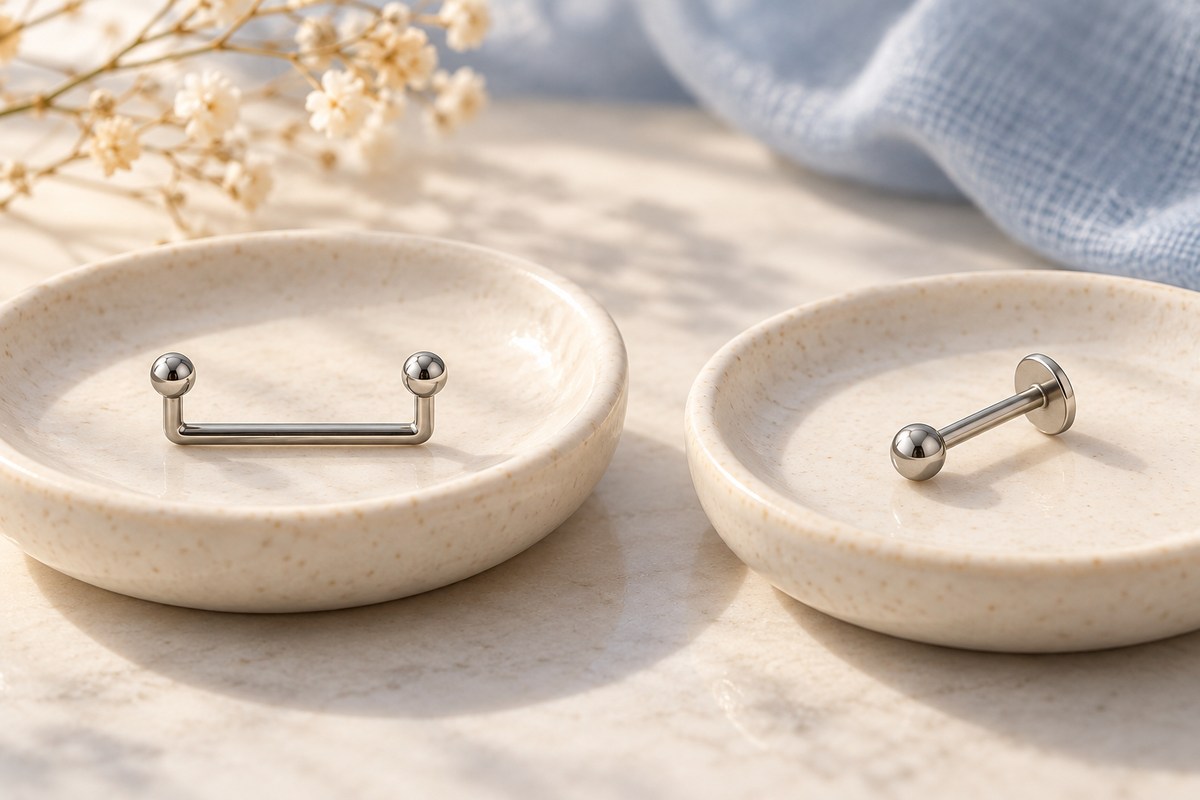
Surface Tragus vs Tragus: Why the Jewelry Is Different
Learn how surface bars, labret studs and surface anchors differ, and what to confirm before buying jewelry for a piercing beside the tragus.
Vertical Helix vs Hidden Helix: Check the Jewelry Direction
Compare vertical and hidden helix descriptions, check what product photographs leave out, and read jewelry specifications for a fully healed piercing.