


An ear piercing pain chart can make choosing a new piercing look straightforward: pick a low number and avoid a high one. But a number beside an ear diagram can't tell you how that placement will feel on your body, or how easily you'll keep pressure off it afterward.
If you're choosing between a lobe and a cartilage piercing, consider the appointment and the healing routine separately. Your sleeping position, headphones and existing jewelry can affect how you manage the days after the appointment.
Why a numbered pain chart has limits
Treat a least-to-most-painful ranking as someone's description, not a personal forecast. A helix, conch or tragus placement has a different position and surrounding anatomy, and individual experiences vary. An online score doesn't assess your ear, the piercer's proposed placement or the fit of your jewelry.
A useful consultation starts with the part of your ear you want pierced. Ask the piercer whether that placement suits your anatomy and what would make caring for it awkward. Bring a photo of the look you like, while staying open to a different position or fewer piercings.
For names and locations, our ear piercing placement chart can help you describe the idea. It doesn't assign a pain score or establish that every placement will work on every ear.
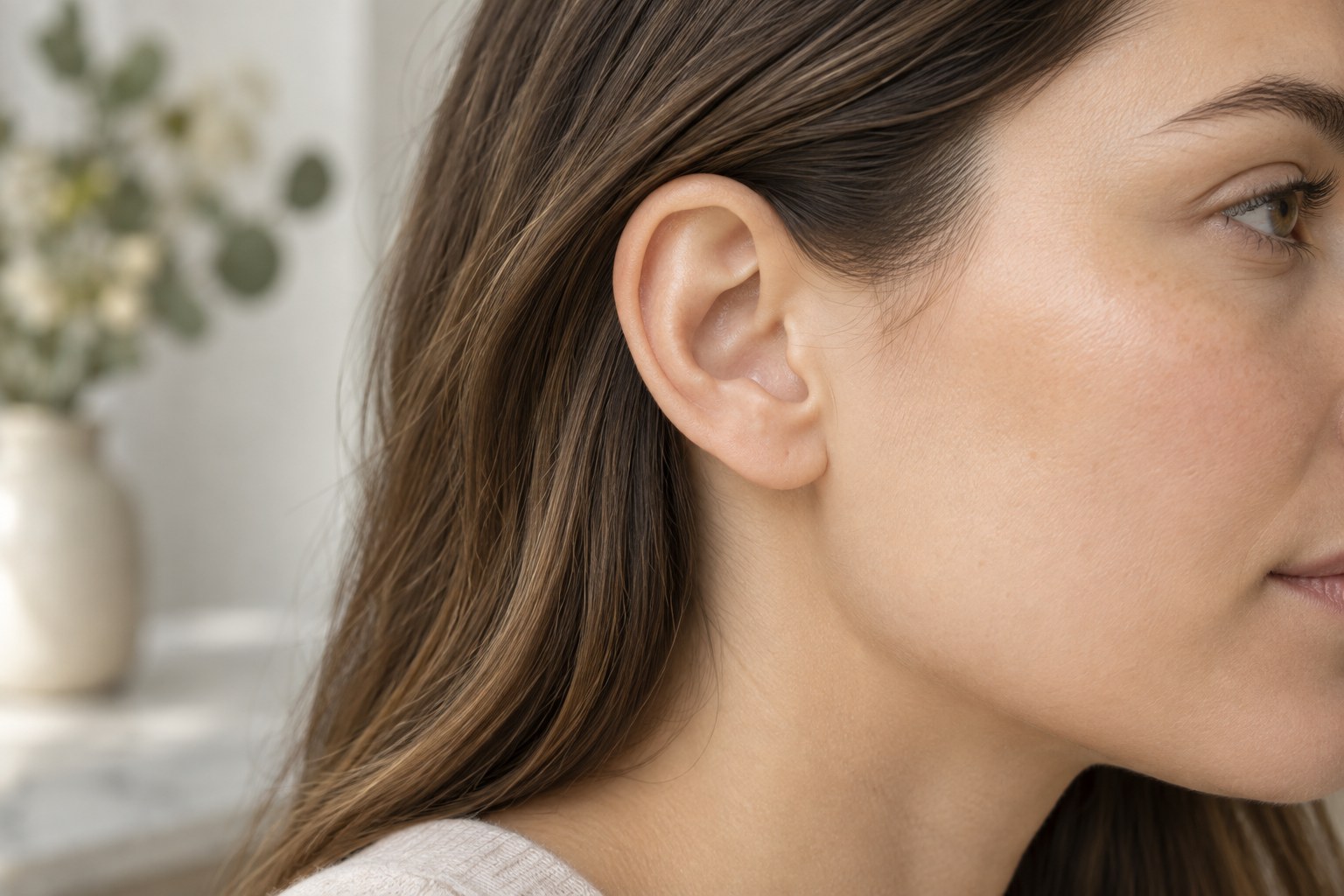
Think about pressure after the appointment
The Association of Professional Piercers advises avoiding friction and pressure on a healing piercing. It also warns that sleeping directly on healing cartilage can irritate it and change its angle. That makes a normal day a useful starting point for planning.
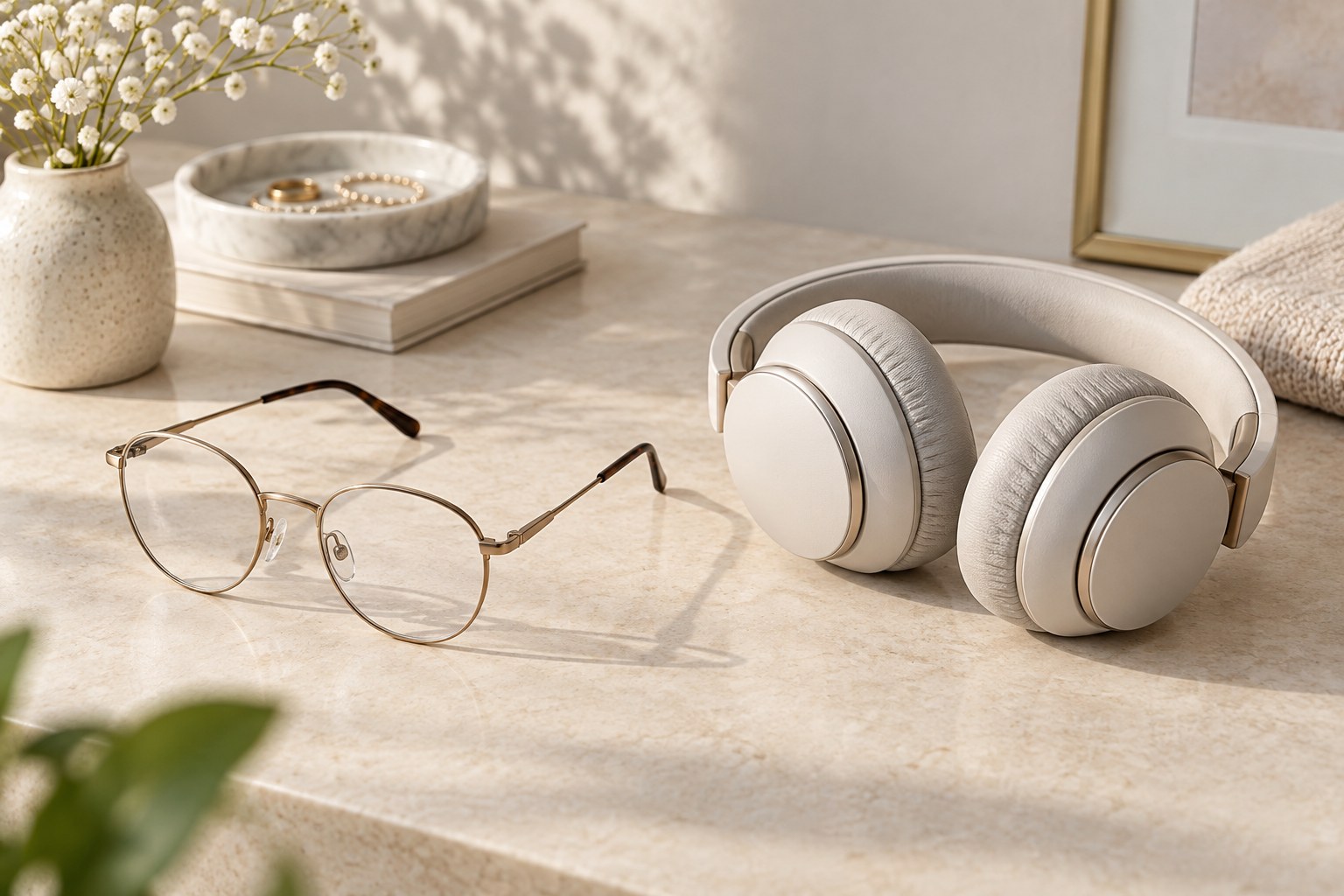
If you sleep on one side, tell the piercer which side it is. Check where your glasses arms sit, where an over-ear headphone cushion rests, and whether an earbud touches the proposed area. A hairstyle, helmet or work headset may introduce another contact point. These are things to discuss before the appointment, rather than discovering them when the area is tender.
A placement that looks easy to leave alone in a photograph may be difficult to protect during your usual routine. If you can't reasonably keep pressure off it, consider postponing it or discussing another placement with your piercer.
Choose a plan you can care for
Adding several piercings at once can leave you with several areas to protect. Ask your piercer how many are sensible for your anatomy and circumstances. There is no need to fill every planned position in one visit.
It helps to describe your goal in practical terms: you want a small stud you can wear with glasses, or another lobe position with enough space for an existing earring. Then ask the piercer to help you choose the placement and jewelry together.
Before committing, establish who you can contact if the jewelry becomes tight, the angle changes or the site is repeatedly knocked. Ask whether a follow-up fitting is part of the plan. Write down the studio's follow-up contact details before you leave.
Jewelry fit matters; a material name isn't a pain promise
Starter jewelry needs to be suitable for the fresh piercing and fitted with swelling in mind. The APP's initial-jewelry guidance covers appropriate materials, surface finish and construction. A retail label alone does not establish that a particular earring is suitable for an unhealed piercing.
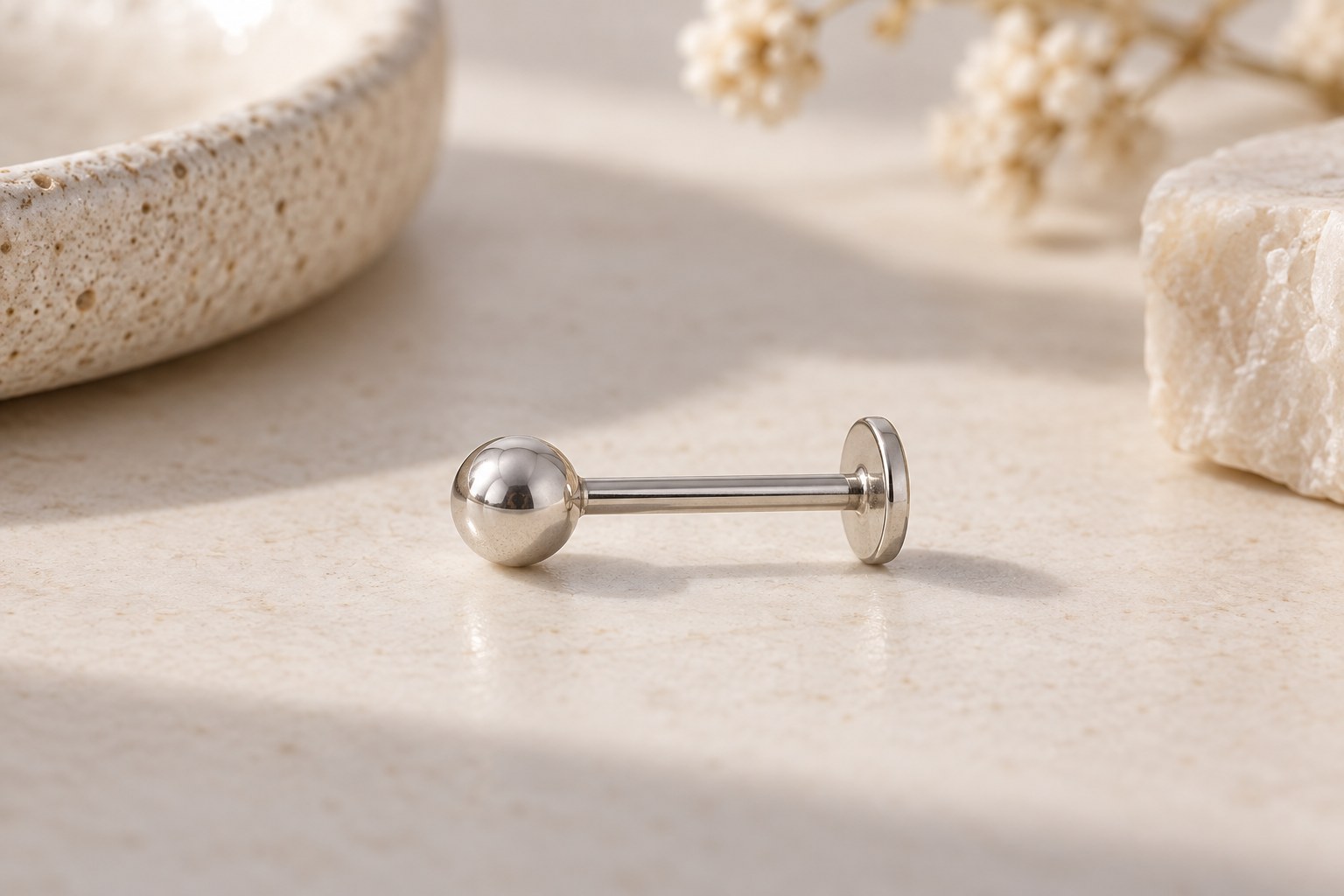
A flat back describes the back's shape. It doesn't tell you the post's diameter, wearable length, finish or material documentation. A short post that works in a healed hole may be too short for a fresh piercing. Ask the piercer to choose and fit the starter jewelry instead of taking a decorative earring to the appointment and assuming it will work.
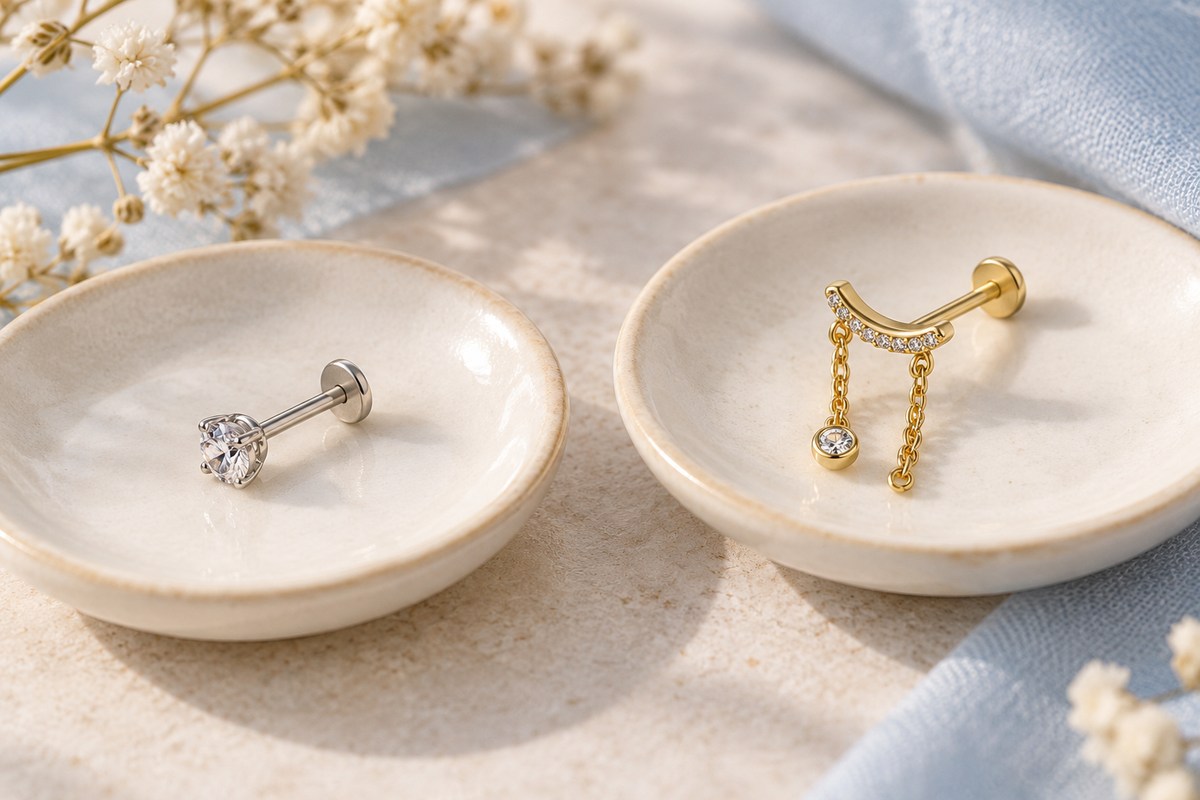
For later, once a piercing is fully healed, you can compare actual listing dimensions. Our Small Solitaire flat-back studs list an approximately 3 mm front and a 0.8 mm post diameter with 6 mm wearable length. The Petite Crystal Cluster lists a 2.6 by 2.3 mm front, the same stated post dimensions and a threadless push-pin closure. Compare those figures with jewelry that already fits the healed piercing, and ask your piercer if you're unsure about the diameter or length.
Some product titles use F136 wording while their material details say G23 titanium. Those labels are not interchangeable proof of a material standard. If certified material is part of your piercer's requirements, ask for the relevant documentation before choosing. Our earring size guide explains the separate measurements to compare.
Know when discomfort needs attention
A new piercing can feel tender, and the NHS describes some early tenderness, itching and light crusting as possible during the first few weeks. A symptom list cannot diagnose your ear, however, and you don't need to wait for a pain score to become high before seeking advice.
Increasing pain, heat, significant swelling, pus, or feeling unwell can be signs of infection. Seek medical advice promptly if you suspect one. The NHS advises leaving jewelry in unless a doctor tells you to remove it.
For routine care, follow the instructions your qualified piercer gives you. APP aftercare guidance recommends sterile saline wound wash with 0.9% sodium chloride as the only ingredient apart from water when saline is used, and says not to twist or rotate the jewelry. Leave the jewelry alone between the care steps your piercer recommends.
Questions before you book
Is an earlobe piercing guaranteed to hurt less than cartilage?
No one can guarantee your personal experience. The more useful comparison is whether the proposed placement suits your anatomy and how you'll protect it during healing. Ask the piercer what that involves for each option you're considering.
Can I choose titanium earrings so the piercing won't hurt?
A material choice can't guarantee a pain-free piercing. Material suitability, jewelry construction and individual fit are separate checks. Have a qualified piercer select the jewelry for a fresh piercing; save retail styling choices for an appropriately healed one.
Should I change the earring if it still feels sore?
Don't change a healing piercing merely to test whether a different design feels better. Contact your piercer about fit or mechanical irritation, and seek medical advice for signs of infection or worsening symptoms. A comfortable appearance in a photo doesn't establish that the piercing is ready for a jewelry change.

Related posts

Ear Piercing Costs: What Your Quote Should Include
Compare ear-piercing quotes by the number of holes, complete jewelry, follow-up services and other charges, with specific official studio examples.
Surface Tragus vs Tragus: Why the Jewelry Is Different
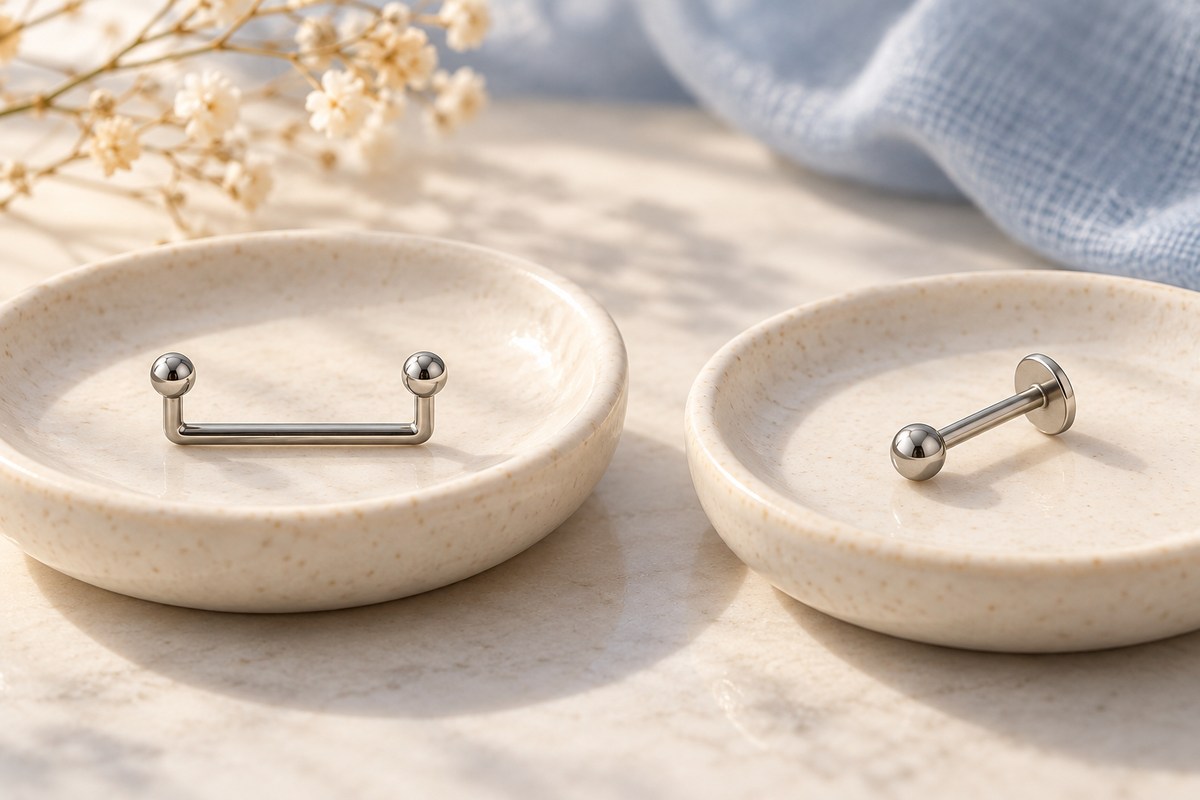
Learn how surface bars, labret studs and surface anchors differ, and what to confirm before buying jewelry for a piercing beside the tragus.
Vertical Helix vs Hidden Helix: Check the Jewelry Direction
Compare vertical and hidden helix descriptions, check what product photographs leave out, and read jewelry specifications for a fully healed piercing.