

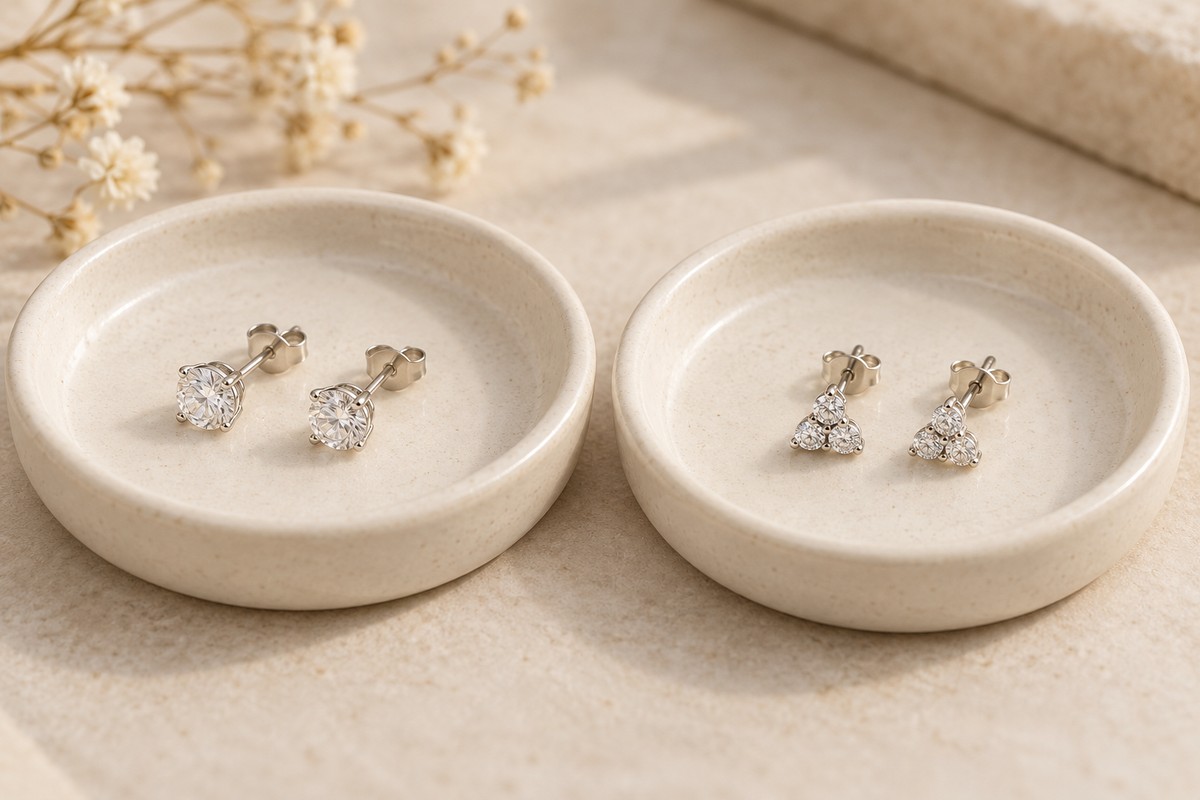
A solitaire stud gives you one main stone to look at. A cluster brings several stones together in one front. Both come in small designs. Counting stones won't tell you which pair takes up less room or feels comfortable on your ear.
For fully healed piercings, compare the complete front, its side profile, and the post behind it. You can choose a simple dot of sparkle or a more detailed shape while still checking the fitting information separately.
Start with the arrangement at the front
GIA's jewelry buying guide describes a solitaire as a single stone. In an earring listing, that describes the arrangement. It doesn't identify the stone as a diamond or supply a missing material specification.
A cluster groups stones within one decorative front. That group might look like a little triangle, an irregular outline or a flower. Check the front photograph to see how the stones are arranged.
Choose the outline you want first. A solitaire keeps the visual focus in one place; a cluster gives you several elements within the same earring. Neither choice establishes weight, exact size or how the setting will sit against your ear.
Compare the whole front in millimeters
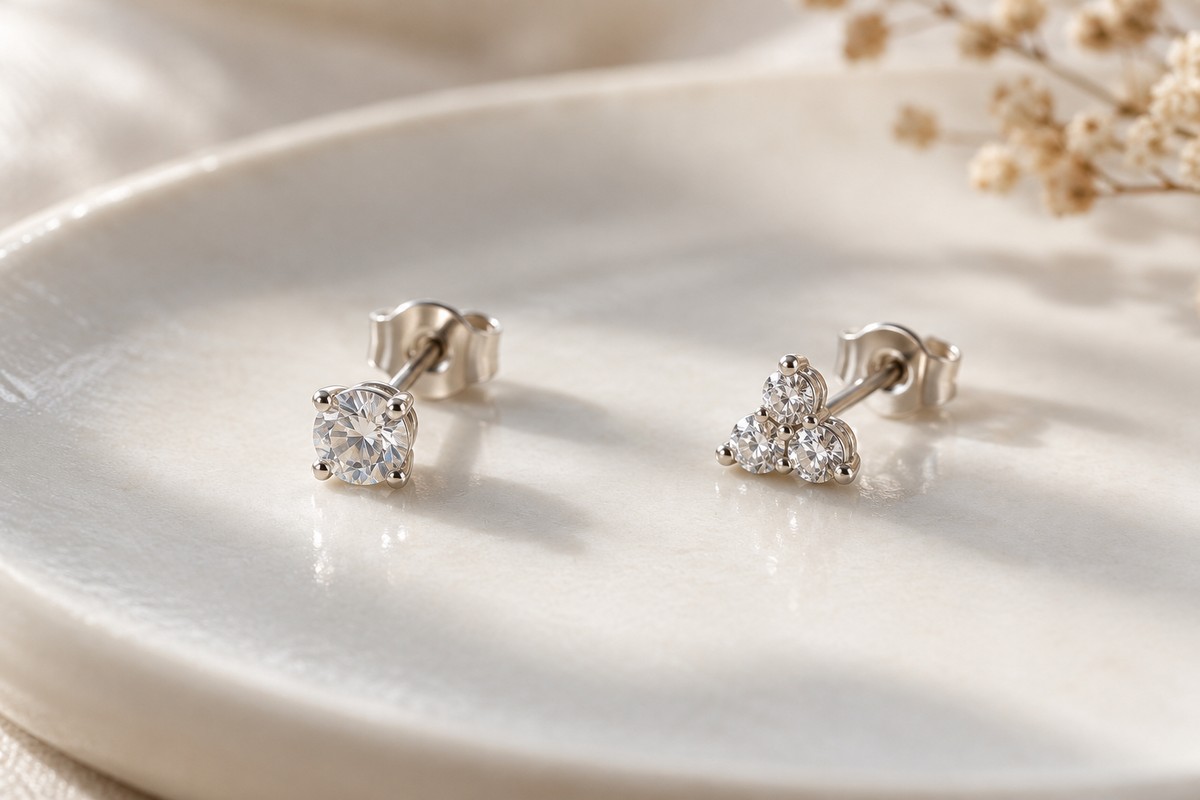
The Small Solitaire Flat Back Studs list a front measuring approximately 3 mm. The Large Solitaire Flat Back Studs list approximately 5 mm. Those measurements describe the face of each earring; the listings don't establish that the stones themselves have those diameters or identify their gem material.
The Petite Crystal Cluster has an approximately 2.6 by 2.3 mm face. Those stated dimensions are smaller than either solitaire's listed face size. The listing calls the front crystal, without giving a detailed gem identification or a stone count.
Compare width and height when both are supplied. Close-up photos can make tiny fronts look substantial. Compare the measurements when the photographs use different magnifications. Our earring size guide explains which measurements belong to the front, post and overall fitting.
Check the fitting behind the design
The two solitaire listings specify a 20G post, equivalent to 0.8 mm in diameter, with a 6 mm wearable length. Both describe a flat-back post, but they don't state the connection type. Ask for that detail if a particular fastening matters to you.
The cluster also lists a 0.8 mm post and 6 mm wearable length, with a threadless push-pin connection. Matching dimensions don't establish that its components fit either solitaire. Our push-pin and threaded flat-back comparison explains what the connection terms mean.
For a different grouped shape, the Zircon Flower Flat Back Studs have five marquise-shaped zircon petals. Their internally threaded posts are 1.2 mm in diameter and 8 mm long. They are sold as a pair, as are the other examples here. The front design and the post size are separate choices.
The Association of Professional Piercers' guidance for healed piercings recommends choosing jewelry dimensions and style for your anatomy. If the fitting is uncertain, have a piercer assess it rather than pushing a thicker post through to see whether it works.
Look at the side view and nearby jewelry
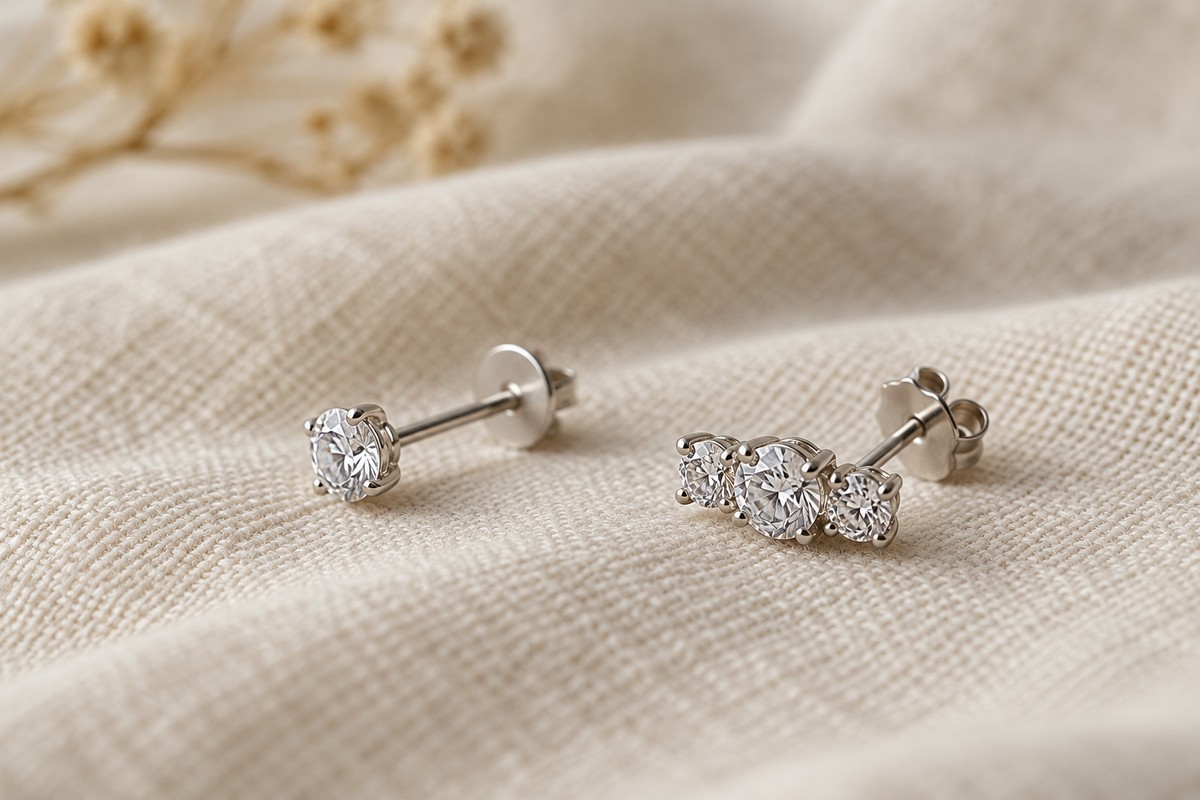
A side view shows how far the decoration projects and where the post joins the front. Ask for the overall front height if the listing doesn't provide it and clearance matters to your placement.
For neighboring holes, consider both fronts together. A broad flower may need a different arrangement from two small round studs. Make the comparison using their stated dimensions rather than counting the stones or assuming a cluster will always look larger.
Pay attention to a setting that catches on clothing or begins to feel rough. GIA's guidance on small-stone workmanship explains why gaps at prong tips can cause snagging and scratches. Set an affected earring aside and ask a jeweler to assess it; don't bend the setting yourself.
Keep material and care questions on the list
Check the metal, finish and construction for each earring you're considering. The product name alone doesn't prove that an earring will suit every person with sensitive ears, and a seller's grade label isn't an independent certificate for the finished piece.
Use the care instructions for the whole earring. The flower listing calls for a soft cloth, keeping the earrings dry and storing them separately. Avoid borrowing a diamond-cleaning method for jewelry whose stones or construction haven't been identified. Keep each pair with its order details for later questions.
Questions about choosing stud fronts
Can I wear a solitaire on one side and a cluster on the other?
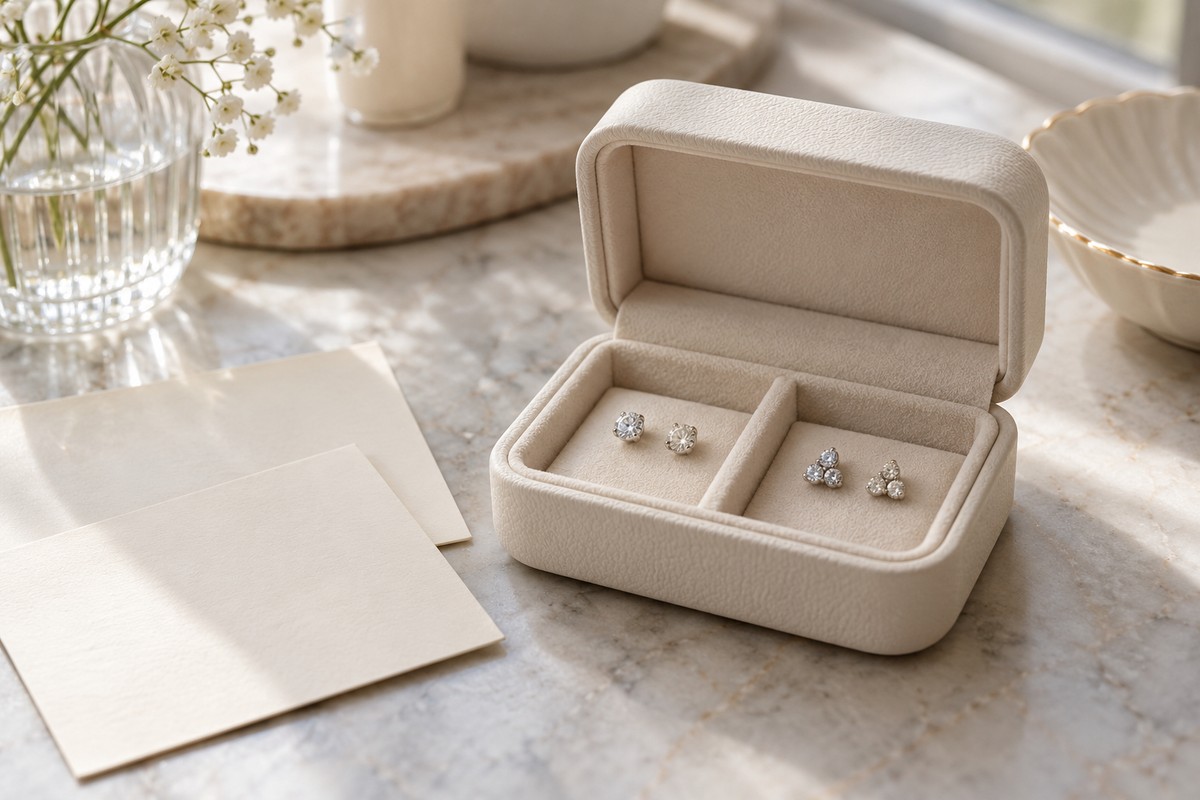
Yes, you can choose that combination as a styling preference. Check each earring's fitting independently, and check whether you are buying individual earrings or complete pairs before ordering.
Does a cluster need several piercing holes?
A cluster stud has a grouped decorative front on one earring. It doesn't require a separate hole for each stone. Check the actual post arrangement of the product rather than inferring it from the front.
Can I keep my current posts and change only the fronts?
Ask the seller to confirm compatibility with your exact jewelry. A matching post diameter or similar front shape doesn't establish that the parts connect. Don't order a complete pair assuming its fronts will fit posts you already own.

Related posts
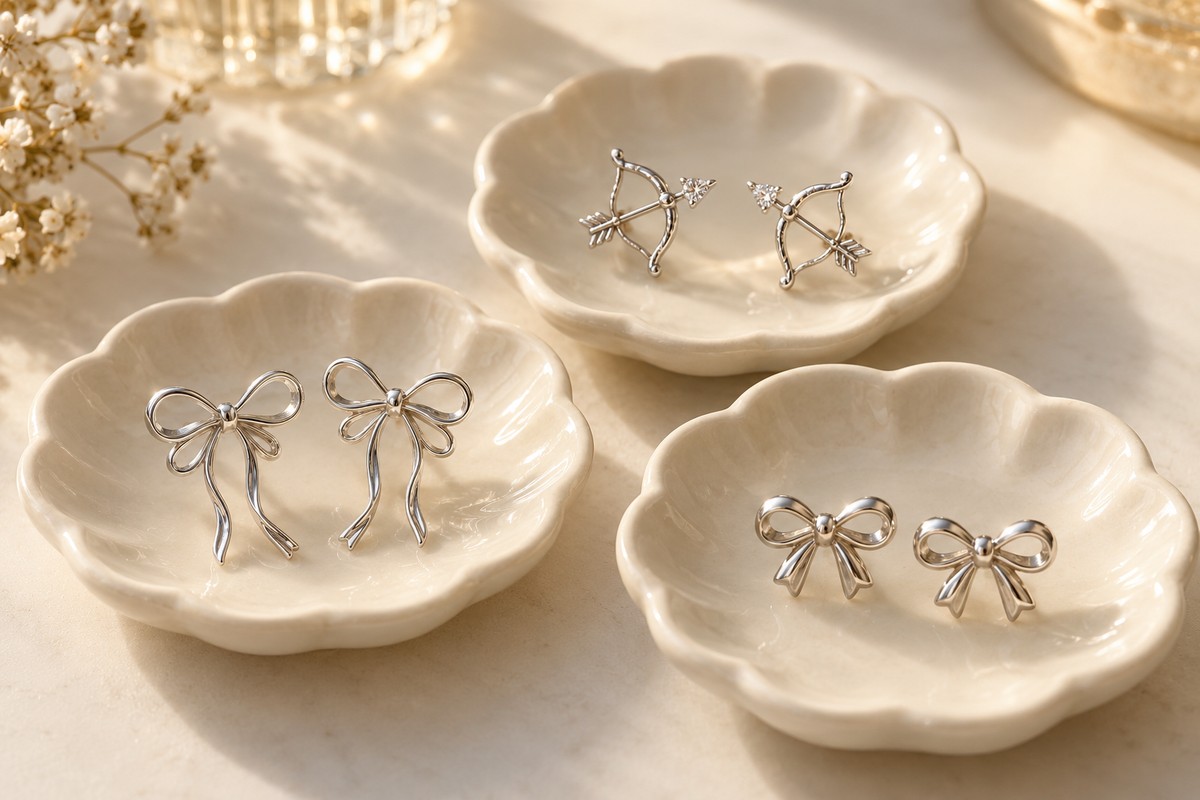
Ribbon Bow Earrings or Arrow-and-Bow Studs? Choose the Motif First
Bow earrings can mean a ribbon knot or an archery design. Refine your search, compare three real pairs, and decide how the motif works with your outfit.
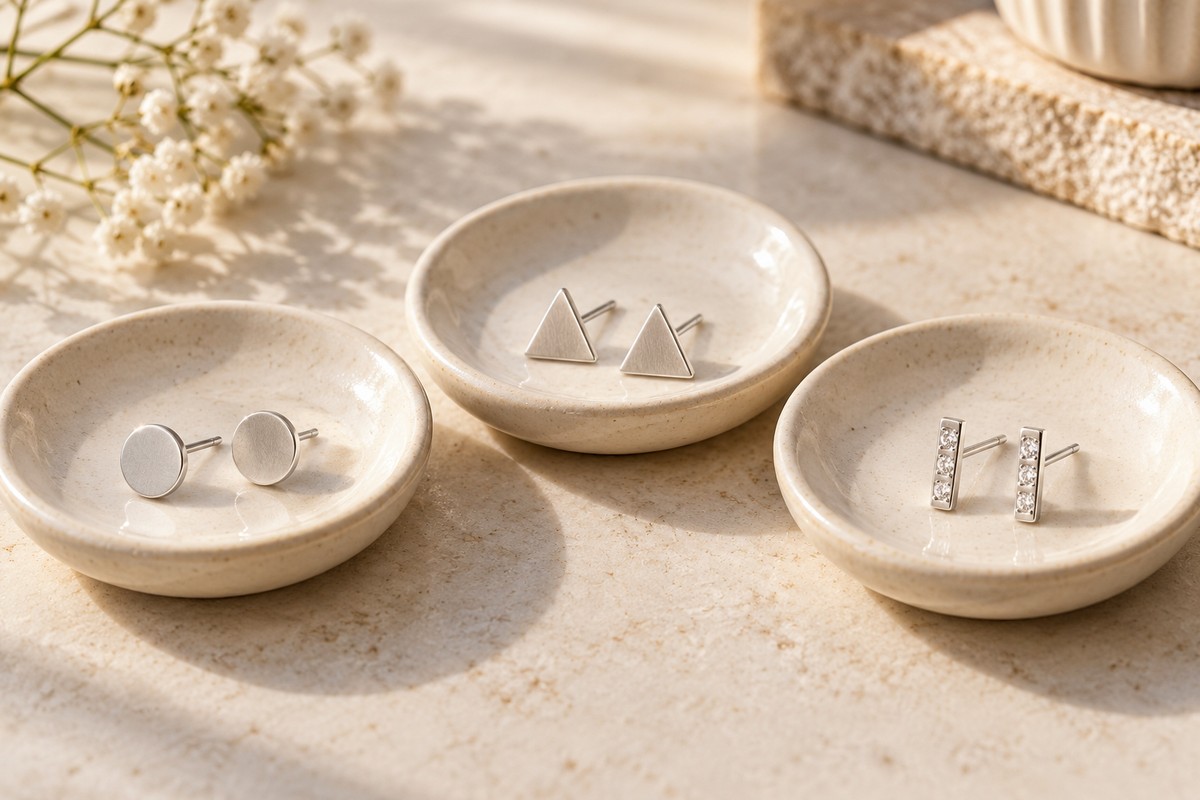
Minimal Geometric Earrings: Round, Triangle or Bar?
Compare round, triangle and bar earrings with the lines in your clothing. Use simple shape, open-space and accessory choices to build a look you enjoy.
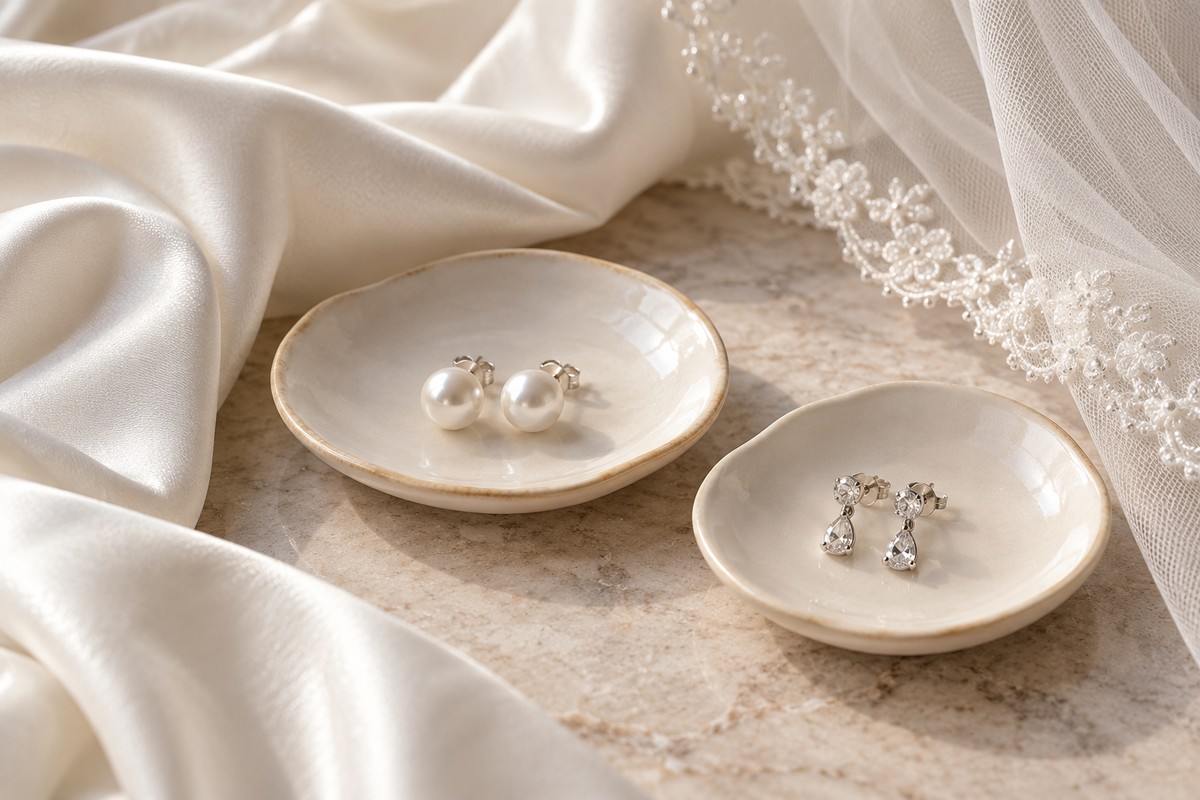
Wedding Earrings for Sensitive Ears: Rehearse the Whole Outfit
Try wedding earrings with your planned hairstyle, veil, neckline and outer layer. Compare photographs, notice catching and prepare a familiar backup pair.