

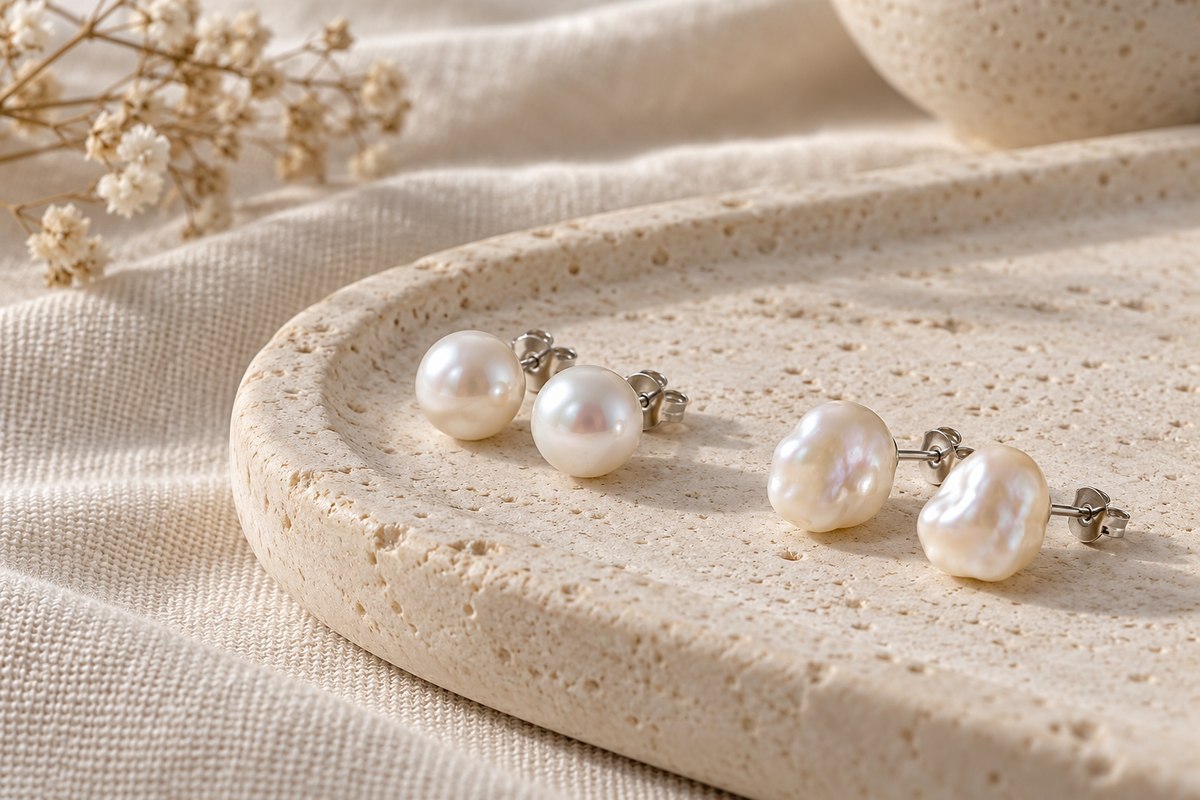
A pearl earring listing should tell you what the pearl is and what the rest of the earring is made from. A clear answer about the pearl can still leave the post and back unexplained.
For sensitive ears, read both descriptions before choosing a pair. The pearl name helps you compare appearance and care. The post, back, setting and any finish need their own material details.
What does the pearl description actually mean?
Cultured pearls are real pearls. GIA explains that they grow in mollusks with human intervention. Natural pearls form without that intervention. Imitation pearls are other materials made to resemble pearls. Calling a pearl cultured doesn’t mean it is an imitation.
Freshwater is another part of the description. A listing that says freshwater cultured pearl is naming both its growing environment and its cultured origin. It doesn’t tell you that the post is titanium, that the back is nickel-free or that the pair will fit your piercing.
If a listing says only “pearl,” ask which type it means. The same applies to a pearl-look or shell-pearl description: request the actual material rather than trying to identify it from a white, round front in a photograph. Keep the seller’s answer with the order details.
You don’t need the rarest pearl to choose earrings you enjoy wearing. You do need a description that lets you decide what you’re buying and how to look after it.
| Listing detail | What it helps describe | Question still to answer |
|---|---|---|
| Natural or cultured pearl | How the pearl formed | What are the post and back made from? |
| Imitation or pearl-look front | A material made to resemble pearl | What is the actual front material and its care method? |
| Pearl diameter | The pearl's size | What are the full earring dimensions and weight per piece? |
| Named post metal | One component | Are the back, setting and finish specified too? |
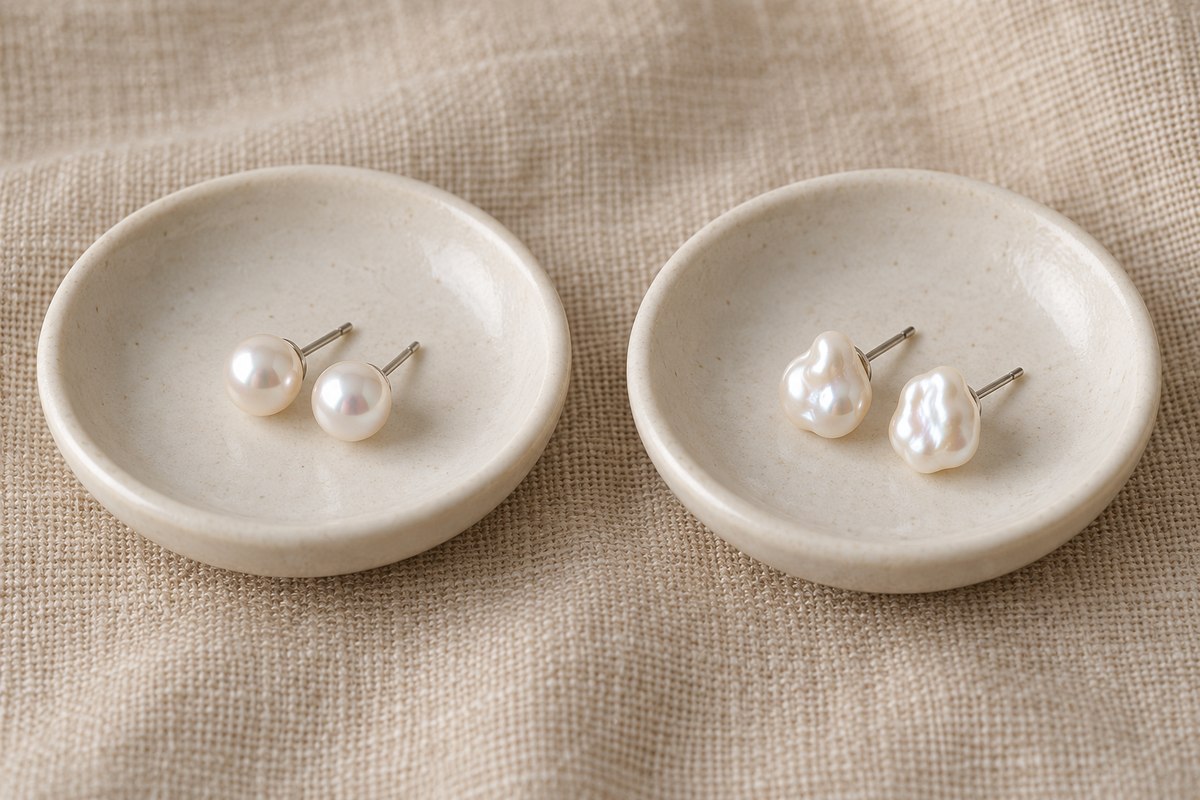
Compare the pair, not just the close-up
A close-up of one pearl can leave questions about the pair. Ask for an image showing both earrings together, plus a side view and a view of the backs. Those angles help you judge the design without relying on a highly enlarged front view.
GIA’s pearl buying guide includes size, shape, color, luster, surface, nacre quality and matching among the factors used to assess pearls. When comparing pairs, start with the measurements and whether you like the two pearls together. A deliberately uneven pair can be a design choice; check that this is what the seller intends.
Separate pearl diameter from the dimensions of the finished earring. A drop may include a hoop, a connector and a pearl beneath it. Ask for the total drop length and weight per earring if those details matter to you. The pearl’s size alone doesn’t describe how the complete piece will sit.
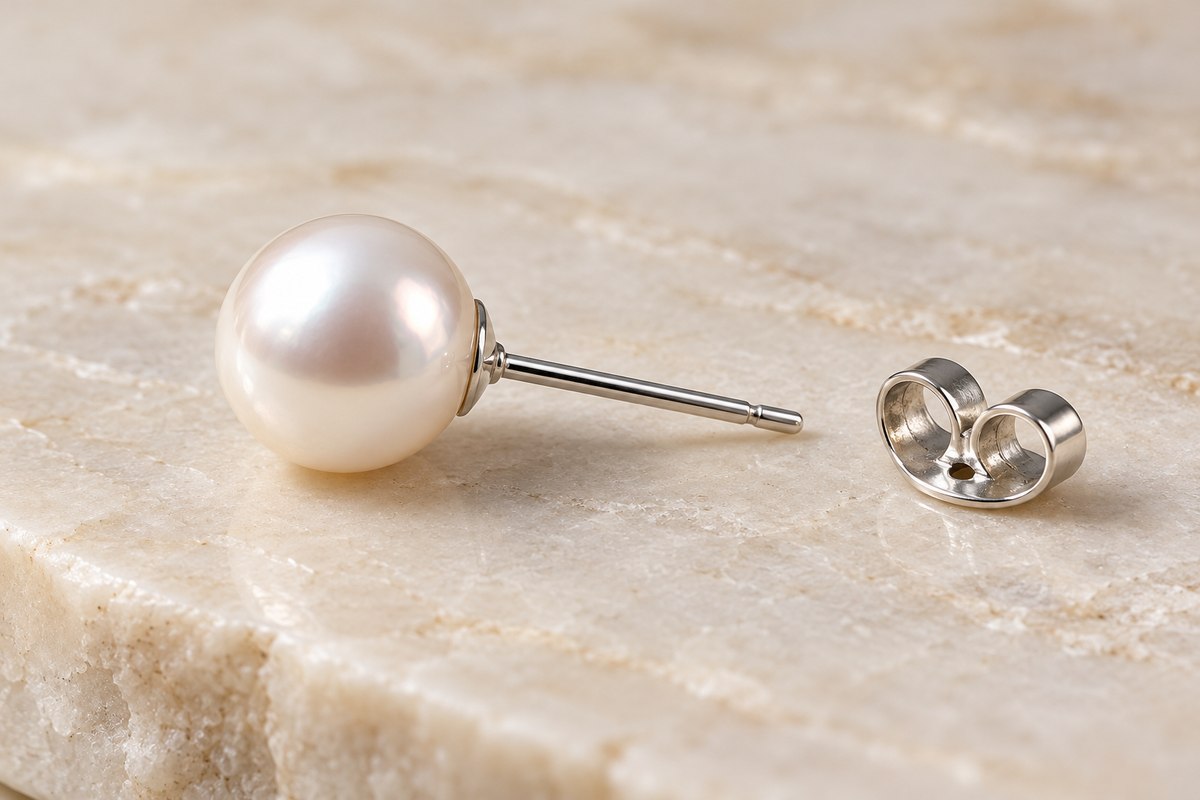
For a stud, a side photograph is useful too. Look at how far the front projects, where the post meets the setting and whether the listing identifies the closure. Our earring size guide explains the measurements to compare before ordering.
Ask about every part that may touch your skin
“Pearl earrings with silver posts” leaves a different set of questions from a complete component specification. Ask about the post, removable back, decorative setting and any plated surface. Include the exact color option in your question, because a color name doesn’t identify the construction.
The American Academy of Dermatology identifies nickel as a cause of allergic contact dermatitis and names earrings and earring backs as exposure sources. If you have a diagnosed allergy, ask for information about that particular metal. A pearl on the front doesn’t establish the composition of the parts behind it.
Our sterling silver guide explains why a silver-purity description still needs a component check. The guide to earring backs can help you distinguish a material question from a closure question. Both are worth answering before the pair arrives.
If you’re comparing stud shapes, browse our stud earrings category and check each listing separately. Treat it as a place to compare designs; don’t assume that every stud has a pearl front or the same post and back materials.
Plan care around the finished earring
Pearls need gentler care than a simple metal-only piece. GIA advises wiping cultured pearls with a very soft, clean cloth after wearing them and avoiding ultrasonic and steam cleaners. It also notes that perfume, hairspray and other chemicals can damage pearls.
Follow the maker’s instructions for the whole earring, including its setting and any finish. Before immersing a pair or applying a cleaner, confirm that the method suits every component. The care instructions for a loose pearl don’t automatically settle how to clean an assembled earring.
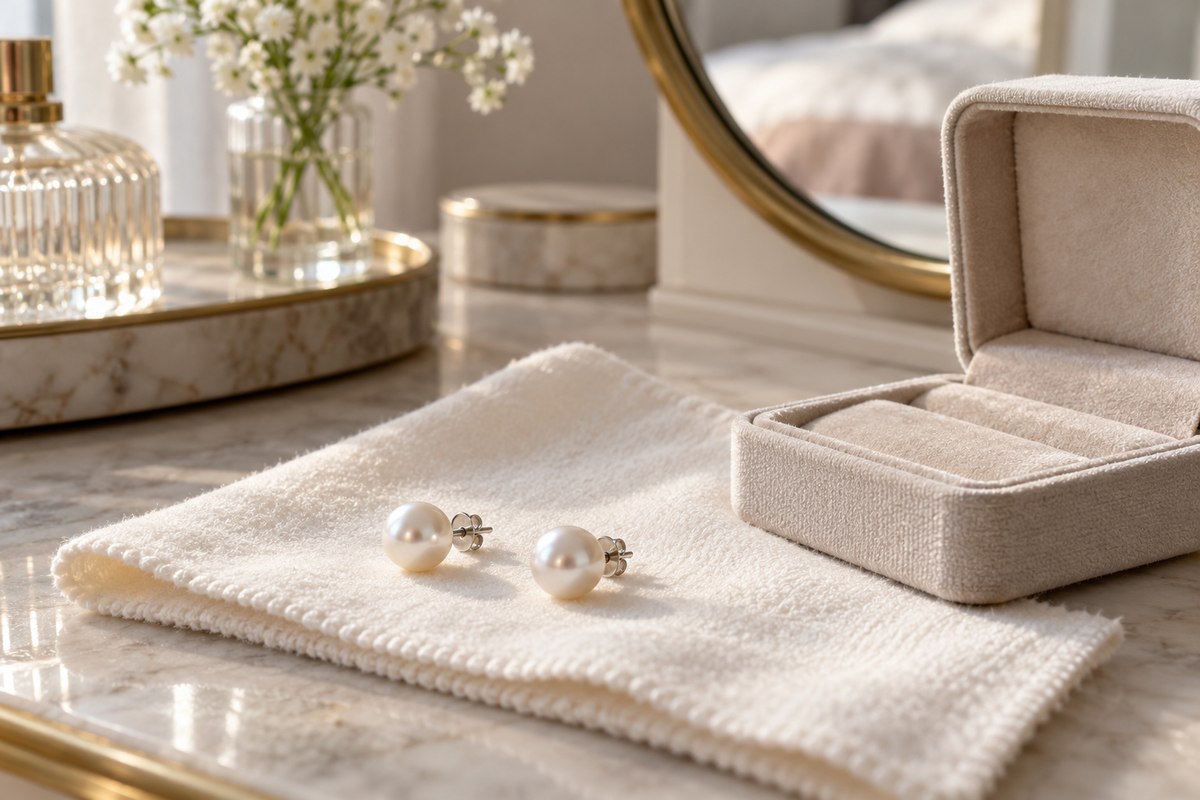
Keep pearl earrings apart from rough or sharp jewelry in a soft pouch or suitable case. GIA’s pearl care FAQ also advises against hot, dry storage. Check the pair before putting it away: if a pearl moves in its setting, a post is bent or the closure isn’t working, ask a jeweler to inspect it before wearing it again.
Keep the material answer with the pair
Keep a note of the answers that matter for the pair. Record the pearl description, the post and back materials, the finish, the dimensions and the care instructions. You can refer to it when you need a replacement back or compare another pair.
This guide concerns shopping for fully healed, compatible piercings. A new pearl pair isn’t a way to diagnose an irritated ear. Consult a dermatologist about a recurring rash, and seek prompt medical advice for severe, worsening or otherwise concerning symptoms.
Questions about pearl earrings
Does a higher pearl price mean better materials for sensitive ears?
No. Price doesn’t specify the post or back composition. Ask for those details even when the pearl itself has a detailed description or grading information.
Can I identify cultured pearls from a product photo?
Don’t treat a photograph as proof of origin. Ask for the seller’s written description and any relevant documentation. If identity is important for a valuable piece, consult a qualified gemologist or an appropriate gem laboratory.
What should I ask about a pearl earring gift?
Find out whether the recipient wears pierced or clip-on earrings, which materials they already know they tolerate and what size they like. Check the seller’s return terms before ordering.
Can a replacement back change the material specification?
Yes. A replacement is a separate component. Check its composition and fit rather than assuming it has the same material as the original back or the earring post.

Related posts
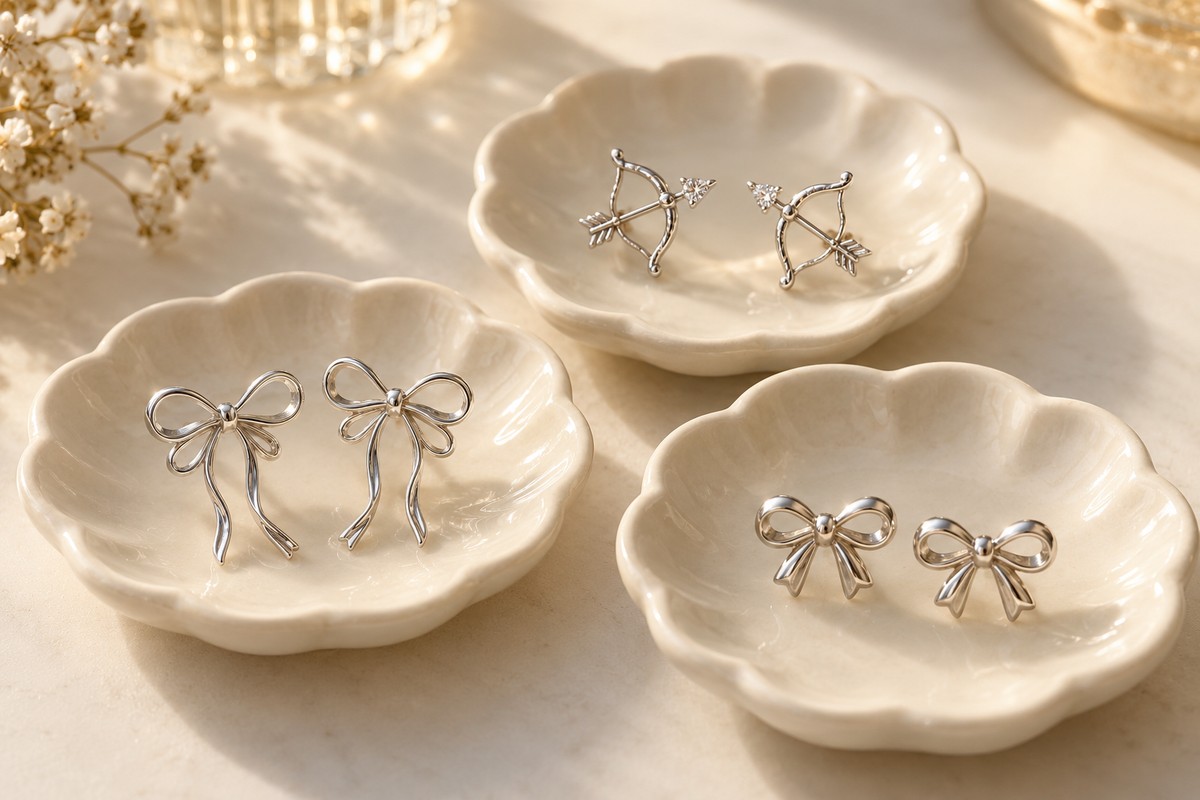
Ribbon Bow Earrings or Arrow-and-Bow Studs? Choose the Motif First
Bow earrings can mean a ribbon knot or an archery design. Refine your search, compare three real pairs, and decide how the motif works with your outfit.
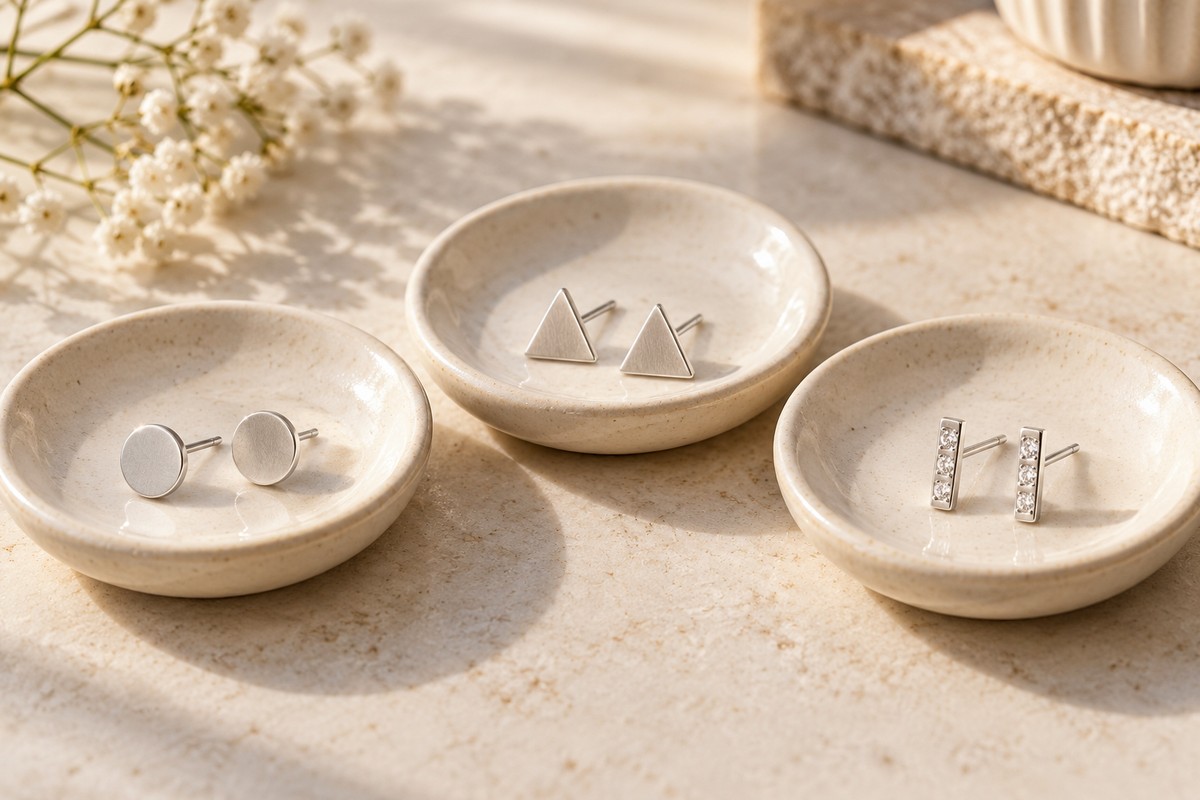
Minimal Geometric Earrings: Round, Triangle or Bar?
Compare round, triangle and bar earrings with the lines in your clothing. Use simple shape, open-space and accessory choices to build a look you enjoy.
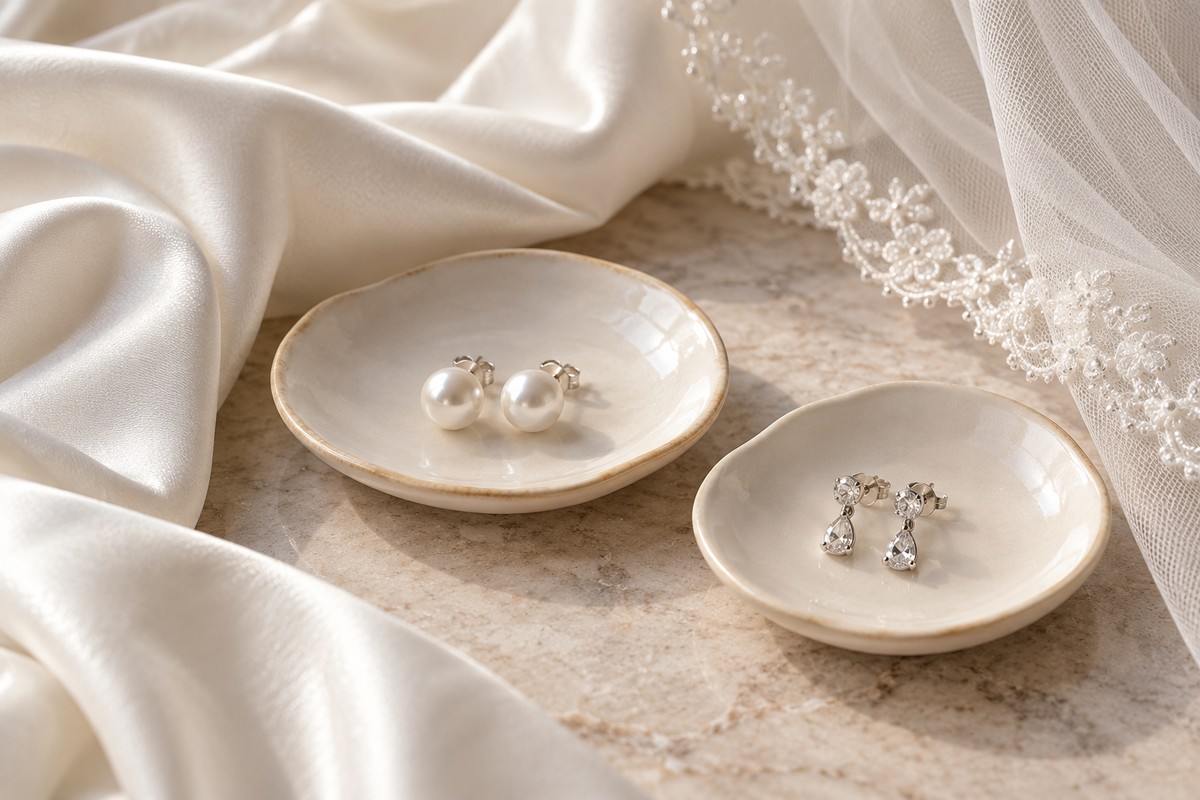
Wedding Earrings for Sensitive Ears: Rehearse the Whole Outfit
Try wedding earrings with your planned hairstyle, veil, neckline and outer layer. Compare photographs, notice catching and prepare a familiar backup pair.