

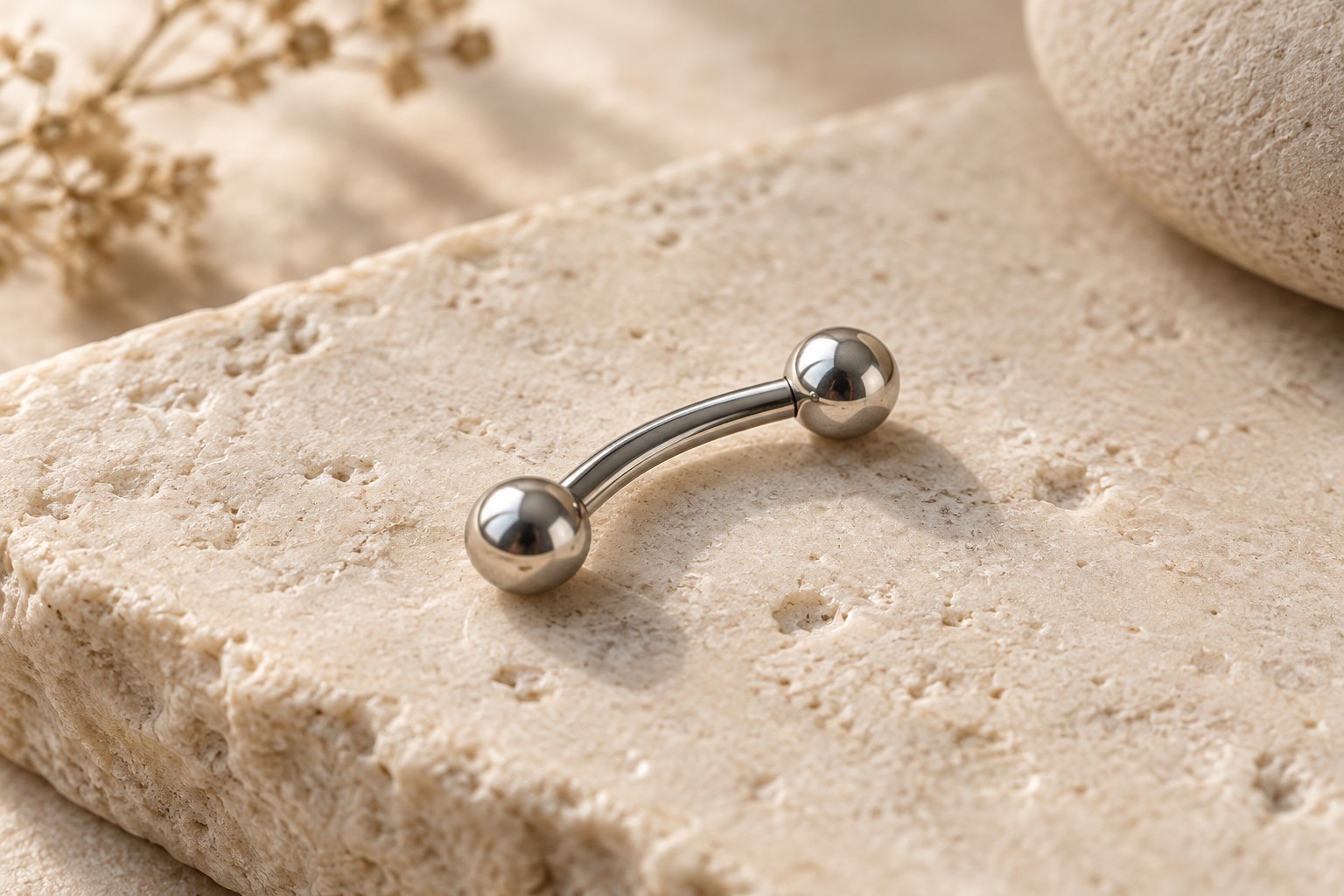
Two jewelry ends across the middle of an ear can belong to different piercings. Before choosing a snug from a photo, ask whether it shows one channel through a cartilage ridge or two separate piercings arranged to look similar.
That difference affects the jewelry and healing plan. If your ears have reacted to earrings before, bring that history to the consultation too. You still need to discuss suitable materials.
Start with the route through your ear
A traditional snug passes through the antihelix, the raised cartilage ridge between the bowl of the ear and its outer rim. Clementine Piercing describes it as a challenging placement because of the tissue and its exposed position. Your piercer needs to check whether your ridge can accommodate it.
A faux snug pairs a conch piercing with a helix piercing. Each has its own channel and jewelry, positioned so the fronts resemble the ends of a snug. Piercing Experience offers this arrangement as an alternative to piercing through the thick antihelix fold.
The word faux refers to the look. You still have two real cartilage piercings to care for, and a photograph cannot tell you whether the layout will work on your ear.
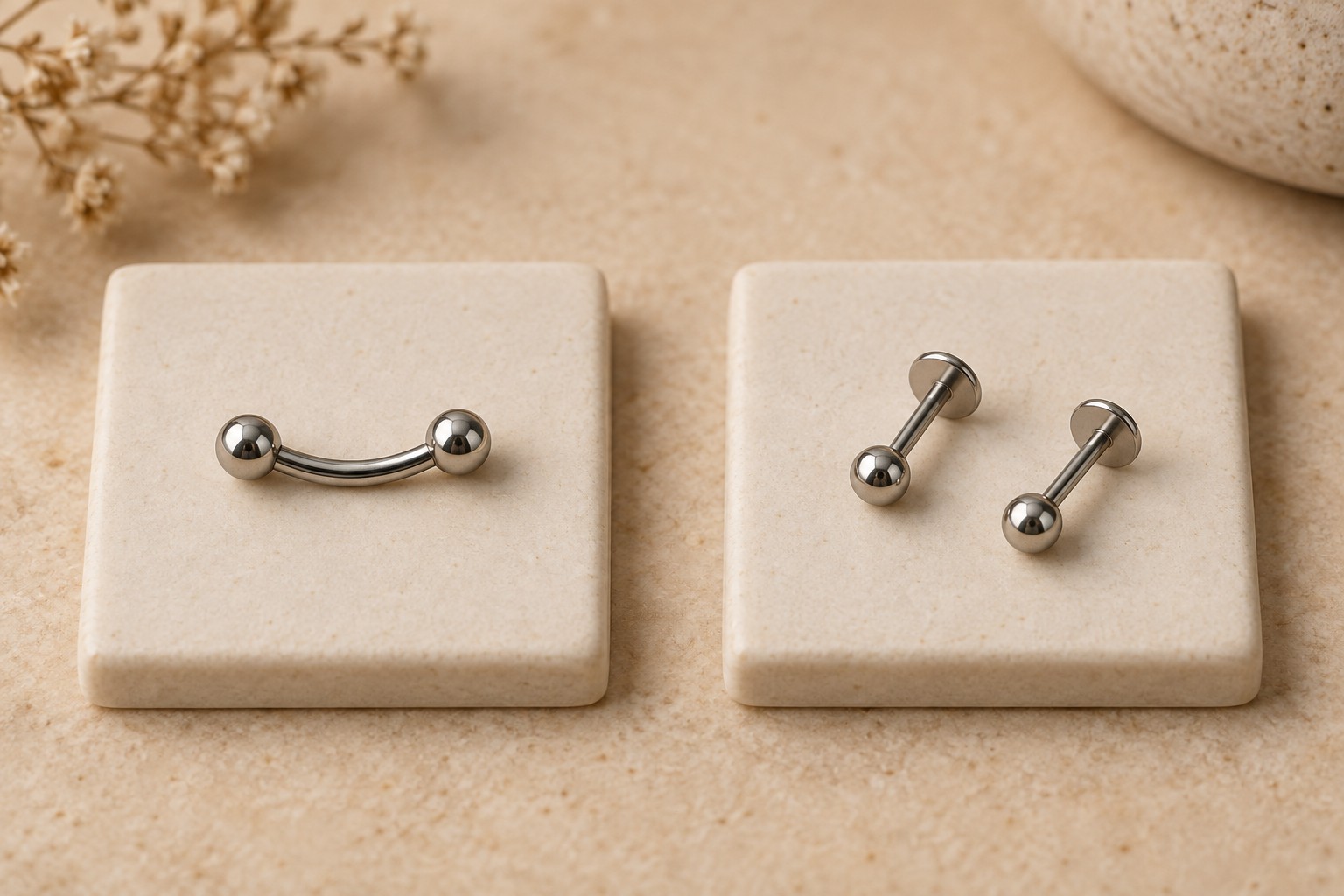
Take your daily routine to the consultation
Bring your usual glasses and headphones. Mention which side you sleep on and whether you wear a helmet for work or sport. Ask where these items would sit against the proposed jewelry.
Show your piercer how these items sit against your ear and discuss a realistic sleeping arrangement before committing to the placement.
Before booking, check that you can return if swelling changes the fit or something starts to catch. Our piercing post downsizing guide has questions to bring to that appointment. Necessary changes during healing should be made by a qualified piercer.

Leave room for a long healing process
Clementine says snug healing can take a year or longer. Plan for that commitment without choosing a fixed date for changing jewelry. Ask your piercer to assess your progress before planning a change.
A faux snug avoids the same route through the antihelix, but it still requires care for both piercings. Two separate placements do not guarantee an easy recovery.
Ask your piercer how they will assess progress and when to check the jewelry again. If work, sport or sleep makes avoiding pressure unrealistic, discuss another placement or a later date.
Choose the fit before the decorative front
For sensitive ears, tell your piercer which materials have caused trouble before and whether a clinician has identified an allergy. Discomfort alone does not establish that metal is the cause; fit and pressure need attention too.
The APP’s initial jewelry guidance considers material, thickness, length and surface quality. It lists specific titanium standards, including ASTM F136. A broad label such as titanium or hypoallergenic does not establish that a particular piece meets that standard or fits your piercing.
Ask for the required gauge and wearable length in writing. The width of a decorative crystal is a different measurement. Let the professional choose and fit initial jewelry rather than selecting a pair because the fronts look right in a photo.
Save these stud ideas for suitable healed piercings
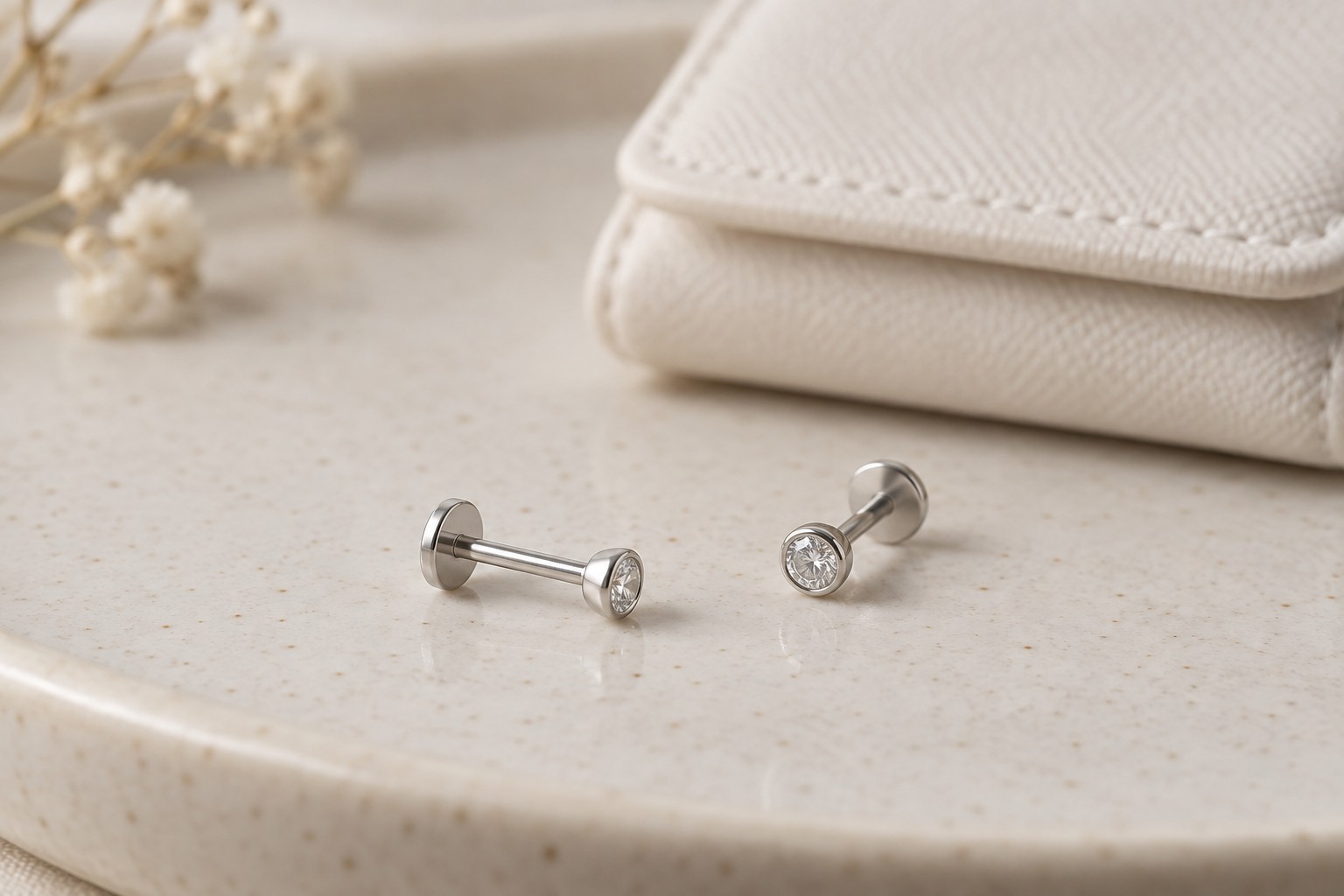
Once independent piercings are fully healed, small fronts can help you explore a paired look. Our Petite Crystal Cluster flat-back studs have a threadless push-pin closure; the Crystal Flower flat-back studs have an internally threaded closure. These are style references for suitable healed independent piercings, not jewelry recommendations for a traditional snug.
Both listings specify 20G (0.8 mm diameter) posts with 6 mm wearable length. That size may not match your piercing’s gauge or required length. Have the fit checked before buying, including for a healed faux snug, and do not change your piercing’s size just to use a design you like.
The listings describe F136/G23 titanium alloy. Their product descriptions do not prove that either item is suitable for a fresh piercing or your individual anatomy. Keep your initial jewelry selection with your piercer.
Keep care simple and know when to get help
The APP recommends gentle saline care and avoiding unnecessary movement or pressure. Your piercer should explain the routine and manage any necessary jewelry changes during healing.
Seek prompt medical advice if you suspect infection. The NHS lists warning signs including a hot, painful, swollen area, pronounced redness or darkening, blood or pus, and feeling feverish or unwell. Leave jewelry in unless a doctor tells you otherwise. A product change is not a substitute for that assessment.
FAQ
Can an existing conch and helix become a faux snug?
They may give a similar appearance, but their positions might not line up as you hoped. Show them to your piercer before buying matching fronts. Do not force jewelry into an angle to recreate a reference photo.
Does faux snug mean I can use clip-on earrings?
No. In this context it means two separate cartilage piercings arranged to resemble a snug. A clip-on styling idea is a different option and does not create those channels.
Should I remove the jewelry to sleep more comfortably?
Ask your piercer to assess why it feels uncomfortable and whether the proposed placement fits your sleeping routine. Do not use nightly removal as a substitute for that conversation.

Related posts

Ear Piercing Costs: What Your Quote Should Include
Compare ear-piercing quotes by the number of holes, complete jewelry, follow-up services and other charges, with specific official studio examples.
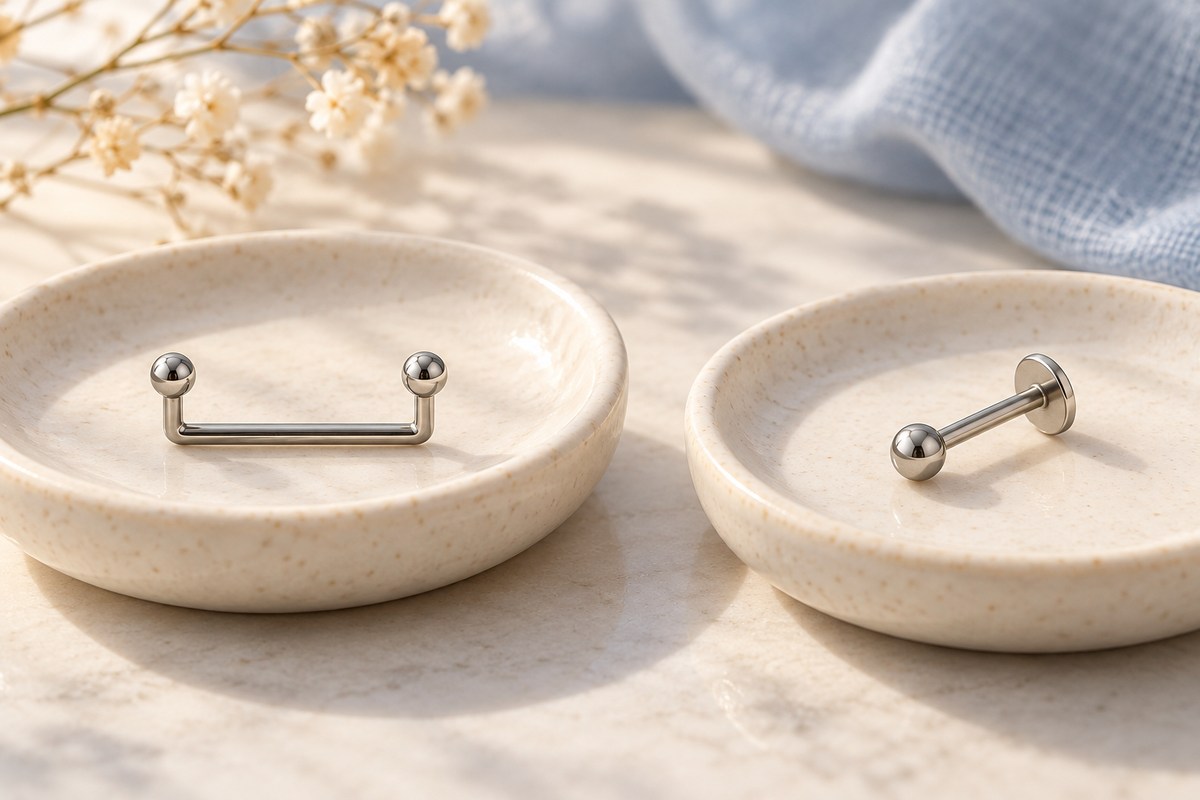
Surface Tragus vs Tragus: Why the Jewelry Is Different
Learn how surface bars, labret studs and surface anchors differ, and what to confirm before buying jewelry for a piercing beside the tragus.
Vertical Helix vs Hidden Helix: Check the Jewelry Direction
Compare vertical and hidden helix descriptions, check what product photographs leave out, and read jewelry specifications for a fully healed piercing.