

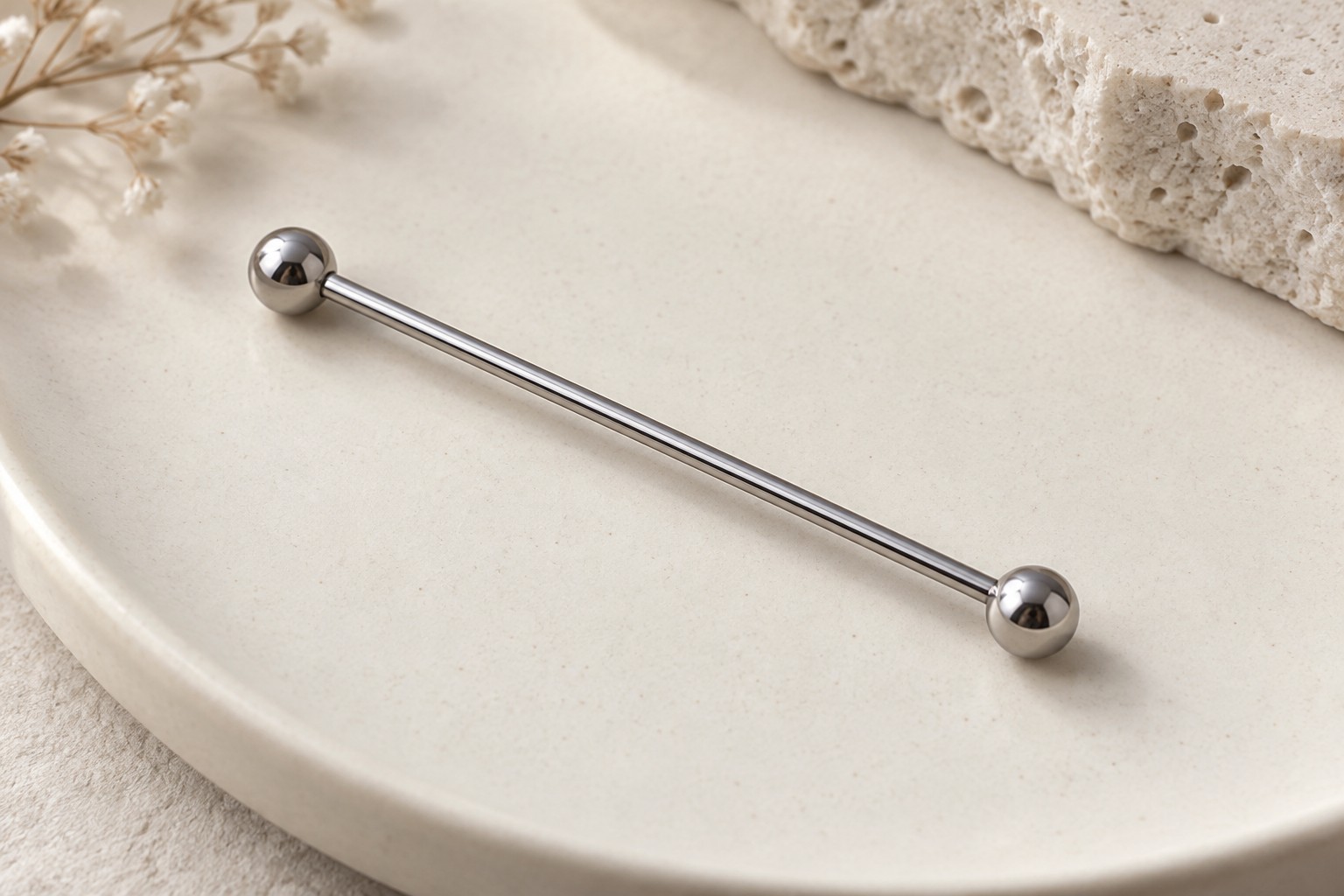
An industrial piercing can look simple: two ends and one straight line across the ear. Before choosing the decoration, check how the bar will fit. Both piercing channels have to work with the same piece.
If you’re considering an industrial, book an anatomy consultation before buying the jewelry. If you already have a healed one, start with the dimensions and fit your piercer has confirmed. A photograph can help you choose a style, but it can’t establish whether the bar will sit correctly in your ear.
What the familiar industrial connects
The usual industrial links two cartilage piercings with a straight barbell, often across a helix and a forward helix. There are other arrangements, so bring a reference photo and ask the piercer to explain the specific placement they recommend.
Amato Piercing’s industrial guide explains why this placement needs suitable support at the ear rim and clearance beneath the bar. A bar pressing into the flat cartilage between the holes is a fit concern. Extending the rod doesn’t automatically solve the shape or angle problem.
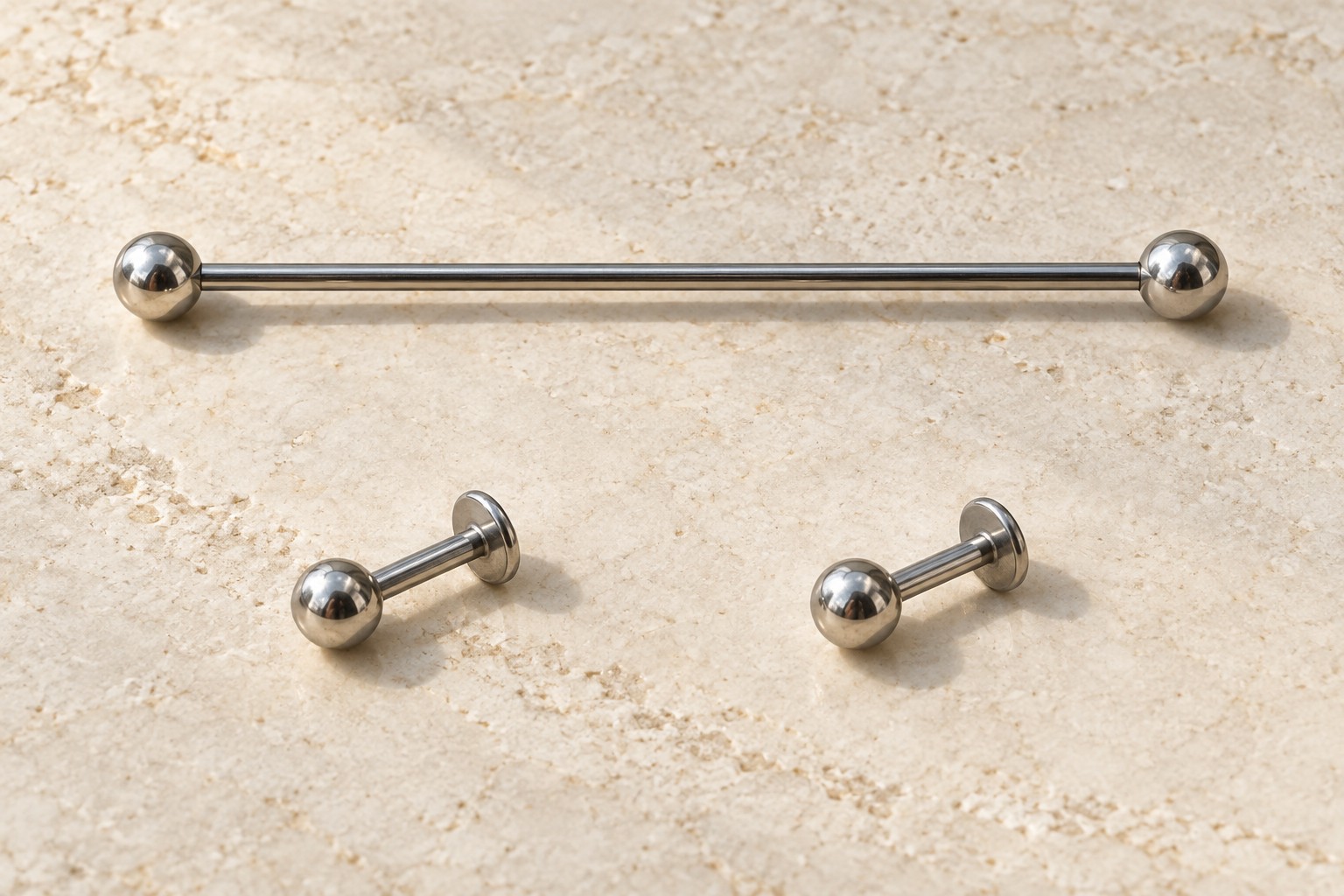
Two visible ends can also come from separate studs. They may create a similar visual line, but they aren’t mechanically the same arrangement as one rigid bar connecting both channels.
Start with a fitting conversation
Bring up the things that touch your ears: glasses, over-ear headphones, a work headset, a helmet, and your usual sleeping position. Your piercer can check those contact points against the proposed placement.
Before committing, ask where the bar would sit, whether it clears the middle of your ear, and how you’ll manage pressure during healing. Ask when the studio wants to see you again and how to contact them if the fit changes. You don’t need to choose the final decorative design at that appointment.
If the answer is that your ear isn’t suited to the traditional straight bar, ask what layout would work instead. Separately planned cartilage piercings can still give you a strong line or balanced stack. The Piercing Experience ear guide also describes alternatives, including flexible chain connections. Those need their own placement and healing plan; they aren’t a reason to force a straight bar into unsuitable anatomy.
Don’t assume two studs can become one bar later
You might prefer to heal two individual piercings before wearing a connecting bar. Discuss that intention before either hole is made. Amato warns that separately healed channels can settle at different angles, leaving a straight bar poorly aligned.
Already have two holes? Let an experienced piercer assess them together. Don’t push a bar through both to see whether it works. Being able to get the jewelry in doesn’t prove that it sits without pressure.
The same caution applies if you want to take a bar out temporarily for a different look. Get advice about your particular channels and whether returning to the original arrangement is realistic.
Read the specifications before the decoration
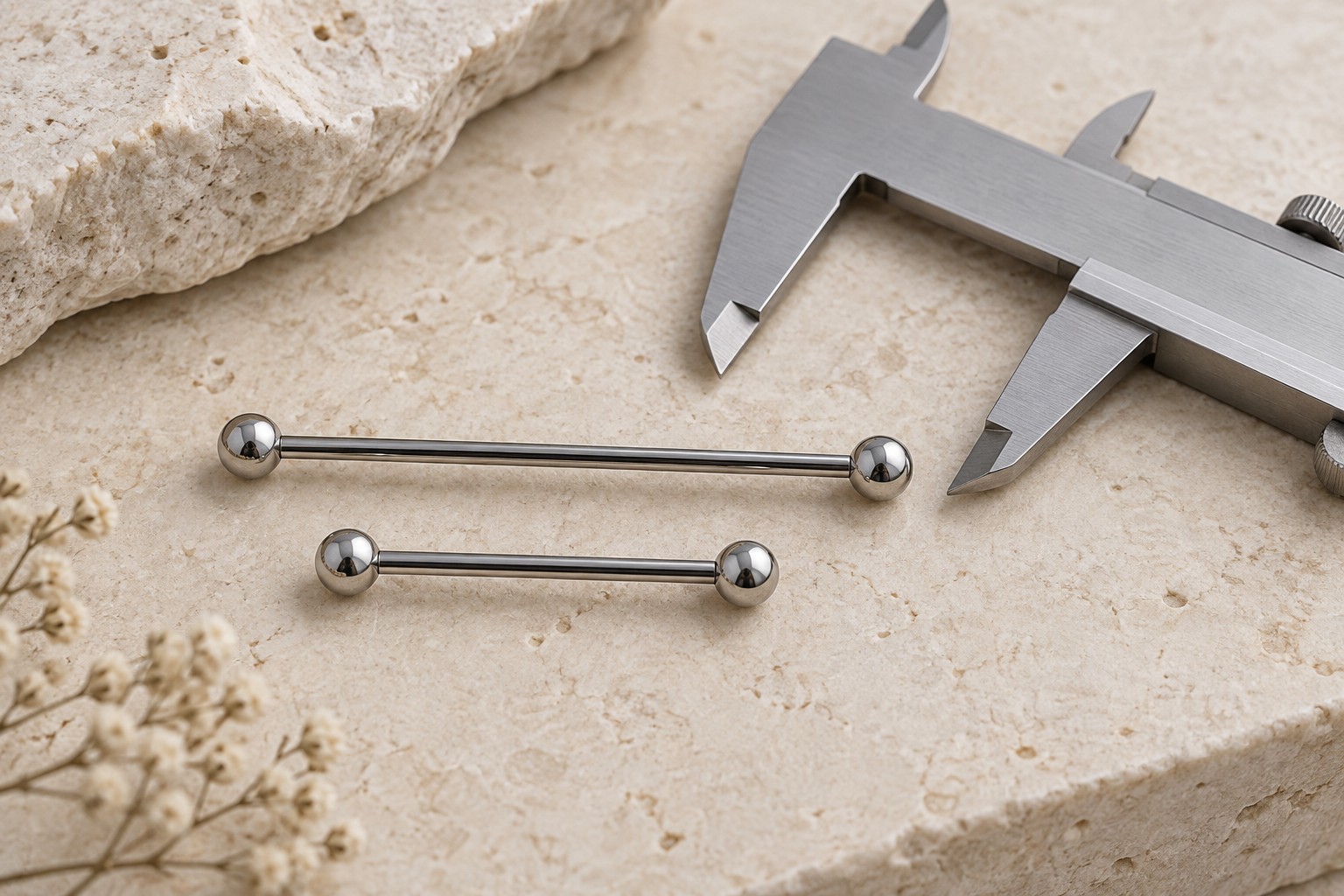
When you shop for a healed industrial, keep the piercer’s measurements beside the listing. Our earring size guide explains the distinction between thickness and wearable length. The overall appearance of a bar, especially one with a large centerpiece, can make its proportions difficult to judge from a photograph.
Check these details with the seller:
- The shaft thickness and wearable bar length, including how that length is measured.
- The end size and how far the decoration projects toward your ear.
- The closure construction and whether the ends and shaft are supplied as a complete compatible piece.
- The material specification and any surface finish on the selected version.
For a fresh piercing, the Association of Professional Piercers calls for suitable size, finish, construction and documented material standards. A broad titanium label alone doesn’t establish that an item meets ASTM F136 or is suitable as initial jewelry.
Two industrial designs to compare after healing
Our North Star industrial barbell and Four-Petal Crystal industrial barbell are both listed in Natural Titanium, with G23/F136 titanium alloy and a threaded industrial closure. They give you two decorative directions to compare once a professional has confirmed your fit.
The descriptions available when this guide was prepared do not state the wearable bar length or gauge. Request those specifications before ordering. Don’t infer them from the product image, and don’t treat the words “industrial” or “titanium” as proof that the piece fits your channels.
Show your piercer the whole design, including the centerpiece. A plain bar that fits doesn’t establish clearance for every ornament attached to a replacement. These are shopping references for a healed piercing, not a recommendation to use either item as starter jewelry or to solve an irritated piercing.
Keep the healing plan manageable
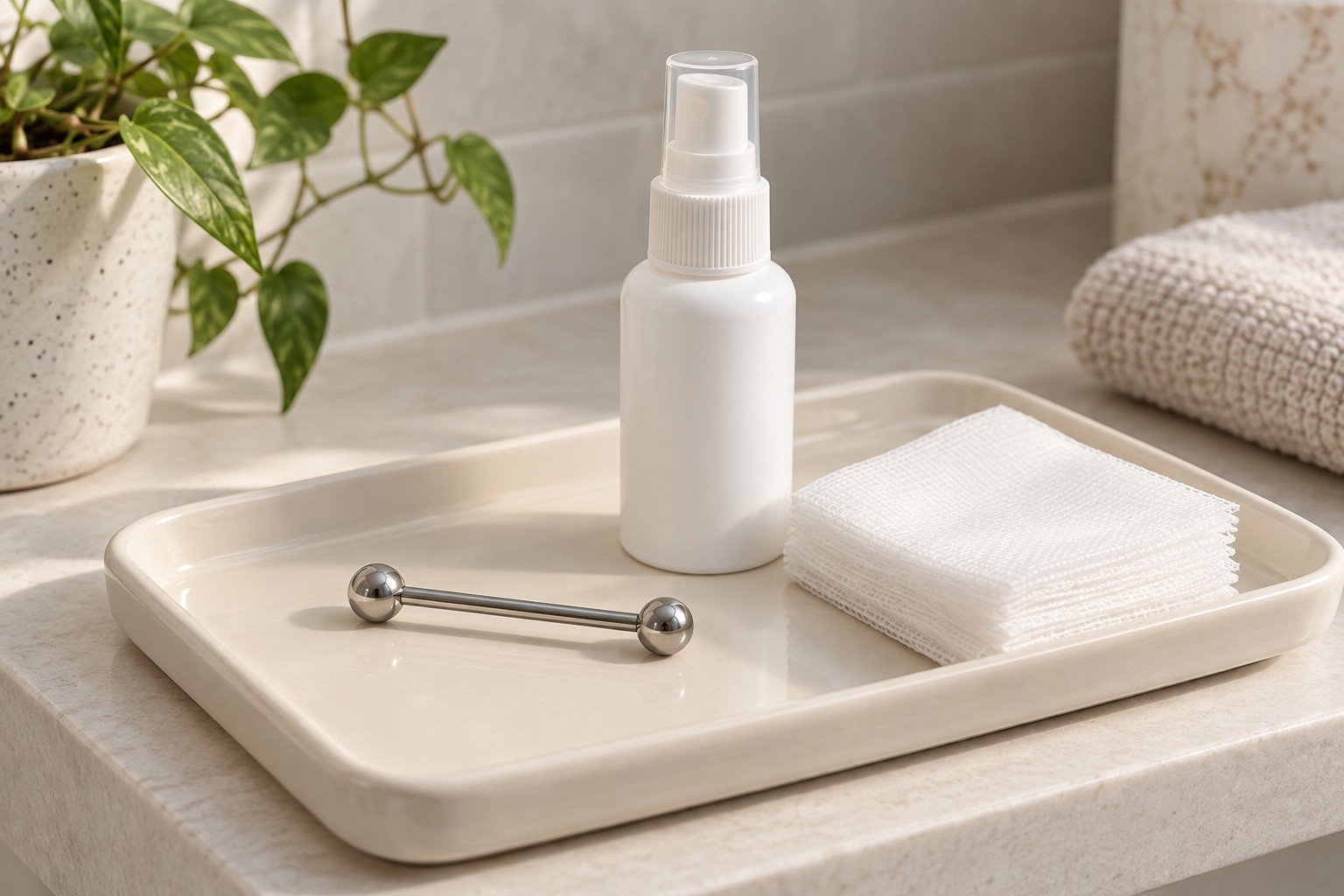
The APP aftercare guidance recommends saline care, avoiding rotation and pressure, and leaving necessary jewelry changes to a qualified piercer. Wait until healing is complete before adding charms.
Discuss the timing of a jewelry change at your follow-up rather than setting the date yourself. Use follow-up visits to discuss what you notice rather than booking a jewelry change around a promised online deadline. Our downsizing guide can help you prepare for that conversation.
Get urgent medical advice if the area becomes hot, increasingly swollen or painful, produces pus, or you feel unwell. The NHS infected-piercing guidance advises leaving jewelry in unless a doctor tells you to remove it. Repeatedly changing bars is not a way to diagnose the problem.
Industrial piercing FAQs
Is every industrial piercing diagonal?
No. The familiar diagonal bar is one arrangement. A piercer can explain other possibilities after assessing your ear. A different angle still needs a compatible plan for the jewelry and both channels.
Can I choose a chain instead of a rigid bar?
A chain joining separate pieces is a different construction. Discuss it as a separate styling plan, including when it can be worn, rather than assuming it’s an immediate replacement in a healing industrial.
What should I send the seller before buying a replacement?
Ask for the exact gauge, wearable length, closure details and dimensions of the decorative part. Compare the answers with your professional fitting notes. If a specification is missing, resolve it before ordering rather than choosing by the photograph alone.

Related posts

Ear Piercing Costs: What Your Quote Should Include
Compare ear-piercing quotes by the number of holes, complete jewelry, follow-up services and other charges, with specific official studio examples.
Surface Tragus vs Tragus: Why the Jewelry Is Different
Learn how surface bars, labret studs and surface anchors differ, and what to confirm before buying jewelry for a piercing beside the tragus.
Vertical Helix vs Hidden Helix: Check the Jewelry Direction
Compare vertical and hidden helix descriptions, check what product photographs leave out, and read jewelry specifications for a fully healed piercing.