

You reach behind your ear and notice that the back feels pressed into your lobe. Your first instinct might be to loosen something. Before you do, check which part you're touching and whether your ear needs professional attention.
An earring needs room for your ear and a properly secured connection. Those are separate details. A securely fastened earring can still be the wrong fit. This guide explains what to look for, when to stop handling the jewelry, and which details to compare when shopping for a fully healed piercing.
Look at the skin before touching the back
Use a mirror and good light to look at the front and back of your ear without pulling or twisting the earring. Notice whether the jewelry appears to be pressing into the skin, whether the skin is swollen, and whether anything looks different from before.
An indentation or a pinched feeling is a reason to check the fit, but it doesn't tell you the cause. Pressure, irritation and infection aren't interchangeable explanations. A photograph or a quick look in the mirror can't reliably distinguish them.
If skin is covering any part of the jewelry, you can no longer see its edge, or the area is markedly painful or swollen, seek prompt medical assessment. Don't dig around the back, push it through, or try to uncover it yourself. A piercer can assess an ordinary fit concern; embedded jewelry or concerning symptoms need clinical care.
Separate fastening from wearing space
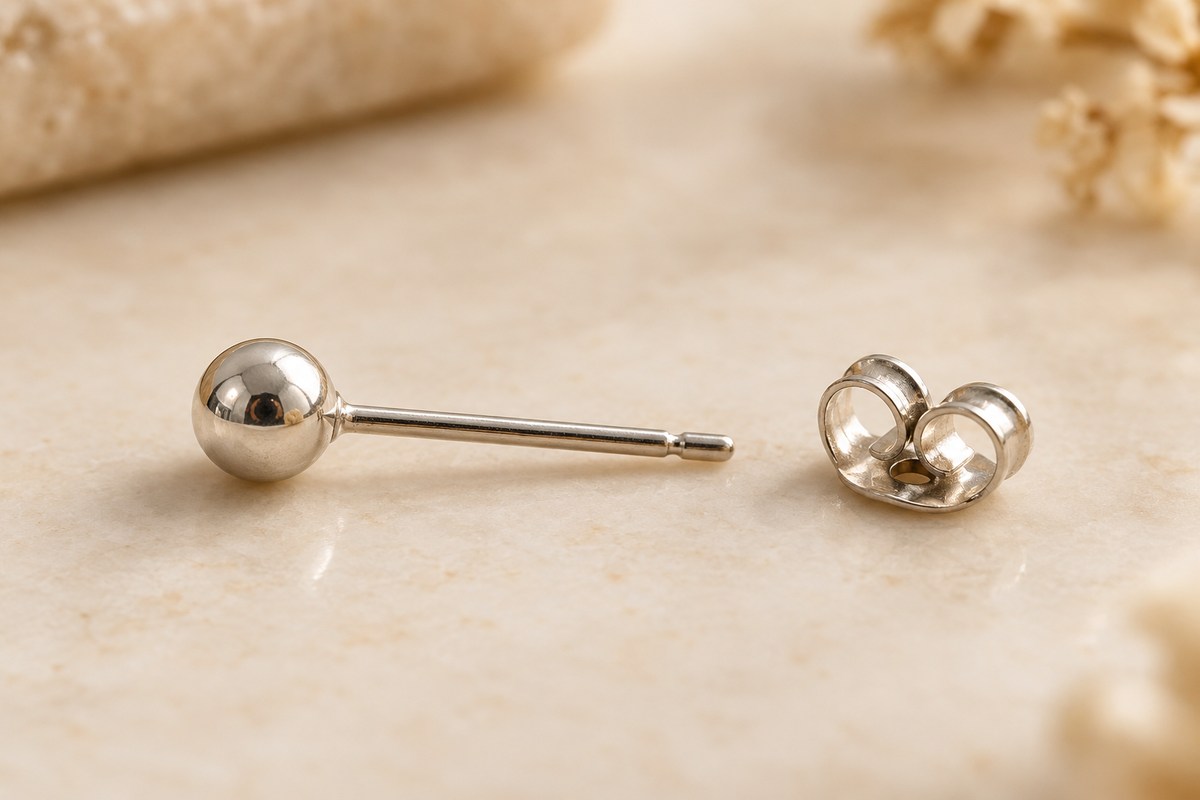
On a traditional stud, a butterfly back slides onto the post behind the ear. Its position affects the space between the decoration and the back. Pushing it toward the ear isn't a useful test of whether the earring is secure.
A fixed-length flat-back stud works differently. The post provides the wearable length, while the threaded or threadless connection holds the removable front in place. Unscrewing the front partway doesn't create a properly fitted longer post. Leaving a push-pin front partly inserted isn't a fit adjustment either.
Keep the connection assembled as its maker specifies. If a fixed-length post doesn't provide suitable space, have a piercer assess the fit and appropriate post dimensions. Don't substitute a partly fastened connection for a different length.
There isn't one gap measurement that suits every ear. The Association of Professional Piercers considers jewelry size, material and surface finish when discussing suitable initial jewelry. A familiar closure or a titanium label alone doesn't establish that a piece fits you.
Check what is pressing against your ear
The back itself may not be the only source of pressure. Think about whether headphones, a helmet or your sleeping position are pressing jewelry toward your ear. Pay attention to when it happens. You don’t need to keep moving the stud to test it.
For healing piercings, the APP's aftercare guidance advises avoiding pressure and unnecessary movement or rotation. Don't twist jewelry to see whether it's “free enough,” and don't change a healing or swollen piercing yourself to try another length.
If the area is comfortable but you're unsure about the fit, arrange a piercer's assessment and bring the original product details. Explain when you notice pressure and whether the fit seems to have changed. That is more useful than asking for a specific gap based on somebody else's ear.
Know when a fit check needs medical help
Seek prompt medical advice if a piercing becomes hot, increasingly painful or swollen, very red or dark, or produces pus. Feeling unwell, feverish or shivery also needs medical attention. NHS guidance describes these as possible signs of infection; they aren't symptoms to troubleshoot by changing backs.
If you suspect infection, leave the jewelry in unless a clinician tells you to remove it. Don't use a home adjustment to delay getting advice. Tell the clinician if the jewelry is becoming covered by skin or seems stuck.
A different back cannot establish whether a reaction comes from pressure, material sensitivity or infection. Even an earring you've worn before deserves a fresh assessment when your ear changes.

Compare product details after the piercing has healed
Once your piercing is fully healed and any current concern has been assessed, compare the complete earring's dimensions and fastening. Use our earring size guide to understand post diameter and wearable length before ordering. A decorative front's width doesn't tell you how much space the post provides.
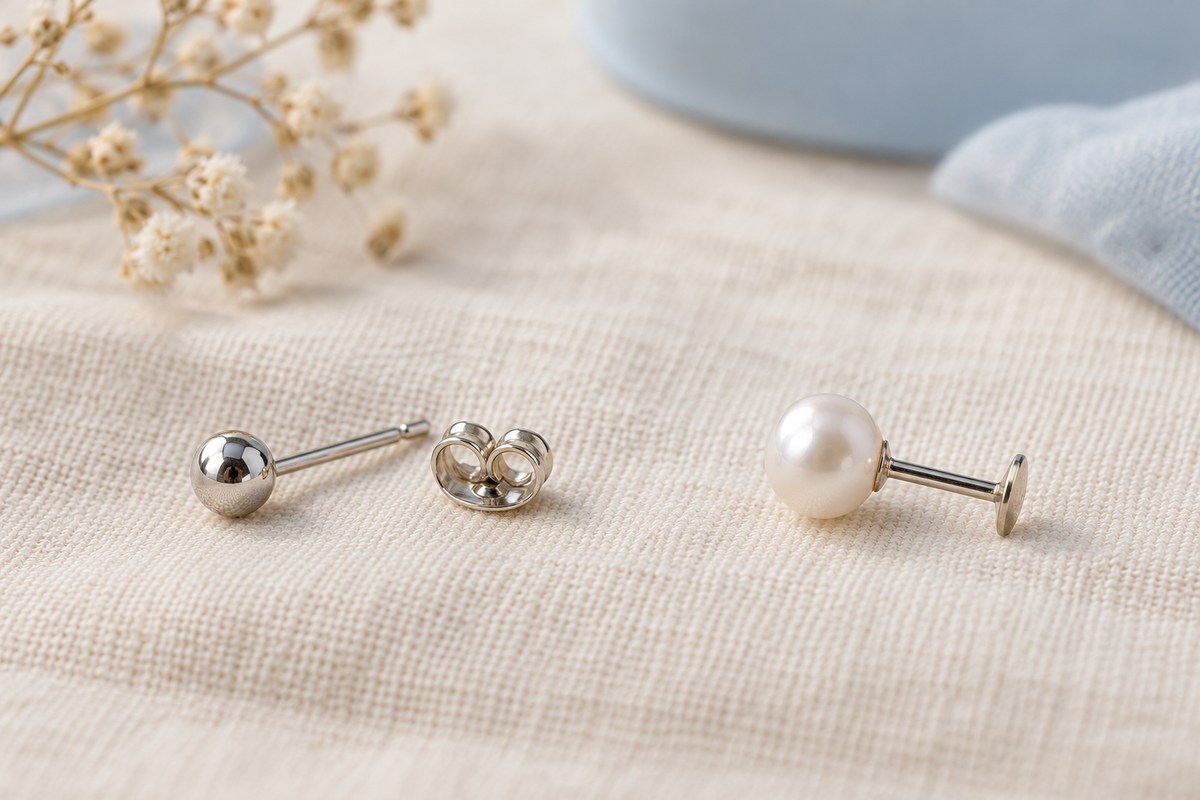
Our Polished Round Ball Studs have straight posts and butterfly backs. The listing offers 3 mm, 4 mm and 5 mm ball sizes. Those numbers describe the ball, not the post length, so ask for missing fitting details rather than treating the smallest ball as the shortest post.
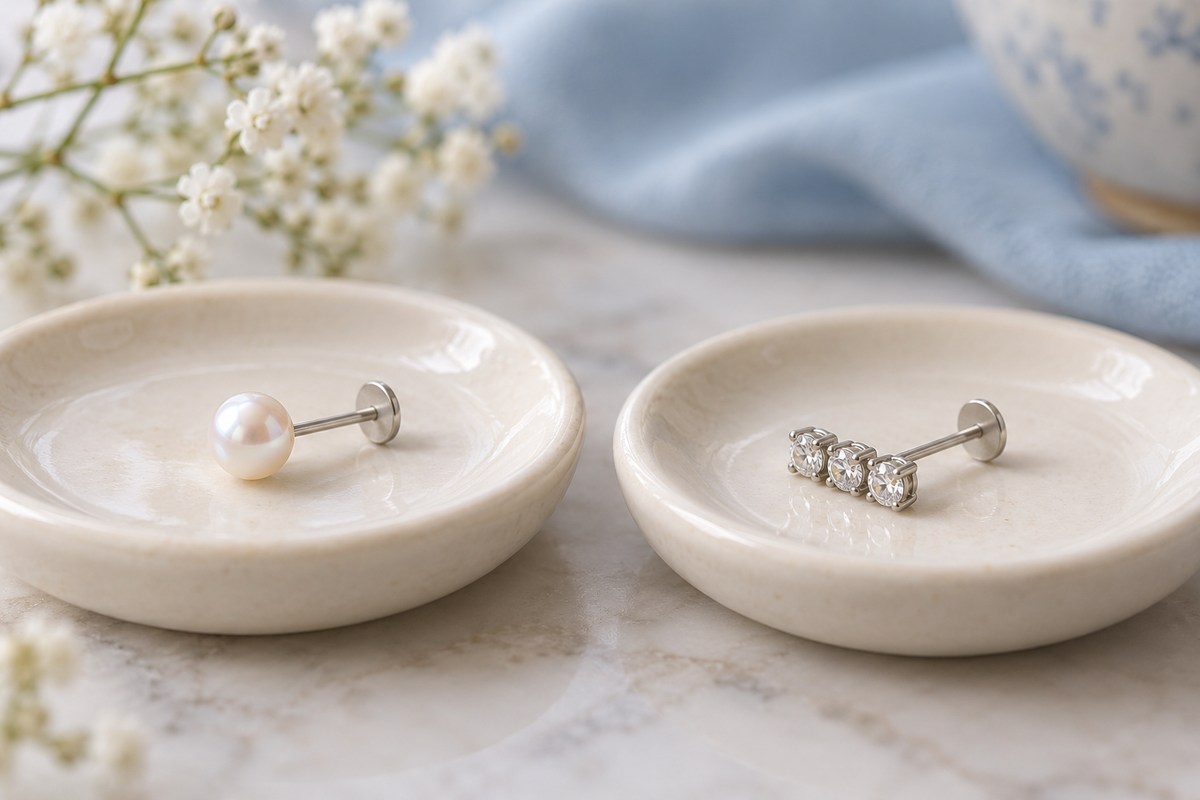
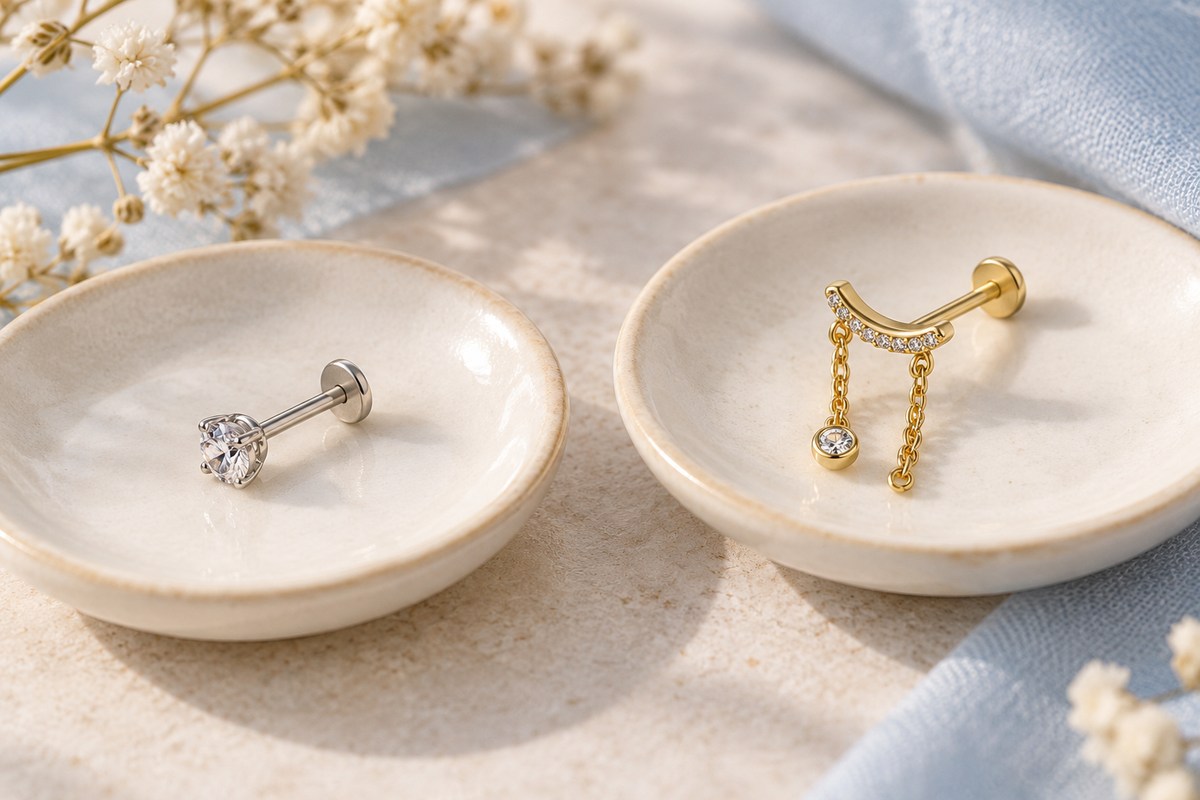
Titanium Pearl uses a threaded flat-back post. Its listing specifies a 20G post, or 0.8 mm diameter, with a 6 mm wearable length and an approximately 6 mm pearl face.
Crystal Trio Bar uses a threadless push-pin flat back. It also lists a 20G, 0.8 mm post with a 6 mm wearable length, but its front is approximately 5.3 by 2.1 mm. Matching listed post dimensions doesn't make the two connection systems interchangeable.
Use these examples to read the specifications, then check them against your own fit. A 6 mm post won't suit every ear, and these products aren't a treatment for a sore piercing.
Questions about tight earring backs
Should I check the fit by spinning the earring?
No. Rotation doesn't measure wearing space and can disturb a healing piercing. Look without moving the jewelry and have a piercer assess any uncertainty about its dimensions.
Can a back touch my ear without being too tight?
Contact alone doesn't establish a problem. Consider whether it presses into the skin, feels painful or is becoming covered. If you can't judge the fit without tugging at the jewelry, stop and get it checked.
What details should I bring to a fitting appointment?
Bring the product name, order information and any listed post diameter, wearable length and closure details. Explain when discomfort started and what was touching the ear at the time. Don't remove painful or stuck jewelry to photograph its parts.

Related posts

Ear Piercing Costs: What Your Quote Should Include
Compare ear-piercing quotes by the number of holes, complete jewelry, follow-up services and other charges, with specific official studio examples.
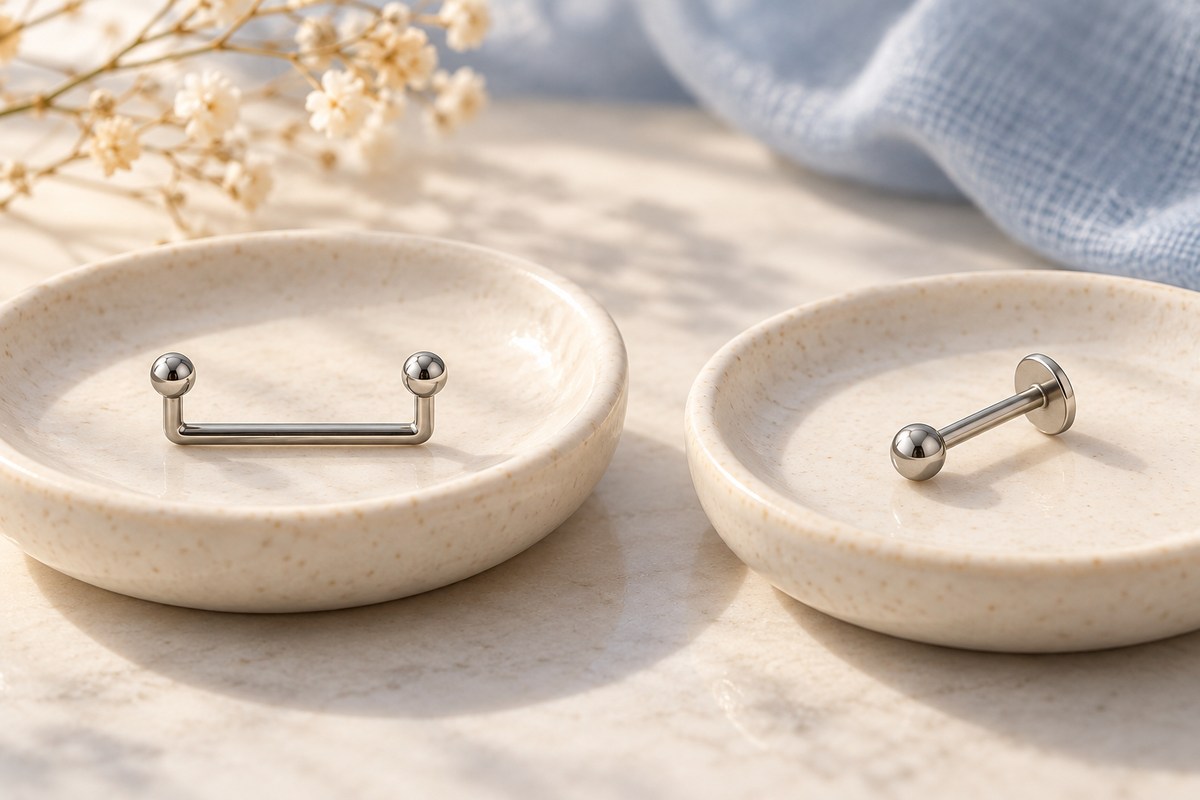
Surface Tragus vs Tragus: Why the Jewelry Is Different
Learn how surface bars, labret studs and surface anchors differ, and what to confirm before buying jewelry for a piercing beside the tragus.
Vertical Helix vs Hidden Helix: Check the Jewelry Direction
Compare vertical and hidden helix descriptions, check what product photographs leave out, and read jewelry specifications for a fully healed piercing.