

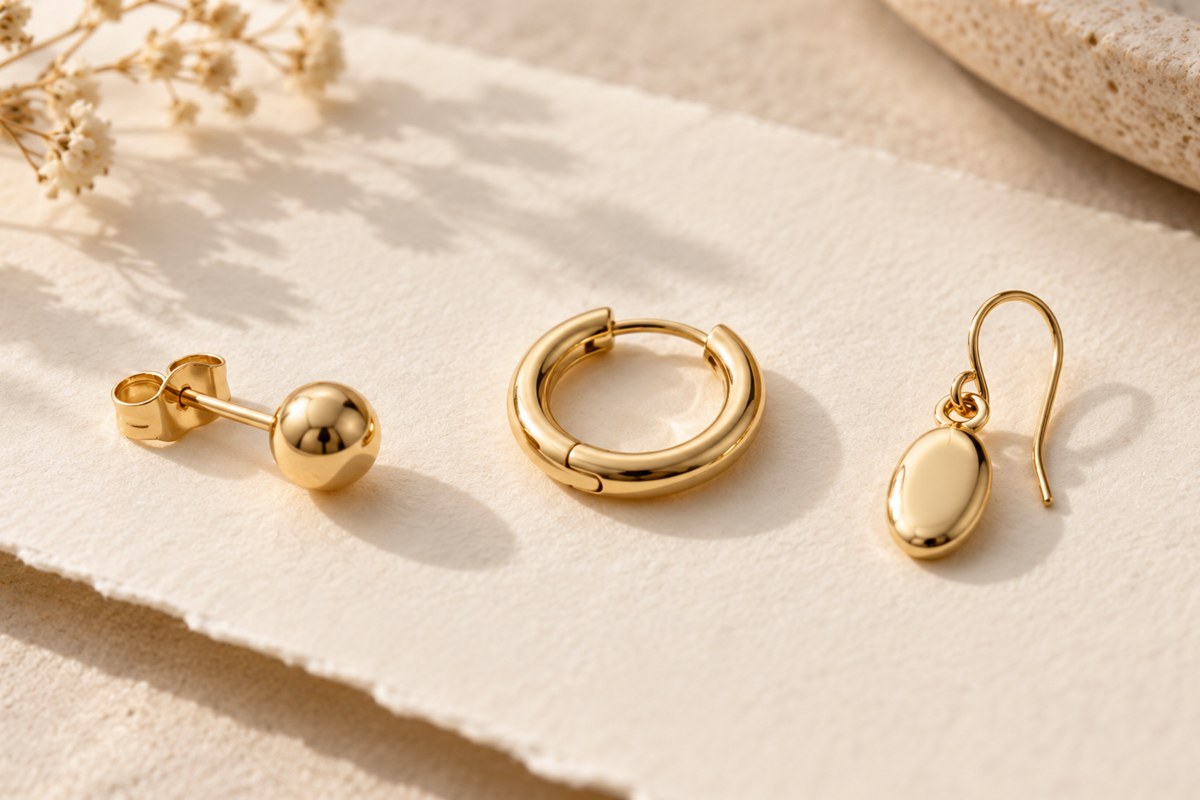
Gold-filled, gold-plated and vermeil describe different ways of putting gold over another metal. Each tells you something about construction. None, on its own, confirms that every part of an earring will suit your ears.
Before choosing a pair, find out what the post, back and decorative body are made from. Ask about the layers beneath the gold too. Two earrings can have the same warm gold color and leave you with very different material information.
This guide concerns jewelry for fully healed, compatible piercings. A coating description cannot tell you why an irritated ear is sore.
Compare the construction first
The following descriptions use US Federal Trade Commission guidance. Terms and requirements can differ between markets.
| Description | What it tells you | What still needs checking |
|---|---|---|
| Gold-plated | Gold covers another material. The description should identify the gold fineness. | The underlying metal, coating details and materials of separate components. |
| Gold-filled | A gold-alloy layer is mechanically applied to another metal. | The gold-alloy mark, underlying metal, and whether the post and back use the same construction. |
| Gold vermeil | Qualifying gold coats a sterling silver base. | Intermediate layers, component materials and any evidence relevant to a known allergy. |
The comparison explains the labels rather than ranking skin tolerance. A more detailed construction name is useful only when it answers the questions you need answered.
Read a gold-filled mark carefully
Under the FTC's gold-filled example (2026 CFR PDF), the mechanically applied coating is gold alloy of at least 10 karat and accounts for at least one twentieth of the metal weight in the article. The guidance also addresses coverage and reasonable durability.
In a mark such as "1/20 14K GF", 14K describes the gold alloy in the outer layer. The fraction refers to that alloy layer's share of the metal weight. It does not mean the whole earring is 14K gold, or that five percent of the earring is pure gold.
If a listing gives only a gold color, you cannot infer this construction. Ask for the material description of the selected variation.
Vermeil gives you a silver base, with further questions
US FTC guidance (2026 CFR PDF) describes vermeil as sterling silver coated with gold of at least 10 karat, with a minimum thickness equivalent to 2.5 microns of fine gold. That is more specific than a photograph or the word "gold" in a product title.
It still does not establish that the finished earring is nickel-free. The guidance addresses intermediate base-metal layers, including nickel, which must be disclosed when present beneath the gold. Check the complete construction if you have a known sensitivity.
Sterling silver identifies silver content: 92.5 percent. It does not provide the full recipe for the remaining alloy or identify a separate back. A 925 mark also cannot tell you the thickness of a gold coating.
Check the parts that touch your skin
The American Academy of Dermatology identifies nickel as a common cause of allergic contact dermatitis and includes earring backs among potential exposure sources. That makes the small parts worth asking about.
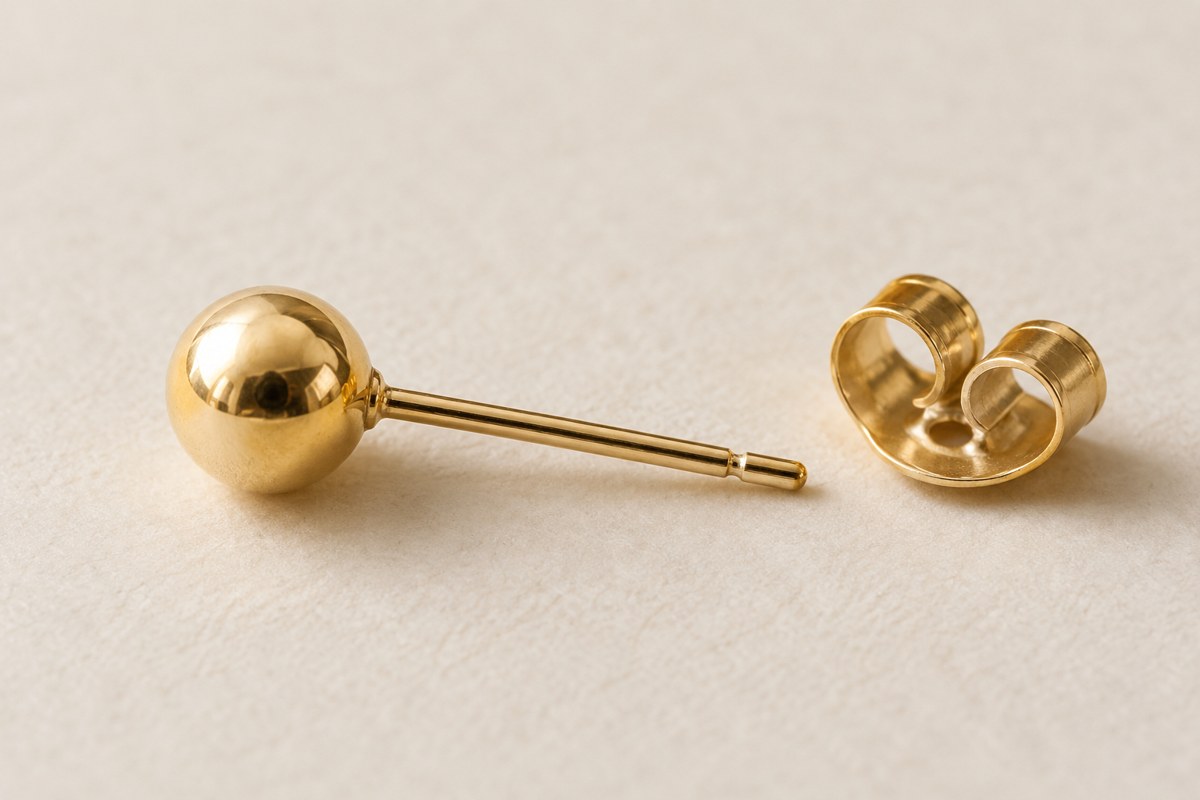
A material statement about the decorative front may leave the post unspecified. A description of a sterling silver post may leave the body or clasp unspecified. For a hoop, consider where the hinged section and decorative body rest against your ear. For a stud, include the back in your questions.
Send the seller the exact product name and color you intend to buy. Ask for the post, back and body composition, then ask about the coating and any intermediate layers. If nickel is your concern, request specific nickel information rather than a general assurance about sensitive ears.
You can compare individual designs in our stud earrings collection, then check the material and finish for the selected pair. Save the reply with the listing. It can also help if you later need a replacement back and want to avoid substituting an unknown component.
Treat coating wear as part of ownership
The FTC's archived consumer guide (PDF) explains that gold plating eventually wears, with use and thickness affecting the result. A promised number of years is less useful when the listing does not explain the coating or your care routine.
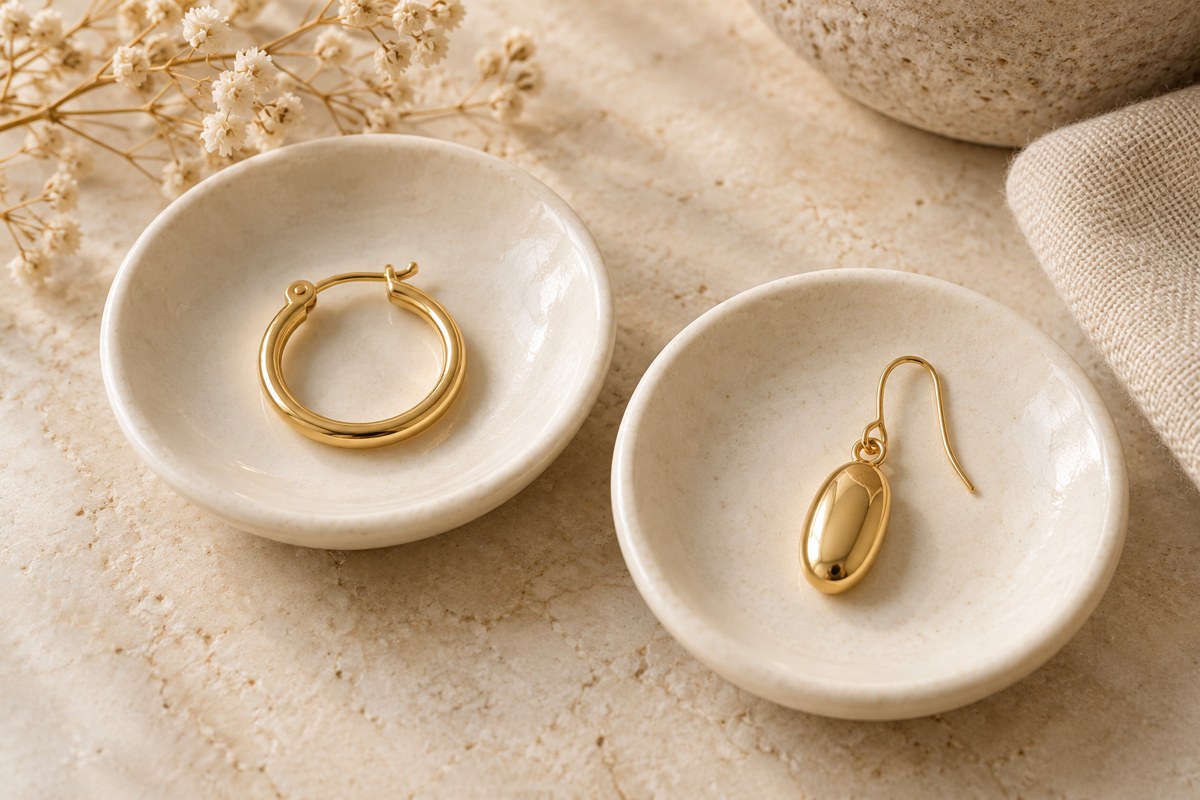
Follow the maker's directions for that finish. Before using a polish or cleaning solution, check whether it is intended for coated jewelry. Keep each pair's care information with its material details so that a silver base does not lead you to assume a silver-polishing method suits the gold surface.
Inspect the parts that contact your ear as well as the visible front. A color change does not diagnose an allergy, but it is a reason to reassess what surface you are wearing.
Keep fit separate from the finish
Check the post thickness, wearable length and closure. A coating name supplies none of those measurements. If a piece resists insertion, do not push it through; a qualified piercer can assess the fit.
For a recurring rash or suspected allergy, consult a dermatologist. Seek medical advice for severe, worsening or otherwise concerning symptoms. Repeatedly swapping gold finishes is not a reliable way to identify the cause.
Questions about gold coatings
Is gold-filled automatically better for sensitive ears?
No. The construction describes a gold-alloy coating. You still need the composition of the parts touching your skin and information relevant to your own sensitivity.
Does 18K gold-plated mean the whole earring is gold?
No. The karat number describes the gold alloy in the coating. Check the underlying material and the post and back separately.
Is vermeil always nickel-free?
No. The vermeil label alone does not establish nickel absence throughout the finished item. Request component and intermediate-layer details.
Can a gold color option tell me which coating I am buying?
A color option describes appearance. Our anodized titanium color guide explains another reason to read color separately from coating. Look for a separate statement of material, construction and finish before treating it as gold-plated, gold-filled or vermeil.

Related posts
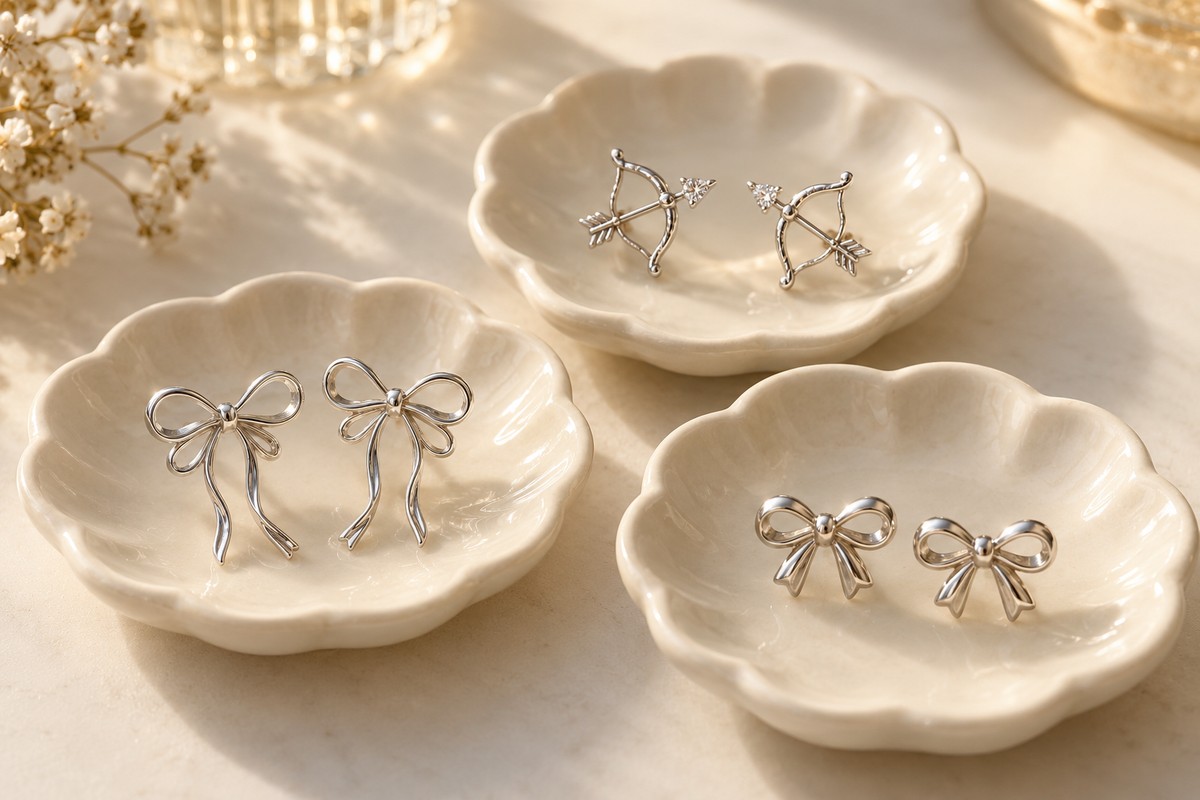
Ribbon Bow Earrings or Arrow-and-Bow Studs? Choose the Motif First
Bow earrings can mean a ribbon knot or an archery design. Refine your search, compare three real pairs, and decide how the motif works with your outfit.
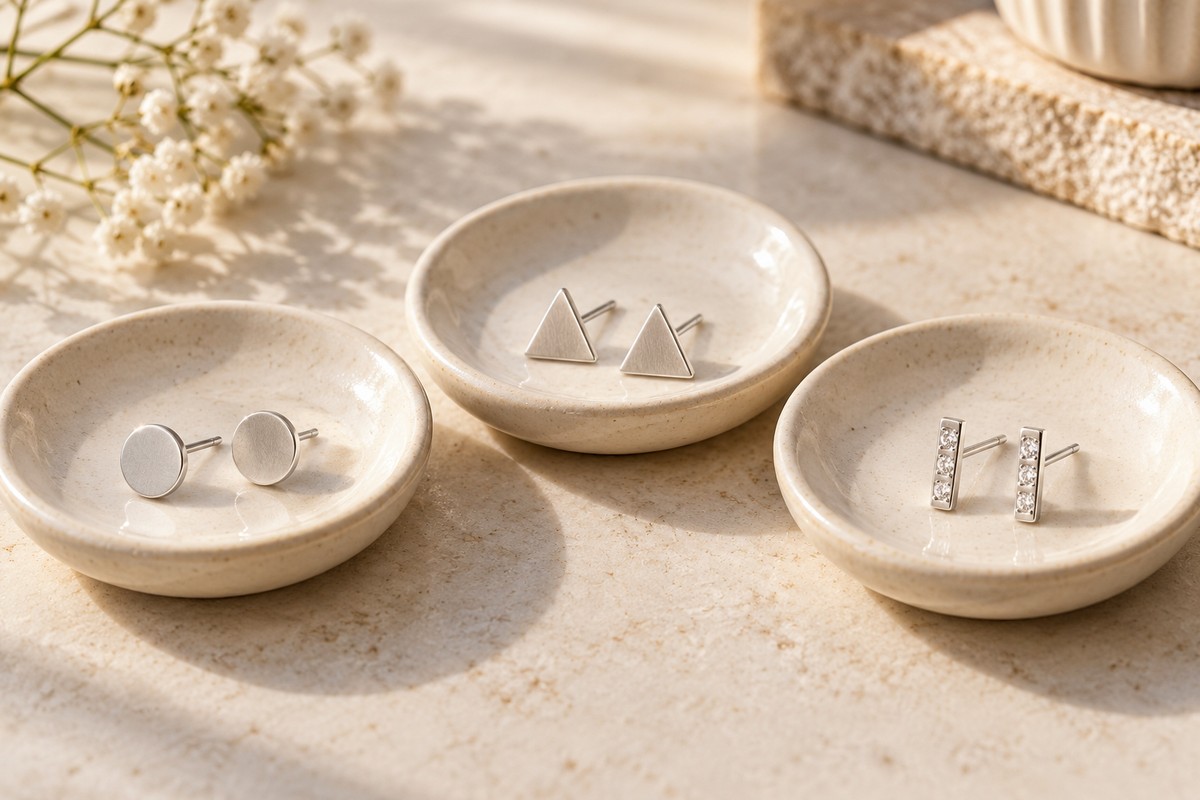
Minimal Geometric Earrings: Round, Triangle or Bar?
Compare round, triangle and bar earrings with the lines in your clothing. Use simple shape, open-space and accessory choices to build a look you enjoy.
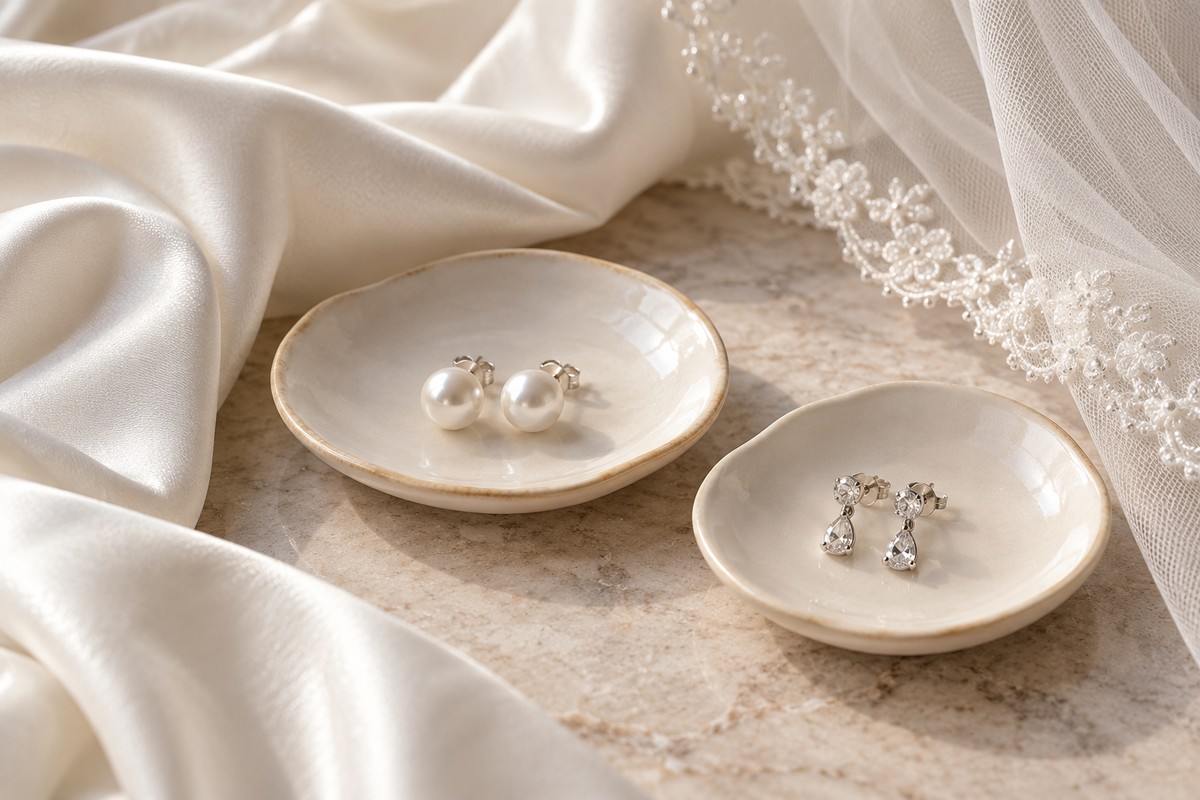
Wedding Earrings for Sensitive Ears: Rehearse the Whole Outfit
Try wedding earrings with your planned hairstyle, veil, neckline and outer layer. Compare photographs, notice catching and prepare a familiar backup pair.