

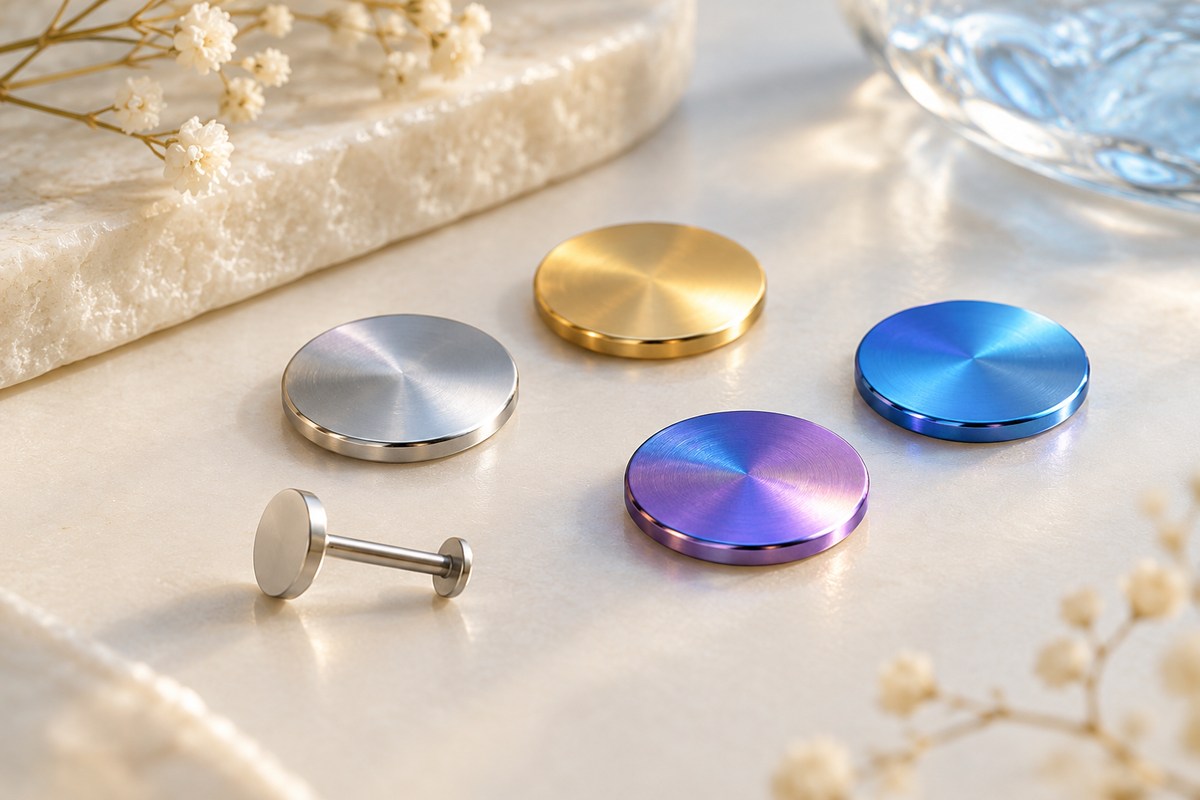
If you're comparing colored titanium earrings, look for an explanation of how the finish is made. “Titanium” identifies a material, while “anodized” identifies a surface process. A color photograph doesn't establish either one.
Anodized titanium gets its color from light interacting with a thin oxide film. Plating adds a covering over the underlying material. That difference is useful when reading a product description, but it doesn't answer every question about the complete earring. For shopping for fully healed piercings, check the finish alongside the material, dimensions and fastening.
Follow the light through the oxide film
DOT America's color-anodizing explanation describes an electrochemical process that thickens the transparent titanium oxide layer on the surface. Light reflected from that thin film interacts with light reflected from the underlying metal. This optical interference creates the visible color without requiring dye.
The oxide film is a surface layer. Describing anodized titanium as having “no surface layer” leaves out the part that produces the color.
The film's thickness affects the color produced. That doesn't mean a photograph can tell you its thickness or prove how a particular earring was finished. DOT describes a process it provides; its explanation isn't evidence that another seller uses that process.
Compare the surface processes, not just the colors
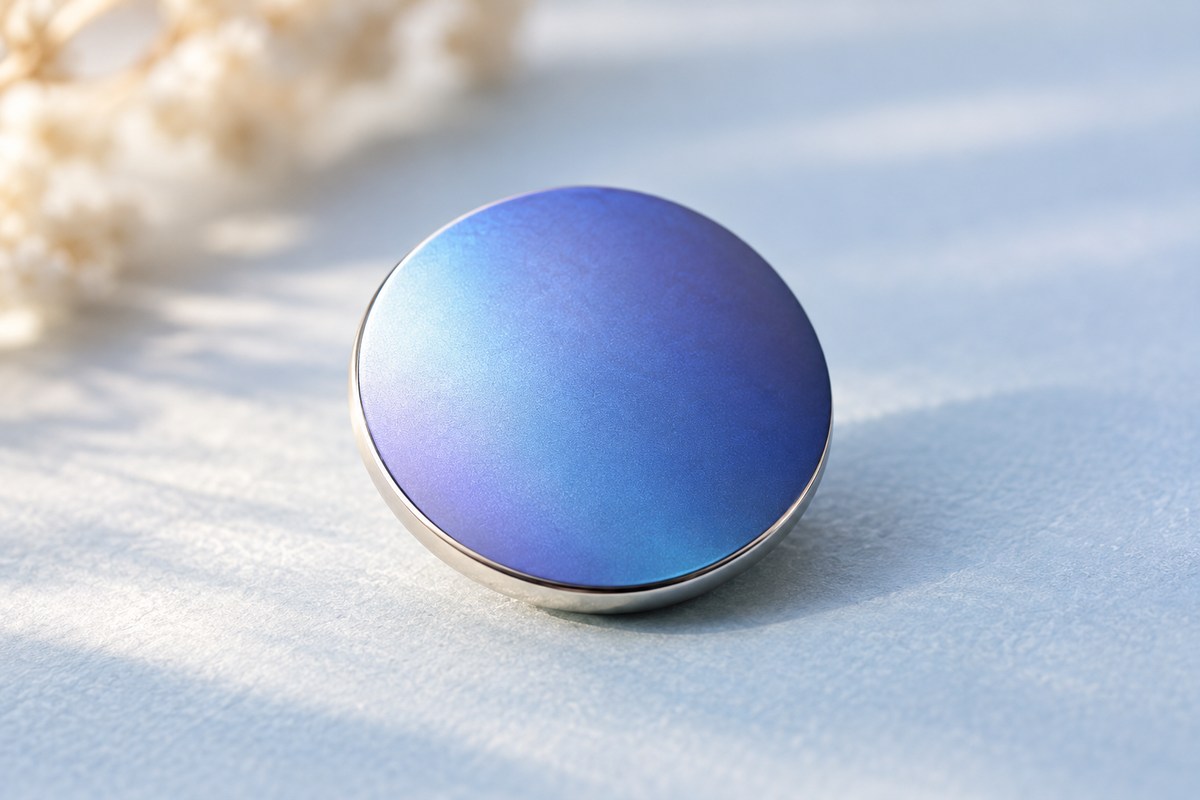
With plating, a separate covering is added over a base material. Gold-plated, gold-filled and vermeil pieces all have gold covering an underlying material, although those descriptions refer to different constructions. They aren't interchangeable names for titanium anodizing.
For anodized titanium, the color comes from the oxide film's optical effect. There doesn't need to be a layer of gold to produce a gold-looking shade through that process. Equally, a gold-colored titanium earring isn't automatically anodized. The seller needs to identify the actual finish.
Start your comparison with two questions: what is the underlying material, and what was done to its surface? If a listing provides only a color option, keep the process marked as unknown. Don't turn an appearance into a manufacturing claim.
Keep color separate from suitability
The Association of Professional Piercers notes that titanium can be anodized in multiple colors and that friction or body chemistry may cause the color to fade. An anodized finish isn't a promise of permanent color, scratch resistance or freedom from allergic reactions.
Its jewelry guidance also considers material standards, appropriate dimensions and surface quality. Those checks remain separate from the coloring method. Knowing that a piece is anodized doesn't establish its titanium grade, and a grade written in a product title isn't an independently inspected certificate.
For the underlying material questions, our titanium material guide offers additional context. When comparing a specific earring, ask for details about that product rather than relying on general statements about titanium. A finish name can't confirm that the post length, thickness or shape suits your piercing.
This article concerns shopping for fully healed piercings. For a new or healing piercing, have a qualified piercer select and assess the jewelry; the examples below aren't initial-jewelry recommendations.
Read these two listings without guessing the finish
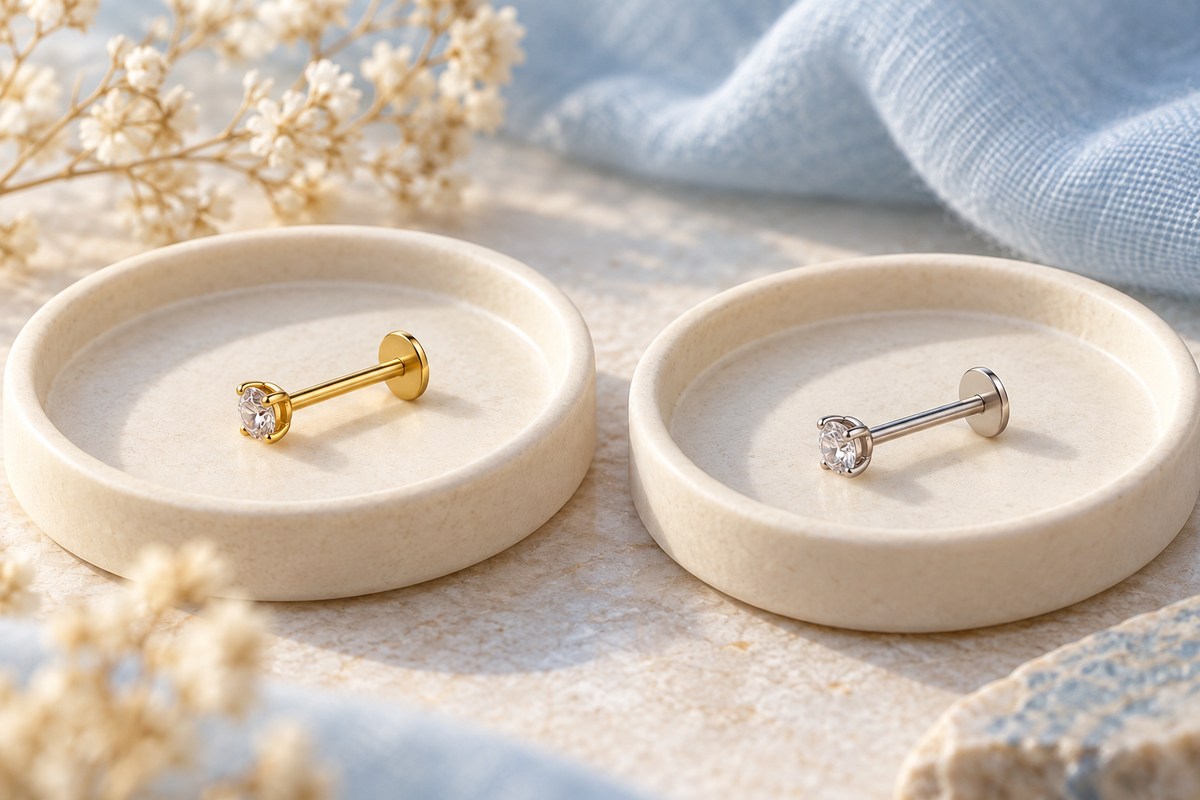
The Crystal Butterfly listing describes F136/G23 titanium alloy with Gold and Natural Titanium color options. It lists a threadless push-pin flat back, a 20G post measuring 0.8 mm in diameter, and a 6 mm wearable length. The butterfly front measures approximately 4.8 by 4.0 mm and has two marquise wings with two round lower crystals. The purchase includes a pair.
The Crystal Trio Bar listing also describes F136/G23 titanium alloy, Gold and Natural Titanium options, and a threadless push-pin flat back. Its listed post is 20G, or 0.8 mm, with a 6 mm wearable length. The front measures approximately 5.3 by 2.1 mm, with three small round crystals in a narrow arrangement. It is also sold as a pair.
These are complete earrings to compare for compatible, fully healed piercings. Neither listing identifies its finish as anodized or PVD. We can't determine the process from those color options. We also haven't independently verified the material labels for this article.
If the coloring method matters to your purchase, ask before ordering. The published dimensions help describe the pieces, but matching post sizes don't establish that either style fits your ear.
Ask about the exact option you plan to buy
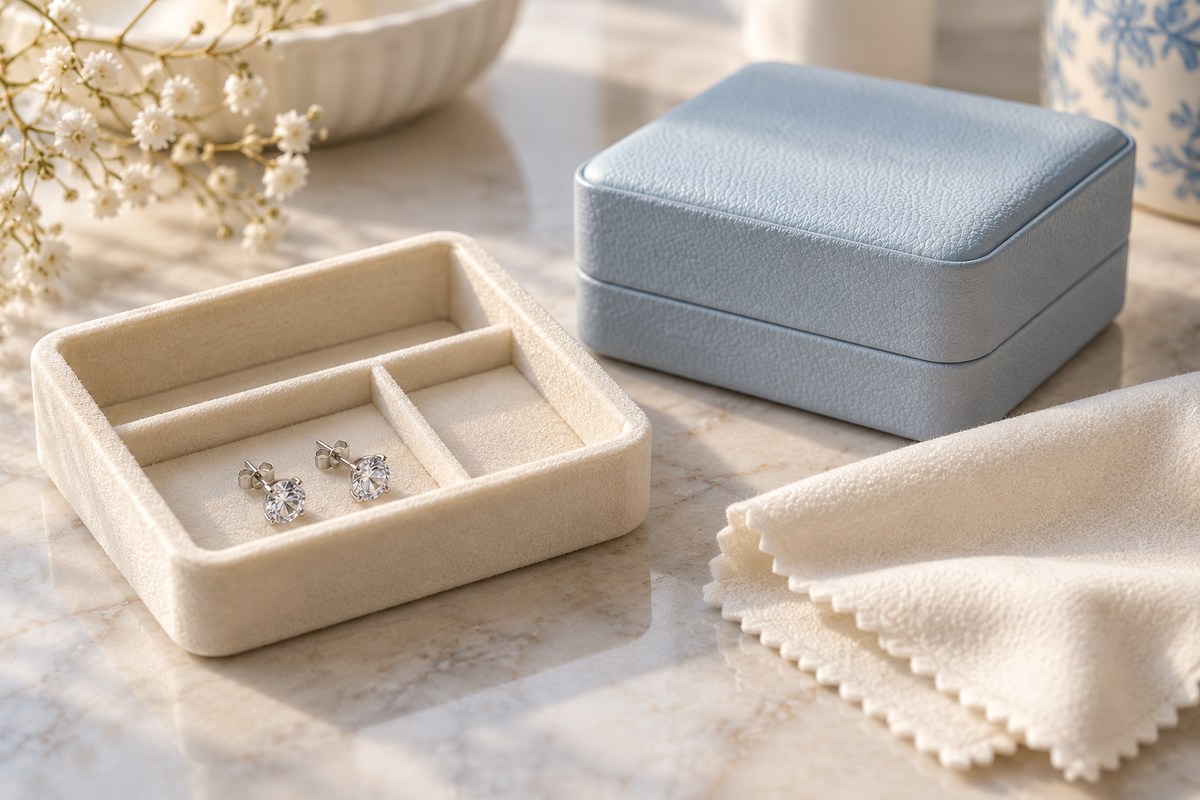
Send the seller the product link and selected color. Ask which process produces that finish and whether the answer applies to the decorative front, post and back. Ask for an answer about your selected option, even if the seller has already described its titanium range.
Keep the reply with the order details. If the seller confirms anodizing, ask for care guidance for the complete earring, including its decorative parts. Don't assume that general advice about a titanium surface covers every component.
If the process remains unspecified, you can still compare the information the listing does provide. Record the missing detail plainly instead of describing the piece as anodized in a review, gift note or later resale listing.
Questions about anodized titanium earrings
Does a bright color mean dye was added?
Not necessarily. Titanium color anodizing can produce visible color through optical interference without dye. Brightness alone doesn't identify the process used on an earring, so check the seller's description.
If the color changes, does that prove the earring was plated?
No. Anodized titanium color can fade, so a change in appearance doesn't prove plating. Contact the seller with your order details and photographs rather than trying to identify the finish from wear alone.
Can two earrings with the same color have different finishes?
Yes. A similar appearance doesn't establish the same manufacturing process or underlying material. Compare the written specifications for each item and ask about any missing finish information before treating them as equivalent.

Related posts
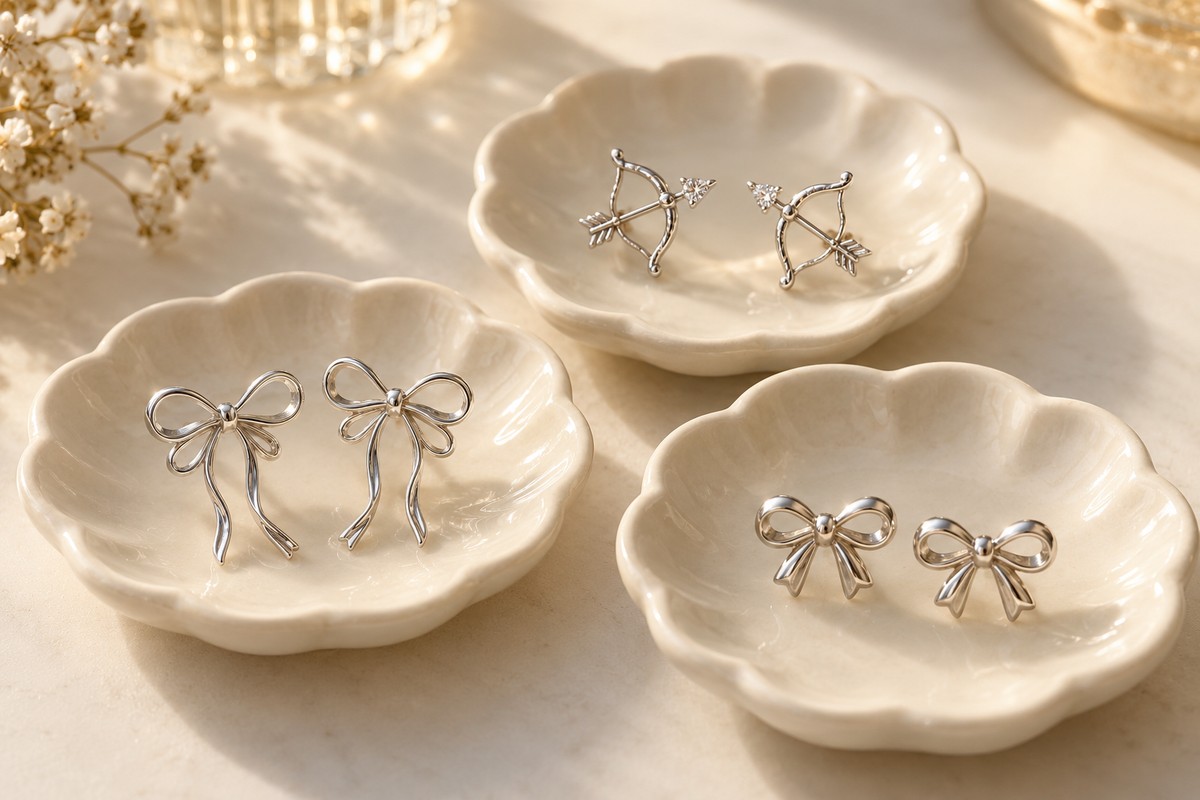
Ribbon Bow Earrings or Arrow-and-Bow Studs? Choose the Motif First
Bow earrings can mean a ribbon knot or an archery design. Refine your search, compare three real pairs, and decide how the motif works with your outfit.
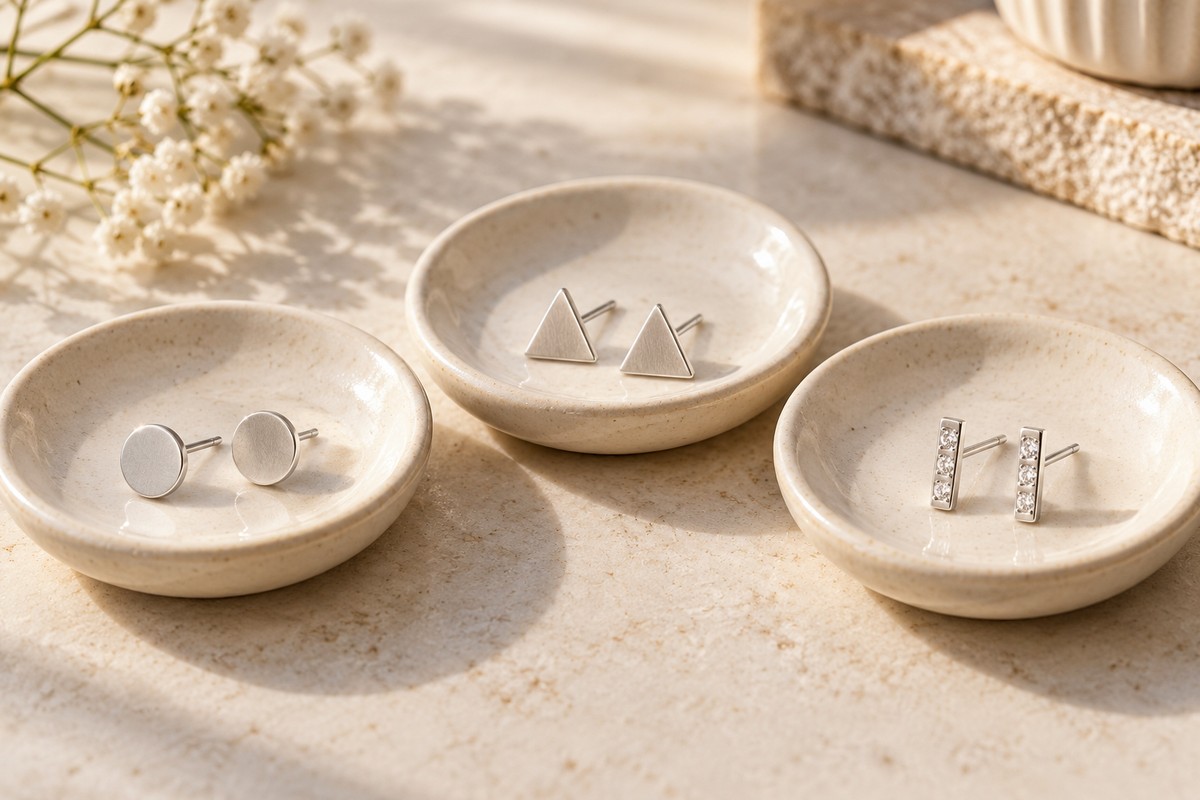
Minimal Geometric Earrings: Round, Triangle or Bar?
Compare round, triangle and bar earrings with the lines in your clothing. Use simple shape, open-space and accessory choices to build a look you enjoy.
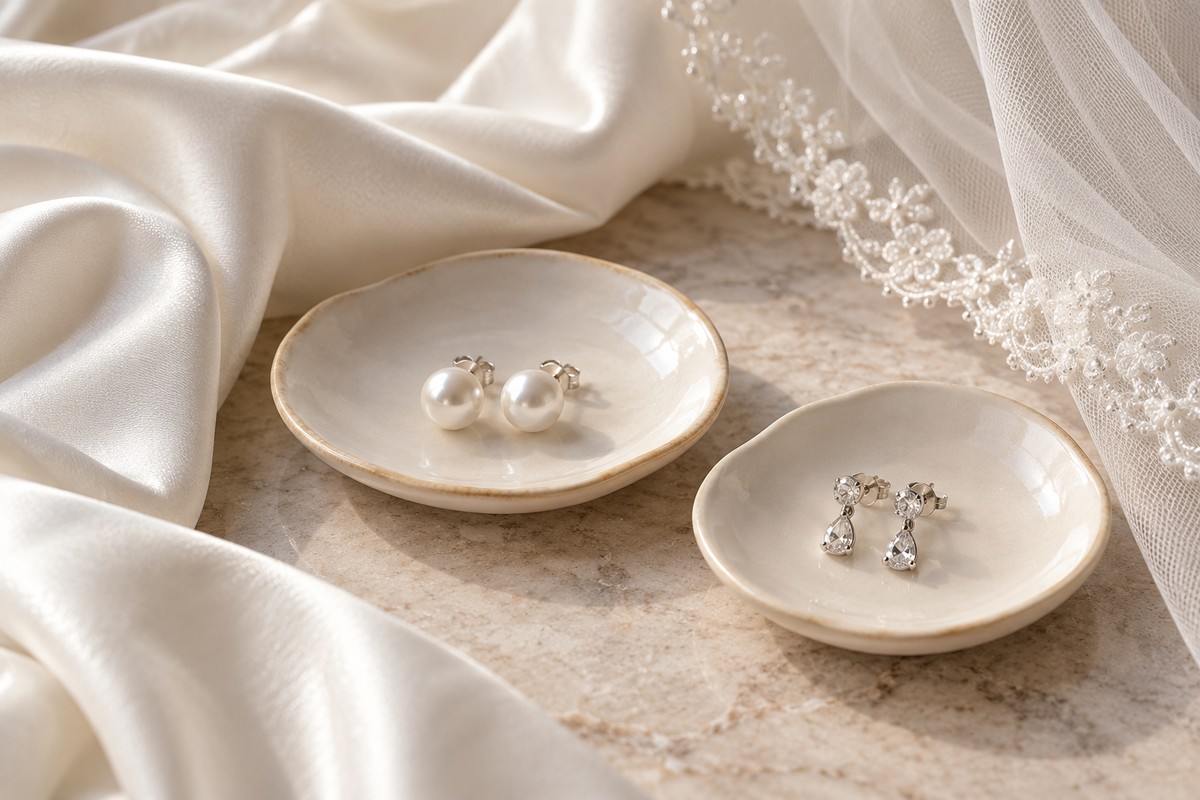
Wedding Earrings for Sensitive Ears: Rehearse the Whole Outfit
Try wedding earrings with your planned hairstyle, veil, neckline and outer layer. Compare photographs, notice catching and prepare a familiar backup pair.