

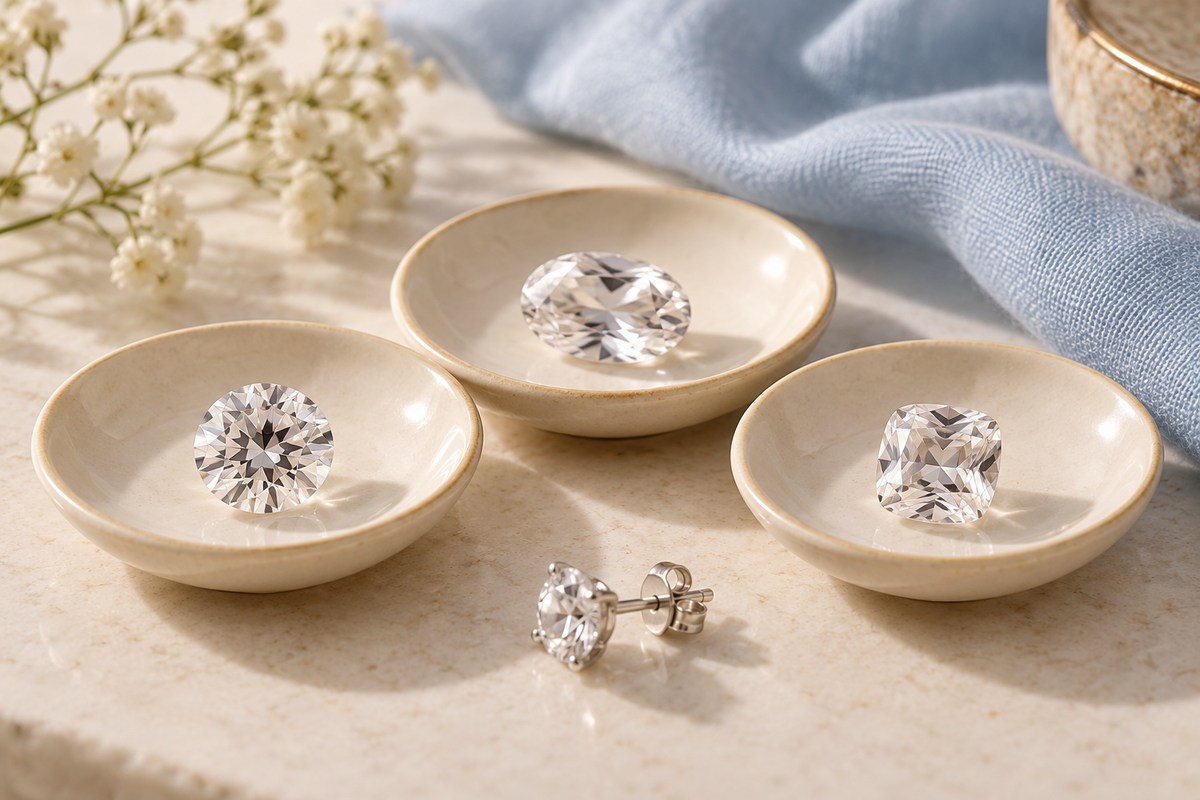
A clear heart stud, a tiny crystal bar and a sparkling hoop can look easy to compare. Open their product descriptions, though, and the stone names may raise more questions than the photos answer. Does “zircon” mean cubic zirconia? Does “crystal” identify a particular material?
Start with the exact wording. A stone name may identify the material, or it may leave you needing more detail. This guide explains how to read those differences and what to ask before buying earrings for fully healed piercings.
Read zircon and cubic zirconia as different names
Zircon is a mineral in its own right. GIA's zircon guide identifies its chemical composition as zirconium silicate, written ZrSiO4. The word is not simply a shortened spelling of cubic zirconia.
Cubic zirconia, usually shortened to CZ, is a different material. The CZ used in jewelry is typically manufactured and can serve as an imitation gem. Similar-looking names don't make zircon and cubic zirconia interchangeable.
That distinction matters when reading a listing. If a description says “zircon,” keep that wording when you ask the seller for clarification. Don't silently translate it into CZ. Equally, the presence of the word in a product title doesn't give you independent verification of the stone's identity or origin.
Ask what material the seller means and what documentation supports the description. You can enjoy the design while still wanting a precise answer about what you're buying.
Treat crystal as a question about composition
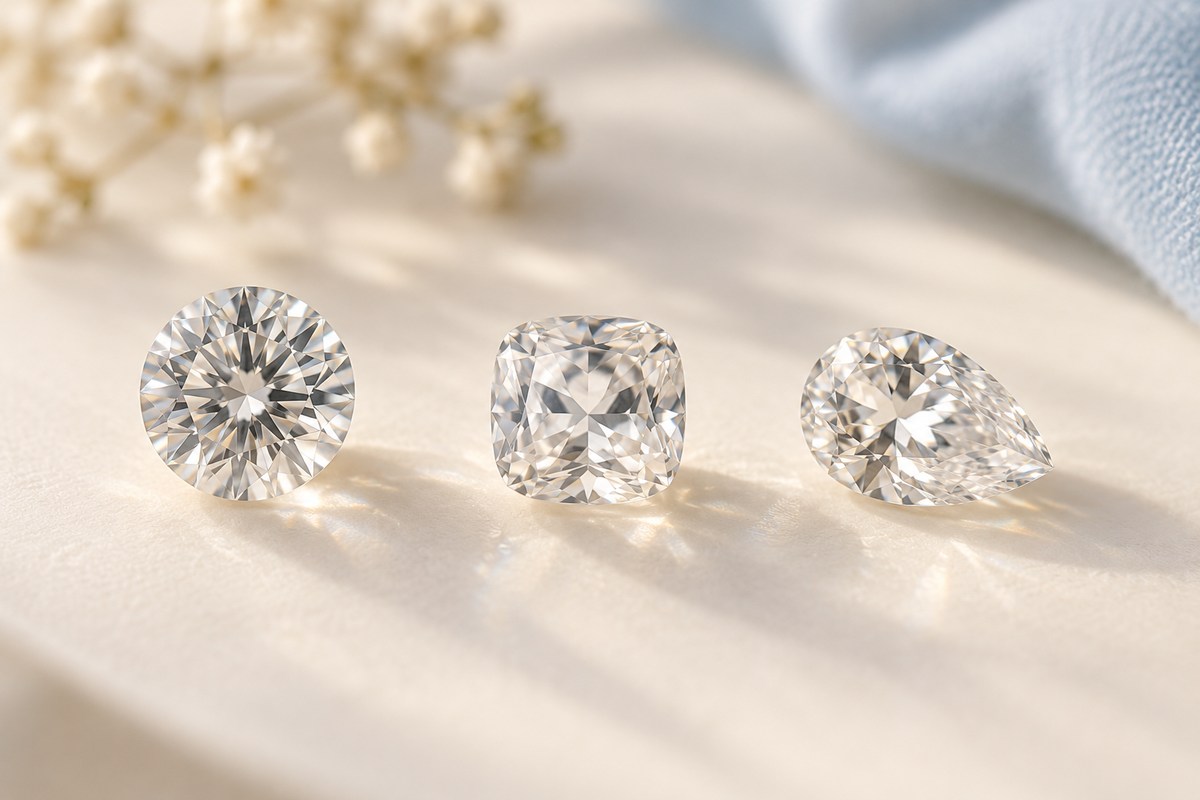
“Crystal” on its own doesn't tell you exactly what a jewelry stone is made from. A listing needs more detail before you can identify its composition. Don't assume the word always means glass, quartz or cubic zirconia.
Look for a separate stone field in the product details. Does it name a material, repeat “crystal,” or describe only the color and shape? “Clear,” “round” and “three-stone” help you picture the design, but they don't identify the substance.
If the composition matters to your purchase, ask the seller to name it explicitly. A useful question is: “What is the exact material of the stones in this product?” Include the product link and selected option so the answer relates to the earrings you plan to order.
A photograph can help you compare the arrangement and setting. It can't fill in an unspecified stone material, even when the sparkle looks familiar.
Keep imitation and style wording intact
GIA's guide to imitation gems explains the distinction between a material that resembles another gem and a laboratory-grown version of that gem. CZ used to imitate a diamond is not a laboratory-grown diamond. For that separate buying comparison, see our diamond earrings guide.
Look closely at phrases such as “moissanite-style,” too. The ending matters: a style description doesn't independently establish that the stone is moissanite. Don't drop “style” when comparing products or asking for more information.
Also separate a stated color description from evidence of grading. A listing that uses “D-color” doesn't, by itself, establish that an independent grading report exists. Ask whether supporting documentation is available and what, exactly, it identifies.
You don't need to turn every small jewelry purchase into a laboratory investigation. You do need to avoid paying for a particular material on the strength of wording that only promises a look.
Compare the wording on three product pages
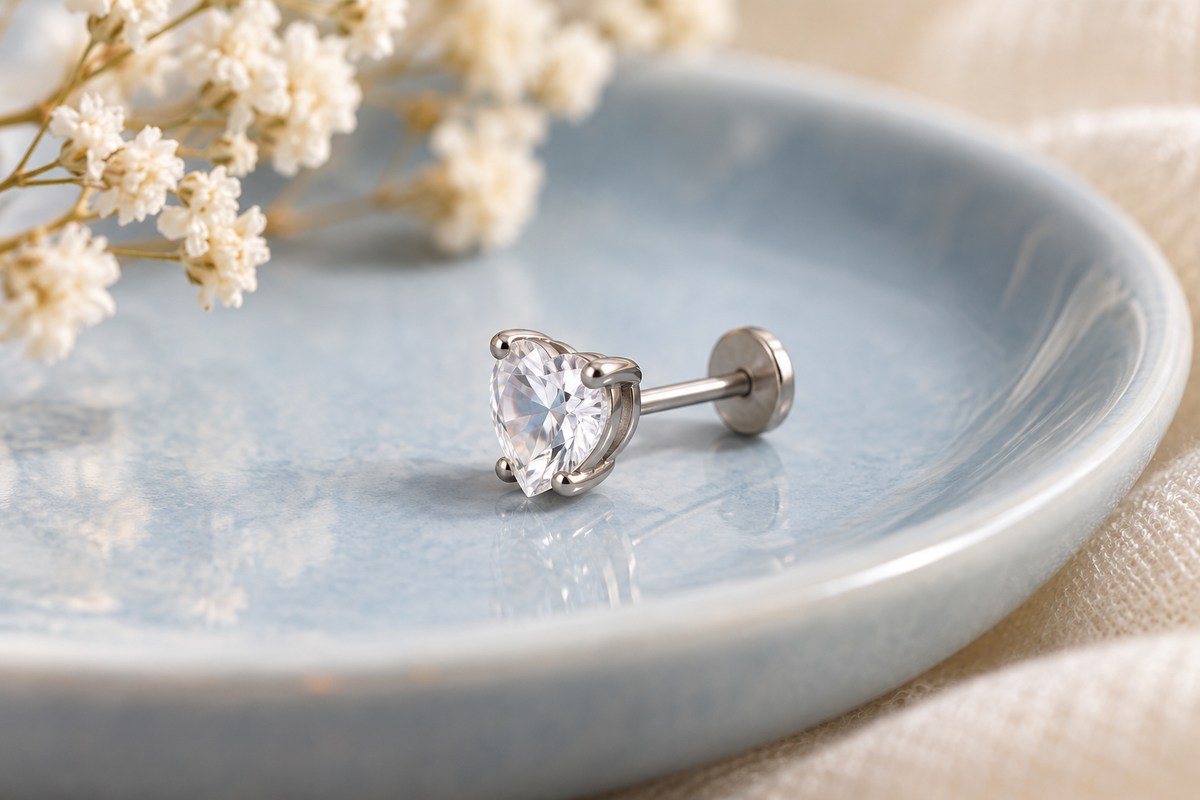
Our Clear Zircon Heart listing describes white zircon in a four-prong heart setting. It lists an approximately 6 mm heart front, a 1.2 mm post diameter and an 8 mm post length, with a threaded flat back. These are the listing's stated details. Without independent mineral identification, we aren't upgrading “white zircon” to verified natural zircon or relabeling it CZ.
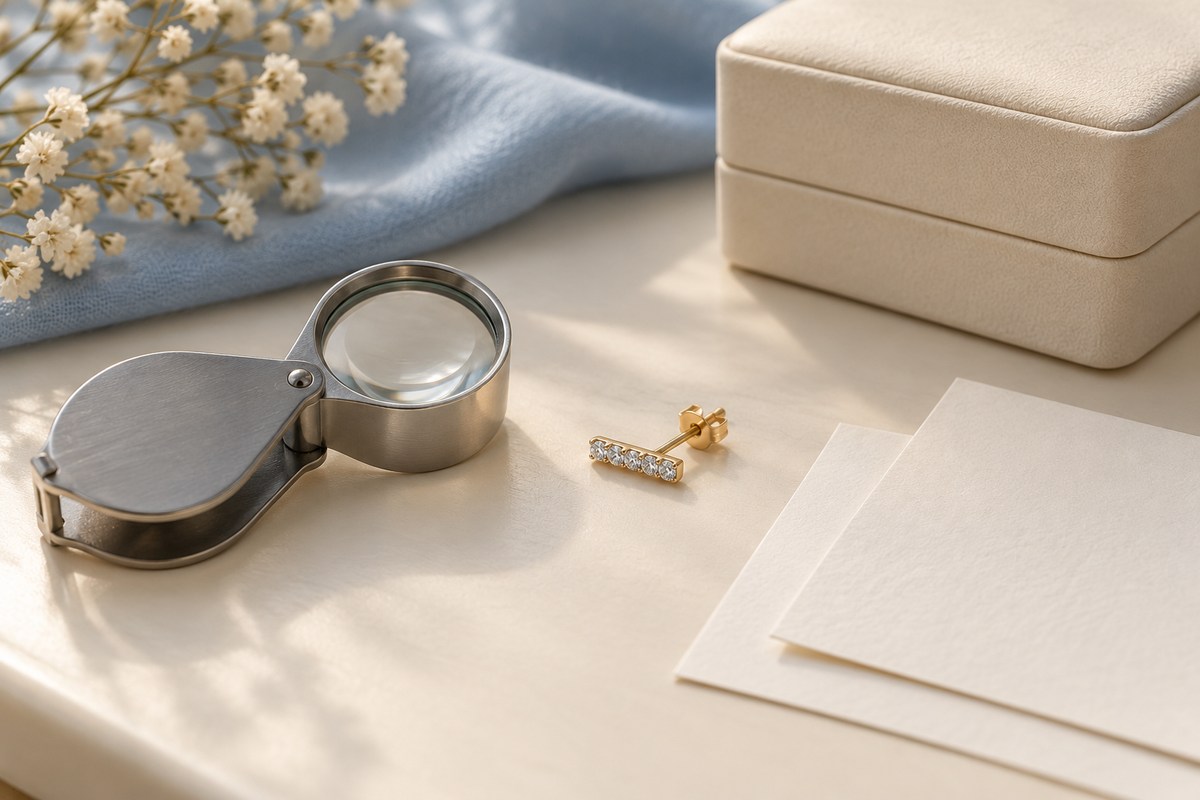
Crystal Trio Bar describes three small crystals in a narrow bar. Its listed front is approximately 5.3 by 2.1 mm, and its threadless flat-back post is 20G, or 0.8 mm in diameter, with a 6 mm wearable length. The word “crystal” leaves the stones' exact composition unspecified.
Moissanite Huggie uses the more qualified wording “D-color moissanite-style stones” in its detailed stone field. Keep that qualification even though the product name is shorter. It lists a 1.0 mm post, a 12 mm hoop diameter and a hinged clasp. That stone field isn't independent confirmation of moissanite composition or certified D-color grading.
Use these examples when shopping for compatible, fully healed piercings. Choose the fit separately from the stone appearance, and ask about any missing details before ordering.
Check the metal and fitting separately
A stone name doesn't identify the material of the post, back or setting. Likewise, a listing's F136 or G23 titanium wording doesn't establish the identity of its stones. Read each field for the part it actually describes.
For sensitive ears, don't treat a familiar gem name as a promise that an earring won't cause a reaction. Confirm the materials of the parts that contact your ear, along with the post dimensions and closure. No stone label guarantees comfort or an allergy-free result.
Save the seller's answer with your order details. If the answer remains vague, decide whether you are comfortable buying for appearance alone. If a specific material is essential to you, wait for a clear answer before purchasing.
Questions about earring stone names
Is CZ an abbreviation for zircon?
No. It stands for cubic zirconia. If a listing mixes the two names, ask the seller which material the product contains rather than choosing the meaning yourself.
Can two earrings labeled crystal contain the same material?
They may, but the shared word doesn't establish that. Ask for the composition of each product if you need a material comparison. Matching color or shape doesn't resolve the missing detail.
What if the product title and detailed stone field differ?
Read both and ask the seller to reconcile them. Keep qualifiers such as “style” in your question, and request an answer for the exact product and option. Don't assume the shorter title overrides the more specific wording.

Related posts
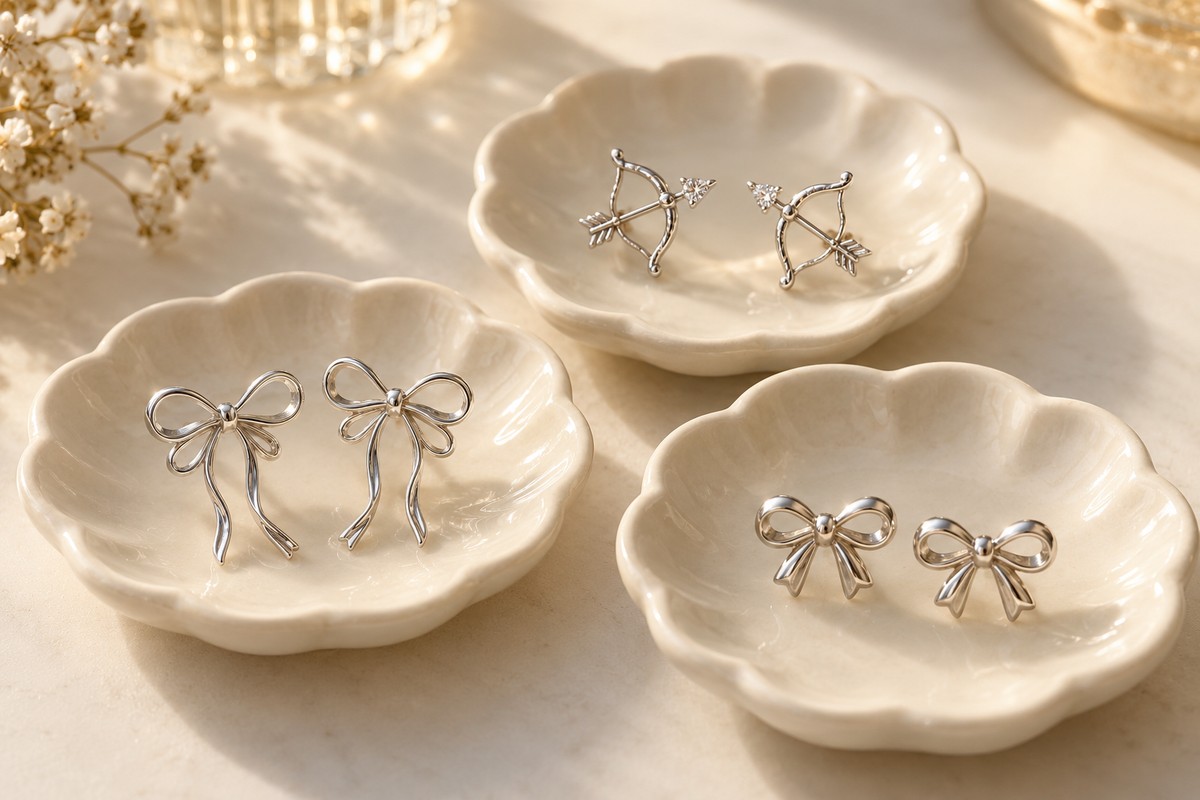
Ribbon Bow Earrings or Arrow-and-Bow Studs? Choose the Motif First
Bow earrings can mean a ribbon knot or an archery design. Refine your search, compare three real pairs, and decide how the motif works with your outfit.
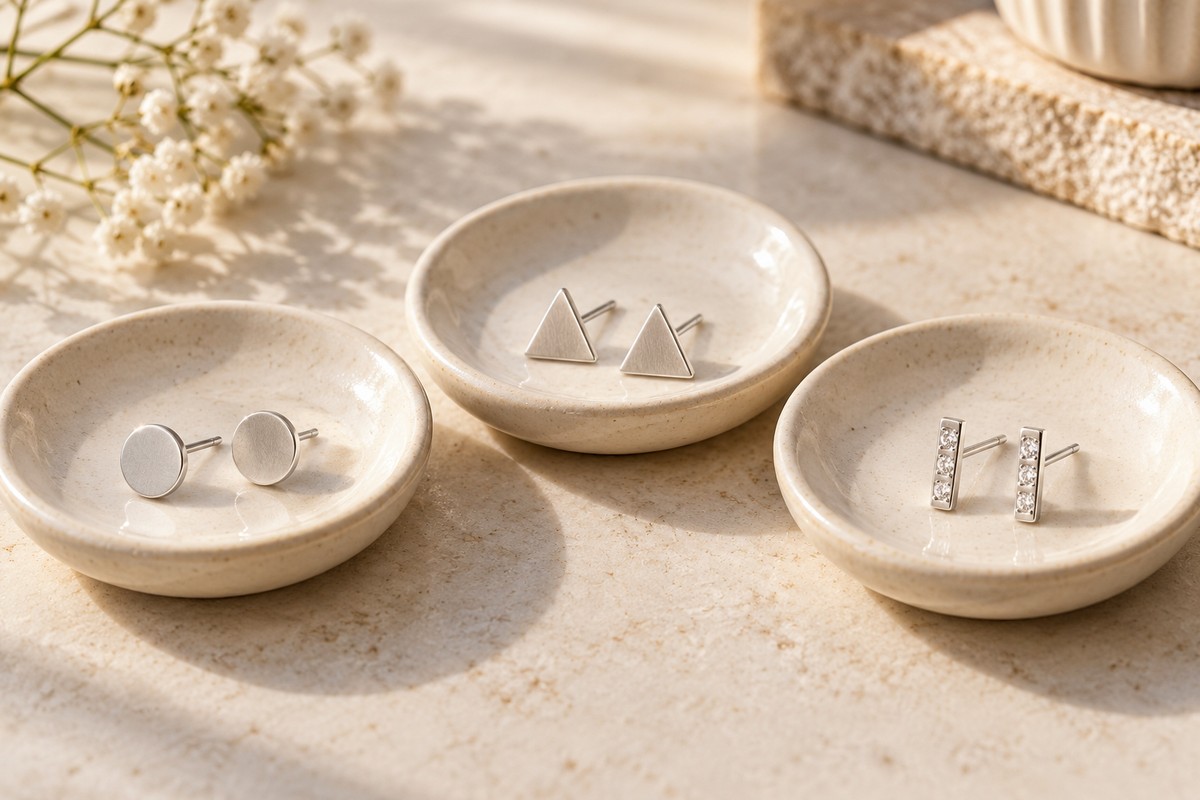
Minimal Geometric Earrings: Round, Triangle or Bar?
Compare round, triangle and bar earrings with the lines in your clothing. Use simple shape, open-space and accessory choices to build a look you enjoy.
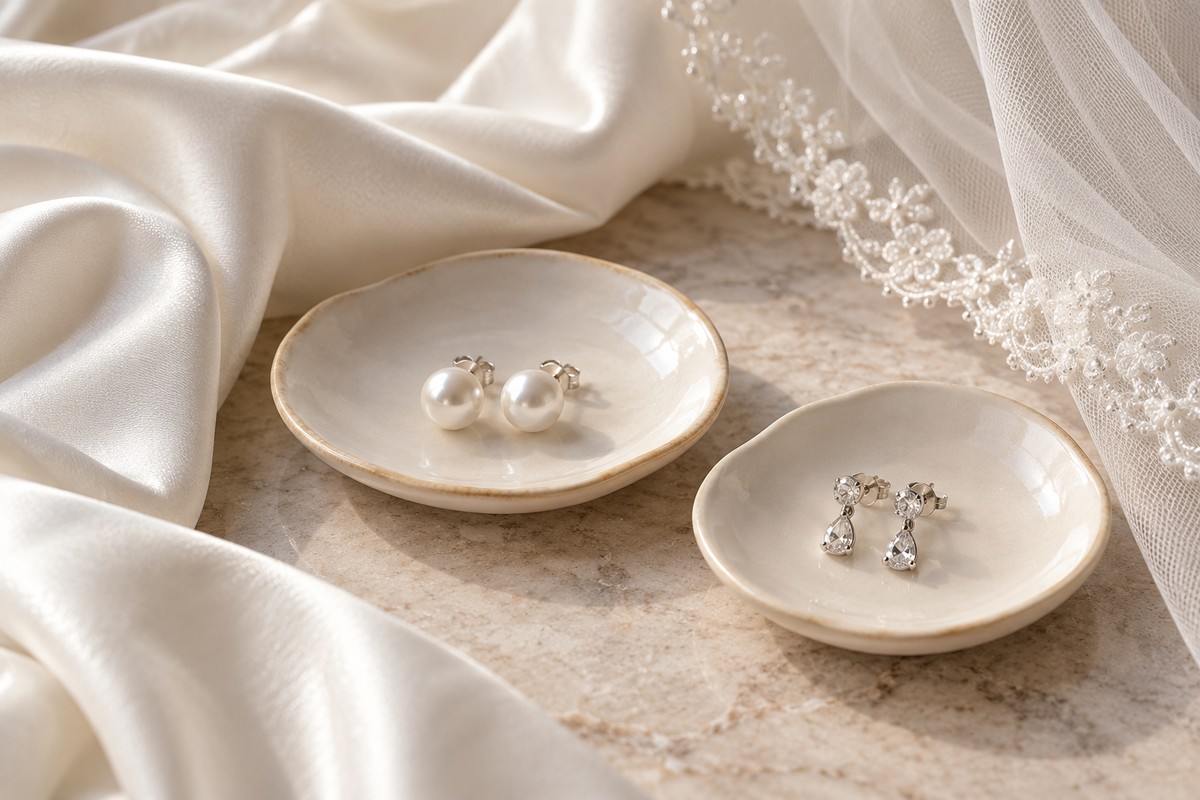
Wedding Earrings for Sensitive Ears: Rehearse the Whole Outfit
Try wedding earrings with your planned hairstyle, veil, neckline and outer layer. Compare photographs, notice catching and prepare a familiar backup pair.