

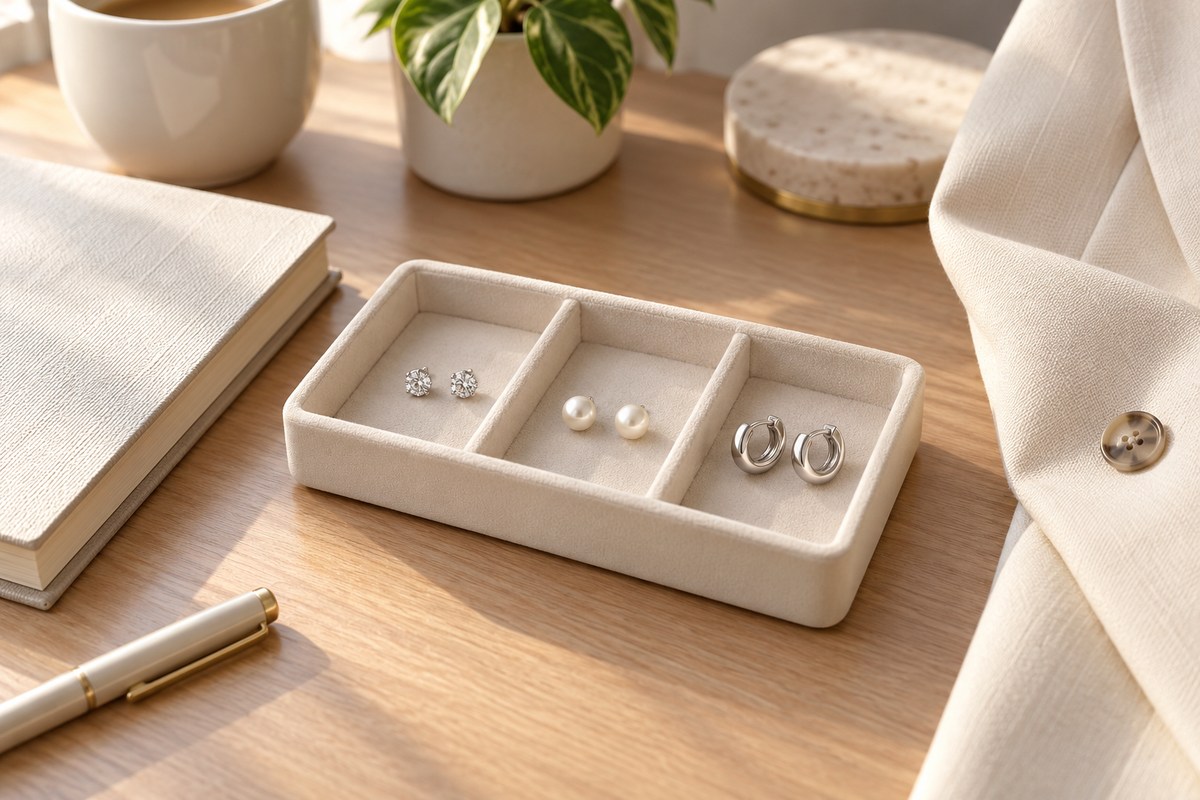
Keeping a few familiar pairs of earrings together can make workday mornings easier. One simple stud, one pearl-front pair and one compact hoop offer three different looks without needing another piercing or a crowded jewelry box.
This is a styling plan for fully healed piercings that feel comfortable now. You can wear one pair for several days, choose the same favorite every morning, or leave out a style you don't enjoy. Three pairs are a starting point, not a requirement to buy more jewelry or change earrings every day.
Start with the day you actually have
Start with the clothes and equipment you wear during a normal shift. A loose scarf, a high collar or hair tucked behind your ears may change how a shape feels. Try a pair with those clothes before deciding it belongs in your regular rotation.
Your workplace's own rules come first. If your role requires removing jewelry or limits its shape, check those rules directly. A small stud doesn't automatically meet a uniform, food-handling or equipment policy. This guide can't establish what your employer permits.
For a desk-based day, look at your earrings in a mirror from a normal conversation distance. You might prefer a tiny point of sparkle with a patterned shirt and a rounder front with a plain top. Those are choices about the look you want, without a rule that everyone needs the same office jewelry.
Give each pair a different job
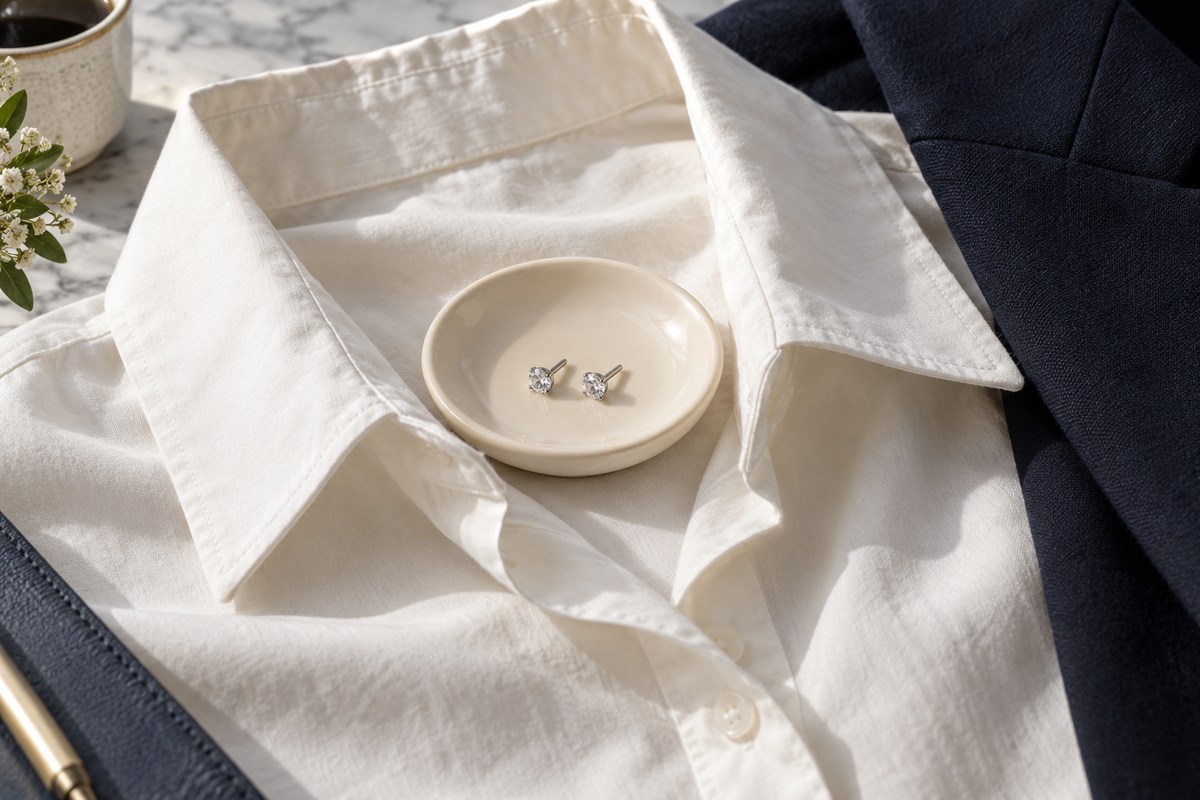
Choose the first pair for the mornings when you want something simple. Our Small Solitaire listing describes an approximately 3 mm front, a flat-back post and a 20G, or 0.8 mm, post diameter with 6 mm wearable length. The product details list G23 titanium. Its title uses F136 wording, but that title alone doesn't establish an independently verified material certificate. Ask about documentation if you need a particular standard confirmed.
The second pair can change the outline while keeping the rest of your outfit familiar. The Titanium Pearl listing describes an approximately 6 mm pearl front, F136 titanium alloy and a threaded flat-back post. Its stated post diameter and wearable length are 0.8 mm and 6 mm. A pearl front makes a different visual choice from a small crystal, though it doesn't tell you whether that post length fits your ear.
Use a compact hoop as the third option if hoops already suit your healed piercings. The Rooftop Huggie listing describes a huggie clasp, a compact profile and F136 / Gr23 titanium alloy. It doesn't give a numeric inner diameter or post gauge. Ask for those measurements before ordering for a specific fit; the word “huggie” isn't a size.
These three examples come from our current catalog. They're alternatives to compare, rather than a matched system of interchangeable parts. Choose complete earrings whose individual dimensions work for you.

Check the parts that sit against your skin
Check more than the decorative front. Check the post, rear component and any coating or plating in the listing. If the material of one skin-contact part is missing, ask the seller before assuming it matches the front.
The American Academy of Dermatology identifies nickel as a cause of allergic contact dermatitis and notes that earring posts and backs can contain it. A familiar material name or a “hypoallergenic” label isn't a guarantee that every wearer will tolerate the complete earring. Repeated itching or a rash is a reason to seek medical advice, rather than keep trying to make the pair work.
Read our earring size guide if you're comparing post diameter, wearable length or hoop diameter. A listing's measurements describe the jewelry. They don't measure your ear, and a thicker post isn't something to force through a smaller opening.
Keep the rotation easy to use
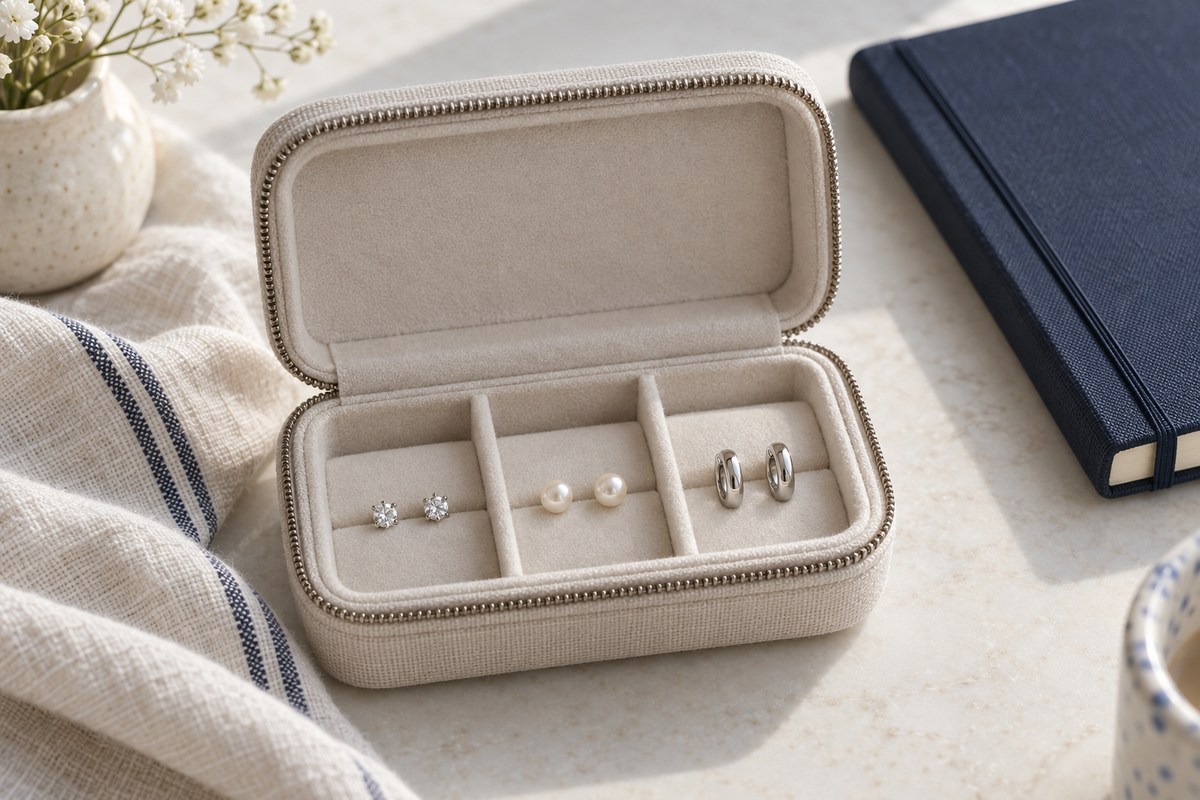
Give each pair its own place in a small divided tray or case. Keep the original product information with it, particularly if two pairs look similar but have different closures. Store the complete pieces together so a loose front or back doesn't get assigned to the wrong pair.
You can plan tomorrow's pair with your clothes the night before. Handle it with clean hands, inspect the closure according to that earring's instructions, and put it away separately when you're finished. Follow the seller's care guidance for its stones, finish and construction rather than using one cleaning method for everything.
Make a note of a pair that catches on a collar or feels uncomfortable during your normal day. Our guide to earrings with glasses and headphones offers a separate way to check contact with those accessories. A flat back can still meet a glasses arm or ear cushion, depending on its position.
Leave uncomfortable piercings out of the experiment
Keep the routine manageable. If an ear is sore, swollen or still healing, don't keep changing earrings to compare styles. Get advice about the piercing and fit before returning to the plan.
You can also keep a rotation to one or two pairs. If you already have earrings that fit, match the dress code and feel comfortable, wear them. The useful part of this idea is having a few dependable choices that you understand, including their dimensions and fastenings.
Questions about earrings for work
Do I need three pairs for this to work?
No. Start with the pair you already reach for. Add another only if it offers a different look or fills a practical gap in your wardrobe. You don't need to fill every slot in a jewelry case.
Can I follow this plan with one lobe piercing in each ear?
Yes. Each option is a complete pair for a compatible healed piercing on each side. Wear one pair at a time; no extra holes or multiple-earring arrangement is needed.
Are small hoops suitable for every workplace?
No. Check your employer's requirements and the actual tasks you do. A compact shape may suit your personal style, but it doesn't establish permission or equipment compatibility.

Related posts

Ear Piercing Costs: What Your Quote Should Include
Compare ear-piercing quotes by the number of holes, complete jewelry, follow-up services and other charges, with specific official studio examples.
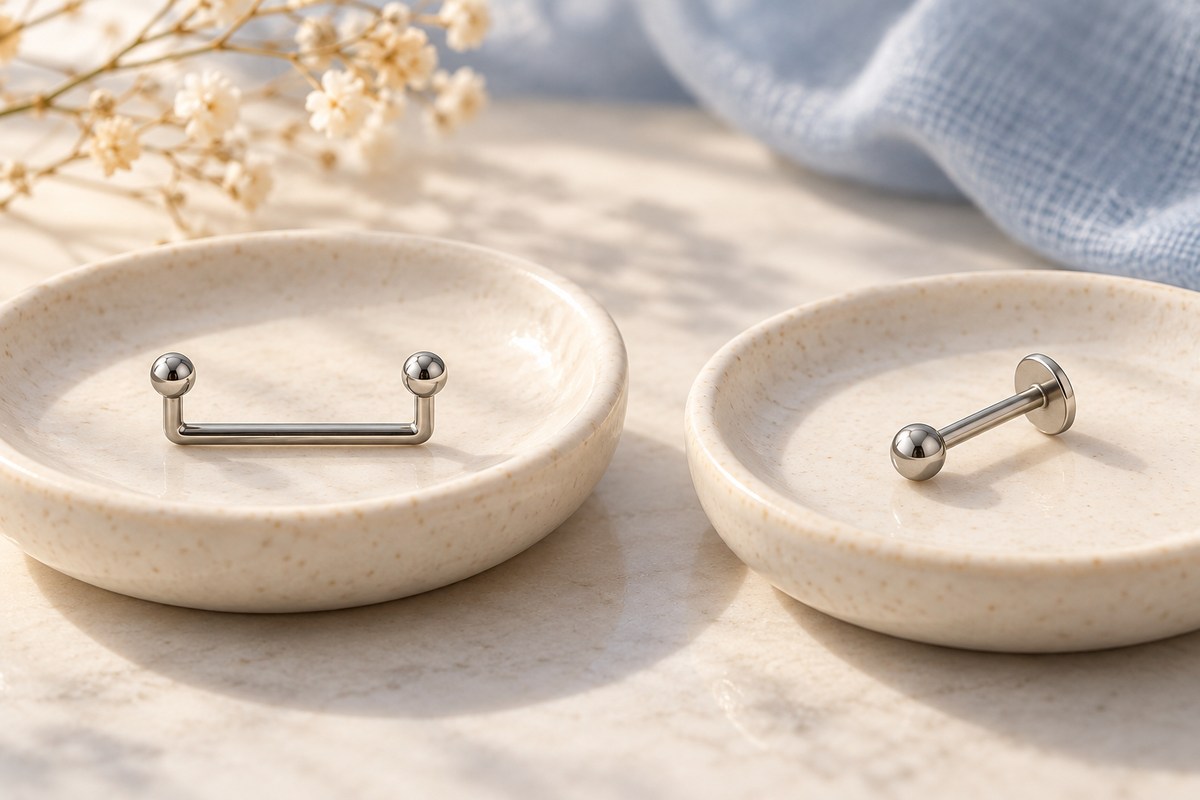
Surface Tragus vs Tragus: Why the Jewelry Is Different
Learn how surface bars, labret studs and surface anchors differ, and what to confirm before buying jewelry for a piercing beside the tragus.
Vertical Helix vs Hidden Helix: Check the Jewelry Direction
Compare vertical and hidden helix descriptions, check what product photographs leave out, and read jewelry specifications for a fully healed piercing.