

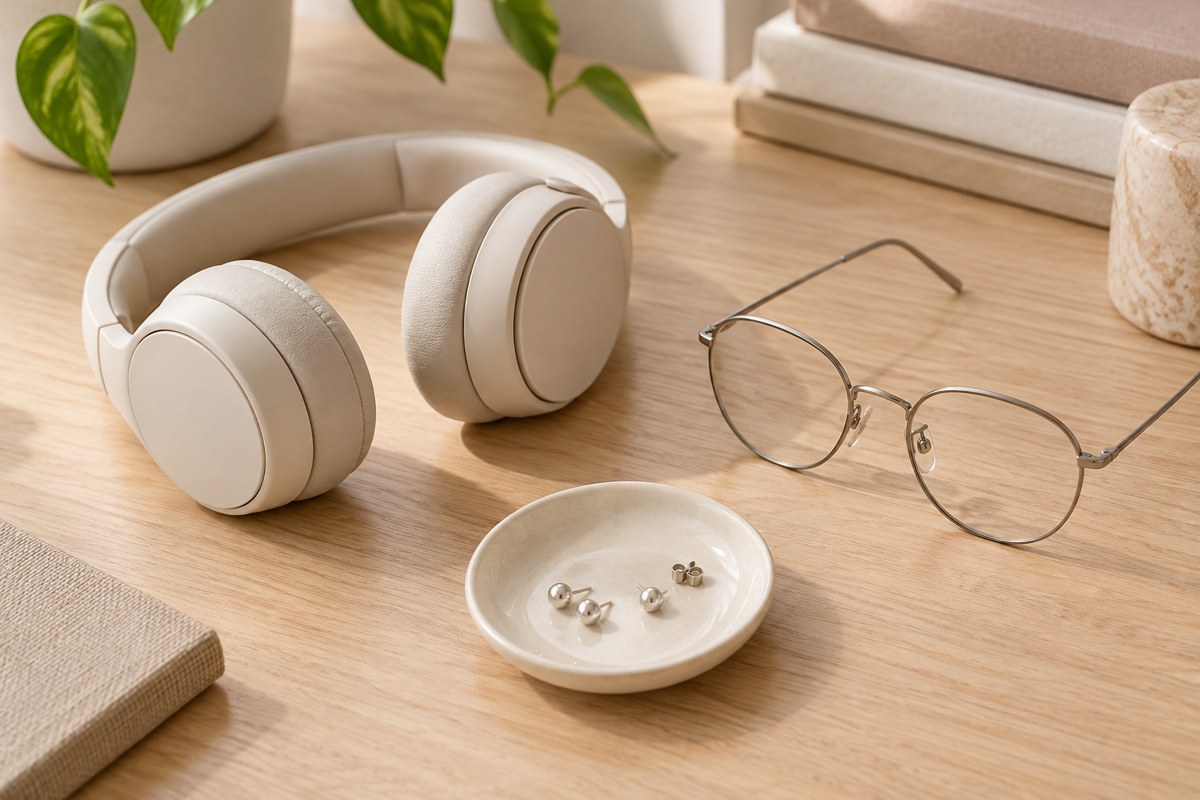
Your earrings may feel fine until you put on your glasses and join a call. Before shopping for another pair, look at where the glasses arm, headphone cushion and jewelry meet. A small front can still sit directly under an accessory.
The shopping examples below are for fully healed, compatible piercings. If yours is healing, ask your piercer to help plan around the equipment you use. Don't change jewelry yourself to make a headset fit.
Start with the glasses you actually wear
Put on your glasses in their usual position. Look in a mirror, or ask someone to help you see behind your ear. Notice where each arm rests and whether it touches the earring's front, post or back. Check both sides; don't assume they have the same clearance.
Keep the glasses where they normally sit. Moving them into an awkward position to make room for an earring doesn't tell you much about everyday fit. If the frame needs adjustment, ask an optician. Prescription glasses and hearing aids take priority over a jewelry choice; don't remove or replace necessary devices to accommodate earrings.
Describe the contact in plain words: “the arm meets the back” is more useful than “this stud feels too big.” That gives a piercer or optician a specific place to inspect.
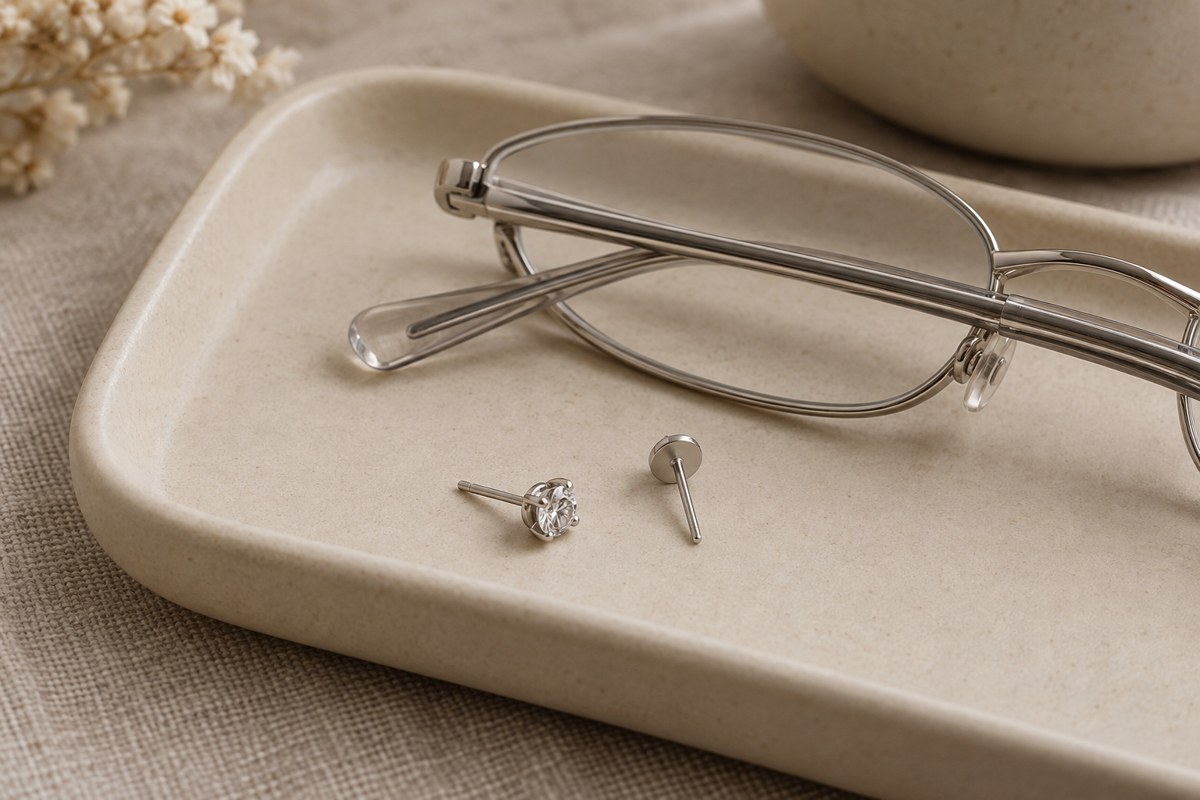
Add your usual headphones without pressing
With your glasses still on, bring your headphones into their normal position gently. Stop if putting them on requires pressing the jewelry into your ear. Don't force the ear into a cushion opening or push an earbud past a stud.
Look at the contact point. Does a cushion edge meet the decorative front? Does it press the glasses arm toward the earring? Is an earbud touching jewelry near the ear opening? These are different fit problems, even when the earrings are identical.
Use the adjustment options described by the headphone maker only if they let the equipment sit normally without pressure on the jewelry. A different audio option may be worth considering when practical, but its fit needs checking too. There isn't one headphone shape that clears every ear and piercing arrangement.
This is a contact check, not a test of how much discomfort you can tolerate. If pressure appears, take the accessory off rather than waiting to see whether you get used to it.
Choose around the contact point
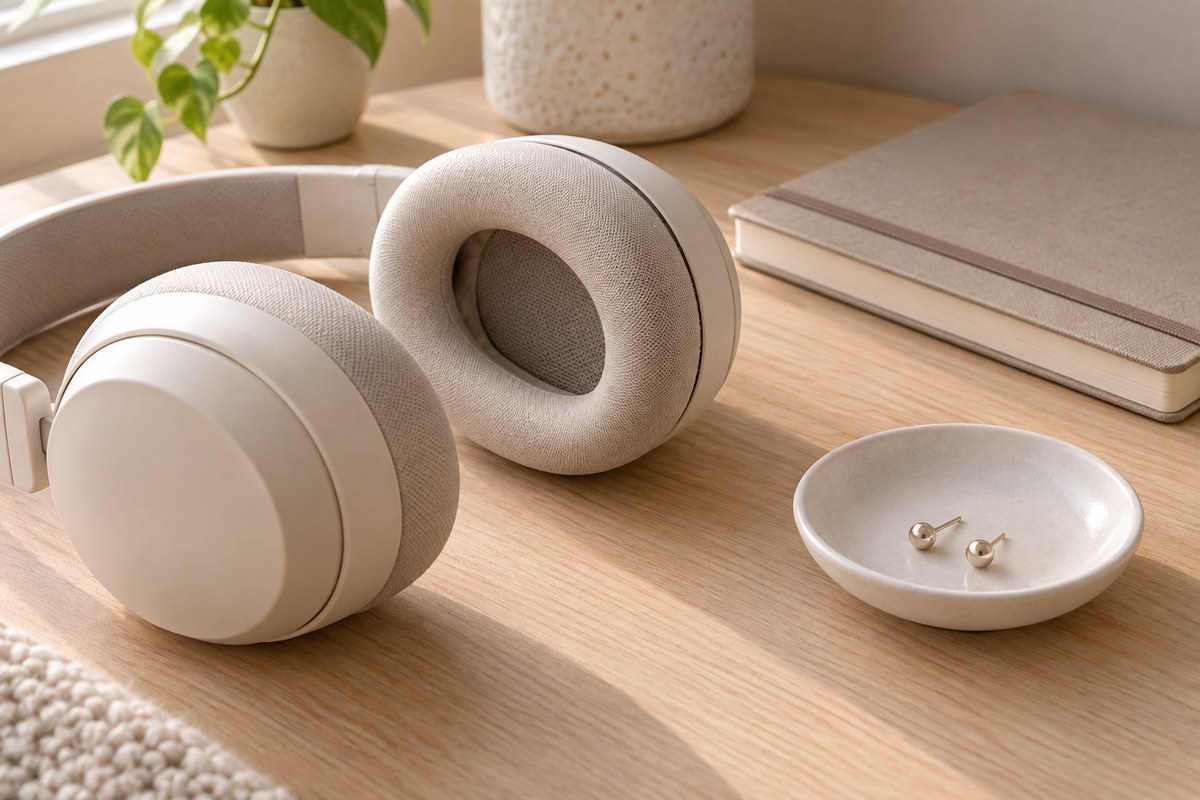
For healed piercings, compare jewelry only after you've identified where space is tight. Our Small Solitaire flat-back studs list an approximately 3 mm face and a 20G, 0.8 mm diameter post with a 6 mm wearable length. The product details specify G23 titanium. Those details describe the earring; they don't establish that it will clear your glasses or headset.
The Crystal Trio Bar has an approximately 5.3 by 2.1 mm face, a threadless push-pin flat back and a listed 20G by 6 mm post. Its narrow face has a different outline from the round solitaire. Consider where that longer outline would sit relative to the cushion rather than choosing it simply because it's called small.
The Titanium Pearl flat-back studs have an approximately 6 mm pearl face, a threaded flat back and a listed 20G by 6 mm post. That larger front gives you another shape to compare against the contact area. Check the complete fitting before choosing them for a healed piercing; shared post dimensions don't establish equal comfort with your equipment.
These are product examples to compare, not earrings tested with every headset. A flat back or titanium material doesn't guarantee comfort or safety. Keep the piercing's fit requirements in the decision; don't choose a tighter post just to tuck the earring under a glasses arm. If appropriate for your fully healed piercing, leaving that position without jewelry may be an option to discuss with your piercer.
Keep the equipment clean and address pressure early
The Association of Professional Piercers advises avoiding pressure and friction during healing. Its aftercare guidance also calls for cleaning phones, headphones and eyeglasses with an appropriate disinfectant. Follow the equipment maker's cleaning instructions, and keep device-cleaning products away from the piercing itself.
Clean equipment can still press against jewelry. If a healing piercing and necessary equipment compete for the same space, contact your piercer for a plan. Bring the glasses or headphones so they can see the actual contact. Seek medical advice for significant, worsening or otherwise concerning symptoms; buying another earring isn't a way to diagnose the cause.
Questions about earrings and everyday equipment
Should I check sunglasses separately from prescription glasses?
Yes. Check each frame you use with your headphones. One pair clearing your earrings doesn't establish that another pair will sit in the same place. Keep the actual frame in mind when discussing jewelry or glasses adjustments.
Can I judge headset clearance from a product photograph?
A photograph can help you compare shapes, but it doesn't show how an earring will sit on your ear beside your equipment. Read the listing dimensions and ask about missing details. Take photographs of the contact area to a piercer if it's hard to describe.
What should I bring to a piercing consultation?
Bring your everyday glasses and headphones, plus the listing or order details for the jewelry. Explain when contact happens, including whether it starts only when you wear both accessories together. That gives the piercer more to work with than the earring's name alone.

Related posts

Ear Piercing Costs: What Your Quote Should Include
Compare ear-piercing quotes by the number of holes, complete jewelry, follow-up services and other charges, with specific official studio examples.
Surface Tragus vs Tragus: Why the Jewelry Is Different
Learn how surface bars, labret studs and surface anchors differ, and what to confirm before buying jewelry for a piercing beside the tragus.
Vertical Helix vs Hidden Helix: Check the Jewelry Direction
Compare vertical and hidden helix descriptions, check what product photographs leave out, and read jewelry specifications for a fully healed piercing.