

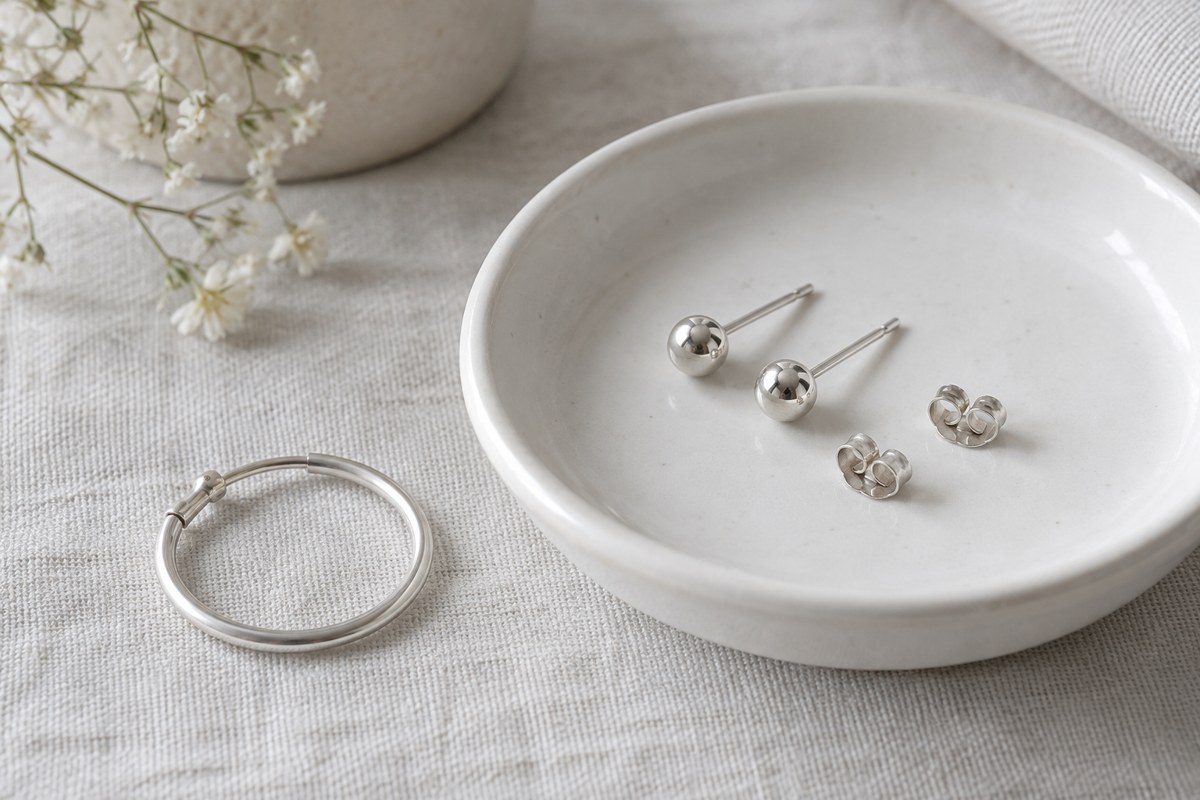
Sterling silver won't suit every sensitive ear. A 925 label gives you useful information about silver content, but it doesn't answer every question about the finished earring. Before buying, find out what touches your skin: the post, the back and the decorative body may need separate answers.
This guide is for choosing jewelry for fully healed, compatible piercings. If your ear is already irritated, a new material label isn't a diagnosis or a treatment plan.
Start with what 925 actually tells you
GIA explains that sterling silver contains 92.5% silver mixed with 7.5% other metals. The additional metals help make the alloy suitable for jewelry. That definition describes silver purity; it doesn't identify the complete alloy recipe for a particular pair.
So a seller's statement that a piece is S925 sterling silver is a starting point. If you know you react to a particular metal, ask whether that metal is present in the relevant components. Don't fill in a missing specification from the color of the photograph.
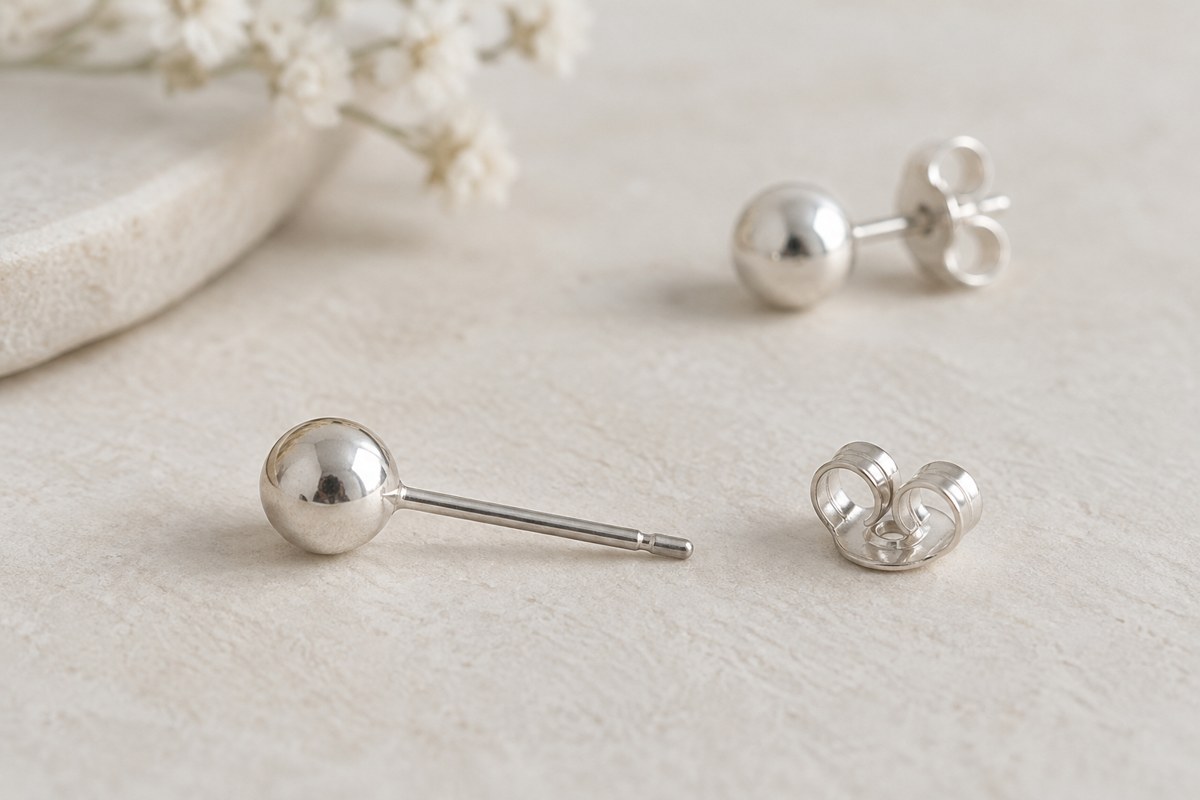
Read the material line for each component
Look for wording that distinguishes the post from the rest of the earring. “Sterling silver earrings” and “sterling silver post” can describe different constructions. A gold-colored surface also doesn't tell you whether the underlying piece is sterling silver, titanium or another metal.
The American Academy of Dermatology identifies nickel as a cause of allergic contact dermatitis and notes that earrings and earring backs can be exposure sources. Check the back as well as the post, plus any coating or other component that may contact your skin. The front's material doesn't answer those questions.
If the seller cannot confirm the information you need, keep that uncertainty in the buying decision. A claim of “hypoallergenic” in a title doesn't provide a complete component specification.
Compare three listings without treating them as equivalent
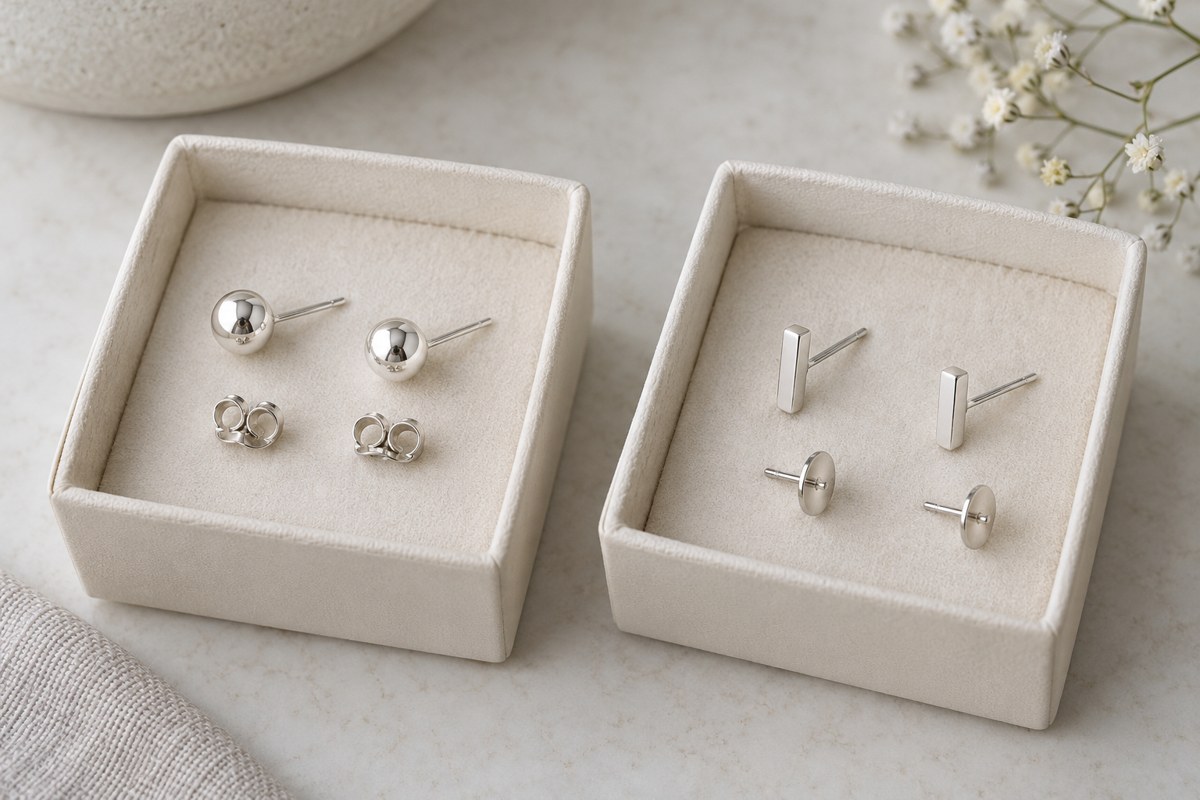
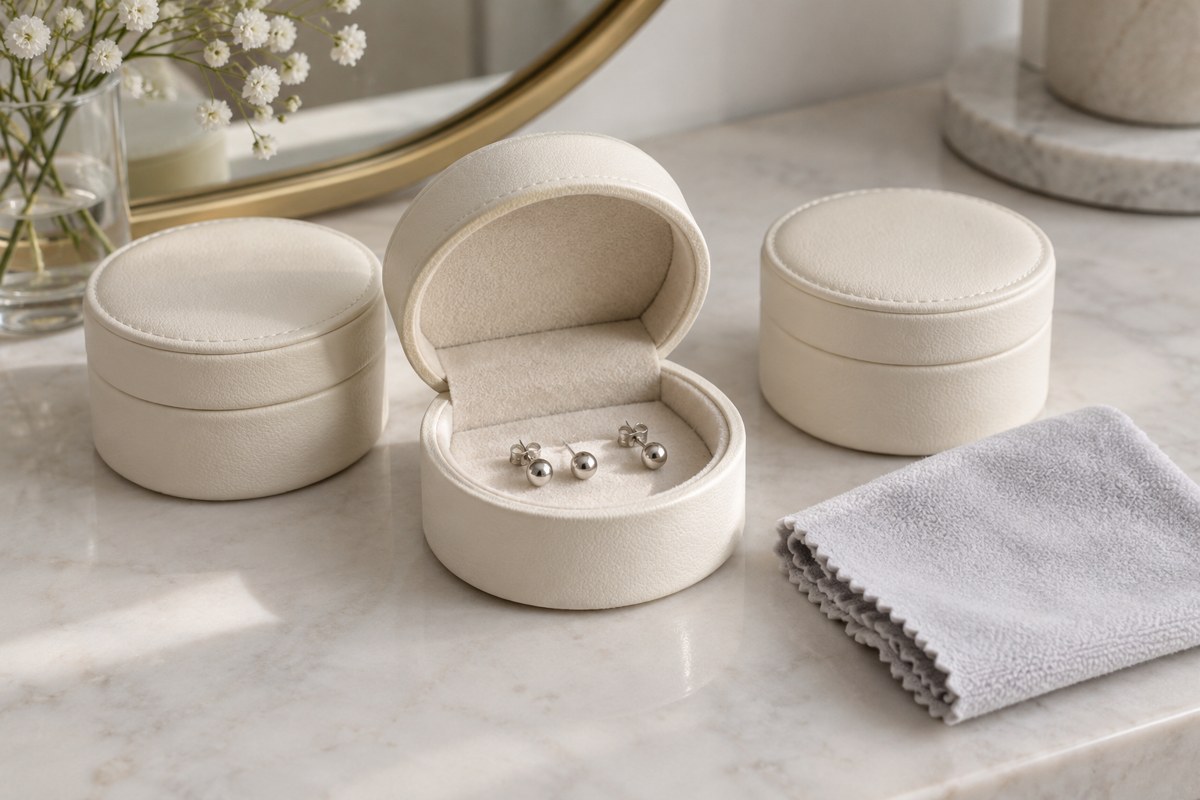
Our S925 Silver Ball Studs list S925 sterling silver and one pair. The current selectable color is Gold, even though the description also mentions Silver. The listing doesn't state the closure type or post dimensions. Ask for those details if you need a particular fit; the rounded front doesn't supply them.
The S925 Silver Jewel Bar Flat Back Studs list a mini vertical bar with three clear crystals, a flat-back labret post, and a 20G post measuring 0.8 mm in diameter with 6 mm of wearable length. They are listed as a pair in Gold. Those measurements help you compare a fitting, while the material line still needs any component-level clarification relevant to your allergy.
Our Gold S925-Post Hoop Earrings have a different construction. The material description says S925 silver post with a plated metal body, alongside an approximately 25 mm hoop profile and hinged clasp. The S925 post description doesn't make the entire hoop solid sterling silver. If the body or clasp touches your ear, ask about those parts too.
These are shopping examples, not a ranking of which pair your skin will tolerate. The differences in their descriptions are the useful part.
Send a question the seller can answer
Include the product name and selected color when you ask about materials. Request confirmation of the post, back and body composition, along with the coating details. If you have a diagnosed nickel allergy, say that nickel information is what you need rather than asking only whether the earrings are “good for sensitive ears.”
Keep the answer with your order confirmation. When a listing leaves a measurement or material unspecified, a saved written reply is more useful than relying on a similar-looking pair you bought elsewhere. It also gives you a record if you later need replacement parts.
Keep fit and skin symptoms in the decision
An alloy description doesn't establish that an earring fits your piercing. Check the post dimensions and closure separately. A flat back is a shape, and a small-looking front isn't a measurement. Our earring size guide explains the terms to compare before ordering.
If you develop a recurring rash, or you're unsure whether a reaction is an allergy, consult a dermatologist. Seek prompt medical advice for severe, worsening or otherwise concerning symptoms. Don't keep changing metals to identify a cause yourself, especially in a healing piercing.
Questions about sterling silver earrings
Does 925 mean nickel-free?
No. The silver-purity description doesn't establish every other constituent of the alloy or every material in the finished earring. Ask for specific nickel information about the parts that will touch your skin.
Can sterling silver earrings be gold-colored?
Yes. Our Jewel Bar listing identifies S925 sterling silver and a Gold color option. The color name alone doesn't establish a coating method, thickness or solid-gold content. Check the actual material and finish details.
Is an S925 silver post enough information for a hoop?
It may leave other questions open. Our S925-Post Hoop listing separately identifies a plated metal body. Consider the clasp and body contact as well as the post, and ask for the missing composition details before buying for a known allergy.

Related posts

Ear Piercing Costs: What Your Quote Should Include
Compare ear-piercing quotes by the number of holes, complete jewelry, follow-up services and other charges, with specific official studio examples.
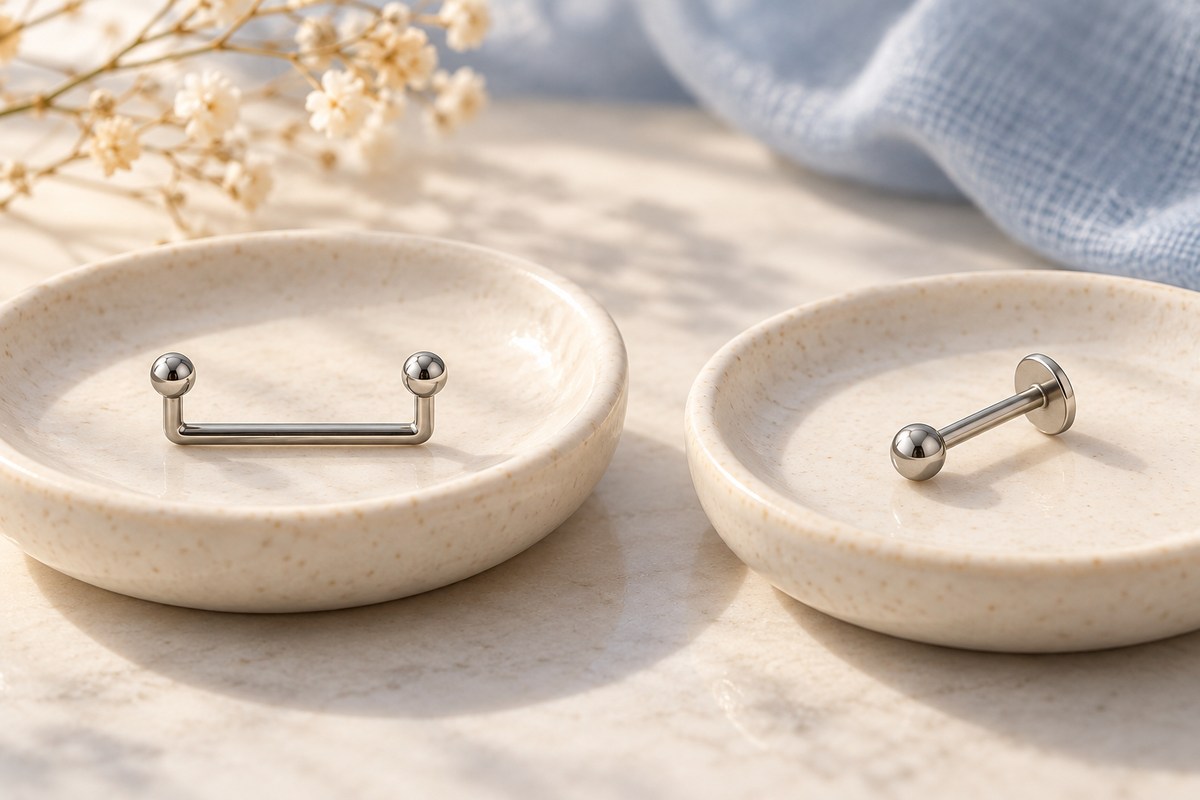
Surface Tragus vs Tragus: Why the Jewelry Is Different
Learn how surface bars, labret studs and surface anchors differ, and what to confirm before buying jewelry for a piercing beside the tragus.
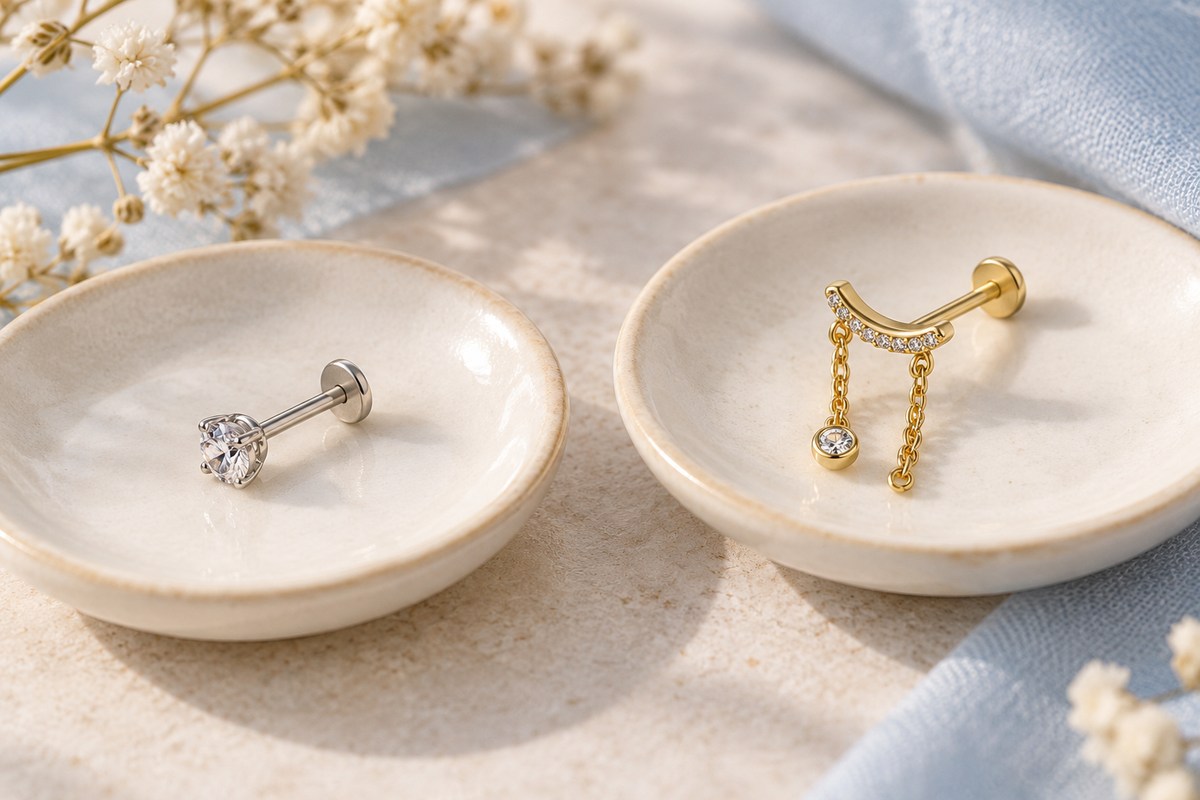
Vertical Helix vs Hidden Helix: Check the Jewelry Direction
Compare vertical and hidden helix descriptions, check what product photographs leave out, and read jewelry specifications for a fully healed piercing.