

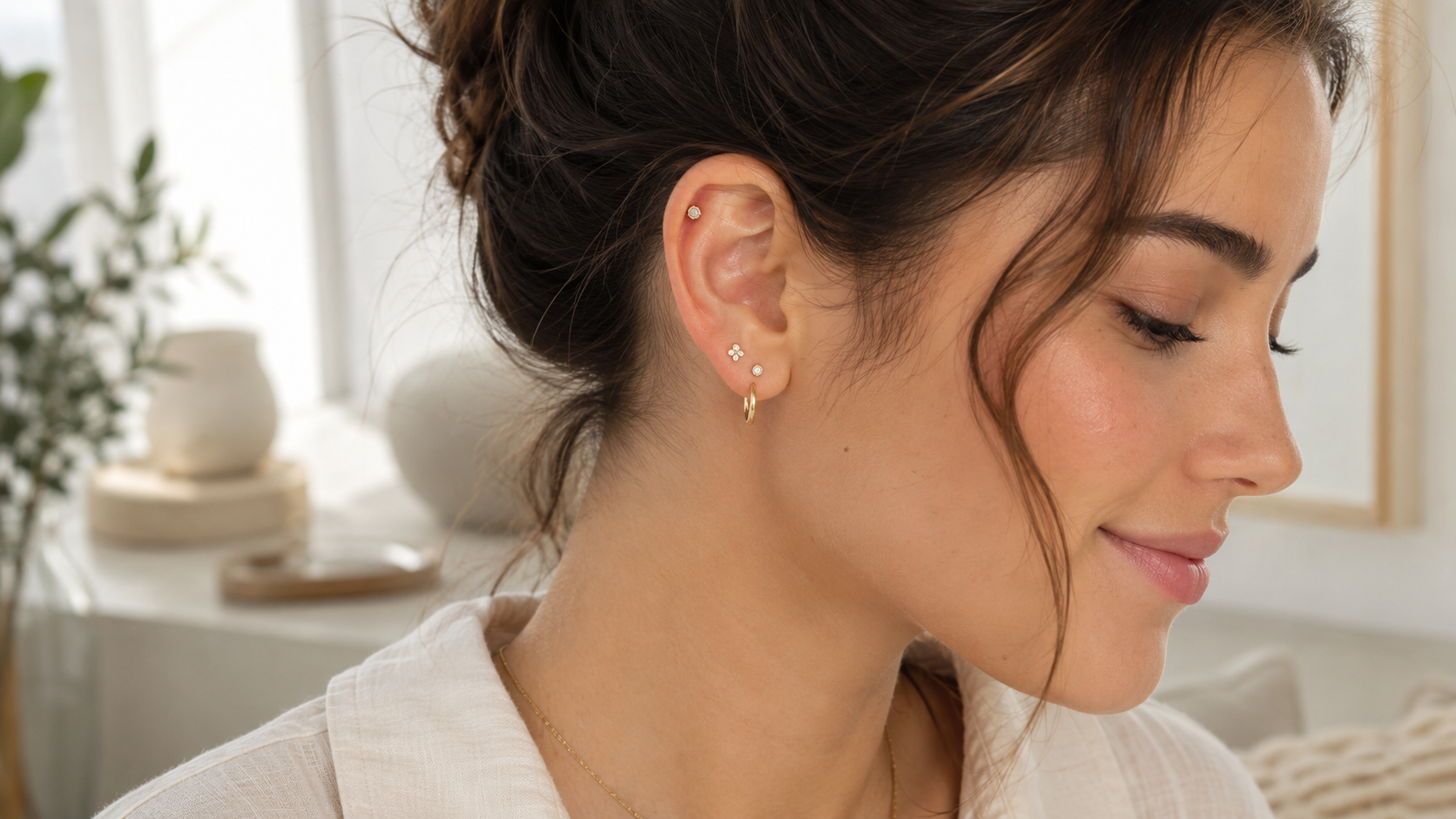
You finally got the piercing. You already have the perfect earrings in mind. And now comes the hardest part: waiting for your ears to heal.
So, how long does an ear piercing take to heal?
In most cases, earlobe piercings take around 6 to 8 weeks to heal, while cartilage piercings can take several months and sometimes up to a year depending on the location, your aftercare routine, and how your body responds. That is why some piercings seem easy and quick, while others feel like they take forever.
If you have sensitive ears, healing can feel even more stressful. A little redness can make you panic. A little soreness can make you wonder if something is wrong. The good news is that some irritation during healing is normal. The key is knowing what to expect, how to care for the piercing properly, and when it is actually safe to switch earrings.
This guide walks through ear piercing healing time, what affects it, and how to support the healing process if you have sensitive ears.
Once your piercing is fully healed, choosing the right earrings matters. Read our guide to the best earrings for sensitive ears.
What Happens While an Ear Piercing Heals?
A new piercing may look cute, but your body treats it like a wound. That means healing takes time, even when the outside looks better quickly.
At first, the piercing may feel warm, tender, or slightly swollen. That early stage is your body responding to the piercing itself. After that, the area usually starts to calm down, but that does not mean it is fully healed yet. The tissue inside the piercing still needs time to rebuild and strengthen.
This is why a piercing can look fine on the outside but still become irritated if you remove the jewelry too early, sleep on it too much, or switch to poor quality earrings before it is ready.
Healing is also not always perfectly linear. Some days your piercing may seem calm, and other days it may feel a little sore again. That can happen, especially with cartilage piercings.
How Long Do Different Ear Piercings Take to Heal?
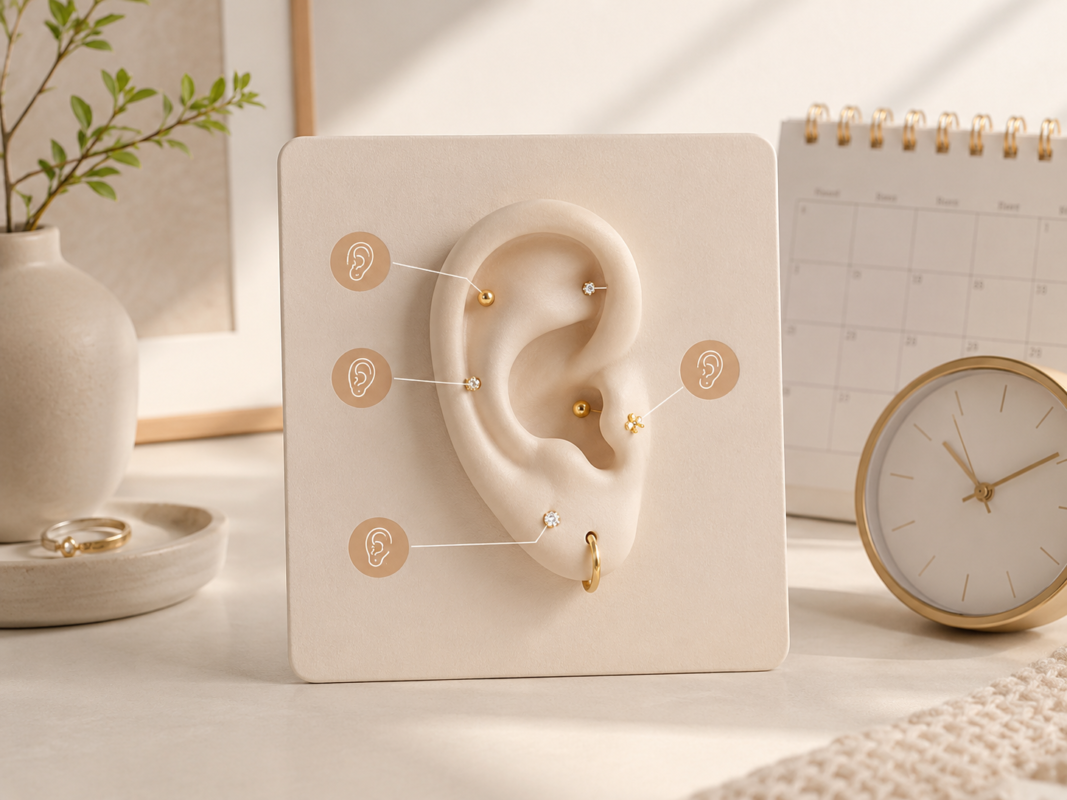
The healing time depends a lot on where the piercing is located.
Earlobe Piercing Healing Time
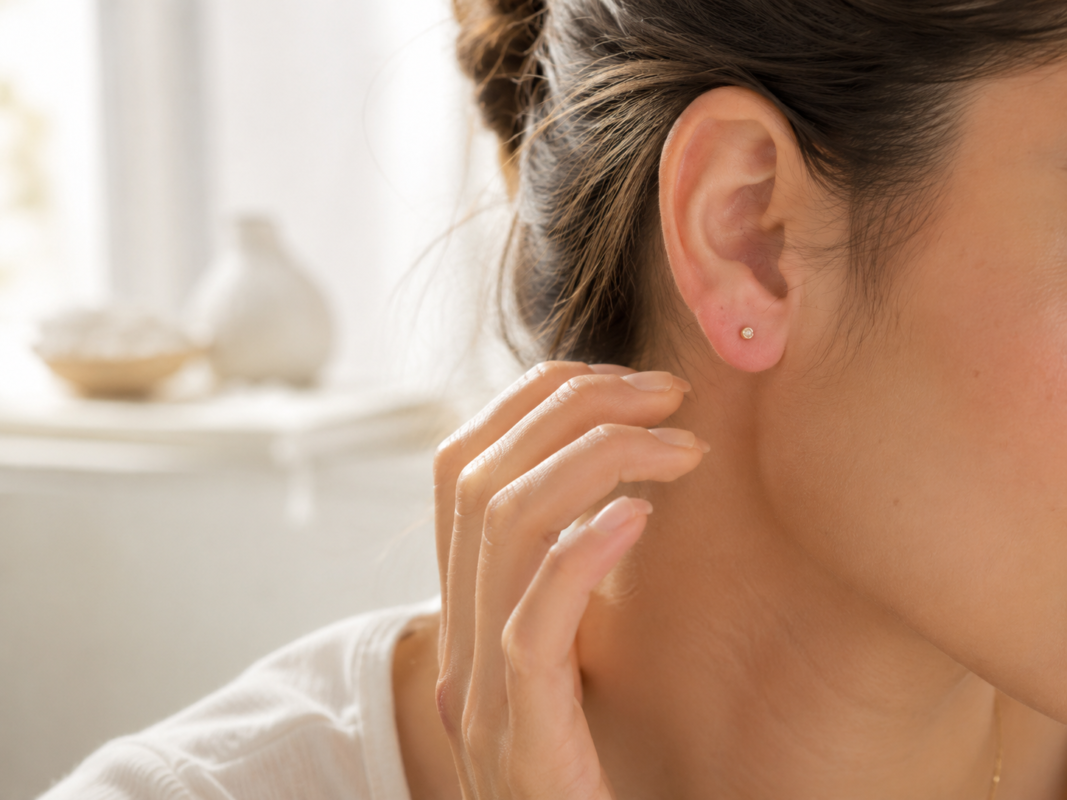
A standard lobe piercing is usually the fastest to heal. For many people, the healing time is around 6 to 8 weeks with good aftercare. Since the lobe has better blood flow, it generally heals more easily than cartilage.
Upper Lobe Piercing Healing Time
An upper lobe piercing may take a little longer than a standard first lobe piercing, but it is still usually faster than cartilage. Many people heal in around 8 to 10 weeks, though this can vary.
Helix Piercing Healing Time
A helix piercing goes through cartilage, which means healing is slower. It can take 3 to 6 months, and for some people even longer.
Tragus, Conch, and Other Cartilage Piercings
These often take 6 to 12 months to fully heal. Cartilage has less blood flow than the lobe, so patience matters more than people expect.
Second or Third Piercing Healing Time
If the piercing is still in the lobe area, healing may be similar to a standard lobe piercing. But if you get several piercings at once, healing may take longer because your body is trying to recover in multiple places at the same time.
Ear Piercing Healing Time Chart
Here is a simple table you can use in the blog:
| Piercing Type | Typical Healing Time |
| Standard lobe piercing | 6–8 weeks |
| Upper lobe piercing | 8–10 weeks |
| Helix piercing | 3–6 months |
| Tragus piercing | 6–12 months |
| Conch piercing | 6–12 months |
| Other cartilage piercings | 6–12 months |
These are general timelines, not guarantees. Some people heal faster, while others need more time.
Why Some Ear Piercings Take Longer to Heal
Not all ears heal the same way. Even if two people get the exact same piercing, one may heal smoothly and the other may deal with irritation for months.
A few factors can slow healing down:
- Touching the piercing too often
- Sleeping on that side
- Changing earrings too early
- Using harsh cleaning products
- Wearing low quality metals
- Getting multiple piercings at the same time
- General stress, poor sleep, or not taking care of your body
When Can You Change Earrings After a New Piercing?
This is one of the biggest questions people ask, and honestly, it is where a lot of healing problems start.
Just because a piercing looks better does not mean it is ready for a jewelry change. If you remove the starter earrings too early, you can irritate the channel, introduce bacteria, or even cause the hole to shrink or close.
For a lobe piercing, many people are tempted to change earrings at around 4 weeks, but that is often too early. It is usually safer to wait until the full healing period has passed. For cartilage piercings, you may need to wait several months before changing jewelry comfortably.
If you do switch earrings after healing, choose lightweight, hypoallergenic styles first. Sensitive ears usually do best with high quality materials and simple shapes while adjusting.
How to Help an Ear Piercing Heal Faster
You cannot force a piercing to heal overnight, but you can make the process smoother.
Clean It Gently
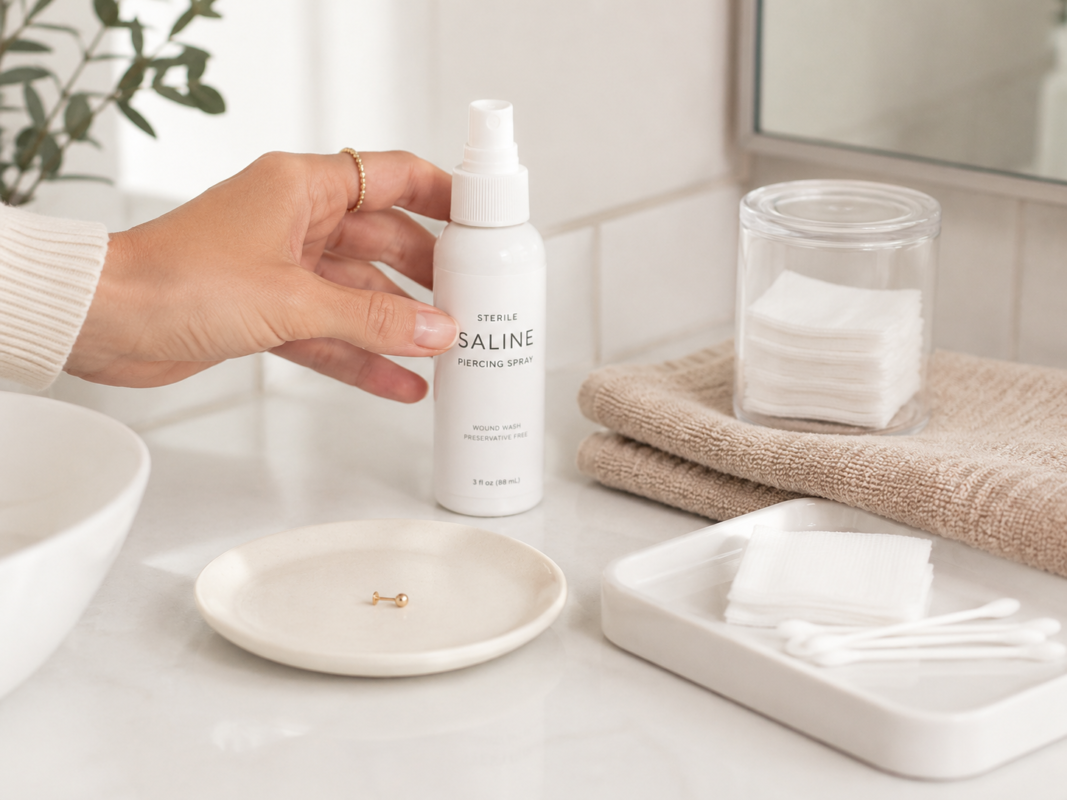
Use a gentle saline solution or a mild, fragrance-free cleanser if appropriate. Do not over-clean. Too much scrubbing can cause more irritation, not less.
Do Not Touch It Constantly
This is hard, but important. Twisting, touching, and checking the piercing all day can slow healing and introduce bacteria.
Sleep Carefully
Try not to sleep directly on the piercing, especially if it is cartilage. Pressure and friction can make healing take much longer.
Avoid Harsh Products
Rubbing alcohol, hydrogen peroxide, and strong fragranced products are often too harsh for healing skin.
Choose Better Jewelry
If you have sensitive ears, poor quality metals can make healing feel worse. Hypoallergenic earrings are usually a much better choice once your piercing is ready for new jewelry.
Take Care of Your Body
Sleep, hydration, lower stress, and general health all matter more than people realize. Your body heals better when you are taking care of it overall.
Signs Your Piercing Is Healing Normally
A healing piercing does not need to be perfect every day. Some mild symptoms can still be normal, especially in the early stages.
Common normal signs include:
- Mild tenderness
- Slight redness at first
- Small amounts of clear or pale fluid
- Light crusting
- Occasional sensitivity if bumped
These do not automatically mean the piercing is infected.
Signs Something May Be Wrong
A piercing that becomes more painful instead of less painful should not be ignored.
Watch for signs like:
- Strong swelling that gets worse
- Thick yellow or green discharge
- Heat around the piercing
- Significant throbbing pain
- A bad smell with worsening irritation
- Redness spreading outward
- Fever or feeling unwell
If you notice these symptoms, it is best to speak to a medical professional or an experienced piercer.
Best Earrings for Sensitive Ears After Healing
Once your piercing is fully healed, the first earrings you choose matter more than people think.
If you have sensitive ears, it is best to start with:
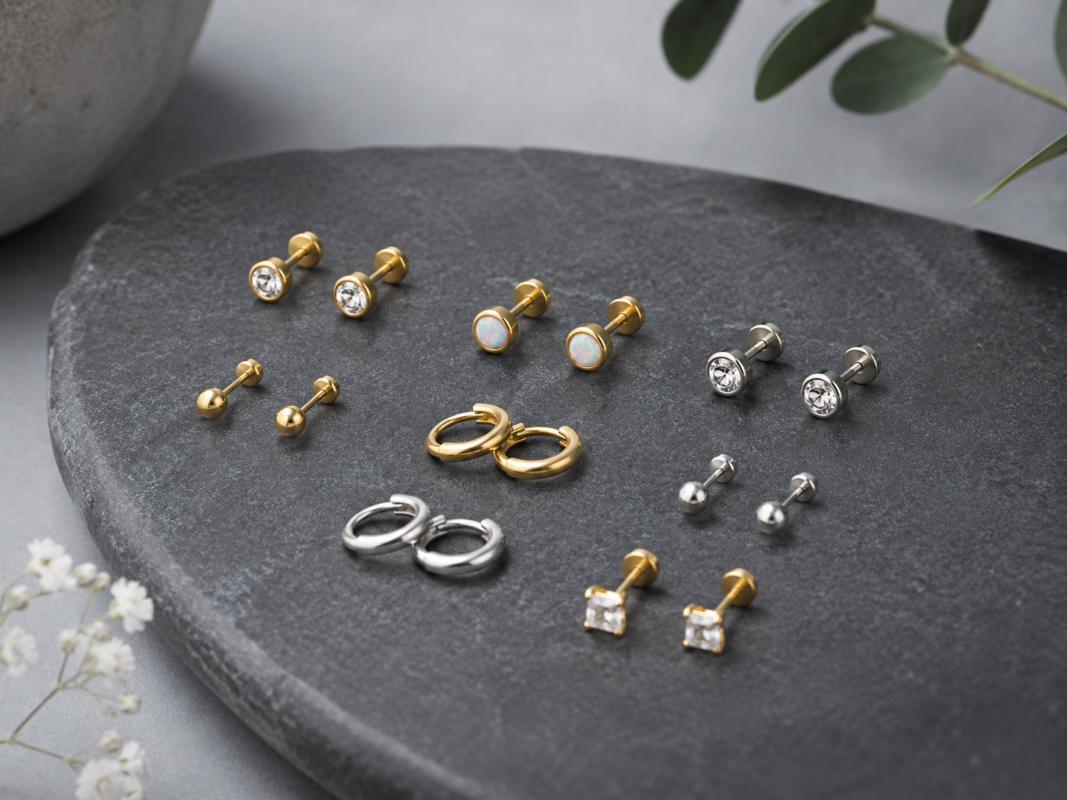
- Hypoallergenic studs
- Lightweight hoops
- Flat back earrings
- Nickel-free materials
- Simple shapes that do not pull or irritate the ear
This is especially important if your ears have reacted badly to earrings in the past. A fresh or recently healed piercing is not the time to test cheap mystery metals.
At Sensitiveearrings, we believe healed ears deserve earrings that feel as good as they look. If your ears are easily irritated, choosing skin-friendly, low-irritation styles can make everyday wear much more comfortable.

Final Thoughts
So, how long does an ear piercing take to heal?
For most people, a lobe piercing heals in around 6 to 8 weeks, while cartilage piercings usually take much longer and may need several months to a year. The exact timeline depends on the location, your aftercare, your jewelry, and how your body heals.
The biggest mistake is assuming that “looks better” means “fully healed.” Good healing takes patience. Gentle care, good habits, and quality earrings all make a difference.
If you have sensitive ears, it is worth being extra careful during the healing process and extra selective about the earrings you wear afterward. The wait can feel long, but healthy, comfortable piercings are always worth it.
How long does an ear piercing take to heal?
A standard lobe piercing usually takes around 6 to 8 weeks, while cartilage piercings may take 3 to 12 months depending on the placement.
Can I change my earrings after 2 weeks?
Usually no. Even if the piercing feels better, it is often still healing internally.
Why is my piercing still sore after a month?
Some soreness can still happen during healing, especially if the piercing gets bumped, slept on, or irritated by jewelry.
How can I make my piercing heal faster?
You cannot force faster healing, but gentle aftercare, avoiding irritation, and wearing high quality jewelry can support better healing.
Are sensitive ears harder to heal?
Sometimes, yes. Sensitive ears can react more strongly to poor quality metals, friction, or over-cleaning.

One thought on “When Will My Ear Piercing Heal? Real Timelines for Lobes and Cartilage”