

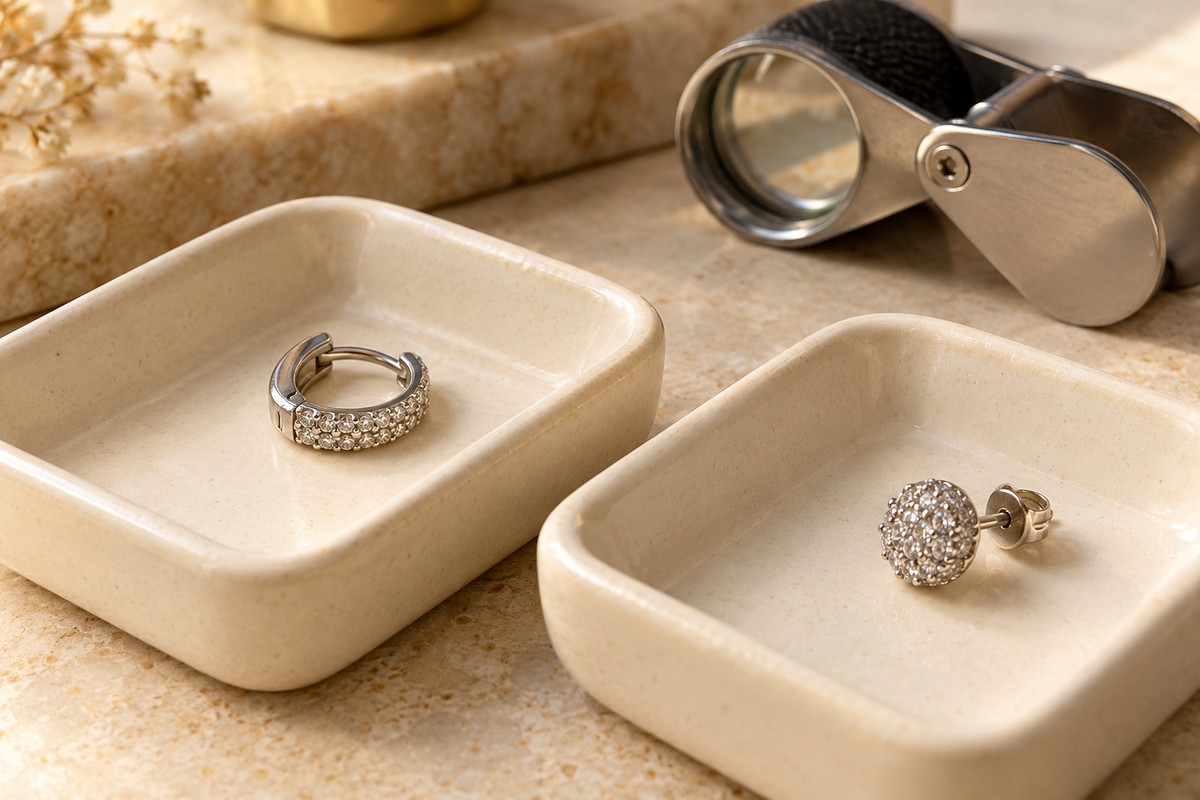
If a stone seems loose or a gap has appeared in your pavé earrings, stop wearing the affected piece and arrange an assessment. Bring the original listing, a description of the change and any pieces you've found. The jeweler can assess what work is possible.
GIA's explanation of pavé setting describes small gems placed close together and held by tiny metal beads. The name “pave” on a product doesn't confirm its stone material or exactly how its stones are secured.
This guide concerns earrings you can remove normally from fully healed piercings. If removal is difficult or the piercing is still healing, ask a qualified piercer for help instead of forcing the jewelry out.
Put the earring and found pieces somewhere secure
Keep the affected earring in a small closed container. Place any loose pieces you've already found in a separate closed compartment or container, labelled for that earring. Keep other pairs apart so their parts don't get mixed together.
Leave anything still attached alone. Avoid testing the other stones by pressing, shaking or picking at them. Don't try glue, bending or home tightening. Tell the jeweler if you've already attempted a repair, even if it was only a small adjustment.

Photograph the location and record what you noticed
Photograph the whole earring, its back and the area that concerns you. Use an everyday landmark in your description, such as “the gap nearest the clasp.” Identify the affected earring in your notes.
Record when you first noticed the change and whether the piece caught on something or was dropped. Say “one visible gap” if that's what you can see; don't guess how many stones are missing or name a stone from its color. Keep an earlier product or personal photograph if you have one.
Find the exact listing and order details
Save the product name, selected color and order number. The listing helps identify the item, but it may leave important repair details unanswered.
For example, the Pave Astrid Flat Back Studs give G23 titanium in the detail section and F136 in the title. Pass the actual listing to the jeweler rather than turning those labels into an assumed repair specification. It doesn't identify the stones or the setting method.
The Shine Crystal Pave Hoops list F136/G23 titanium, while the Kaia Crystal Lotus Pave Hoops list S925 sterling silver and gold color. Both names include “crystal,” but their descriptions don't identify replacement stone dimensions or how each stone is held. Similar names don't establish that stones, fronts or spare parts can be exchanged between them.
Our guide to zircon, cubic zirconia and crystal explains why those labels need careful reading. For an existing piece, ask the original seller for any construction information the jeweler needs.
Describe the cleaning and repair history
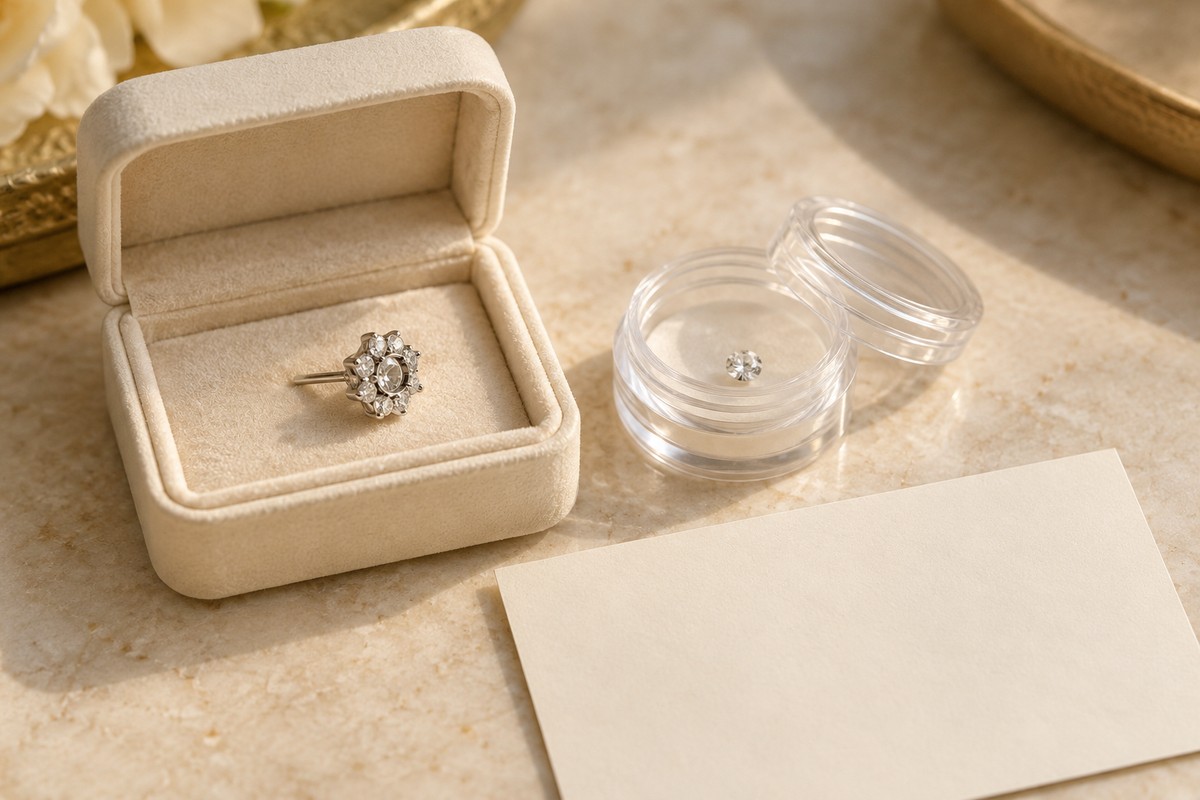
Tell the jeweler which cleaning products or equipment you've used and whether anyone has repaired the earring before. Include a photo of the cleaner's label if you still have it. If you don't know what a previous owner used, say so.
Avoid cleaning the piece simply to make it look better for the appointment. Ask how the jeweler wants to receive it. Our earring cleaning guide covers general care, but an earring with a suspected loose stone needs an assessment before you choose another cleaning method.
Jewelers of America's repair guidance advises having jewelry evaluated by a professional. Send your notes when booking and ask whether the jeweler can assess this particular material and construction.
Agree on the work before authorizing it
Ask what the assessment found, whether repair is feasible, and what would be replaced or changed. If a new stone is proposed, ask how its identity, size and appearance will be matched. If the setting itself needs attention, have that included in the explanation.
Request a written estimate and clarify whether assessment has a separate fee. Ask the jeweler to contact you before additional work or substitutions. Agree how the piece will be returned and which care instructions apply afterward. A general price for “replacing a small stone” leaves those details unanswered.

Questions before a repair appointment
Can I bring the other earring as a reference?
Ask when booking whether the other earring would help. If you bring it, keep it separately contained and identify it as the comparison piece.
Can the jeweler reuse a stone I've found?
Ask them to inspect it with the earring. Finding a piece doesn't establish its condition, its identity or whether it can be secured in that setting. Keep it contained rather than trying to put it back.
What if I no longer have the receipt?
Check your order history, confirmation emails and saved product photos. Give the jeweler what you can establish and mark anything uncertain. The jeweler can explain what needs to be established before proposing a repair.

Related posts
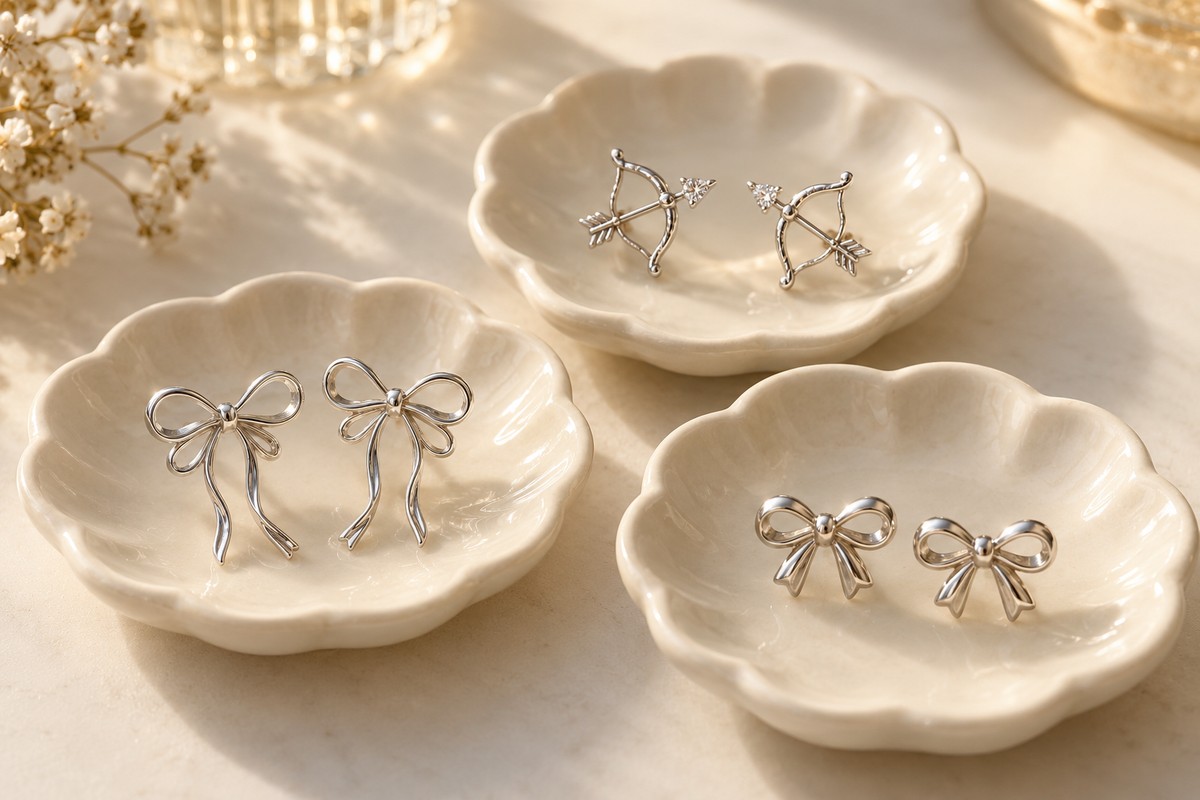
Ribbon Bow Earrings or Arrow-and-Bow Studs? Choose the Motif First
Bow earrings can mean a ribbon knot or an archery design. Refine your search, compare three real pairs, and decide how the motif works with your outfit.
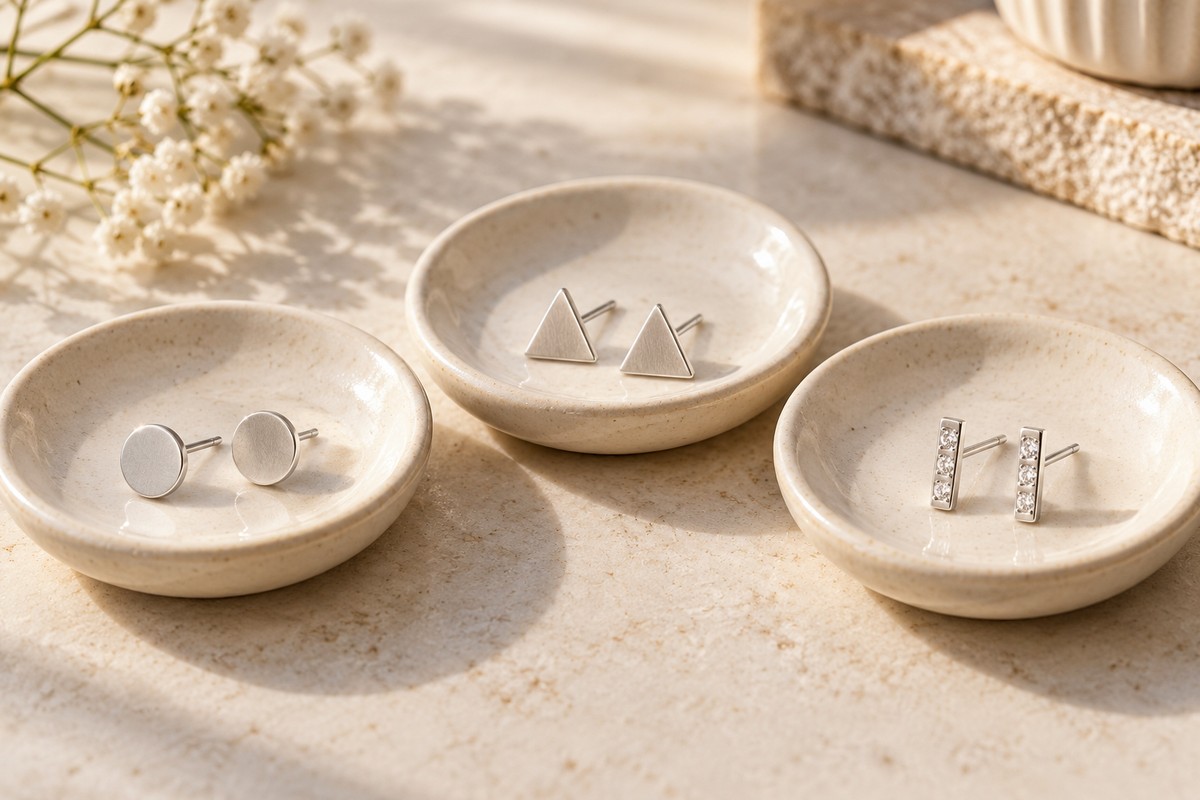
Minimal Geometric Earrings: Round, Triangle or Bar?
Compare round, triangle and bar earrings with the lines in your clothing. Use simple shape, open-space and accessory choices to build a look you enjoy.
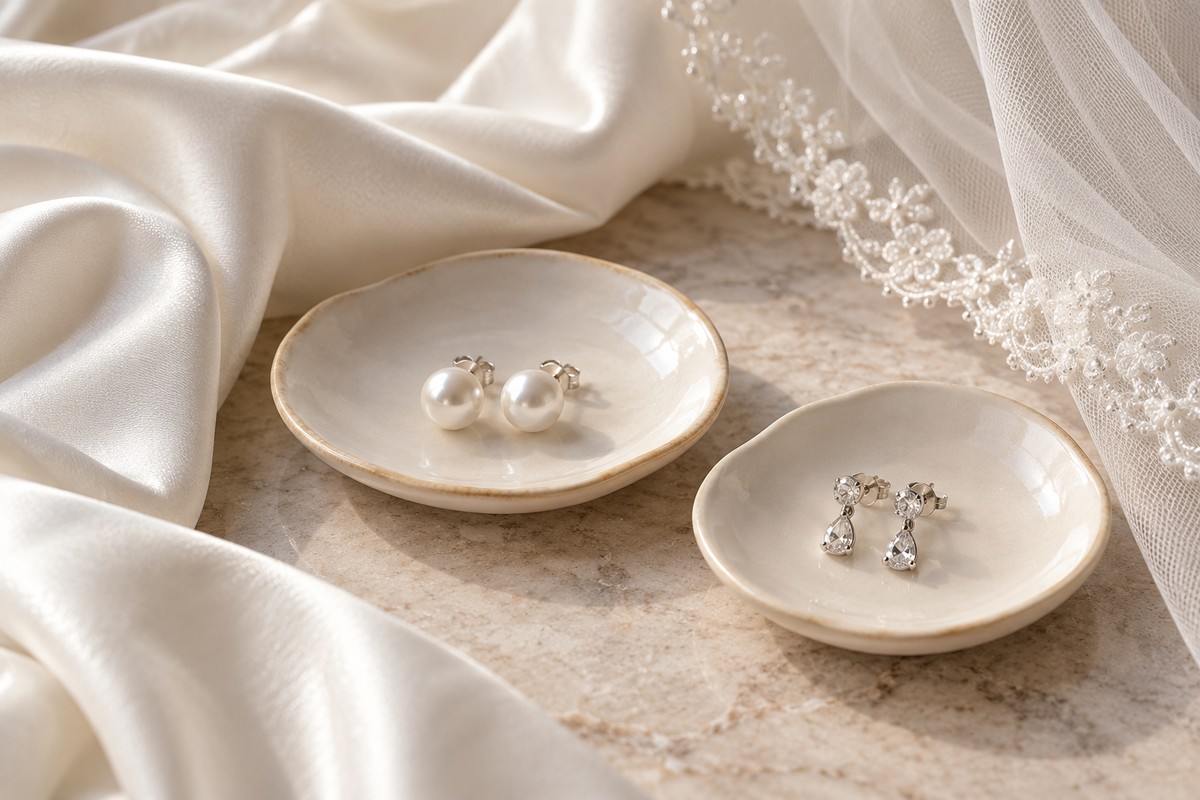
Wedding Earrings for Sensitive Ears: Rehearse the Whole Outfit
Try wedding earrings with your planned hairstyle, veil, neckline and outer layer. Compare photographs, notice catching and prepare a familiar backup pair.