

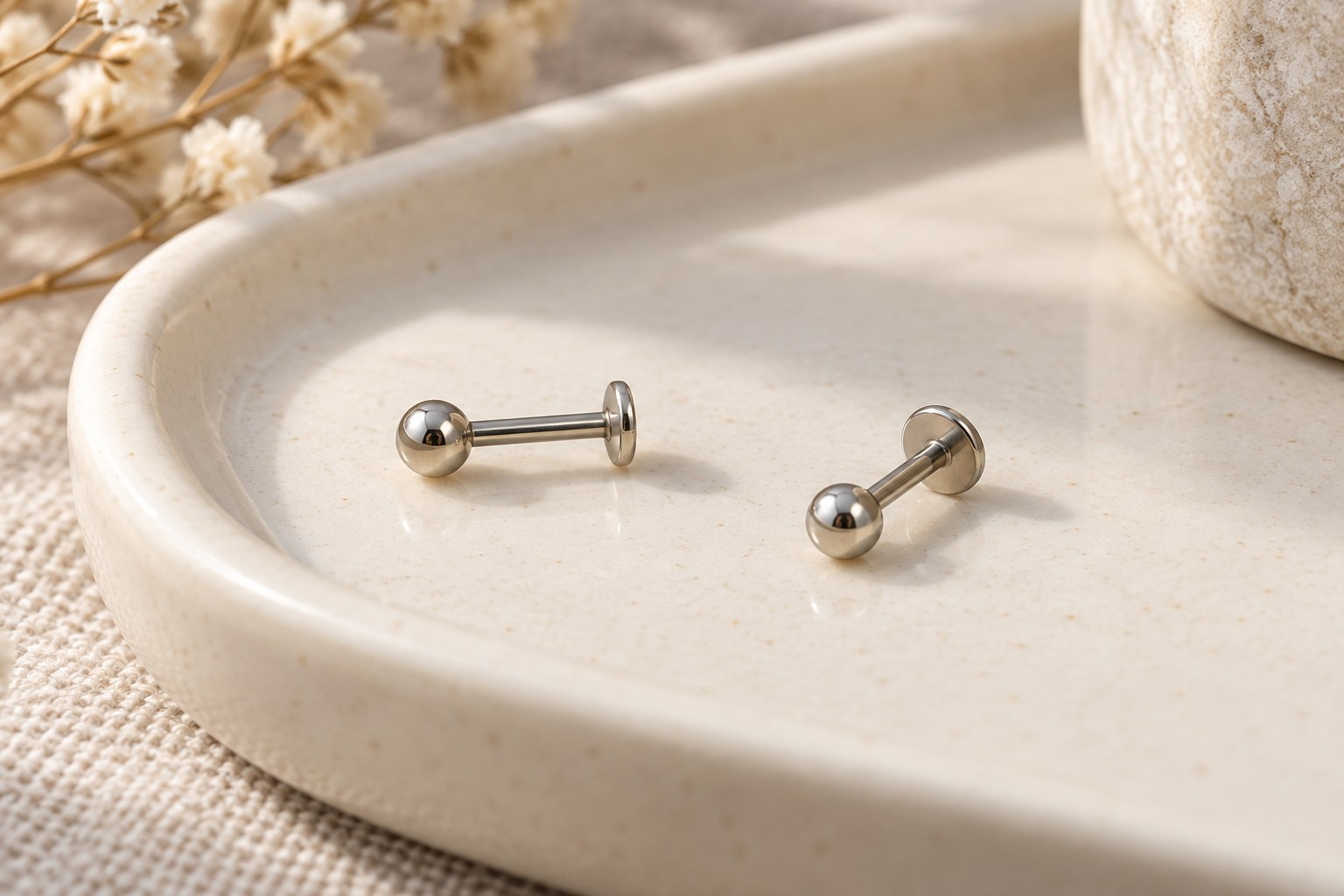
Two studs along the outer cartilage can look like a matched set. Before you order, check what fits each hole. You may want the same decoration in both, but each post needs to suit the piercing it goes into.
This guide is for choosing jewelry for two fully healed helix piercings. If either piercing is still healing, ask your piercer about suitable jewelry and any change of fit. The products discussed here are shopping examples, not starter-jewelry recommendations.
Start with two individual fittings
A double helix arrangement uses two separate piercings along the outer ear cartilage. Each piece sits in its own channel. A photograph from the front won't tell you whether both need the same gauge or post length.
Write down your piercer's recommended gauge and wearable length for each position. Label them upper and lower so you can check a listing against the right hole. If you don't know your current measurements, have the fit checked before ordering.
Matching decorative fronts can still use different posts if the jewelry system supports them. Check compatibility with the seller rather than assuming that parts from different designs will connect.
Compare gauge before choosing the fronts
Gauge describes the thickness of the part that passes through the piercing. A post's length is a separate measurement. Choosing a shorter post does not make a thicker post suitable for your piercing.
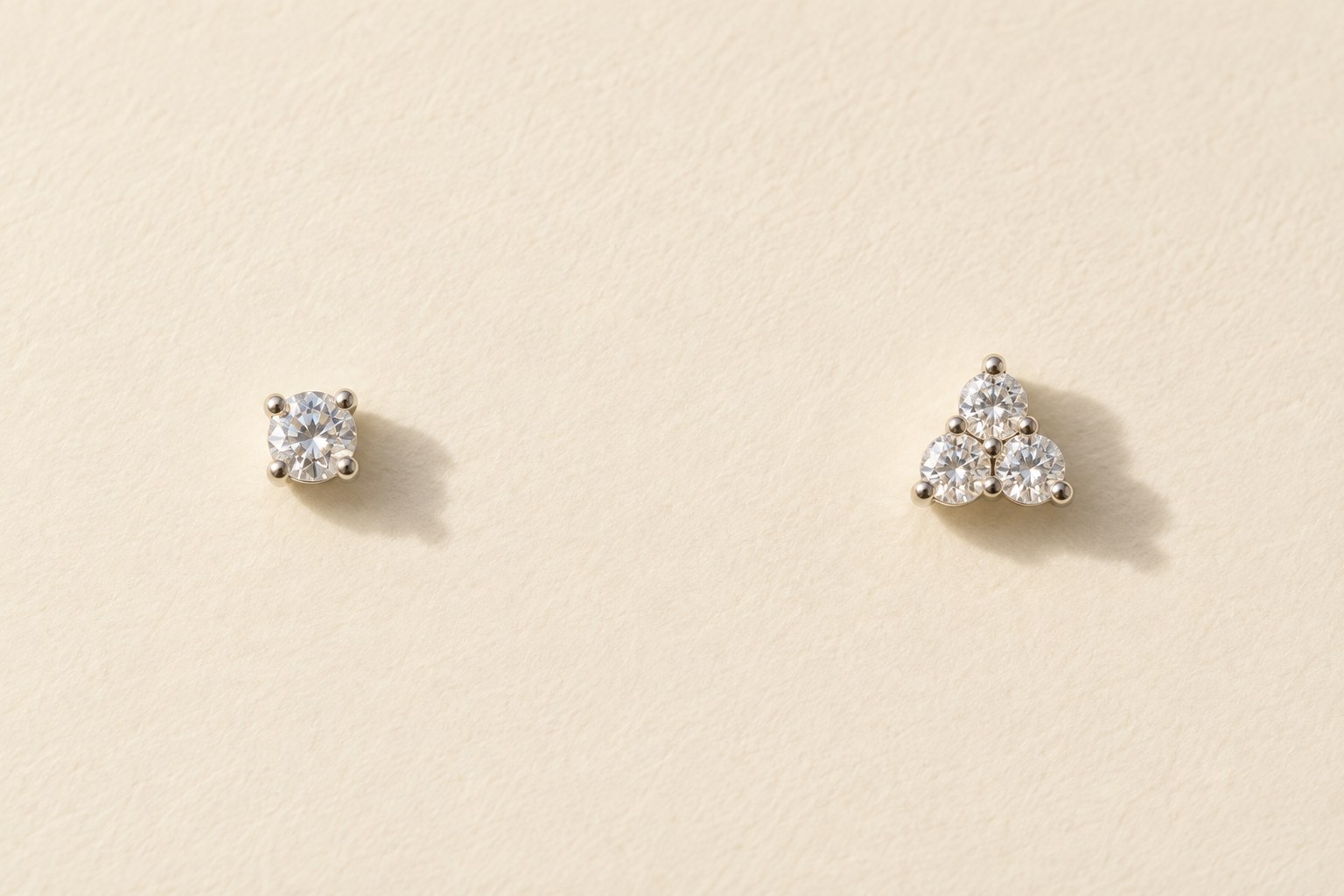
Our Flat Back Stud Earrings Petite Crystal Cluster in F136 Titanium list a 20G, or 0.8 mm, post with a 6 mm wearable length. Our Graduated Zircon Arc flat-back earrings list a 1.2 mm post diameter and an 8 mm post length. The arc listing's stated length should be confirmed as wearable length before comparison.
Those are different post specifications, so don't treat the two designs as interchangeable fittings. Do not force a thicker post through an opening. Have a qualified piercer assess any proposed gauge change.
Allow space around both decorations
The Petite Crystal Cluster has a listed face of approximately 2.6 by 2.3 mm. Use those measurements to compare its footprint with the space around each piercing. Small fronts still require clearance from the neighboring jewelry and the ear's contours.
The Graduated Zircon Arc has nine stones in a curved row. Its listing does not give the overall front width or height. Ask for both measurements before deciding where it could sit beside another stud. The curve's direction and the position of the post behind it also matter to the arrangement.
A model photograph can help you choose a look, but it can't give you a spacing measurement for your own ear. Check the room around your existing piercings.
Check the backs as carefully as the fronts
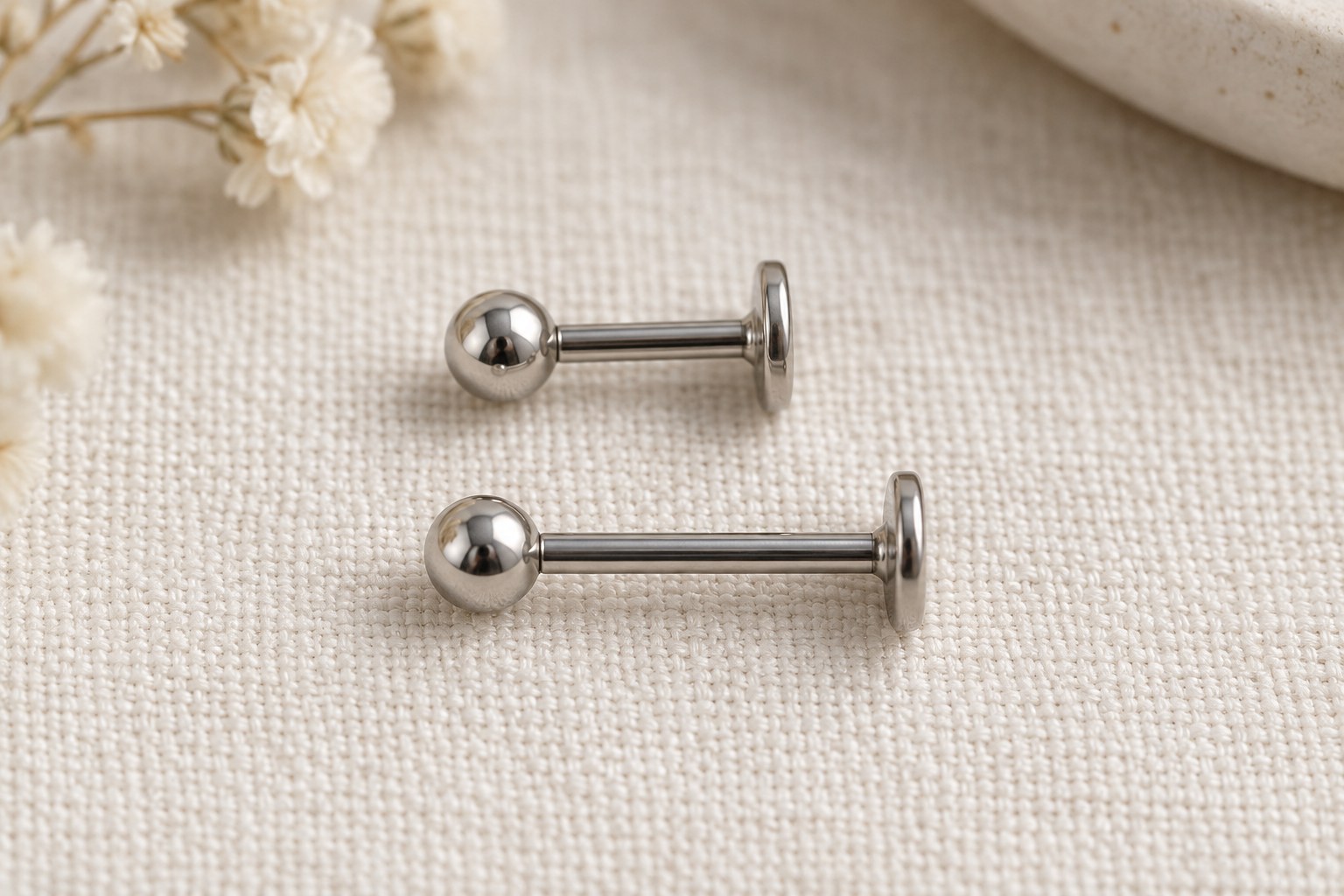
Two fronts may look well spaced while the backs sit closer together. Check that each backing has room without pressing against the other piece or the ear. Ask your piercer to assess contact you cannot see clearly.
A flat back describes the shape of the backing. It does not guarantee that a particular post length suits you. The Association of Professional Piercers' guidance for healed piercings considers appropriate size, material, weight and finish when selecting jewelry.
Consider your glasses, headphones and other items that sit near the upper ear. Notice where they touch the jewelry. Choose a different arrangement or have the fit reviewed if either piece feels crowded or catches during ordinary use.
Coordinate the look after checking the fit
You can choose two small matching fronts for a repeated shape, or compare one compact front with a longer decoration. Think about how much of the outer ear you'd like the decoration to cover, then confirm each piece's measurements.
The petite cluster and nine-stone arc illustrate different decorative footprints and post specifications. To wear them together, you'd need to confirm each fit separately; they aren't a pre-fitted double helix set.
Check material and finish details separately from the styling decision. A G23 label alone does not establish ASTM F136 certification. The product title also does not replace material documentation, and titanium wording does not guarantee that every wearer will tolerate the finished item.
Keep styling changes separate from healing care
If you're unsure whether either piercing has healed, ask your piercer before changing its jewelry. Matching the two fronts can wait.
The Association of Professional Piercers advises against rotating jewelry during healing and cautions about friction and pressure. Follow its aftercare guidance and your piercer's individual advice. Seek medical advice for severe, worsening or otherwise concerning symptoms rather than repeatedly trying different jewelry.
Questions before ordering
Can I buy one pair for both holes in the same ear?
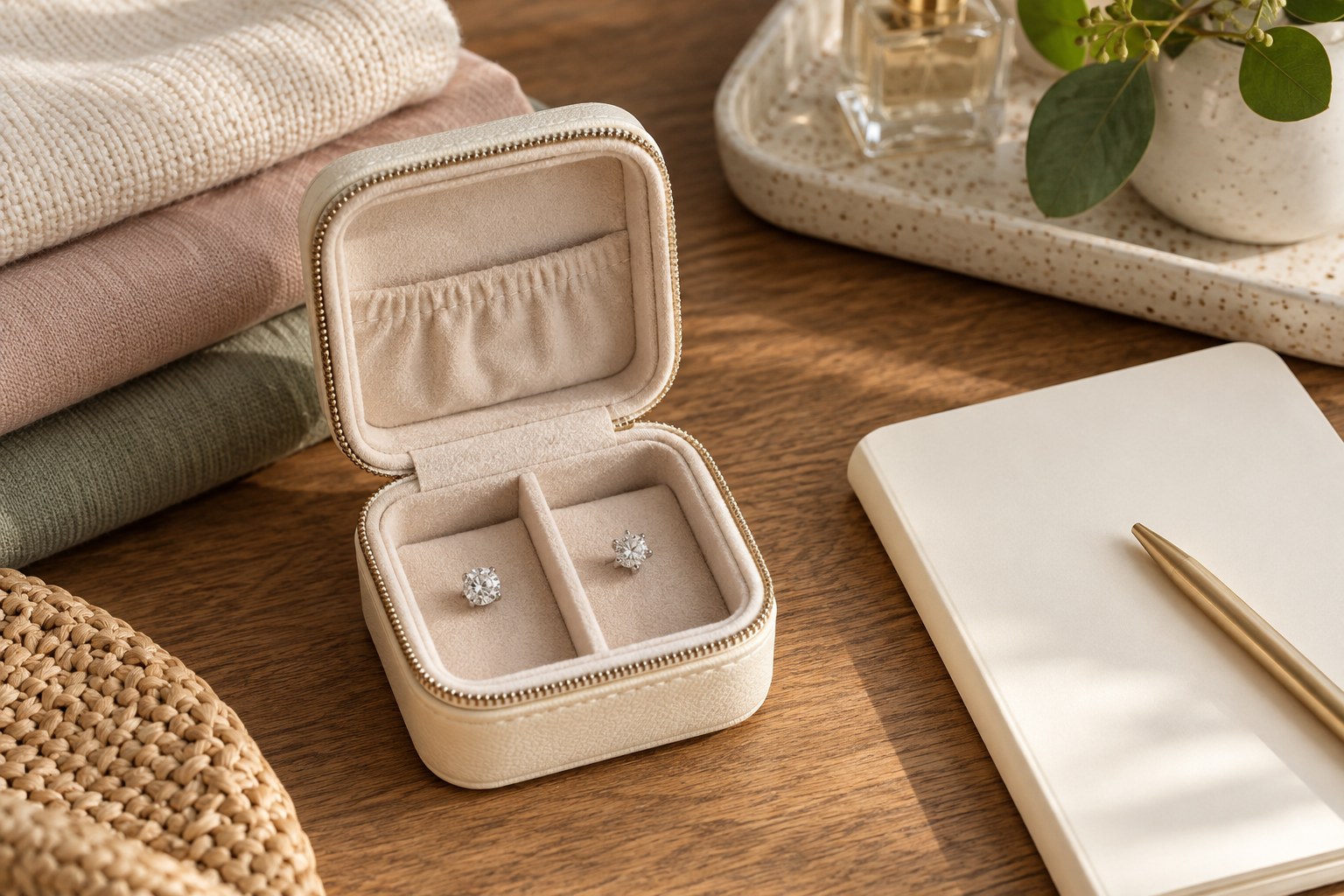
Possibly, if each complete earring fits its intended piercing. A pair tells you how many earrings you'll receive. It doesn't tell you whether both holes need the same dimensions.
Can I swap the fronts between these two products?
Don't assume so. The petite cluster uses a threadless push-pin closure, while the arc uses an internally threaded closure. Ask the seller about compatible components before buying separate fronts or posts.
What if only one of my two piercings is ready for new jewelry?
Leave the healing piercing's jewelry changes to your piercer. You can consider a suitable piece for the healed piercing without changing both at once. It's fine to leave the fronts unmatched while the other piercing heals.

Related posts

Ear Piercing Costs: What Your Quote Should Include
Compare ear-piercing quotes by the number of holes, complete jewelry, follow-up services and other charges, with specific official studio examples.
Surface Tragus vs Tragus: Why the Jewelry Is Different
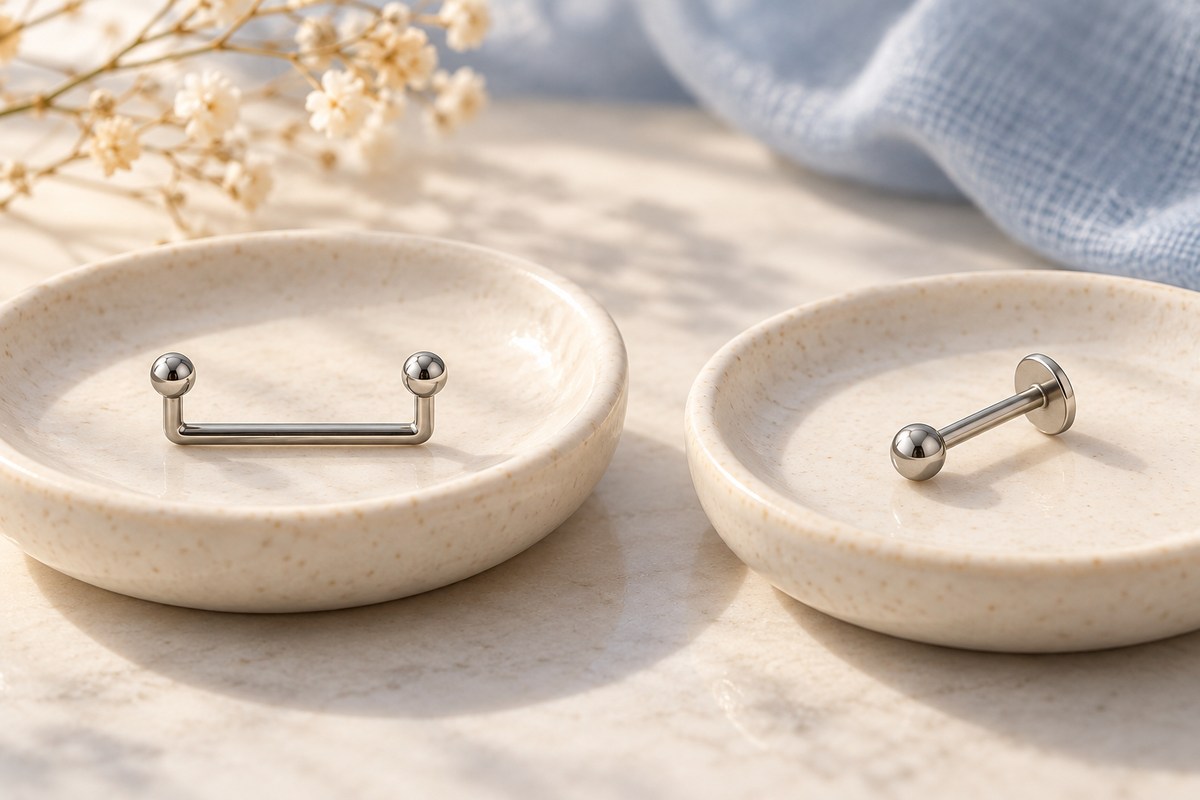
Learn how surface bars, labret studs and surface anchors differ, and what to confirm before buying jewelry for a piercing beside the tragus.
Vertical Helix vs Hidden Helix: Check the Jewelry Direction
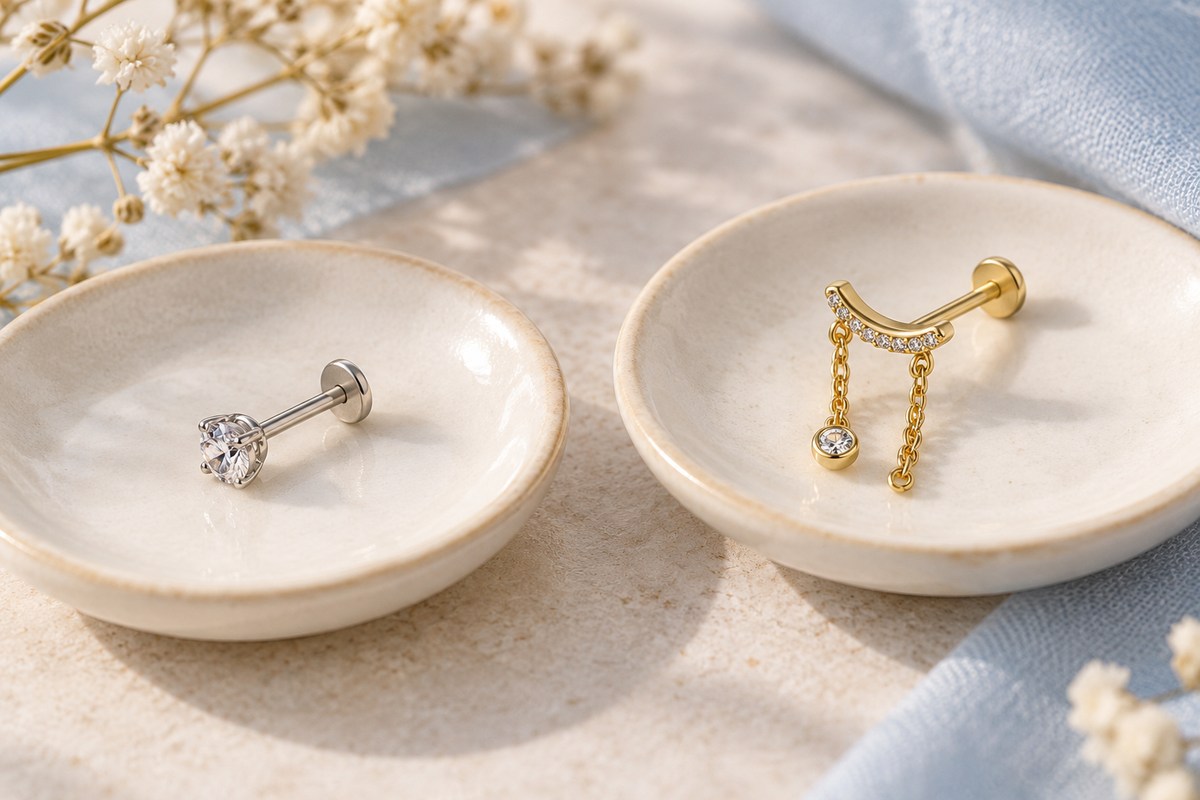
Compare vertical and hidden helix descriptions, check what product photographs leave out, and read jewelry specifications for a fully healed piercing.