

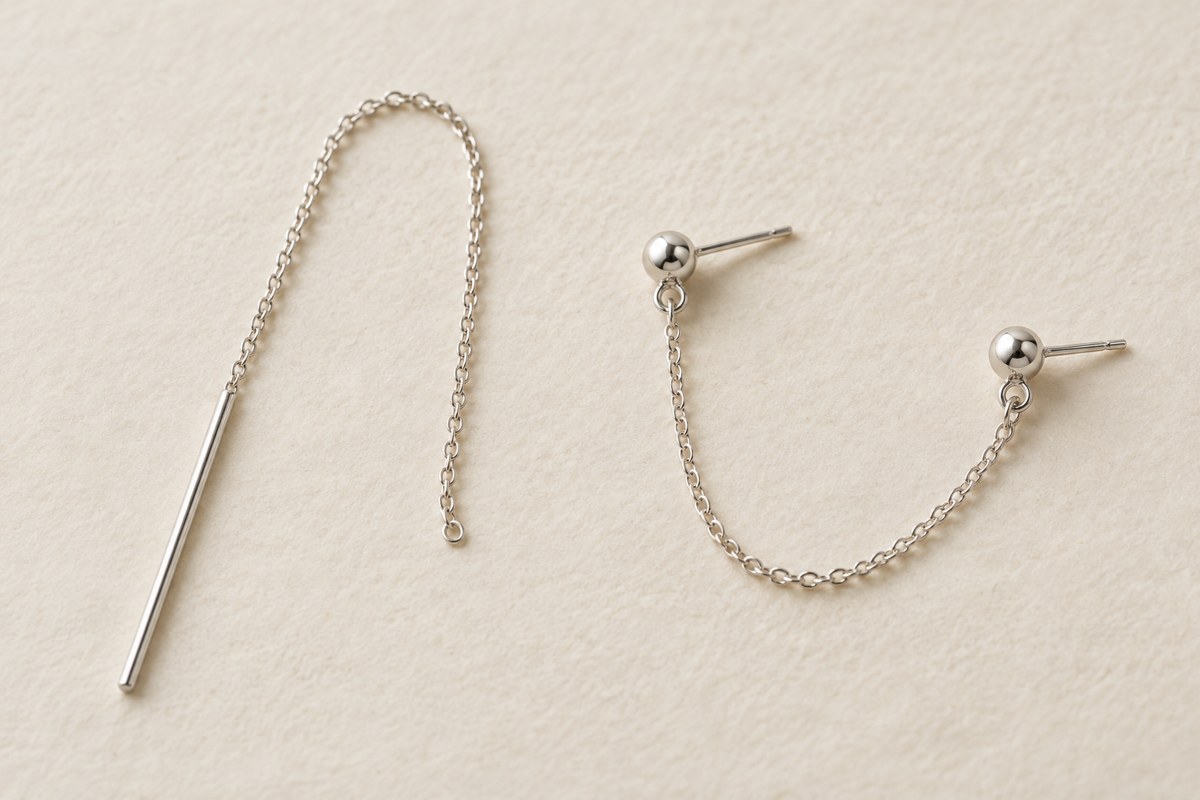
"Chain earrings" can describe jewelry that works in quite different ways. In a threader, a fine chain passes through the piercing. A connector chain usually attaches to compatible earrings or posts, leaving those fittings inside the piercing channels.
Start with a clear view of the fitting, then confirm the material, dimensions and number of piercings the design needs. A photograph may leave the attachment method hidden.
Use this guide for fully healed, compatible piercings. A new chain accessory is not a reason to change jewelry in a healing or irritated placement.
Compare the three common arrangements
| Style | What sits in the piercing | Typical arrangement | What to confirm |
|---|---|---|---|
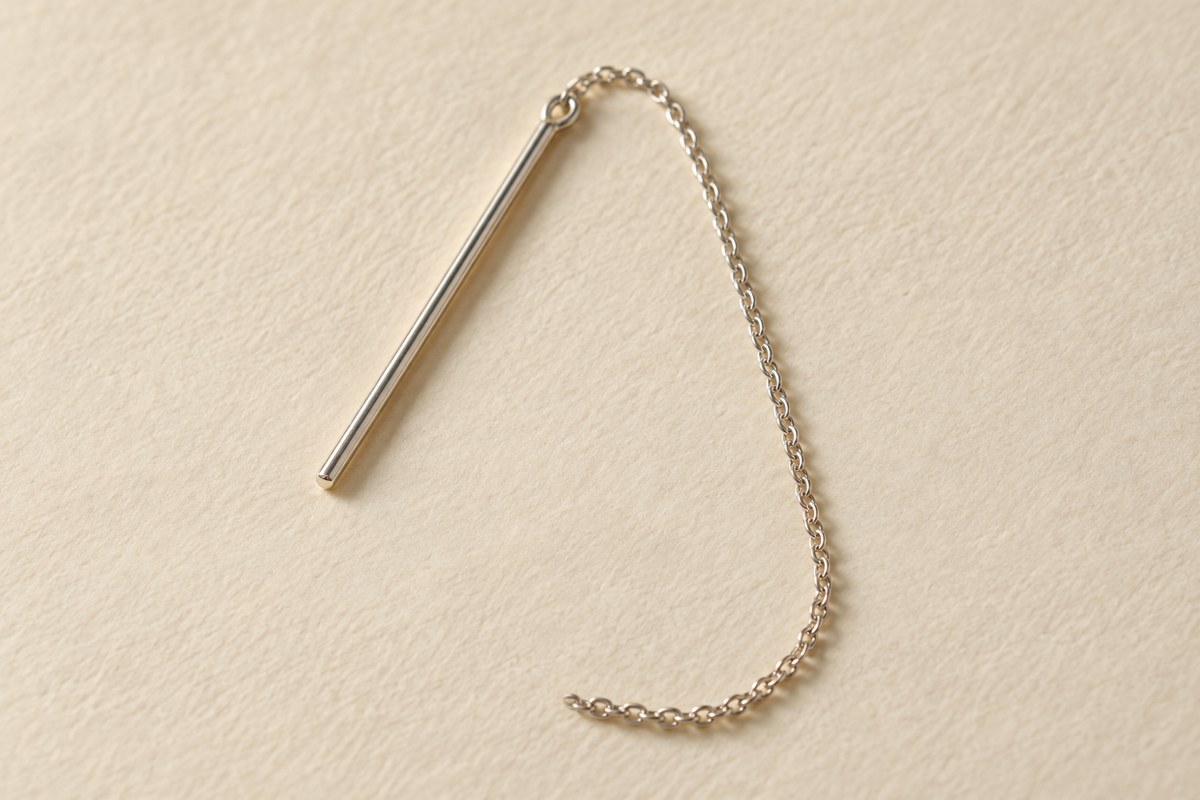
| Threader or pull-through earring | A chain or a shaped section, depending on the design. | A leading end guides the chain through a piercing. | Thickness, surface finish and which section rests in the channel. |
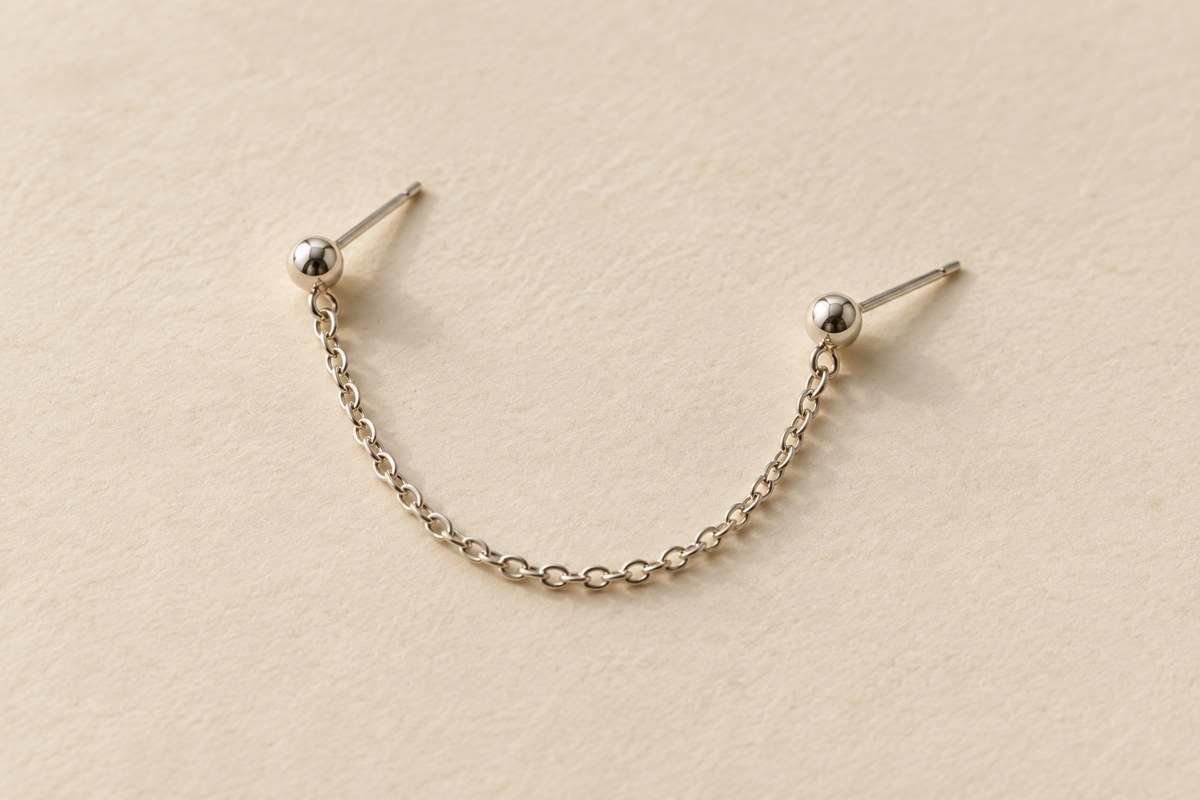
| Connector chain | The existing compatible post or fitting. | Loops attach the chain to jewelry, often across two piercings. | Loop size, post compatibility and chain length. |
| Front-to-back chain earring | A stud post or the design's own fitting. | A chain drapes between the front and back of one earring. | Closure arrangement, wearable post length and drape. |
A connector joining two placements needs both piercings. A front-to-back design may need only one. Check the actual pair rather than buying on the assumption that every chain style needs two holes.
Threader and threadless mean different things
A conventional threader has a stiff leading end attached to a fine chain. You guide the leading end through the piercing and the chain follows. Some designs have a curved or rigid section that changes where the earring rests, so inspect the model you are considering.
Threadless describes a fastening system used in piercing jewelry. A connector chain can attach to compatible threadless posts while the posts remain in the piercing channels.
If the listing does not show which part goes through the ear, ask for a fitting photograph or explanation.
Check thickness and attachment compatibility
A chain that looks fine in a photograph does not establish its thickness. Ask for the leading end and the section intended to sit in the piercing, preferably with measurements in millimeters. If gauge is supplied, make sure it describes the relevant part. Our earring size guide explains gauge and wearable post length.
For a connector, check the opening of the attachment loop against the specific post. A maker's loop may fit certain post sizes and not others. Check the stated compatibility for the exact components rather than applying one brand's measurements to another.
Also ask whether adding the connector loop changes the wearable space on your post. Do not assume a post that fits comfortably alone leaves enough room for another component. Our flat-back earrings category lets you compare complete earring fittings; confirm any separate chain attachment with the seller or your piercer. A qualified piercer can assess the assembled arrangement when the measurements or fit are uncertain.
Keep the material question separate. The post may have a documented composition while the chain, loop or back has a different one. Include every part likely to contact your ear when asking about a known metal sensitivity.
Measure for a relaxed drape
For a connector, the distance between piercings helps you start comparing lengths. It does not automatically give you the finished chain length you want. The desired curve and the positions of the fittings matter too.
Check how the maker measures its chain. A length between loop centers can differ from a measurement of the chain section alone. Use the same measurement method when comparing listings.
A connector should not pull the fittings toward each other. Ask a piercer to check the arrangement if it sits taut or tugs during ordinary movement. Extra length also deserves thought: consider where it falls around your hair, glasses and clothing. There is no universal extra number of millimeters that makes every arrangement suitable.
Choose the placement before the styling
The Association of Professional Piercers advises against hanging objects from jewelry before a piercing is fully healed. Its aftercare guidance also explains that the outside can look settled while the inside is still fragile.
If you are unsure whether a placement is ready, have a qualified piercer assess it. Do not decide from a photograph, the age of another piercing or a day without discomfort.
For healed piercings, the APP advises gentle insertion and professional help when jewelry does not go in easily. A resistant threader is a reason to stop, not to pull harder or repeat the attempt until it passes.
Plan for changes and storage
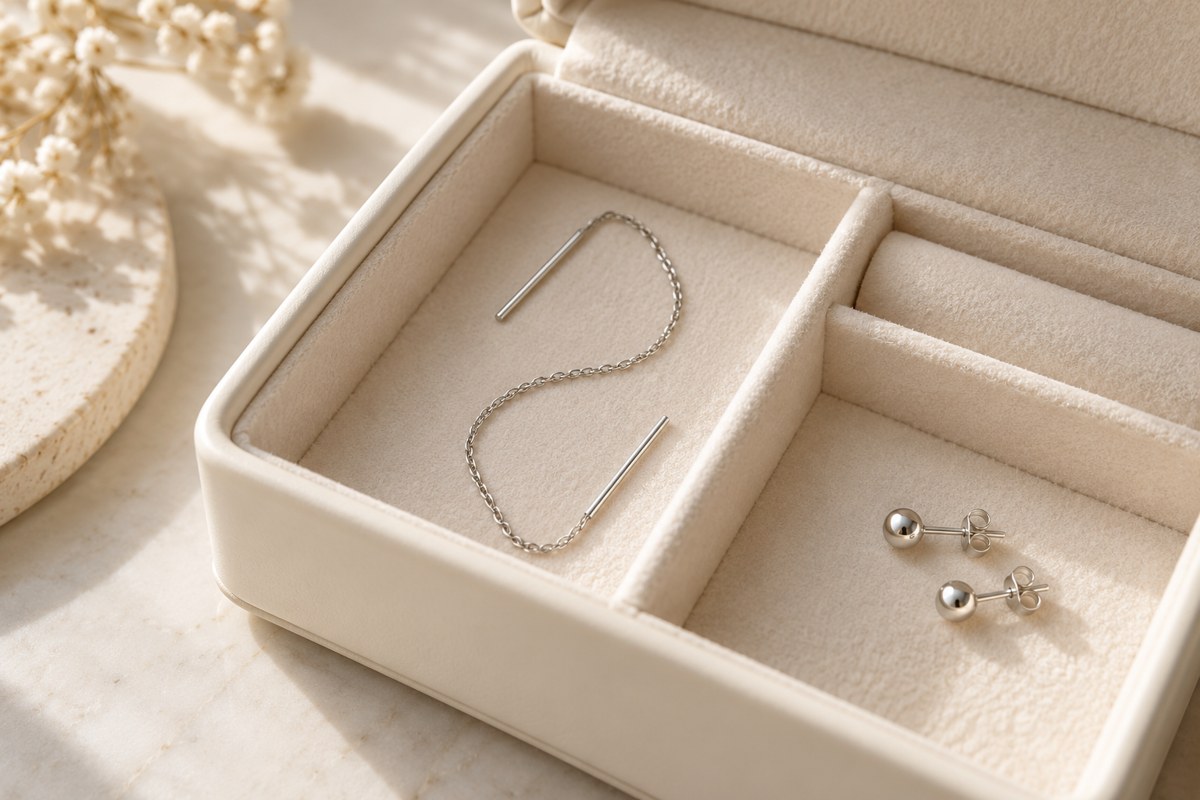
Follow the maker's instructions for the specific design. Check how a connector comes apart before changing it, and keep small components together. Our flat-back removal guide explains why identifying the fastening comes first. Store a fine chain separately so you can inspect it without first untangling it from another pair.
Consider snagging when choosing what to wear with it. If you need to change jewelry for an activity or sleep, account for your piercing's tendency to shrink. A piercer can help you plan a suitable fitting rather than leaving the channel empty by default.
For recurring rash or suspected allergy, consult a dermatologist. Seek medical advice for severe, worsening or otherwise concerning symptoms. Changing from a threader to a connector does not identify or treat the cause.
Questions about chain earrings
Are threaders always comfortable because they are light?
No. Weight is one detail. Thickness, surface finish, movement and the condition of the piercing also need consideration.
Does a connector chain pass through the piercing?
Usually the compatible post stays in the channel and the chain attaches to the jewelry. Confirm the design because product names vary.
Can I use any chain with my existing studs?
Check the loop, post and available wearable length first. Similar-looking fittings do not prove compatibility.
Can I wear a chain on a new piercing?
Wait until the relevant placement is fully healed and suitable for the arrangement. Ask a qualified piercer if you are unsure.
