

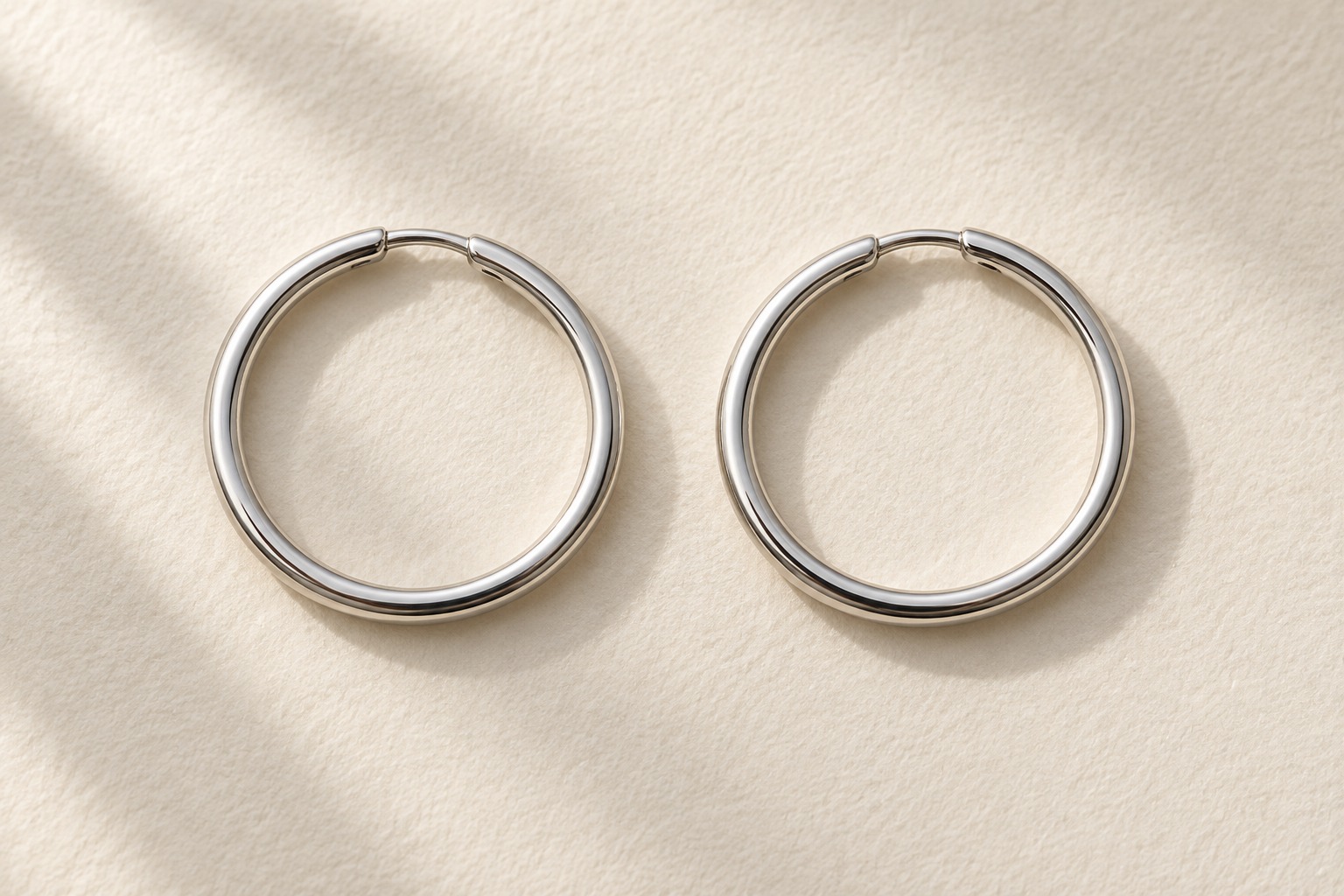
A small hoop can look like an easy swap for a stud. Then you open the listing and find two different measurements, a hinge you haven't used before, and a size that may describe the outside of the earring. Those details deserve a closer look before you order.
A clicker has a hinged segment that closes into the rest of the hoop. That tells you how it fastens. It doesn't tell you whether the part passing through your piercing has the right thickness or whether the ring leaves enough room around your ear. This guide compares two examples for fully healed piercings.
Start with the part that goes through your ear
Check the post or ring thickness first. Our Seamless Clicker for Cartilage lists a 1.2 mm gauge, while the Moissanite Huggie Hoop lists a 1.0 mm straight post. These are different fittings, even if both earrings look small in a photograph.
If you're used to a thinner stud, don't assume either hoop will slide in comfortably. Ask your piercer to confirm the diameter your piercing can accept. The Association of Professional Piercers advises against forcing jewelry into a piercing and recommends getting help if insertion isn't easy.
Keep that measurement separate from the size of the hoop. A thinner post doesn't necessarily mean a smaller ring, and a larger ring doesn't establish which post thickness you need. Our earring size guide explains the different dimensions if the listing uses unfamiliar terms.
Find out what the diameter measures
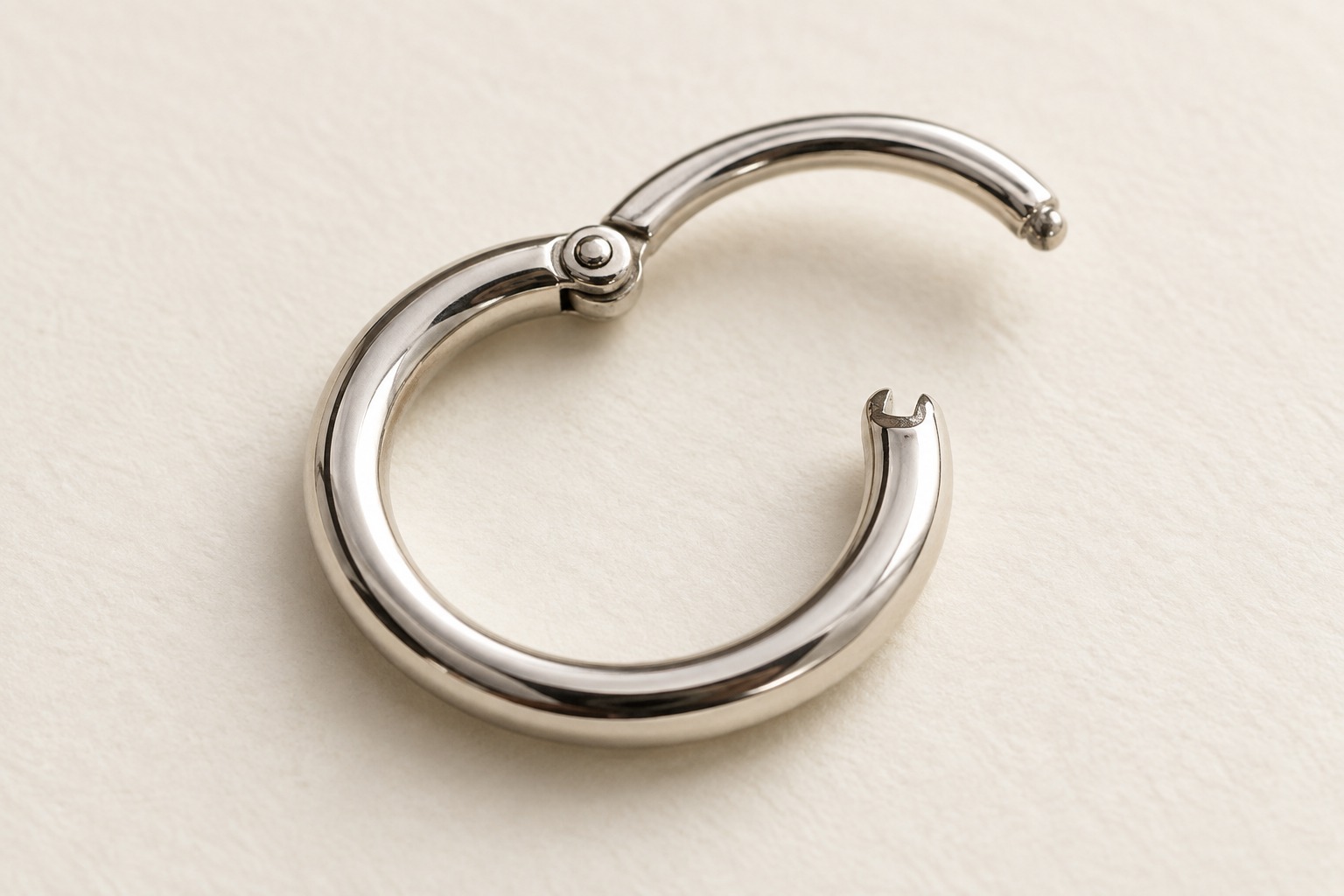
The Seamless Clicker lists an 8 mm inner diameter. That's the open space inside the ring. The Huggie listing gives a 12 mm hoop diameter without specifying whether it is measured inside or outside. Ask for clarification before comparing the two as if those numbers describe the same thing.
For a healed piercing, bring a hoop that already fits to your piercer or keep its confirmed measurements handy. A front-facing photo can't establish the clearance behind the ear, and the same diameter can sit differently in two placements.
A close-fitting look should not require the ring to pull the piercing toward the edge of your ear. Have the fit checked if the hoop presses into tissue or sits at an uncomfortable angle. Don't buy the smallest diameter simply because you like the word “huggie.”
Compare the closure and the shape together
Our Seamless Clicker is a circular G23 titanium hoop with an integrated hinged segment. It comes as a pair and doesn't use a separate butterfly back. Its plain outline offers a simple option to consider alongside more decorative hoops.
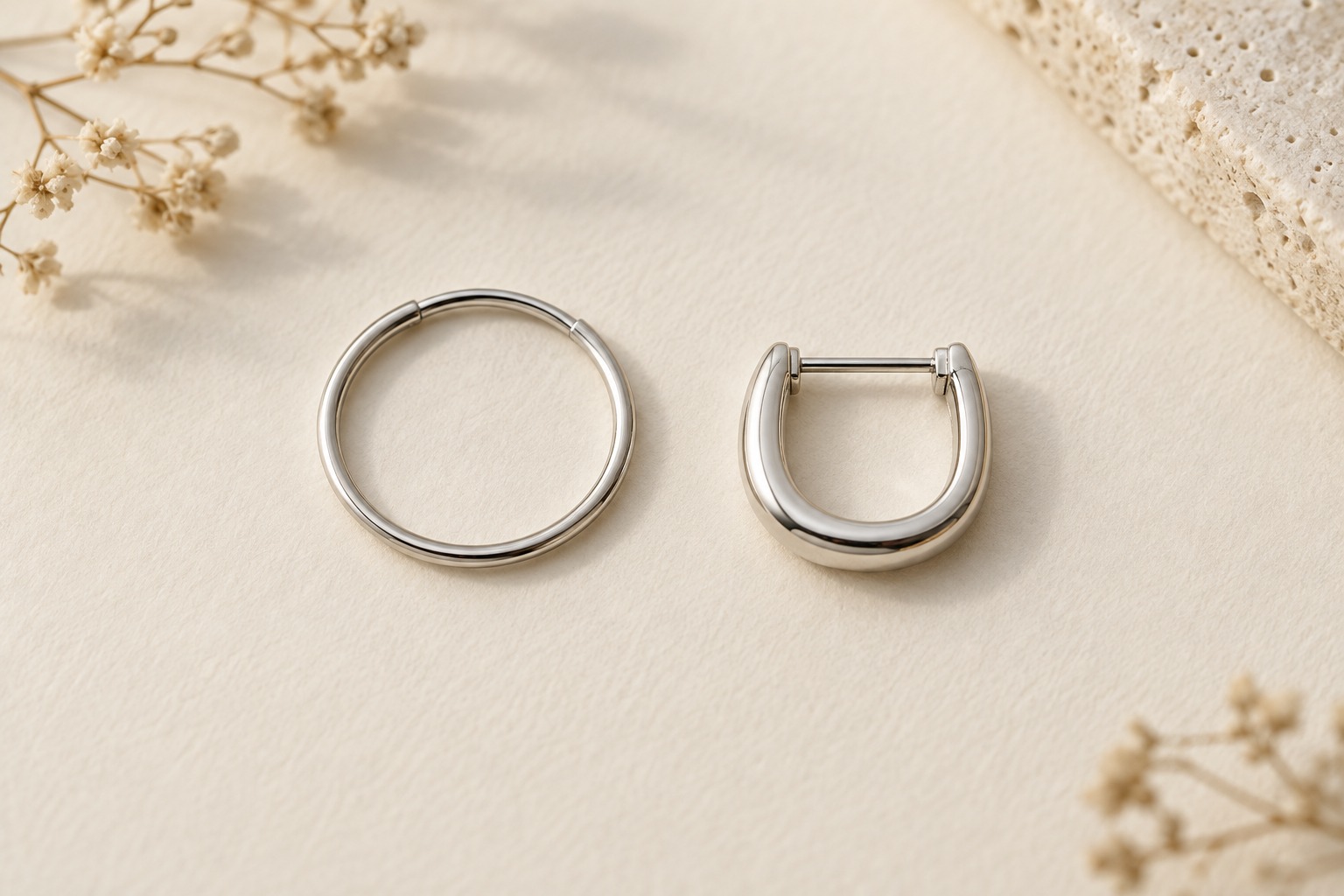
The Moissanite Huggie has a D-shaped profile, a hinged clasp and a straight post. Its front curve holds five round stones. The listing calls them “D-color moissanite-style stones”; it doesn't provide a gem identification report. If gemstone identity matters to your purchase, ask for supporting details.
Neither design is a drop-in substitute for the other. The part passing through the piercing, the space inside the hoop and the depth of the decorative front all need to suit the placement. Choose the fitting before choosing how much sparkle you want.
Inspect an unfamiliar hinge before wearing it
When the earrings arrive, look at the closure in good light and follow the instructions for that model. Find the moving segment and the receiving end while the earring is off your ear. You should be able to understand how the two meet without experimenting in the piercing.
If the hinge looks bent, the ends don't line up, or an edge feels rough, set the earring aside and ask for help. Don't bend the ring body to make the clasp reach. A click sound alone doesn't establish that a damaged closure is secure.
Avoid reaching for pliers to fix a newly purchased hoop. Ask the seller about a replacement or have a professional inspect it. Forcing the closure while it is in your ear can also make it harder to see which part is catching.
Read the material beyond its color
The plain clicker is listed as G23 titanium. The D-shaped huggie uses the listing wording “F136/G23 titanium alloy” and offers Natural Titanium and Gold color options. Those are the current product descriptions, not independently verified material certificates.
If your choice depends on a particular specification, request the documentation and ask about the selected finish. A silver tone does not identify an alloy, and a gold color does not mean solid gold. The hinge mechanism itself also says nothing about allergy suitability.
You can compare these styles in our titanium hoops collection. Keep the product's exact measurements with your notes so a similar-looking design doesn't get mistaken for the same fitting.
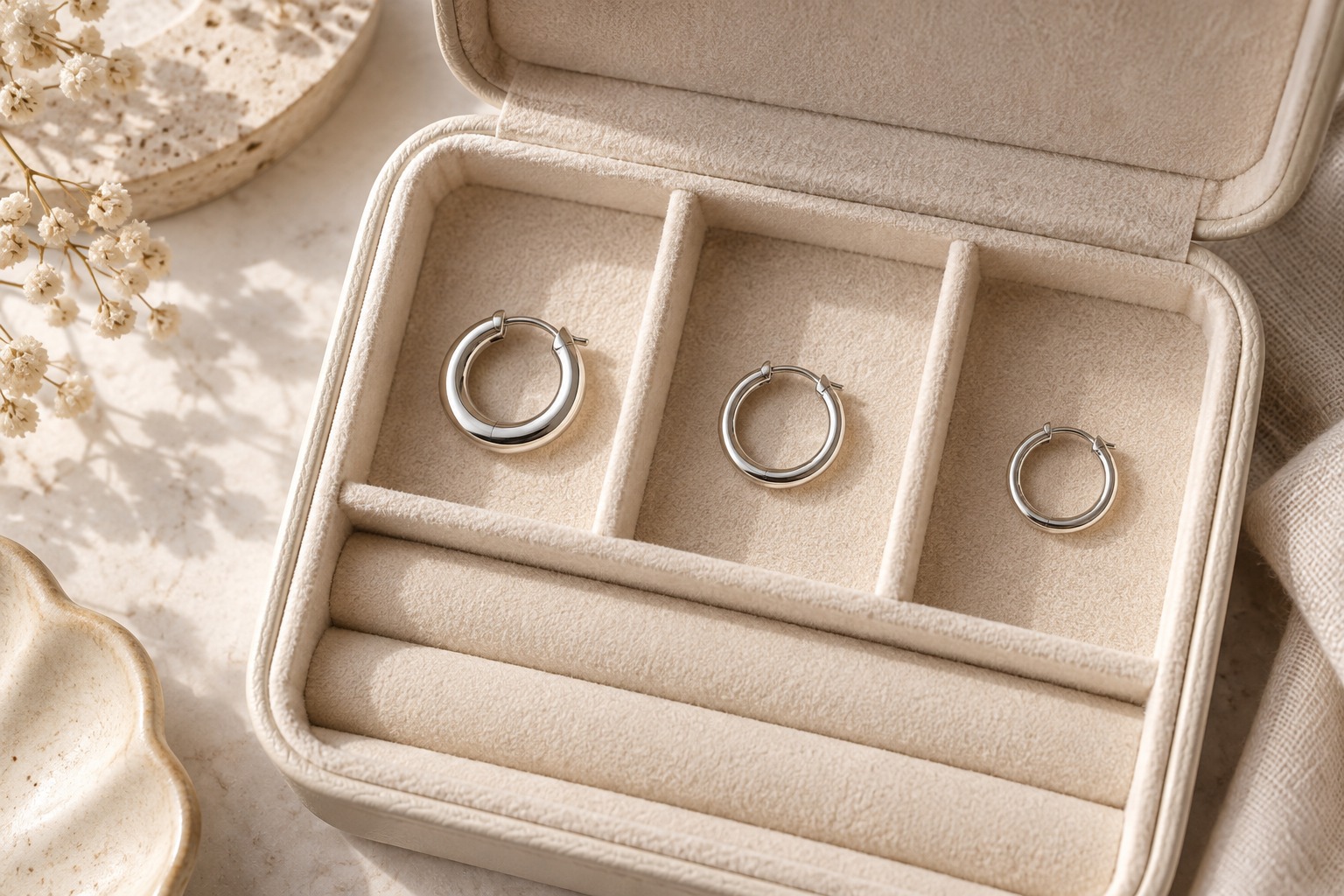
A few questions before you choose
Is a clicker the same as a huggie?
The terms describe different features. Clicker refers to the fastening mechanism; huggie describes a close-fitting hoop style. A product may use both terms. Read its closure and dimensions instead of choosing by the name alone.
Can I wear either example in a fresh piercing?
These shopping examples are for healed piercings. Ask your piercer to select and fit initial jewelry for a new piercing. A retail category such as “cartilage earrings” doesn't establish that every product in it is suitable for your healing stage.
Does a seamless hoop mean I can sleep in it?
The closure name doesn't promise comfort during sleep. Pressure and the way the jewelry sits still matter. If you're planning around glasses, headphones or your sleeping position, discuss those details when checking the fit.

Related posts

Ear Piercing Costs: What Your Quote Should Include
Compare ear-piercing quotes by the number of holes, complete jewelry, follow-up services and other charges, with specific official studio examples.
Surface Tragus vs Tragus: Why the Jewelry Is Different
Learn how surface bars, labret studs and surface anchors differ, and what to confirm before buying jewelry for a piercing beside the tragus.
Vertical Helix vs Hidden Helix: Check the Jewelry Direction
Compare vertical and hidden helix descriptions, check what product photographs leave out, and read jewelry specifications for a fully healed piercing.