

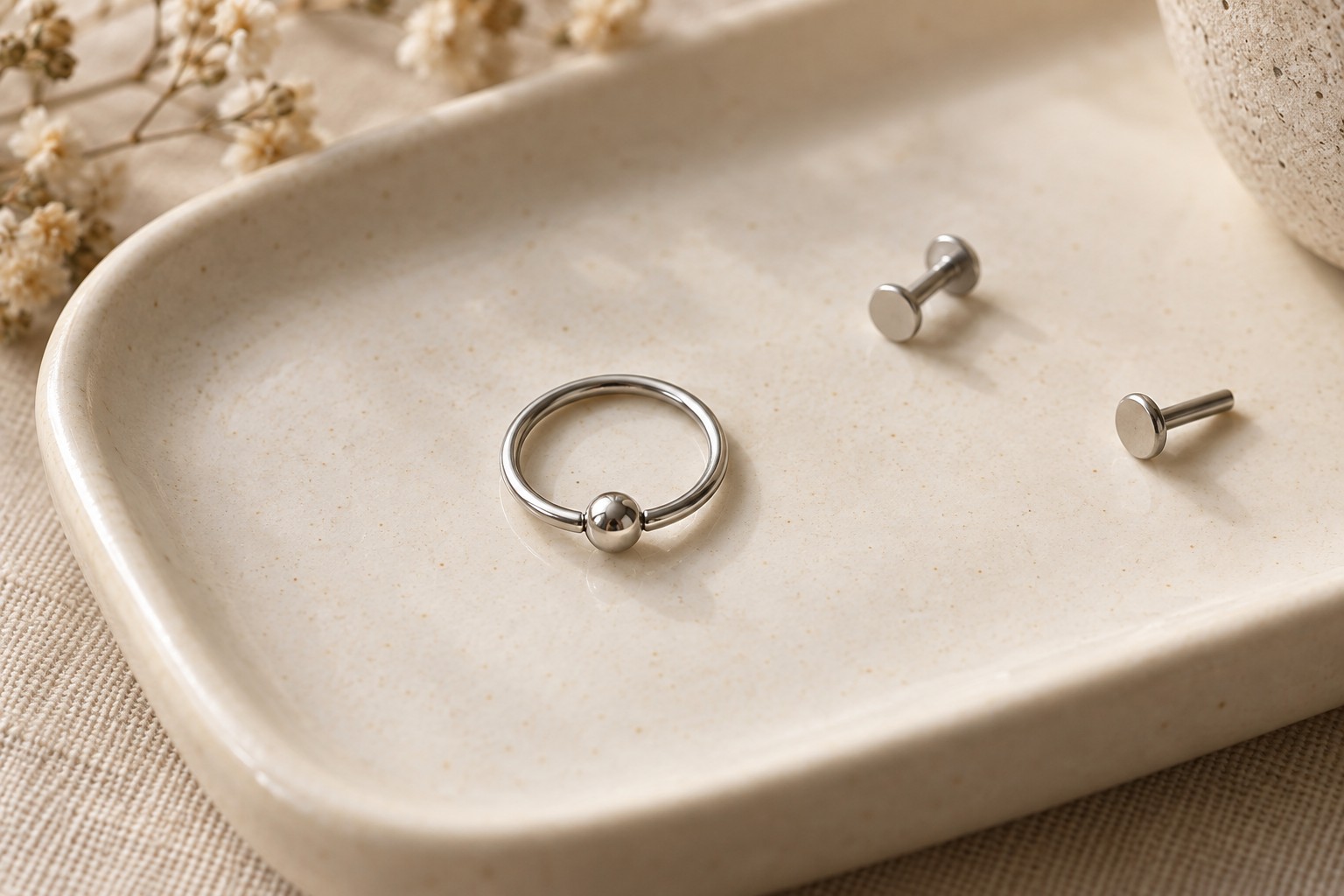
You see a small ring linking two holes on an ear and start looking for the same style. Before you buy a ring, check how those piercings were placed. An orbital needs both channels to work with one ring, so the space between them matters as much as the ring itself.
An orbital piercing connects two separate piercing channels with a single ring. It can involve the lobe or cartilage. A hoop through one conch piercing is different, even when a shop or social post calls it an orbital.
Bring a placement idea to your appointment
A photograph can show the look you like. It cannot tell a piercer whether your ear has the right shape for that arrangement. Piercing Experience describes orbital placements in the helix or lobe; the shared feature is the two channels joined by a ring.
If you already have two piercings, ask whether their positions and angles suit a shared ring. Having two healed holes does not automatically make them a compatible pair. Axiom’s orbital consultation guidance emphasizes anatomy, spacing and measuring for the jewelry.
Ask your piercer to explain where the ring would sit and which part of your ear each channel would pass through. You can also discuss healing the channels separately or together. Your piercer can help you weigh those options for your placement.
Write down the jewelry measurements
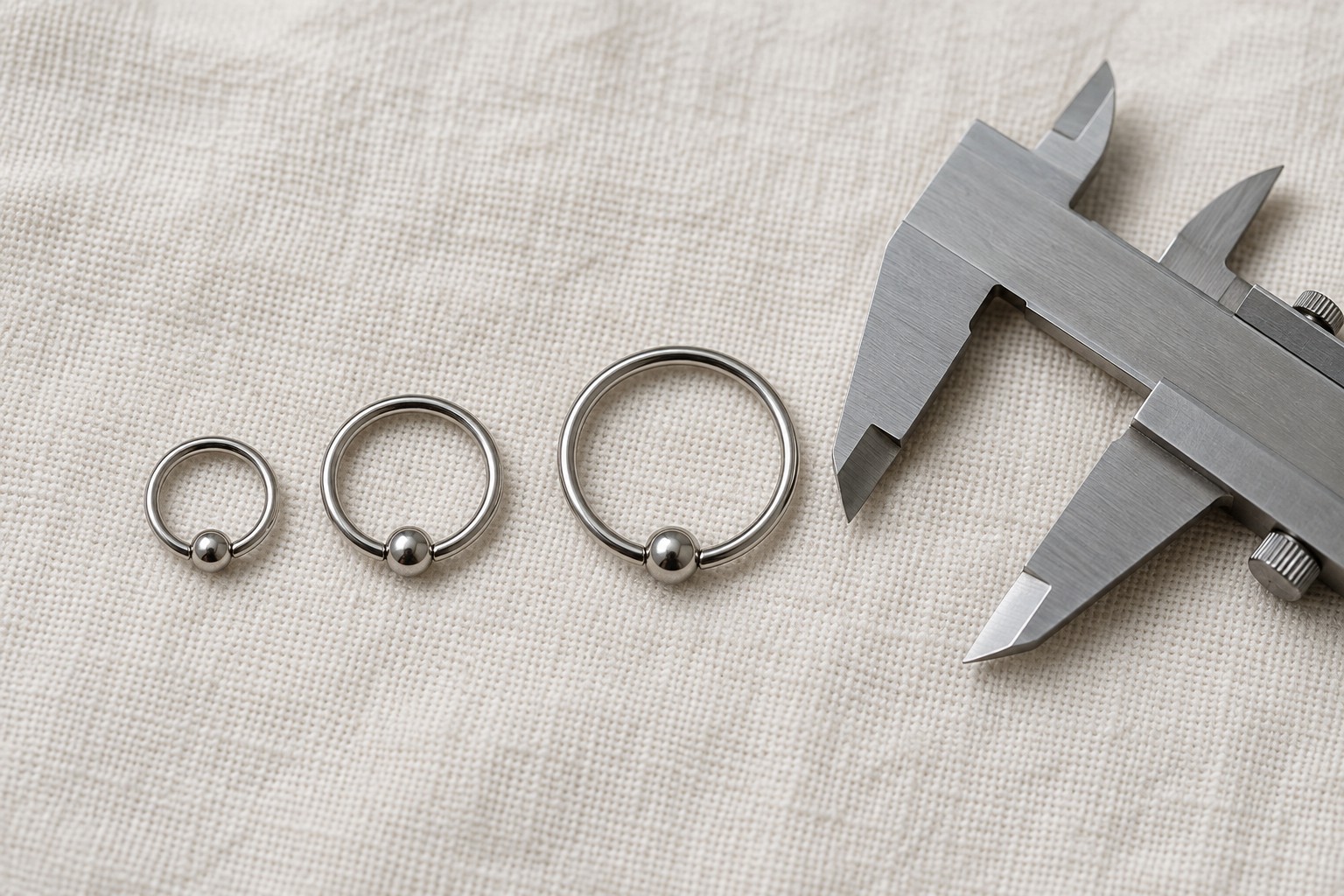
Ask for the gauge, inner diameter, material and closure style your piercer recommends. Keep those details with the placement plan. Ring diameter and gauge describe different measurements: the first concerns the circle; the second concerns the thickness that passes through the piercing.
An online photograph makes it hard to judge either measurement. Two rings can look much the same while fitting very differently. A compact ring that suits a single healed hole may not span two channels comfortably.
The Association of Professional Piercers explains that jewelry dimensions, material, surface finish and style all affect suitability for a new piercing. A smaller ring can be too tight. A larger one can also fit poorly, so let the measurements guide the choice.
Have your piercer select and fit the initial jewelry. If you react to jewelry, explain what happened and bring any material information you have. A titanium label alone does not establish a particular manufacturing standard, and no seller can promise that every sensitive ear will respond the same way.
Plan for healing before adding more jewelry
A lobe orbital and a cartilage orbital should not be given one shared healing deadline. The location and your individual progress matter. Ask what follow-up your piercer recommends and when they want to assess the fit again.
Discuss your usual sleeping position and whether headphones, helmets or other everyday items would touch the proposed placement. Ask how to manage those contact points.
The APP’s aftercare guidance recommends packaged sterile saline containing 0.9% sodium chloride and water, clean hands and gentle drying. Avoid rotating the ring or using harsh cleansers.
Ask your piercer when to return for a fit check and which changes should wait. Bring any new jewelry you are considering to that appointment.
If the area becomes hot, increasingly painful or swollen, develops pus, or you feel feverish or unwell, seek urgent medical advice. The NHS advises leaving jewelry in when infection is suspected unless a doctor tells you to remove it. A shopping guide cannot diagnose the cause of soreness.
Shop for the rest of the ear separately
Once a separate piercing is fully healed, you may want a small hoop or stud alongside the orbital. Treat that as its own fitting decision. Our guide to nickel-free and hypoallergenic labels explains why a reassuring product label still needs specific material information behind it.
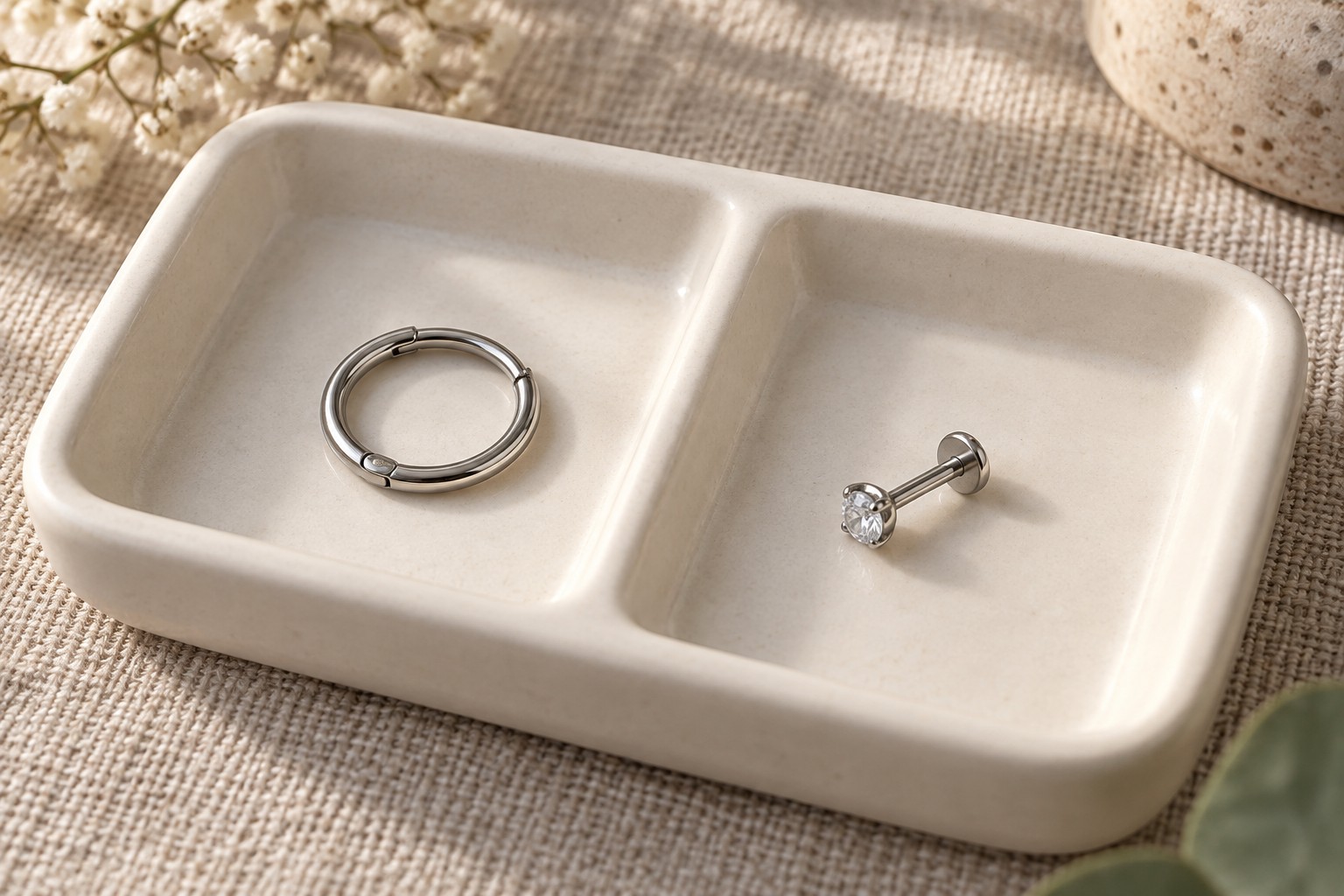
For an appropriately sized, healed single piercing, our Titanium Seamless Clicker Hoop is listed with a 1.2 mm gauge and an 8 mm inner diameter. An 8 mm ring is not a universal orbital size. Ask your piercer whether they match the separate piercing you intend to wear it in.
For a small accent in a neighboring healed piercing, you could consider the Petite Crystal Cluster Flat Back Stud. Its listed post is 20G (0.8 mm) with a 6 mm wearable length. It has a threadless closure and a small crystal front. Check that exact gauge and length against the healed piercing before ordering.
Neither product has been verified for your orbital. A stud does not connect two holes, and the clicker’s published dimensions do not establish compatibility with your orbital. If you are shopping specifically for the connecting ring, take your piercer’s written specification with you.
Orbital piercing FAQ
Can I choose a ring first and ask for holes to match?
Bring the idea, but leave the placement and final jewelry choice open. A piercer needs to assess your anatomy and the ring’s dimensions, material and construction before deciding whether that combination is suitable.
Is an orbital always a cartilage piercing?
No. The term describes two channels joined by a ring. Ask which tissue your proposed placement involves so the care and follow-up discussion fits your ear.
What should I bring to a jewelry follow-up?
Bring the original jewelry specifications, any new item you are considering, and a description of discomfort or pressure you have noticed. Avoid testing a replacement ring yourself while the area is healing.

Related posts

Ear Piercing Costs: What Your Quote Should Include
Compare ear-piercing quotes by the number of holes, complete jewelry, follow-up services and other charges, with specific official studio examples.
Surface Tragus vs Tragus: Why the Jewelry Is Different
Learn how surface bars, labret studs and surface anchors differ, and what to confirm before buying jewelry for a piercing beside the tragus.
Vertical Helix vs Hidden Helix: Check the Jewelry Direction
Compare vertical and hidden helix descriptions, check what product photographs leave out, and read jewelry specifications for a fully healed piercing.