

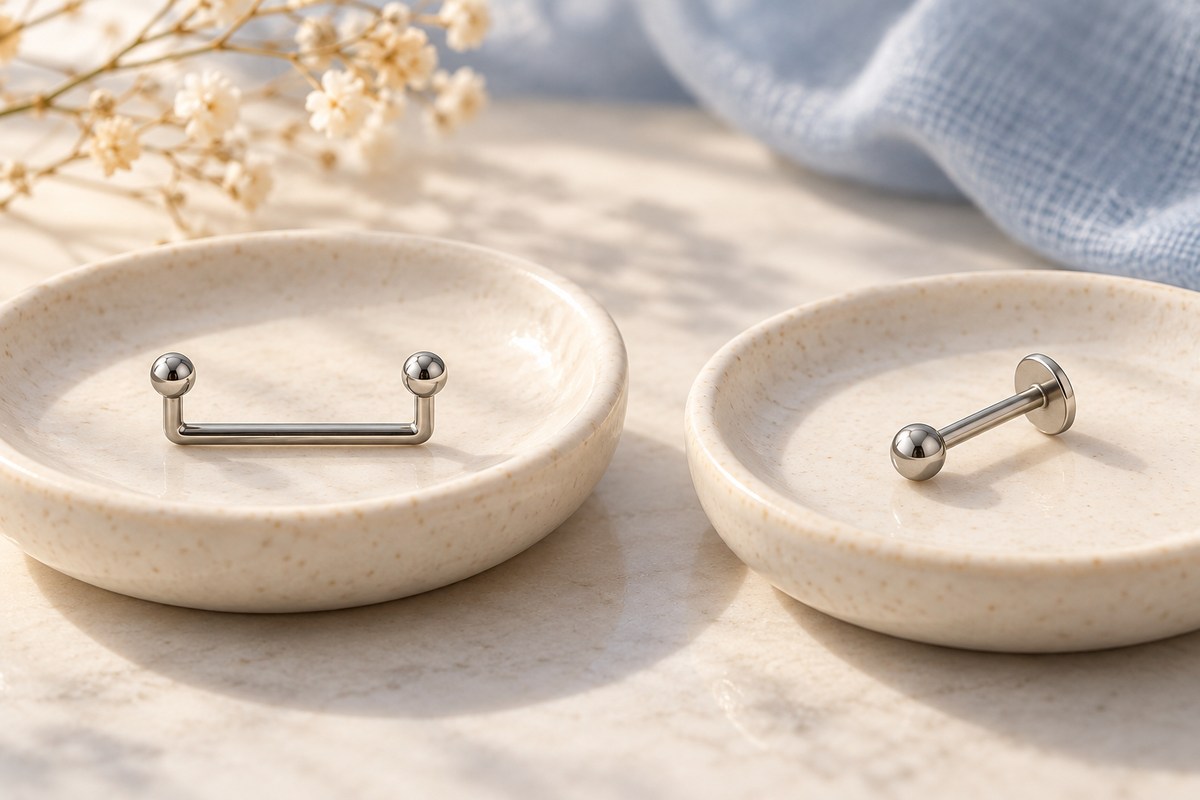
Two small ends beside the ear can look like two ordinary studs. That doesn't tell you what connects them underneath. Before shopping for a surface tragus piercing, check the placement and the complete jewelry structure with your piercer.
A piercing through the tragus cartilage and a surface piercing in the skin beside it are different placements. They can need very different jewelry, even when the visible decoration looks similar. Start with the part you can’t see in the photo.
Start with the tissue, not the photograph
The tragus is the small cartilage prominence beside the opening of the ear canal. An ordinary tragus piercing passes through that cartilage. A surface tragus piercing sits in the skin alongside it. A close-up photo may show the decorative ends clearly while leaving the placement hard to judge.
The names aren’t always used consistently. BodyCandy's surface tragus article distinguishes a vertical tragus piercing through cartilage from the surface version beside it. Don't assume that every piercing called “vertical tragus” is a surface piercing. Ask what tissue the planned or existing piercing passes through.
For the ordinary cartilage placement, our tragus piercing guide provides separate background. Here, the focus is identifying the jewelry beneath the visible ends before ordering anything. A location word in a product title isn't enough to establish compatibility.
Understand what connects the visible ends
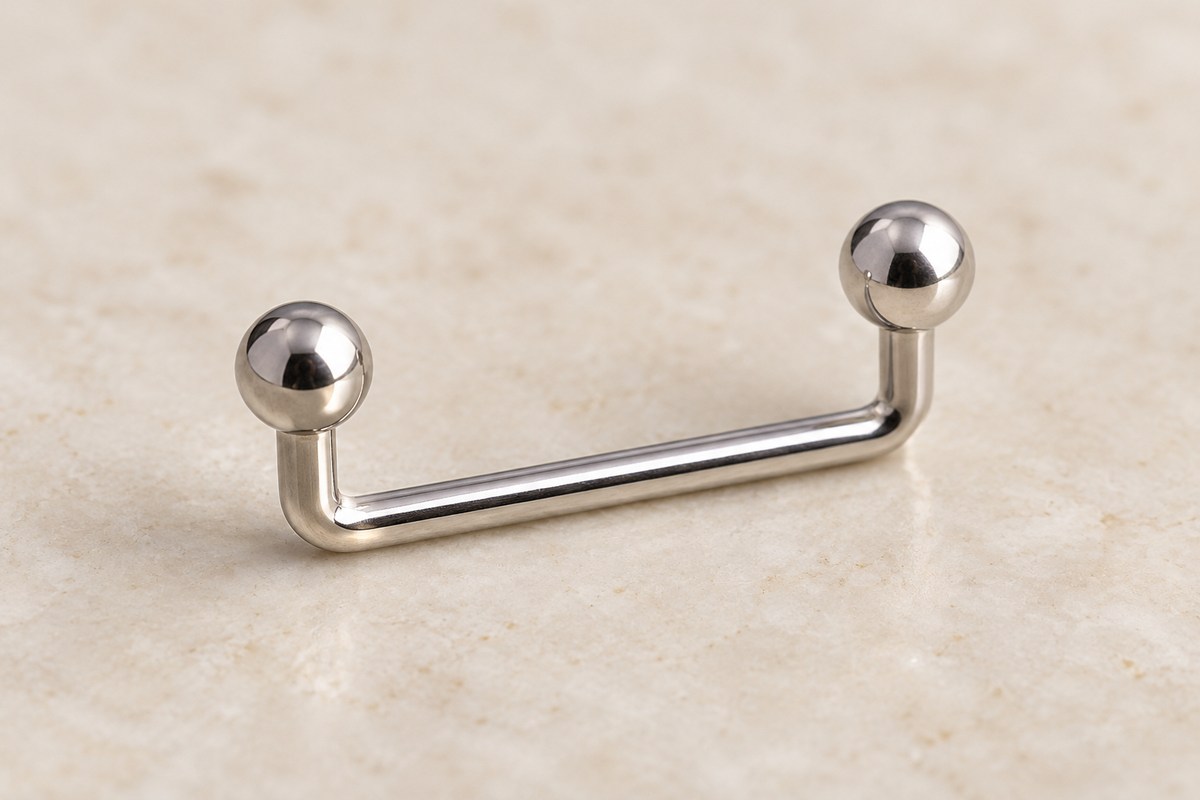
A surface bar has a straight shaft with bent ends, commonly around 90 degrees, so the two openings face the same body surface. That description explains its structure; it isn't an instruction to choose an angle or fit a bar yourself.
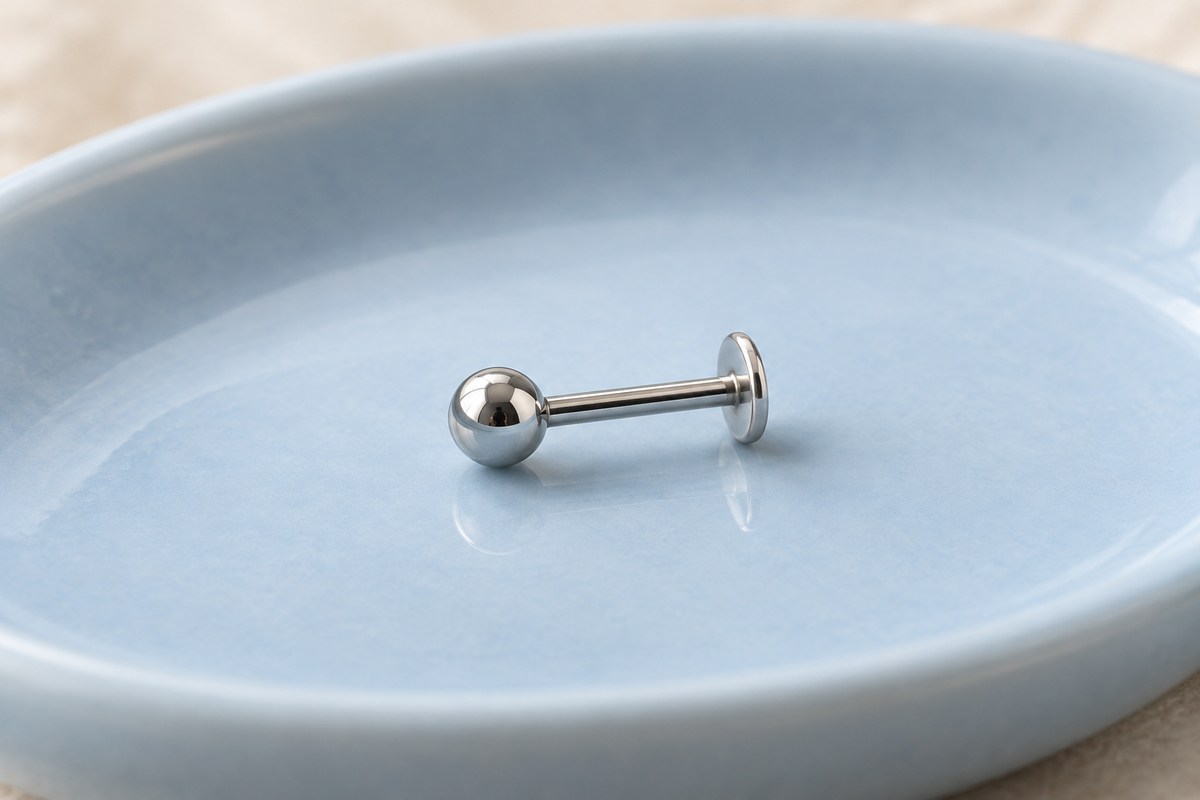
A labret-style stud has a straight post with a flat disc at one end and a decorative end at the other. This is the familiar flat-back structure you may see in ordinary cartilage jewelry. It doesn't have the same shape as a surface bar.
APP's 2013 Procedure Manual describes these structures and lists tragus and helix among common labret placements. This is a 2013 reference used here to explain jewelry shapes, not a newly issued 2026 fitting guide. Your piercer still needs to assess your anatomy and the exact placement.
When you look at a photograph of two decorative ends, ask whether they belong to one surface bar or to separate pieces. Don't buy two flat-back studs on the assumption that they reproduce the arrangement beneath the skin.
Keep surface anchors separate from surface bars
A surface anchor has a base beneath the skin and a single opening for its visible end. A surface bar connects two ends through a different structure. “Surface” in both names doesn't make them interchangeable.
This matters when reading shopping listings and advice online. A description of a surface anchor's base, replacement top or expected longevity doesn't automatically apply to a surface bar. Nor does a photograph of two decorations prove that a surface bar connects them.
Ask your piercer to name the complete jewelry and explain which parts, if any, can be changed professionally. If you're considering a new decoration, have them confirm the connection before ordering. Matching the color, stone or apparent size cannot establish that a replacement end will attach correctly.
Read flat-back listings as a different category
Our Small Solitaire is an ordinary flat-back example. Its listing specifies an approximately 3 mm face and a 20G post, or 0.8 mm in diameter, with a 6 mm wearable length. It describes a flat-back post without specifying the connection type, so ask for that detail if you need it for a particular fitting.
Titanium Pearl lists a threaded flat-back post with the same stated 20G diameter and 6 mm wearable length. Its pearl face is approximately 6 mm. The larger decorative face doesn't mean it has a longer post.
Neither product is a surface bar, and this article does not recommend either for a surface tragus piercing. They are shopping comparisons for other fully healed piercings where a professional has confirmed compatibility. Their listed dimensions aren't suggested surface-piercing measurements.
When comparing listings, keep the decorative face, post dimensions and complete jewelry shape separate. A titanium material description doesn't turn a straight flat-back stud into the structure required for a different placement.

Ask for a fitting assessment before buying
The Association of Professional Piercers' current initial-jewelry guidance addresses suitable size, material and surface finish. Use those considerations alongside your piercer's assessment. There isn't one gauge or length to order simply because a photo is labeled “surface tragus.”
Bring the reference image and ask the piercer to identify the tissue involved, the intended jewelry structure and the specifications needed. For an existing piercing, bring your original jewelry or appointment details rather than removing it to inspect the hidden parts.
If the position or surrounding tissue has changed, arrange professional assessment before shopping for a replacement. Worsening symptoms or concern about infection call for prompt clinical advice. Don't try to correct a placement by installing a different jewelry shape yourself.
Save the confirmed details with your receipt. When you shop again, compare those details with the listing. A familiar-looking gem won’t answer the fitting questions.
Questions about surface tragus jewelry
Can I identify the jewelry just by counting the visible gems?
No. Two visible decorations don't establish what sits beneath them. Ask the piercer who fitted the jewelry, or have a professional assess it if the original details aren't available. Don't remove it to find out.
Does a listing marked “tragus jewelry” cover a surface tragus?
The label alone doesn't establish that. Check the complete structure and have your piercer confirm it for your placement. An ordinary flat-back listing should not be treated as a surface-bar recommendation.
Can I order a matching decorative end separately?
Ask whether the specific end fits your existing jewelry system and whether professional fitting is needed. A similar stone or matching metal color doesn't identify the connection. Also confirm whether the listing sells an end, a complete piece or a pair before paying.

Related posts

Ear Piercing Costs: What Your Quote Should Include
Compare ear-piercing quotes by the number of holes, complete jewelry, follow-up services and other charges, with specific official studio examples.
Vertical Helix vs Hidden Helix: Check the Jewelry Direction
Compare vertical and hidden helix descriptions, check what product photographs leave out, and read jewelry specifications for a fully healed piercing.
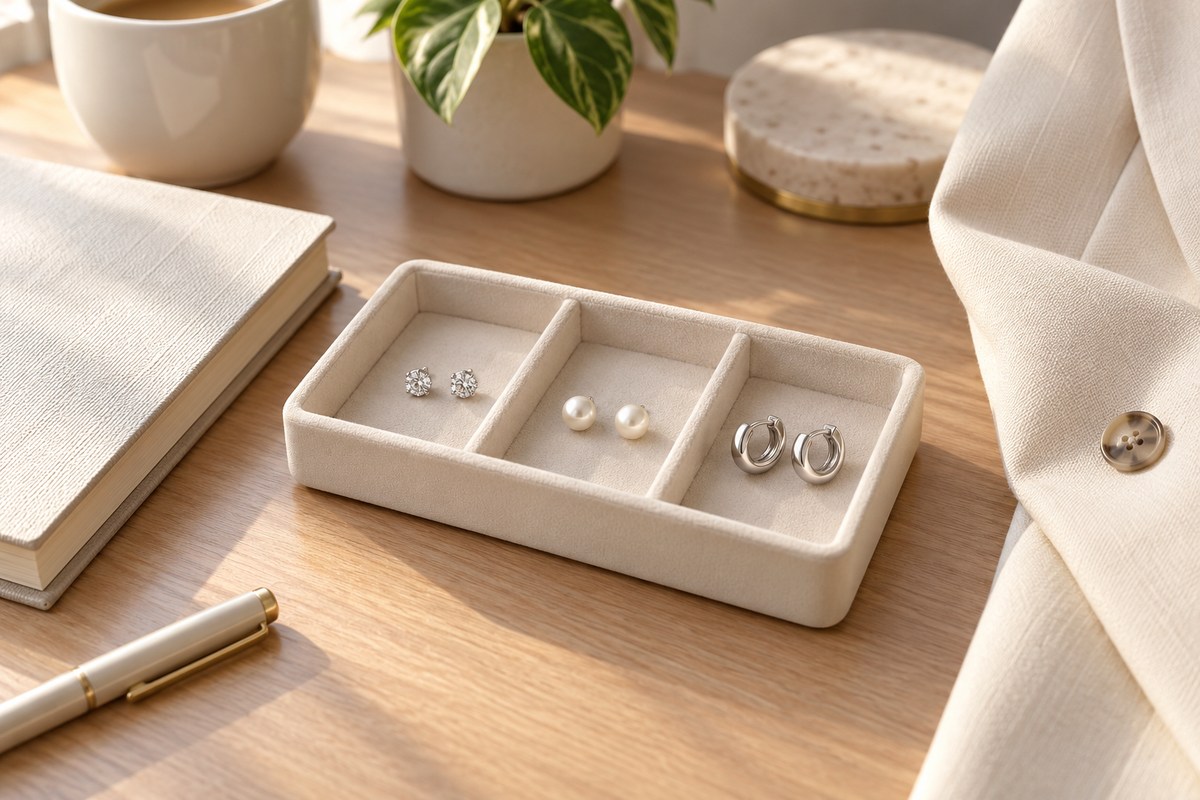
Earrings for Work: A Three-Pair Rotation for Sensitive Ears
Plan a small workday earring rotation with a simple stud, a pearl-front pair and a compact hoop, using real product details and your own workplace rules.