

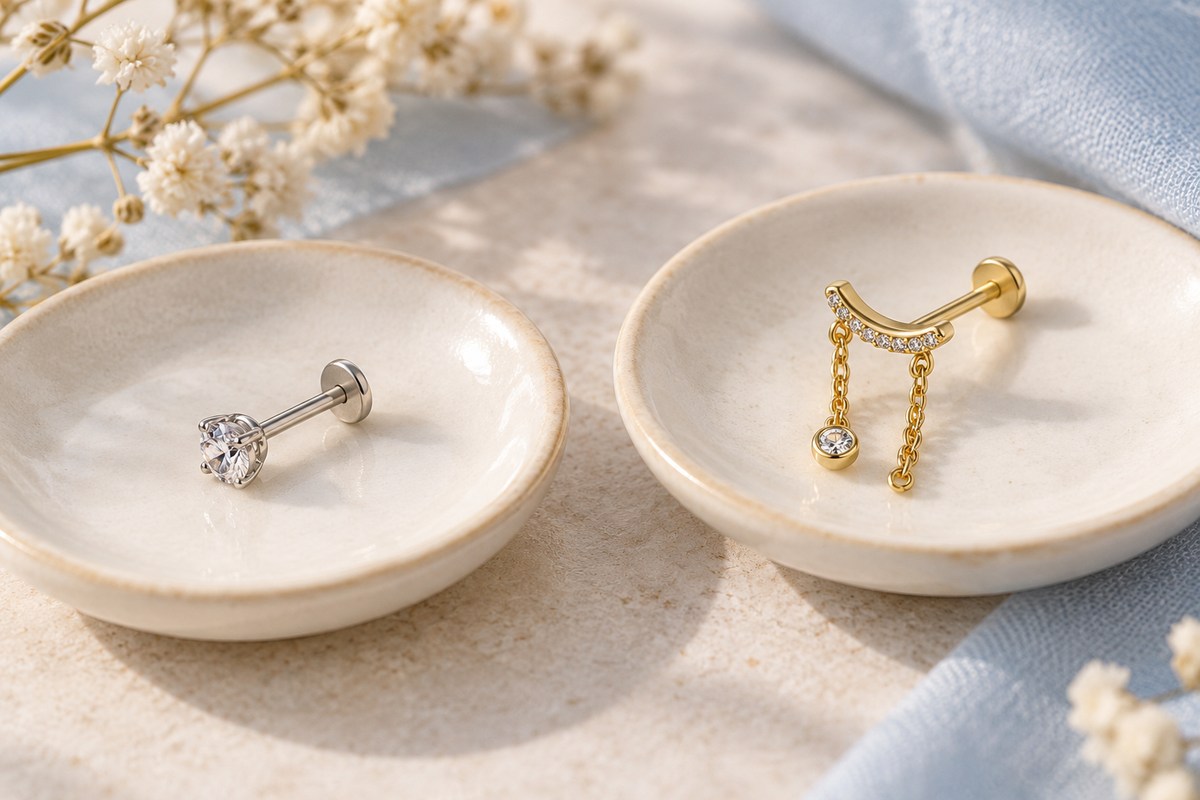
If you've saved a photograph of chains hanging below an upper-ear fold, check how the jewelry connects before shopping for the look. A visible drop doesn't tell you which direction the post passes through the ear. The name on a listing may describe the piercing, the decoration, or both.
Start with two separate questions: where does the post go, and which part of the jewelry is meant to show? Those details matter more than whether two photographs look alike. This guide helps you read the descriptions and prepare questions for your piercer.
Separate the piercing direction from the finished look
BodyCandy's vertical helix guide describes a vertical helix as running in an up-and-down direction through the upper ear, compared with the front-to-back direction of a conventional helix piercing. That is a description of the piercing's path. It doesn't give you a universal angle or a jewelry specification for your ear.
“Hidden helix” can describe a look in which part of the jewelry sits beneath the upper fold while a decorative element remains visible. When shopping, ask the seller exactly what that description means. It isn't a standardized medical angle measurement.
The terms aren't necessarily mutually exclusive. One description may emphasize direction and another may emphasize concealment. Ask what the seller means by each term instead of assuming that “vertical” and “hidden” identify two completely separate fittings. For broader placement terminology, see our helix piercing guide.
Ask what the photograph leaves out
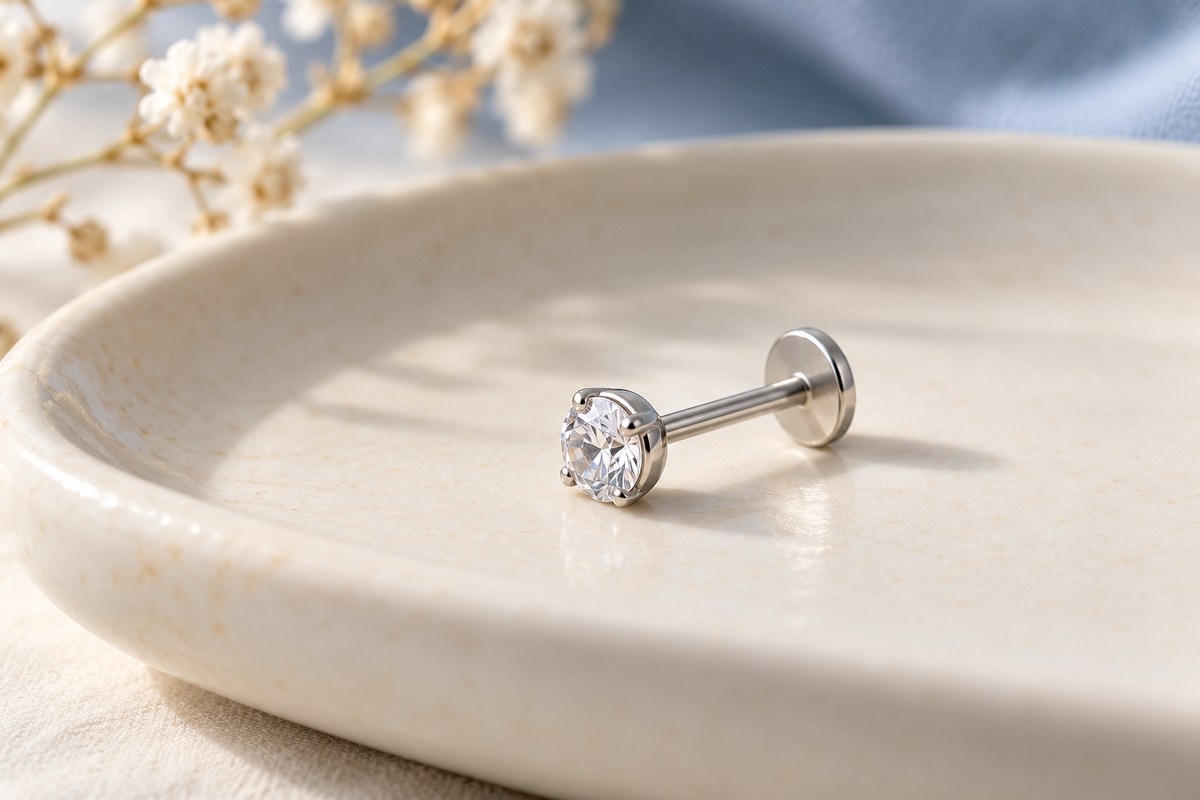
A front-facing photograph can show chains, crystals and the curve of an ear fold while concealing the post and back. It may give you a clear idea of the decoration without enough information to assess how the earring connects.
Request a side view and a photograph of the complete earring off the ear. Ask the seller to identify the post, the fastening and the decorative section. Several photographs can still leave the connection unclear.
Take those details to your piercer. Ask whether the jewelry's shape and direction suit your existing piercing and whether the decoration can sit as intended on your ear. Don't turn, reverse or force jewelry into place to recreate the product image. A photograph of another person's ear can't confirm your fit.
Check your piercing before choosing dimensions
The Association of Professional Piercers explains that appropriate jewelry size, material and style depend on the individual anatomy and piercing. A shared placement name doesn't establish that two people need the same post or jewelry shape.
Write down the proposed post diameter and wearable length, then have your piercer assess them for your piercing. The decoration's dimensions answer a different question: how much space the visible front occupies. Keep those measurements separate when comparing listings.
If the piercing is still healing, ask your piercer to handle any necessary jewelry changes. APP aftercare guidance advises against rotating healing jewelry and recommends avoiding pressure on the piercing. Ask before changing to a decorative piece. A style name can't tell you when your piercing will be ready.
Compare these listings for a fully healed piercing
The following examples are for comparing specifications before shopping for a compatible, fully healed piercing. None is a recommendation for initial vertical helix jewelry, and none is established here as a fit for your ear.
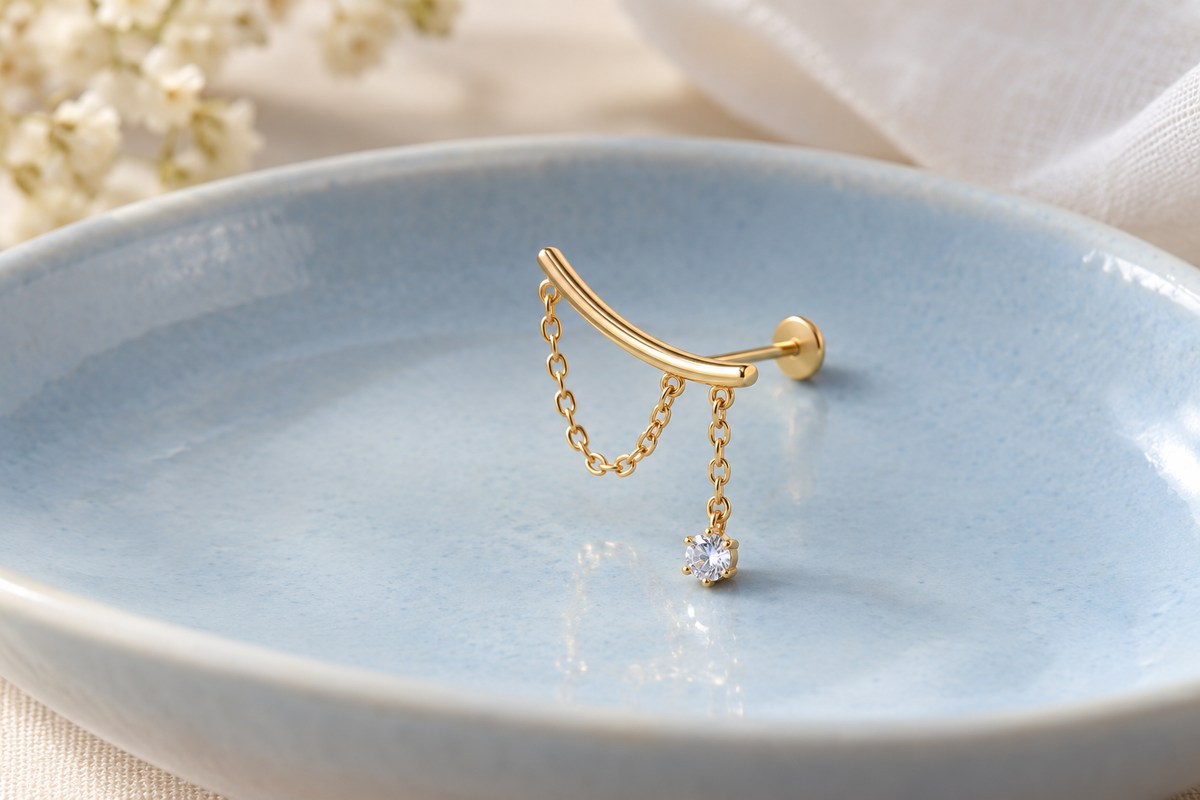
The Hidden Helix Crystal Chain listing describes titanium, a gold color, two chains and a round clear crystal drop. Its post is listed as 20G, or 0.8 mm in diameter, with a 6 mm wearable length. It is sold as a pair. The current material description is simply titanium; an older URL containing “F136” doesn't verify a material grade or certification.
The S925 Hidden Helix Double Chain listing describes S925 sterling silver in a gold color, with a curved profile, two hanging chains and a flat-back post. It also lists a 20G (0.8 mm) post, a 6 mm wearable length and a pair of earrings. Its material is silver, not titanium, despite the similar hidden-helix styling.
The Crystal Trio Bar listing describes F136/G23 titanium alloy and a threadless push-pin flat back. Its front measures approximately 5.3 by 2.1 mm, with three small round crystals in a narrow arrangement. The listed post is again 20G with a 6 mm wearable length, and the purchase includes a pair.
These details come from the product listings; we haven't independently checked material certificates for this comparison. Matching post measurements don't prove that the different decorative shapes will sit correctly in the same piercing.

Keep the seller's answer with your order
Before ordering, save the product link, selected option, dimensions and any reply about the intended fitting. Ask the seller to clarify missing information rather than filling it in from another product with a similar name.
Show your piercer the complete description along with the photograph you like. Explain which part of the look matters to you: a concealed support, a hanging chain or a small crystal front. Your piercer can then assess the look you want before you choose an earring.
If the seller can't explain the connection or your piercer can't confirm compatibility, wait before buying that piece. A familiar name and an appealing photograph don't resolve missing fit information.
Questions about vertical and hidden helix jewelry
Does “flat back” tell me the piercing direction?
No. It describes the back's shape. You still need to know how the post and decorative part are arranged and whether that arrangement suits your piercing.
Can I buy a pair and assume each ear will look the same?
A pair tells you how many earrings the purchase includes. Have each intended piercing assessed for fit; the quantity doesn't establish matching placement or an identical finished appearance.
What if my piercer uses a different name from the shop?
Bring the listing and ask both parties to describe the actual construction and intended placement. Compare those details. Agreement on a label is less useful than knowing which direction the post runs and where the decoration is intended to sit.

Related posts

Ear Piercing Costs: What Your Quote Should Include
Compare ear-piercing quotes by the number of holes, complete jewelry, follow-up services and other charges, with specific official studio examples.
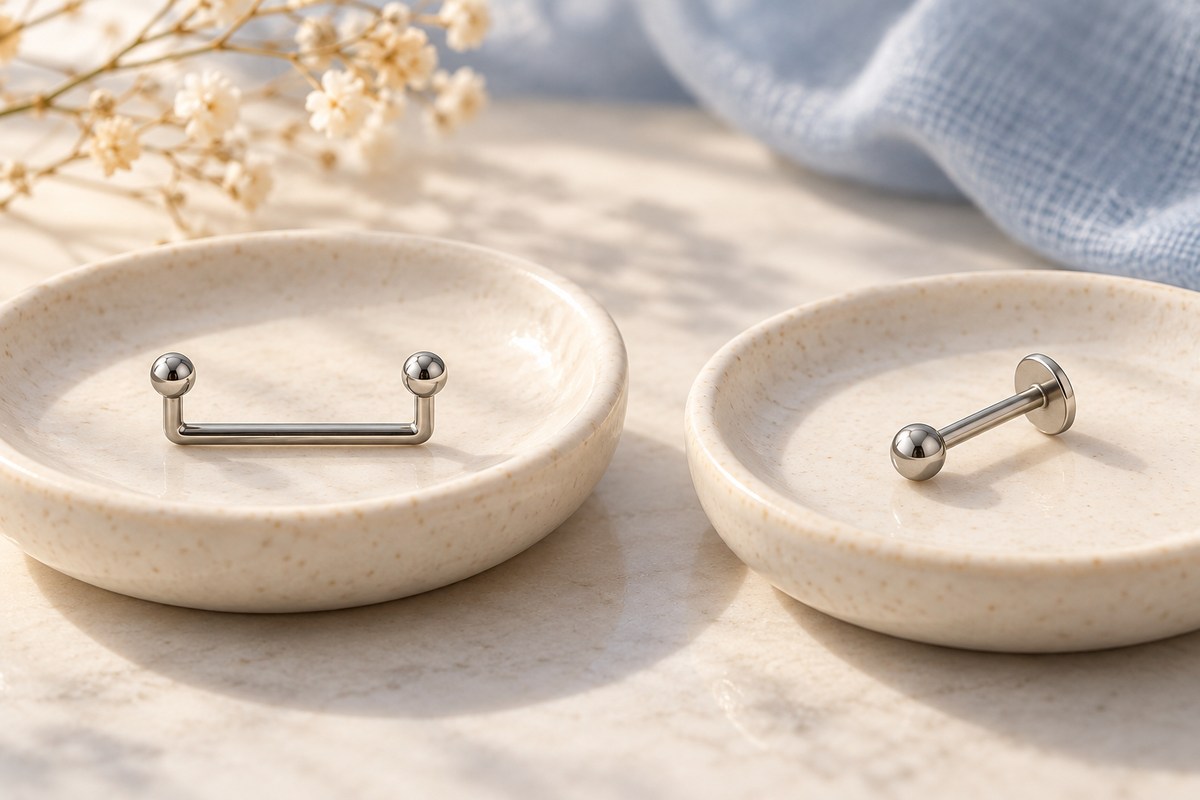
Surface Tragus vs Tragus: Why the Jewelry Is Different
Learn how surface bars, labret studs and surface anchors differ, and what to confirm before buying jewelry for a piercing beside the tragus.
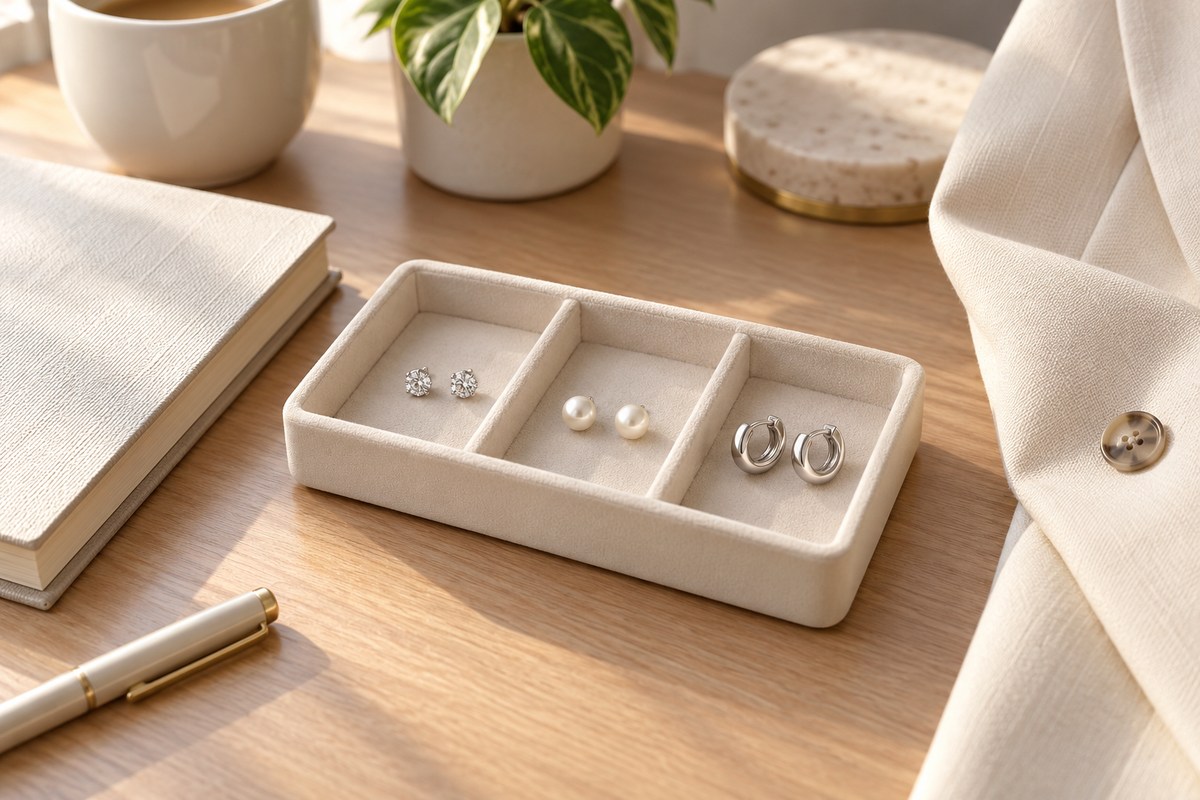
Earrings for Work: A Three-Pair Rotation for Sensitive Ears
Plan a small workday earring rotation with a simple stud, a pearl-front pair and a compact hoop, using real product details and your own workplace rules.