

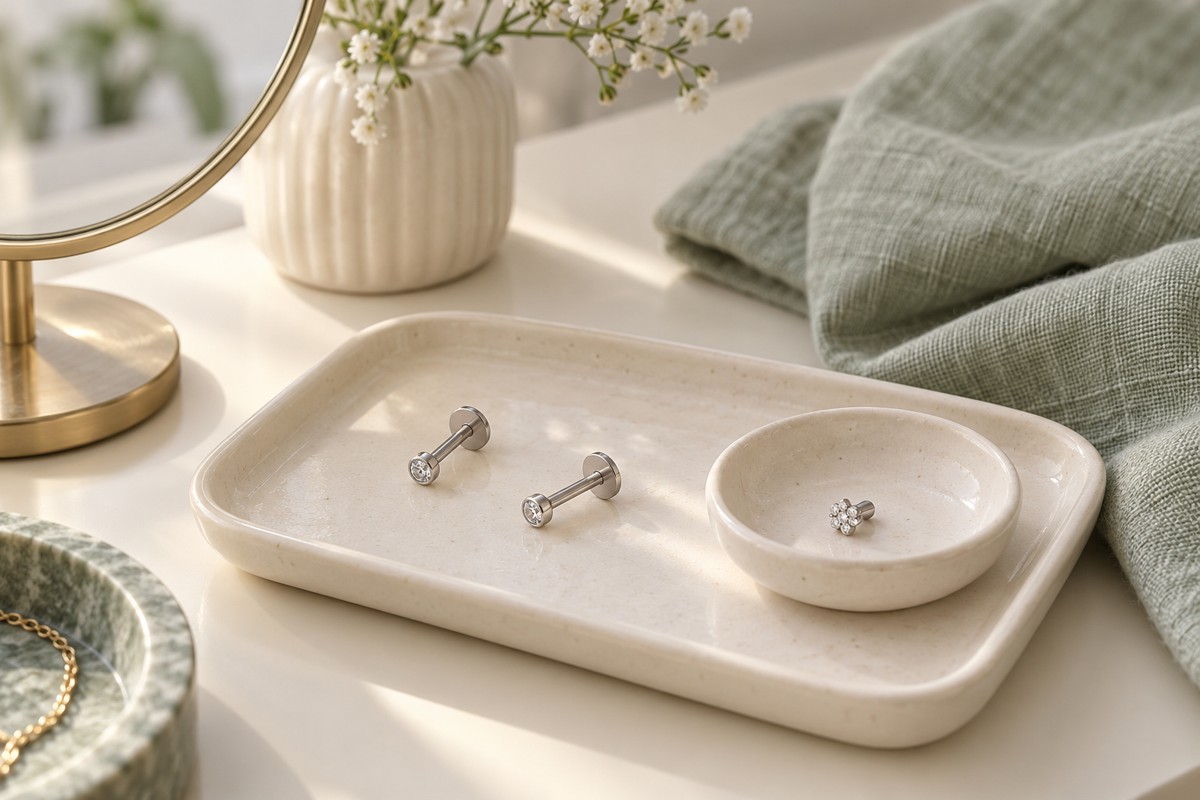
A flat disc behind your ear doesn't tell you how the front comes off. Before removing flat back earrings, check whether the connection is threaded or threadless. If you can't identify it, leave the jewelry alone and ask your piercer. Trying both movements is a poor way to find out.
This guide is for a planned jewelry change in a fully healed piercing. A new or unhealed piercing, swelling, pain, or jewelry sinking into the skin needs professional assessment before you attempt removal. You don't have to finish the change today.
Find the closure on your order, not by testing your ear
Open the original listing or receipt and look for the closure specification. Useful terms are ‘internally threaded,’ ‘threadless,’ and ‘push-pin.’ ‘Flat back’ describes the rear shape; it doesn't settle the connection question. A photograph of the decorative front alone won't settle it either.
Check the exact item and variant you bought. A bow, crystal, or flower can appear on different fittings. If the listing is unclear, send the seller your order number and ask which part detaches and how. Bring that information to a piercer if you still can't confidently identify the piece.
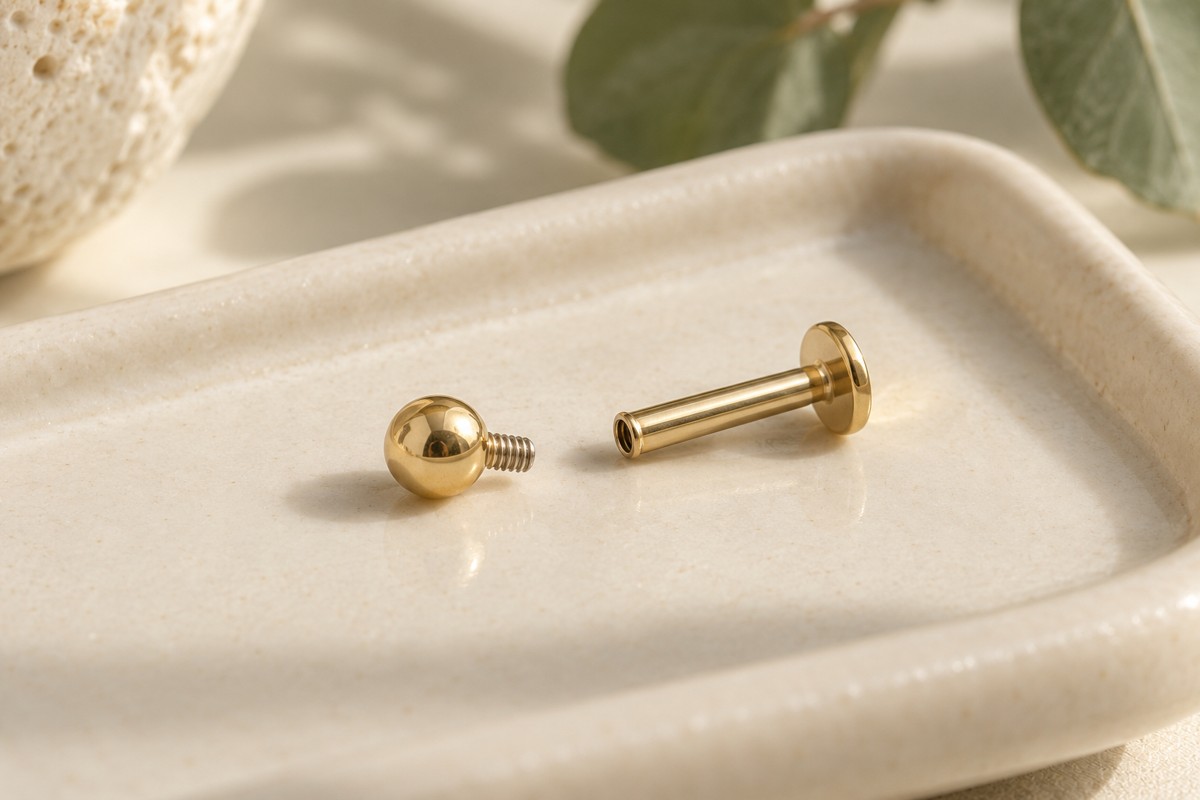
Our Outline Bow Cartilage Stud is listed with an internally threaded connection: a 1.2 mm post diameter, 8 mm post length, and M0.9 internal thread. Those are three separate specifications. M0.9 names the thread; it isn't the diameter of the post through your ear.
Match the movement to the confirmed connection
The Association of Professional Piercers describes threaded ends as unscrewing and press-fit pieces as pulling apart. For a confirmed threaded front, counterclockwise means the direction seen when facing the decorative front, not looking from behind the ear. Support the rear post while gently loosening the front. Stop if it resists.
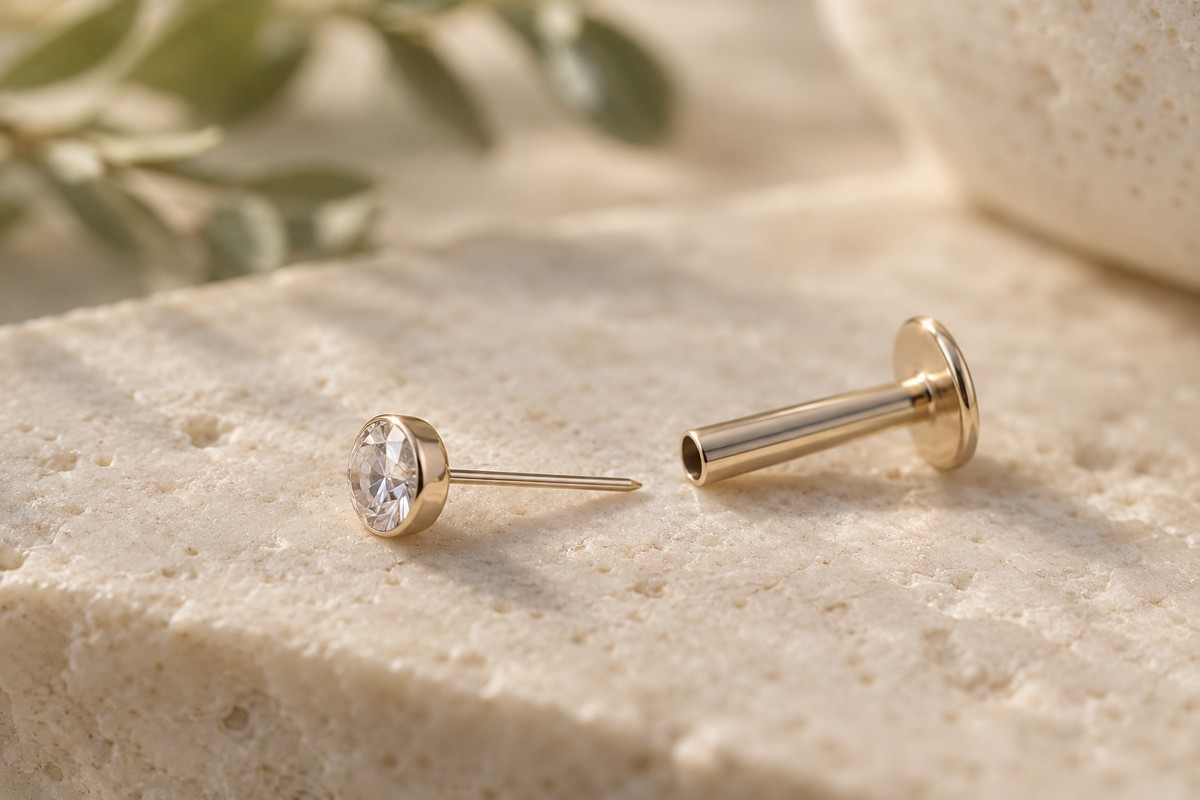
For confirmed threadless jewelry, support the rear post and gently separate the front from the post. Stop at resistance rather than pulling harder. These movements describe different mechanisms; they aren't a sequence to try on an unidentified stud. If the part won't move gently, arrange help from a piercer.
Our Petite Crystal Cluster is listed as a threadless push-pin design, with a 0.8 mm diameter post and a 6 mm wearable length. Use those details to check your order record. It does not use the bow stud's listed threaded fitting.
For a closer look at the two constructions, see our push-pin versus threaded flat-back guide. Keep the product instructions with the jewelry so the next change doesn't start with the same uncertainty.
Set up before anything comes apart
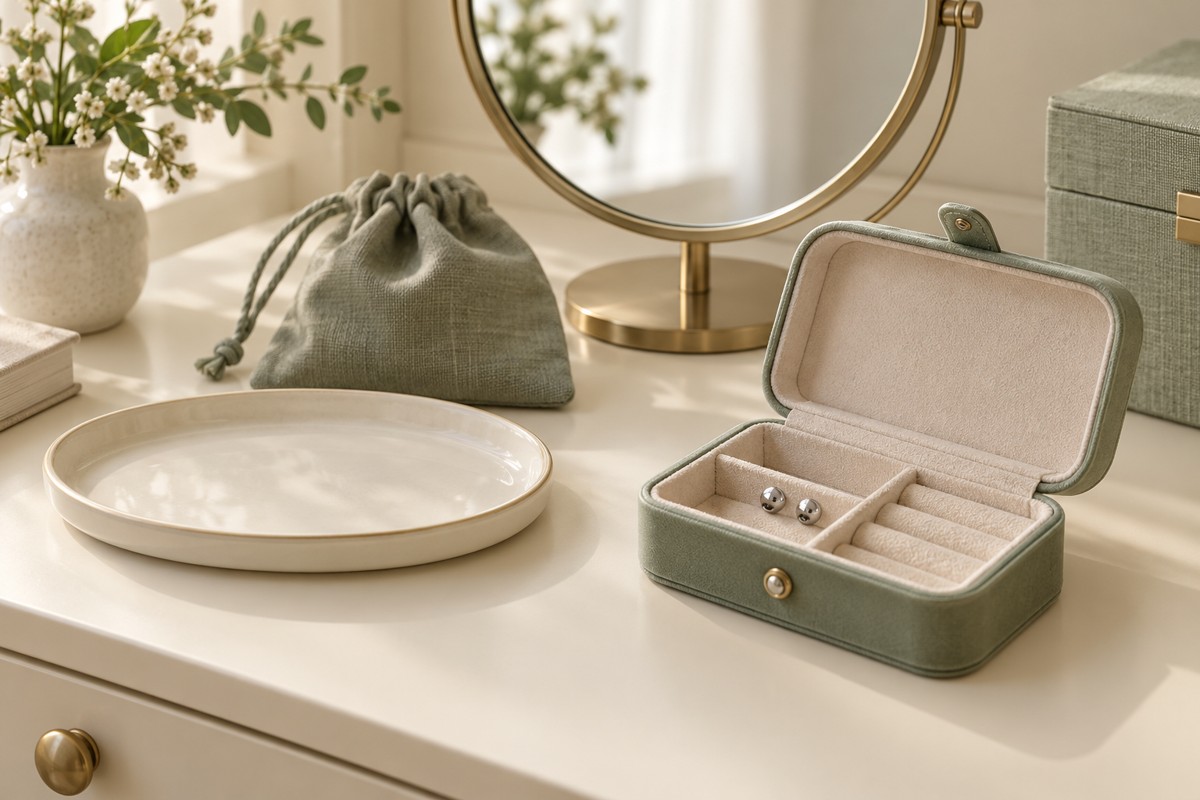
Choose a spot where you can see the front and back without rushing. Put a small tray beside a mirror and close any nearby sink drain. Keep other earrings off the tray so a loose front doesn't get mixed into another pair. If you can't reach both parts comfortably, book a jewelry change instead.
The APP advises clean hands, jewelry, piercing site, and work area for home jewelry changes. Even healed openings can shrink after jewelry comes out. Have an appropriate replacement ready if you're keeping the piercing; never force a post back in. Get a piercer's help if insertion isn't easy.
Compare the replacement's dimensions before removal. The bow's 1.2 mm by 8 mm post and the cluster's 0.8 mm by 6 mm post differ in both diameter and length. Neither listing establishes which size fits your ear, or that their fronts and posts are interchangeable.
When the change should wait
A front that stays put is enough reason to stop. Don't set yourself a target number of turns or keep trying because you have already started. Leave household gripping tools out of the process. A piercer can assess the connection and decide how to help without asking you to guess at home.
If you suspect infection, seek urgent medical advice. The NHS advises leaving jewelry in unless a doctor tells you to remove it. Swelling, heat, worsening pain, pus, or feeling unwell are reasons to get medical help rather than continue a jewelry change.
Our guide to changing piercing jewelry for sensitive ears covers the wider changeover. Before removal, check that you know the fitting, can handle it gently, and have no reason to seek professional care first.
Questions before you remove a flat back
Can I identify the closure from the flat disc?
No. Both products discussed here have flat backs and different connections. Use the exact product specification or ask the seller or piercer to identify your jewelry.
Should I order only a new decorative front?
Confirm compatibility first. Keep the closure type and any thread specification with your order. These two listings don't establish cross-compatibility, even if a loose front looks as though it might fit.
What should I bring to a removal appointment?
Bring the order details, any supplied instructions, and the replacement jewelry you hope to wear. Tell the piercer which part resisted and whether anything hurts. That is more useful than another attempt at home.

Related posts

Ear Piercing Costs: What Your Quote Should Include
Compare ear-piercing quotes by the number of holes, complete jewelry, follow-up services and other charges, with specific official studio examples.
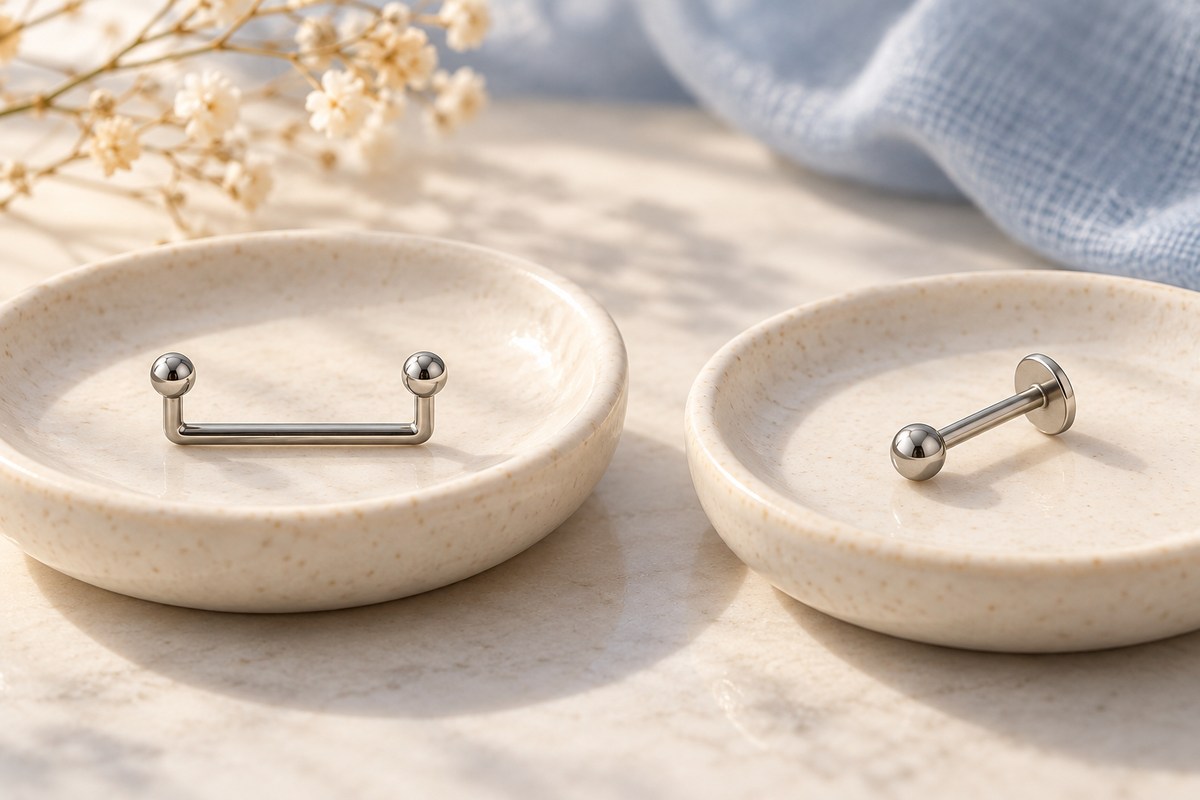
Surface Tragus vs Tragus: Why the Jewelry Is Different
Learn how surface bars, labret studs and surface anchors differ, and what to confirm before buying jewelry for a piercing beside the tragus.
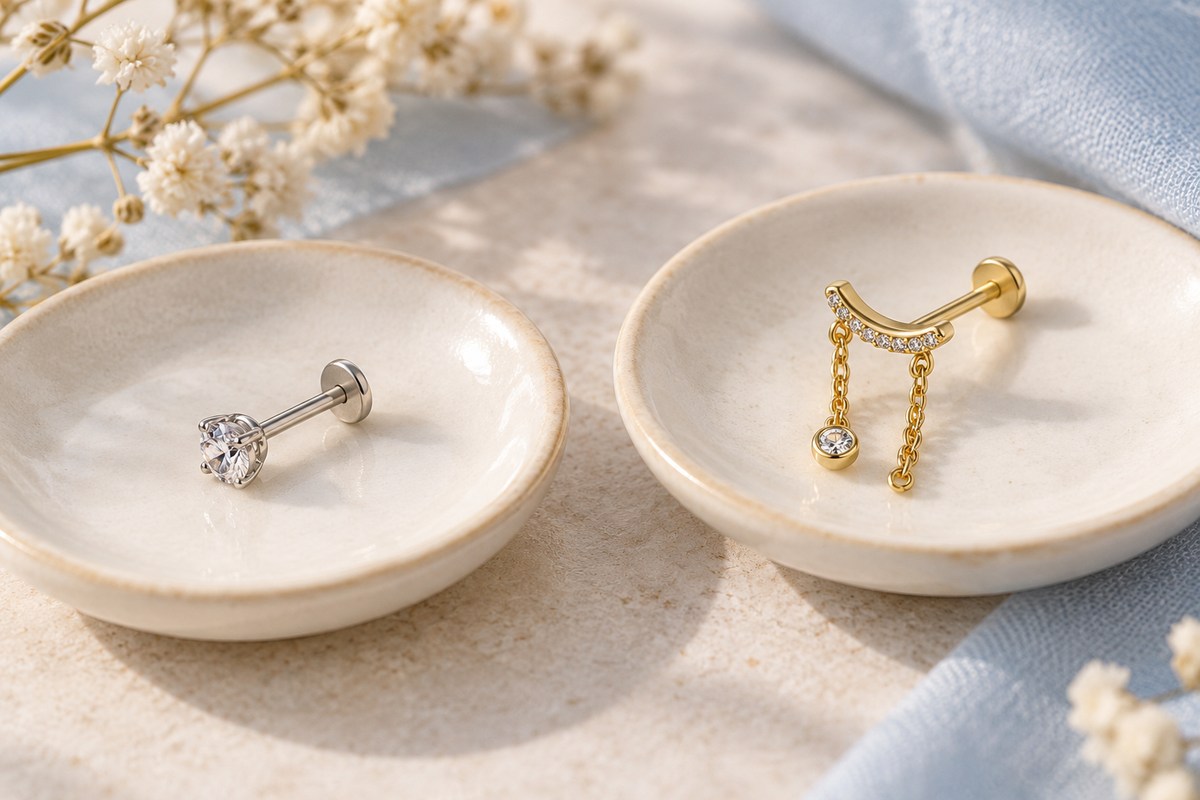
Vertical Helix vs Hidden Helix: Check the Jewelry Direction
Compare vertical and hidden helix descriptions, check what product photographs leave out, and read jewelry specifications for a fully healed piercing.