

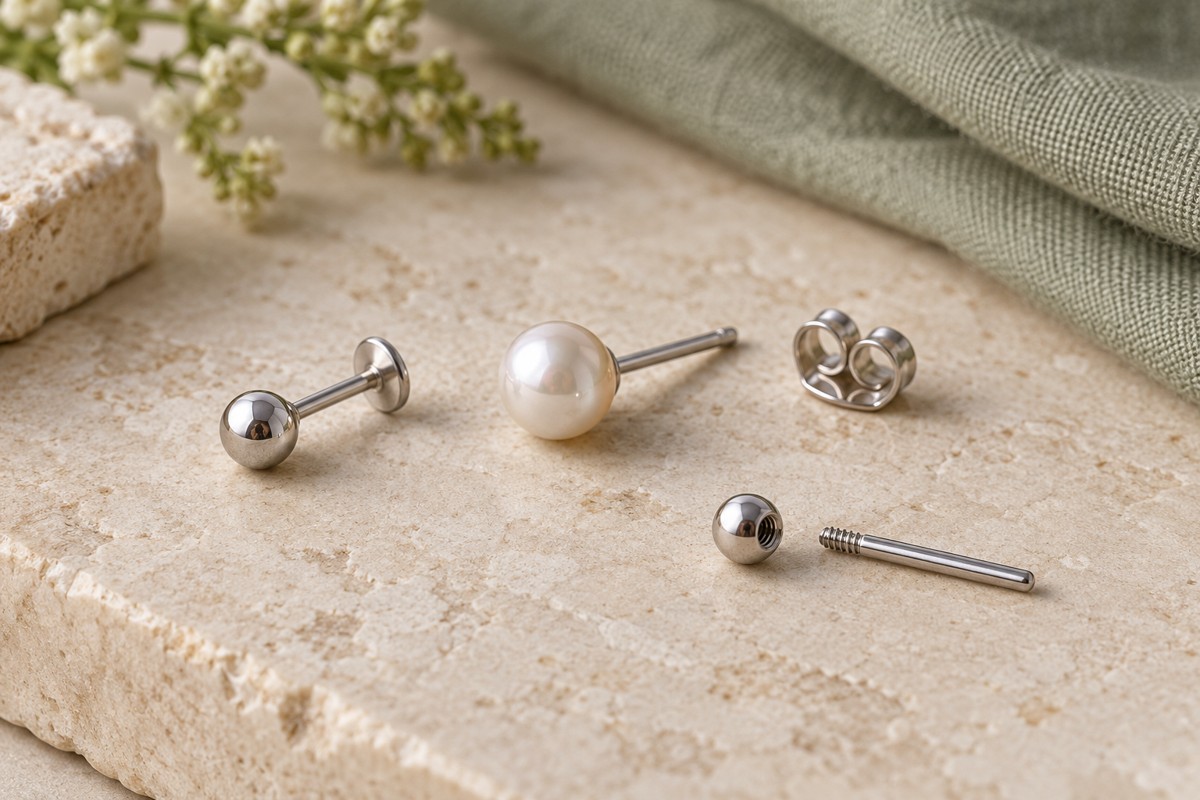
If you've lost an earring back, check how the complete earring connects before buying a replacement. The phrase “flat back” describes a shape, while “threaded” and “threadless” describe a connection. Those words can appear on the same product, and they answer different questions.
This guide is for shopping for fully healed piercings. Before ordering a replacement or a new pair, keep the remaining pieces together and find the original listing or receipt. A photograph alone may leave out the detail you need.
Work out which piece is missing
With a traditional stud, the decorative front and post may be one piece, with a separate butterfly back that slides onto the post. On many flat-back studs, the rear disc and post stay together, and the decorative front is the removable part. The small piece you lost might be a front rather than a back.
Look at your remaining jewelry off the ear in good light. Is there a long post attached to the decoration? Or do you have a post with a flat disc at one end and an opening at the other? Photograph both ends. If you can't identify the connection, send those photographs to the original seller or show the pieces to a piercer.
Read shape and fastening as separate details
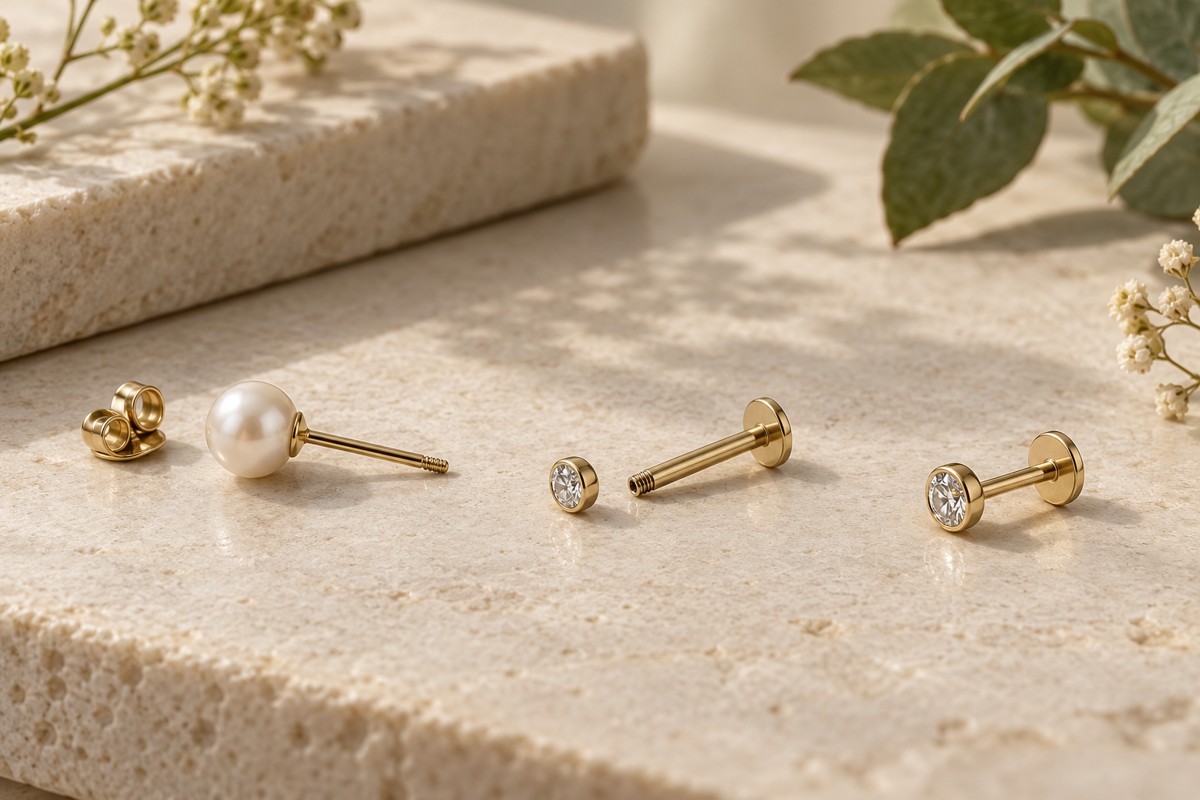
A disc, butterfly outline or covered rear end tells you what the back looks like. It doesn't give you a complete specification for connecting replacement parts.
The Association of Professional Piercers explains that internally threaded jewelry has its screw thread on the removable end, with a smooth post passing through the piercing. Threadless jewelry uses a pin connection without screw threads. Its guidance also considers appropriate size, material and surface finish. A closure name alone doesn't establish suitability.
Two flat-back earrings can therefore need different replacement parts. Our push-pin and threaded flat-back guide covers those mechanisms in more detail. For a replacement, ask the seller to confirm the exact part that fits your existing earring.
Compare the whole earring before buying
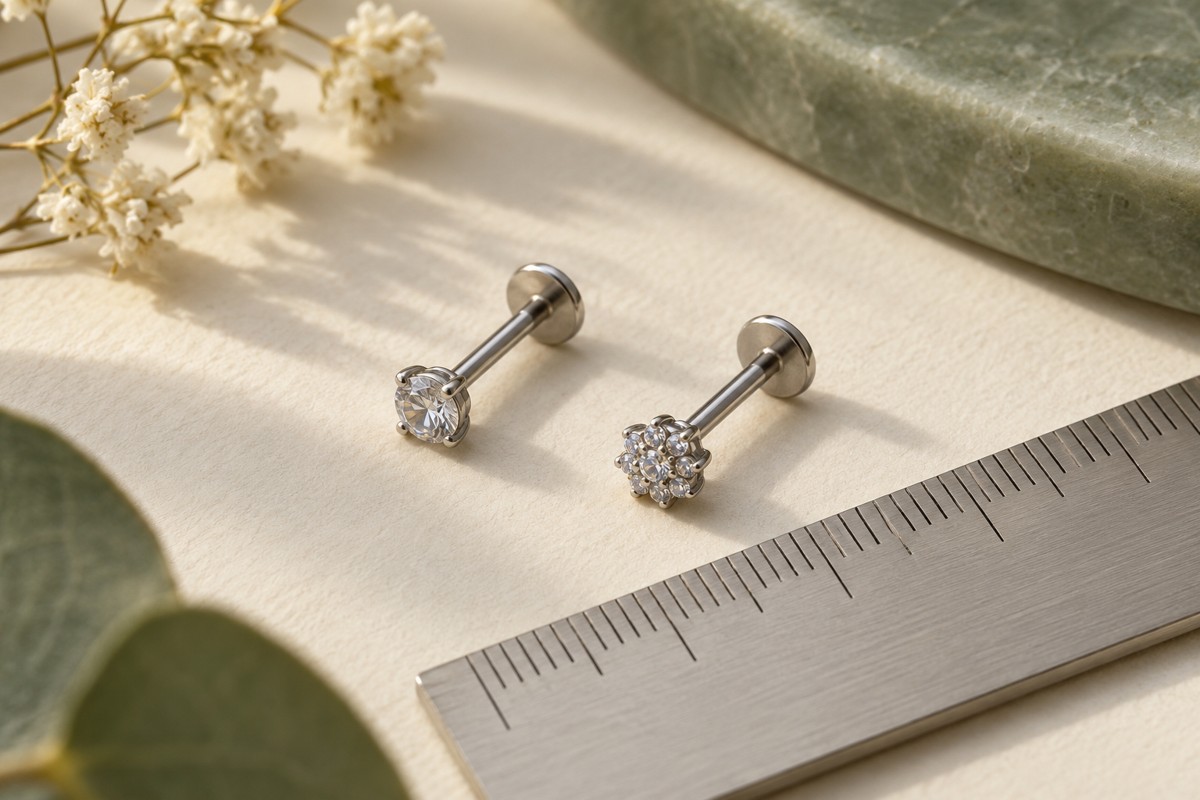
The Zircon Flower Stud is sold as a pair with internally threaded flat backs. Its listing specifies G23 titanium alloy, a 1.2 mm post diameter and an 8 mm post length. Each flower has five marquise-shaped zircon petals.
The Petite Crystal Cluster also comes as a pair with flat backs, but its closure is a threadless push-pin. The listed post is 20G, or 0.8 mm in diameter, with a 6 mm wearable length. Its front measures approximately 2.6 by 2.3 mm.
These are complete earrings with different connections and dimensions. Neither listing establishes that its components fit the other. Post diameter is also a piercing-fit measurement, not a promise that fronts or backs with the same diameter are interchangeable. Our earring size guide explains how to read these measurements.
Some listings leave details out. The S925 Silver Ball Studs identify sterling silver and a pair of earrings, but don't state the closure type or post dimensions. Ask for those details before choosing them for a particular fitting. “Stud” tells you the general style, not which replacement back to order.
Ask for compatibility, not a similar-looking back
Send the seller your order number, product name and photographs of the remaining parts. Ask for confirmation that the proposed replacement fits that exact earring. If the seller can't confirm a match, have a piercer inspect it before combining parts.
For a threaded connection, ask about the thread specification. For threadless jewelry, ask whether the front and post belong to a compatible system. For a slide-on back, ask whether it is made for your post. Don't force parts together to find out.
Also check what the purchase includes. A front-only listing, a complete single earring and a pair are different orders. The three products discussed here are listed as complete pairs; they aren't listings for loose replacement backs.
Keep the details with your jewelry
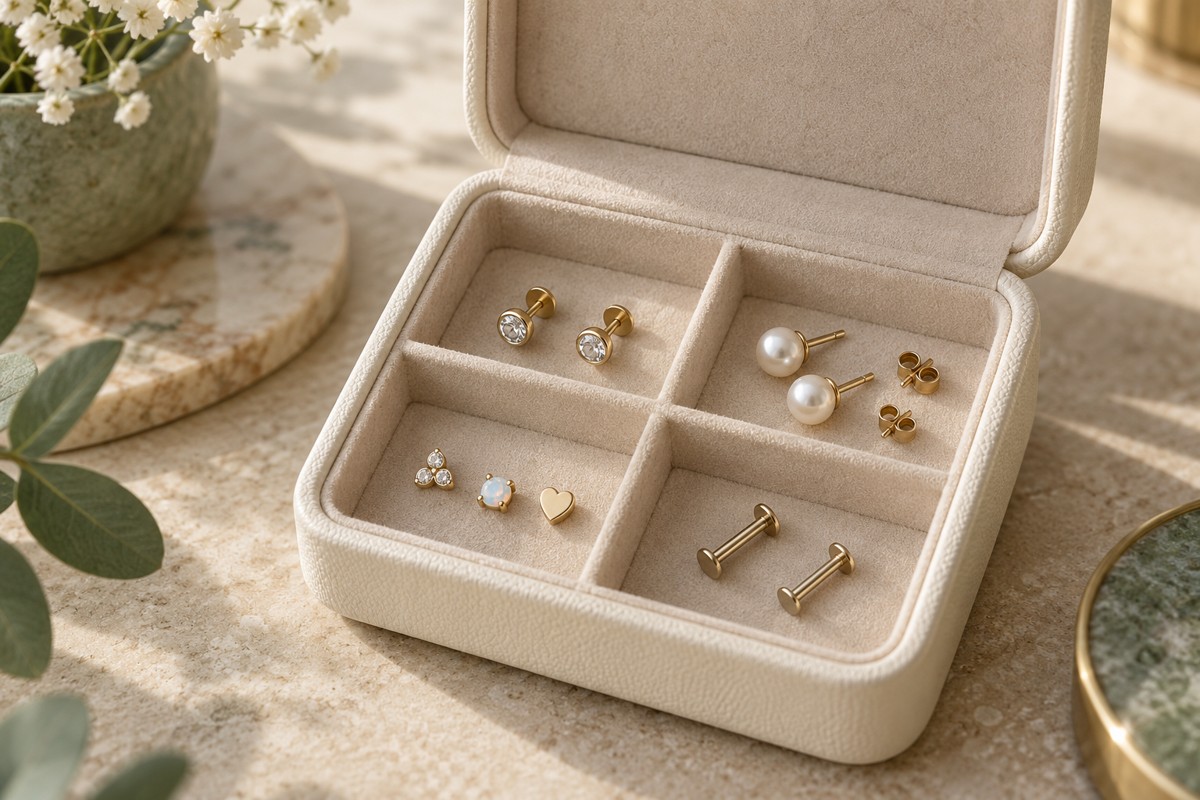
Save the product name, selected option and fitting information with the order receipt. A quick photograph of the assembled earring and its separate components can help you identify it later. Keep tiny parts in a lidded compartment so they don't get mixed with another pair.
If an earring no longer closes as its maker describes, set it aside for assessment. Switching the back doesn't establish why your ear feels irritated, and a different fastening cannot promise an allergy-free or comfortable result.
Questions about replacement earring backs
Can I buy only one piece from a pair?
Check with the seller. A product sold as a pair doesn't establish that individual components are available separately. Ask before purchasing another pair just to obtain a part.
Does matching the gold or silver color mean the parts match?
No. Matching color doesn't identify the underlying material or connection. Check the component specification even when two pieces look identical in a photograph.
What if I've lost the receipt as well as the back?
Search your order history or confirmation emails first. If you still can't identify the earring, take the remaining pieces to a piercer or jeweler for assessment. Ask them to identify the fitting before you order a replacement.

Related posts

Ear Piercing Costs: What Your Quote Should Include
Compare ear-piercing quotes by the number of holes, complete jewelry, follow-up services and other charges, with specific official studio examples.
Surface Tragus vs Tragus: Why the Jewelry Is Different
Learn how surface bars, labret studs and surface anchors differ, and what to confirm before buying jewelry for a piercing beside the tragus.
Vertical Helix vs Hidden Helix: Check the Jewelry Direction
Compare vertical and hidden helix descriptions, check what product photographs leave out, and read jewelry specifications for a fully healed piercing.