

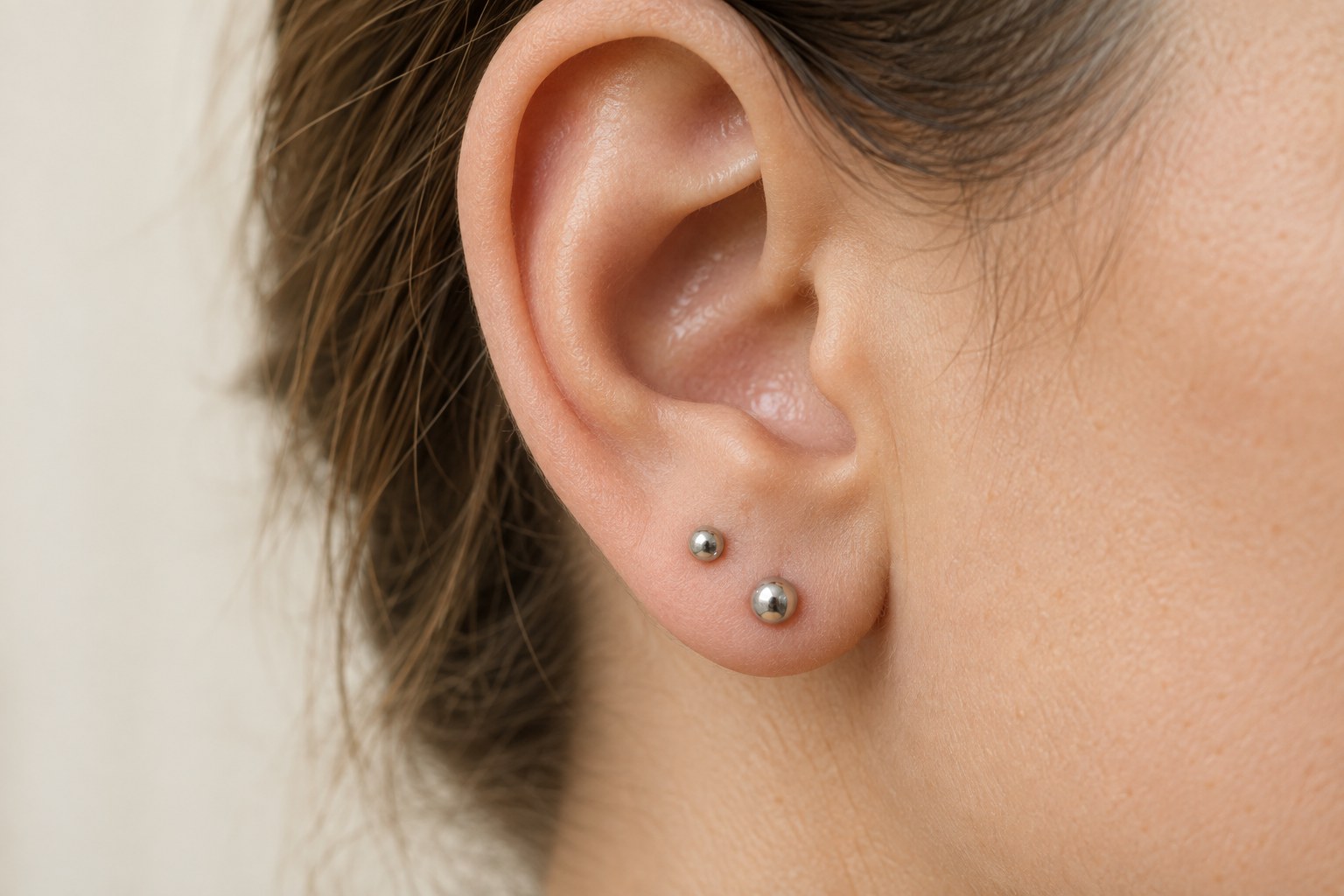
Two studs worn one above the other can look like one small arrangement. Before buying them, compare the fronts and the hardware behind them with the piercings you already have. Two designs you like still need to work together in that space.
A stacked lobe uses piercings above, below or slightly offset from one another, as described in Wildcat's stacked-lobe glossary. This guide is for two existing, fully healed lobe piercings in a vertical arrangement. It does not give measurements for placing a new piercing. If you're unsure whether either placement is ready for a jewelry change, check with your piercer first.
Compare the fronts before choosing an order
Write down each stud's face size. That's the decoration you see from the front, measured separately from the post thickness and wearable length.
Product photos help with shape, but separate photos may show jewelry at different magnifications. A tiny cluster can fill its photograph just as completely as a larger star. Use the listed measurements to compare their scale.
Keep both dimensions when a listing gives you two. A 5.3 mm × 2.1 mm design has a different outline from a round front described by one measurement. The first number doesn't necessarily tell you the height when worn. If direction matters to your plan, confirm the intended orientation and where the post attaches behind the decoration.
Four fronts to put on your shortlist
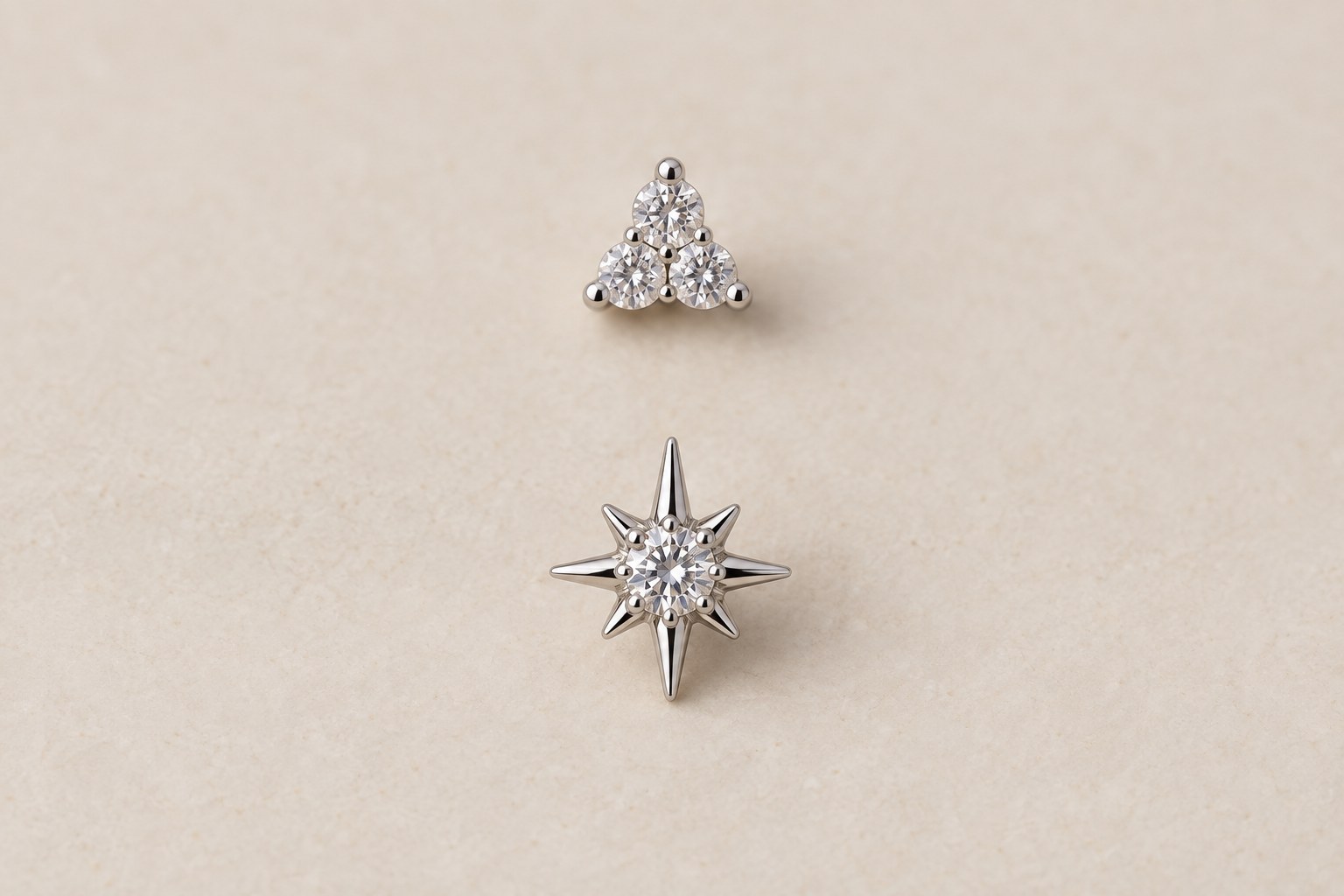
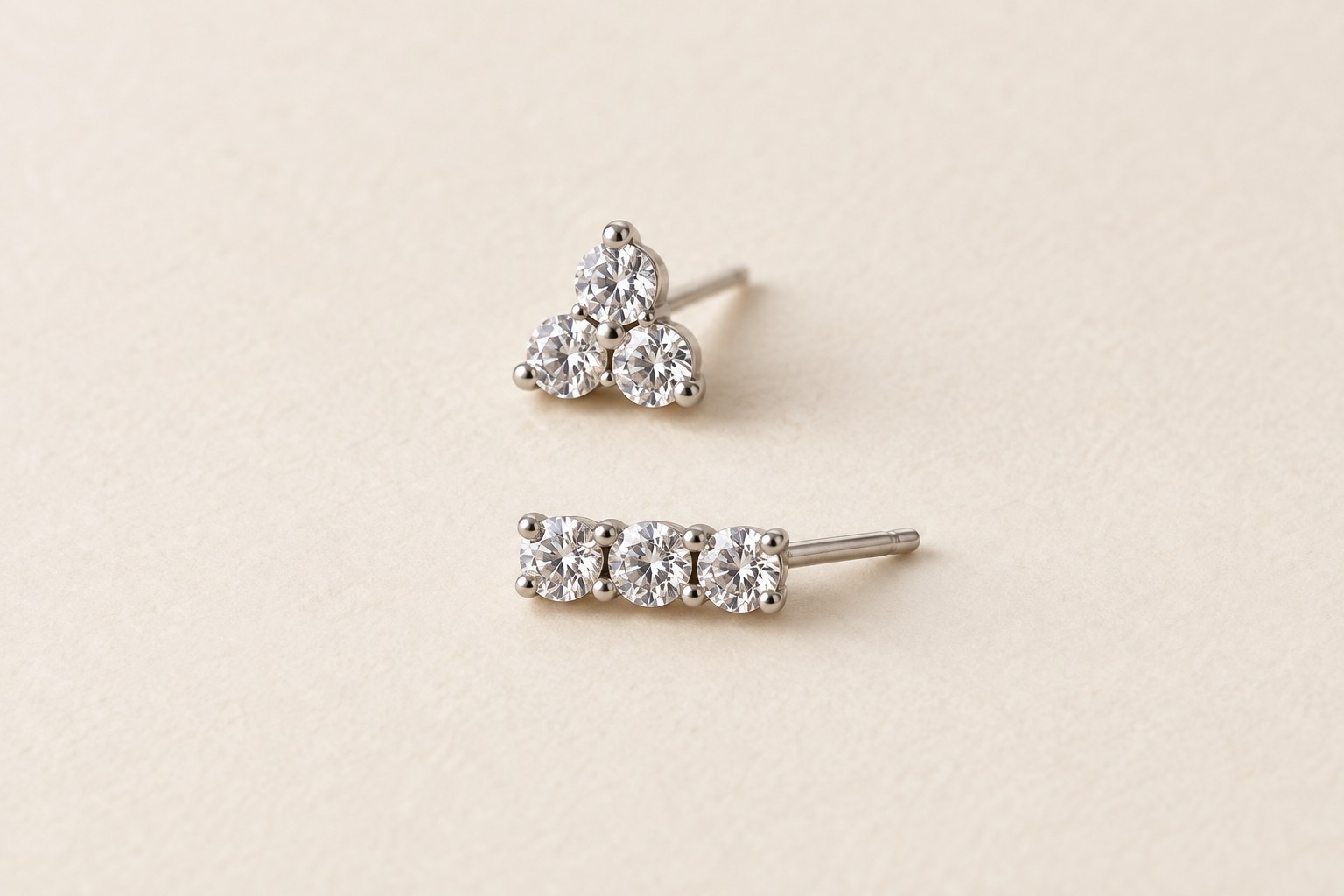
Our Petite Crystal Cluster has a listed face size of approximately 2.6 mm × 2.3 mm. The Crystal Starburst is approximately 4.4 mm, and the Crystal Trio Bar is approximately 5.3 mm × 2.1 mm. The Crystal North Star is listed at approximately 4.6 mm.
Those are individual product measurements. They don't establish whether two pieces will fit together in your ear. The Starburst and North Star have similar listed sizes, for example, but you still need to compare their outlines rather than treat them as interchangeable shapes.
All four descriptions list a threadless push-pin flat back and a 20G post: 0.8 mm in diameter with 6 mm of wearable length. Keep those details beside the front measurements.
Petite Cluster with Starburst
Here you're comparing a 2.6 mm × 2.3 mm cluster with a 4.4 mm starburst. Consider this combination if you like a difference in decorative scale between the upper and lower stud.
The larger front doesn't have to go underneath. Compare both orders using the exact product outlines, then ask your piercer about clearance in your existing placements. The numbers alone can't tell you which piece belongs on top.
Look at where the starburst's rays would sit beside the cluster. Its central crystal is only part of the decoration; include the whole front when you compare the two.
Petite Cluster with Trio Bar
You can also compare the petite cluster with the 5.3 mm × 2.1 mm Trio Bar. This puts a compact cluster alongside an elongated design on your shortlist.
Keep both of the bar's measurements in view. Calling it a "2.1 mm stud" leaves out its longer dimension. If your idea depends on the bar pointing in a particular direction, ask the seller how the decoration sits when securely assembled.
Don't loosen a closure to make the front point where you want it. If the jewelry can't hold your preferred orientation while securely closed, change the arrangement or ask a piercer for help with a compatible piece.
Leave room behind both studs
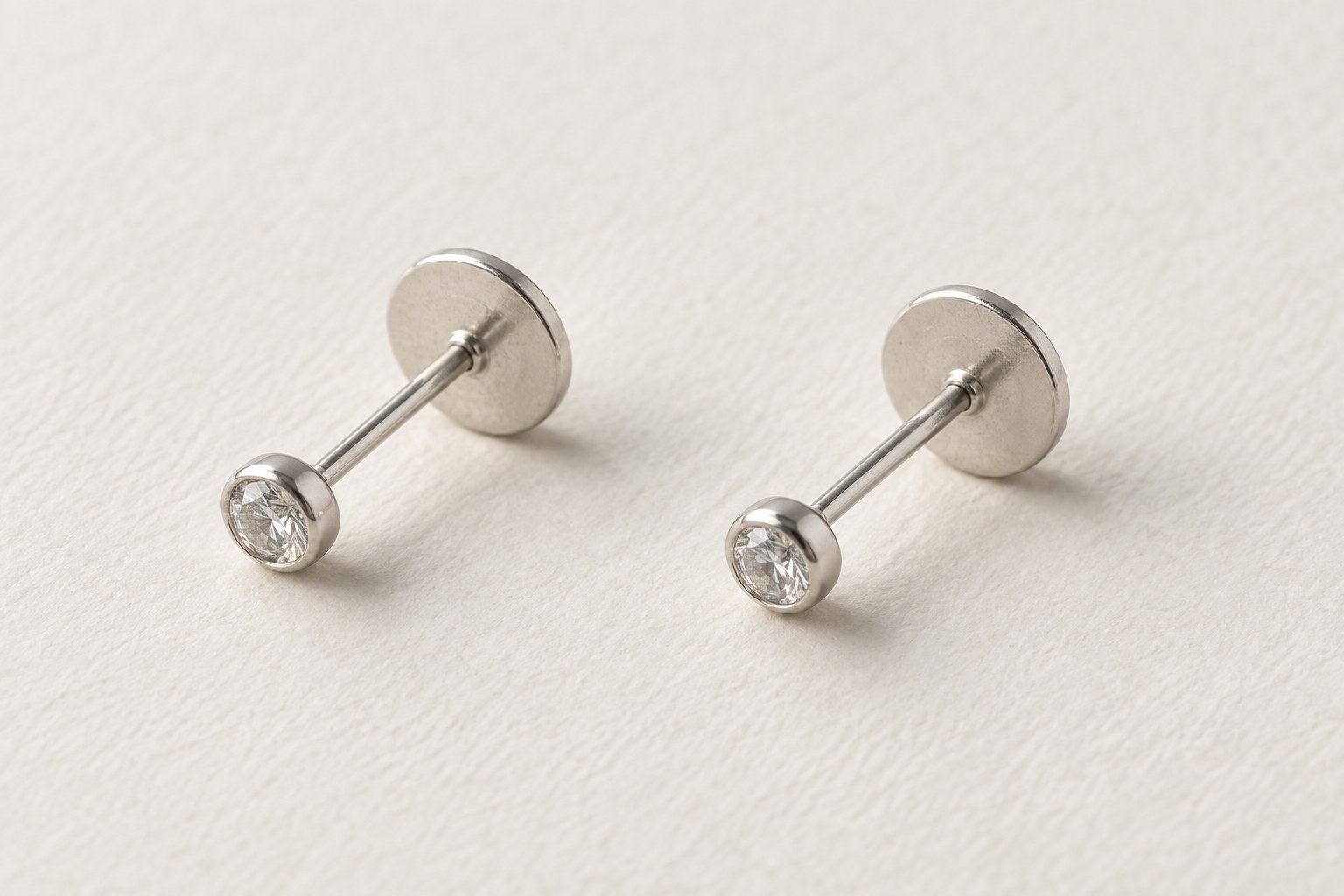
Matching post specifications don't prove that two studs fit. Each piercing needs its own appropriate gauge and wearable length. The Association of Professional Piercers' healed-jewelry guidance also recommends professional help when you're unsure of fit. The two backings also need clearance from each other, so have both placements checked individually.
The descriptions reviewed for these four products don't state the backing-disc diameter. Ask for that measurement before ordering a close vertical pair. A tiny front doesn't tell you how much space the backing takes up.
Bring the product dimensions to your piercer and ask them to assess both fronts and both backs together. Don't calculate a universal minimum gap from the face sizes. The listings don't establish how the complete pieces will sit in your ear.
What to confirm before ordering
Keep a short note for each placement: front dimensions, appropriate post gauge and length, backing diameter, and confirmed orientation. Ask the seller to fill in missing specifications before you buy.
With the dimensions settled, choose the combination you prefer. These comparisons help you narrow a shortlist for healed piercings. They don't establish suitability as initial piercing jewelry or guarantee that a product will suit sensitive ears.

Related posts

Ear Piercing Costs: What Your Quote Should Include
Compare ear-piercing quotes by the number of holes, complete jewelry, follow-up services and other charges, with specific official studio examples.
Surface Tragus vs Tragus: Why the Jewelry Is Different
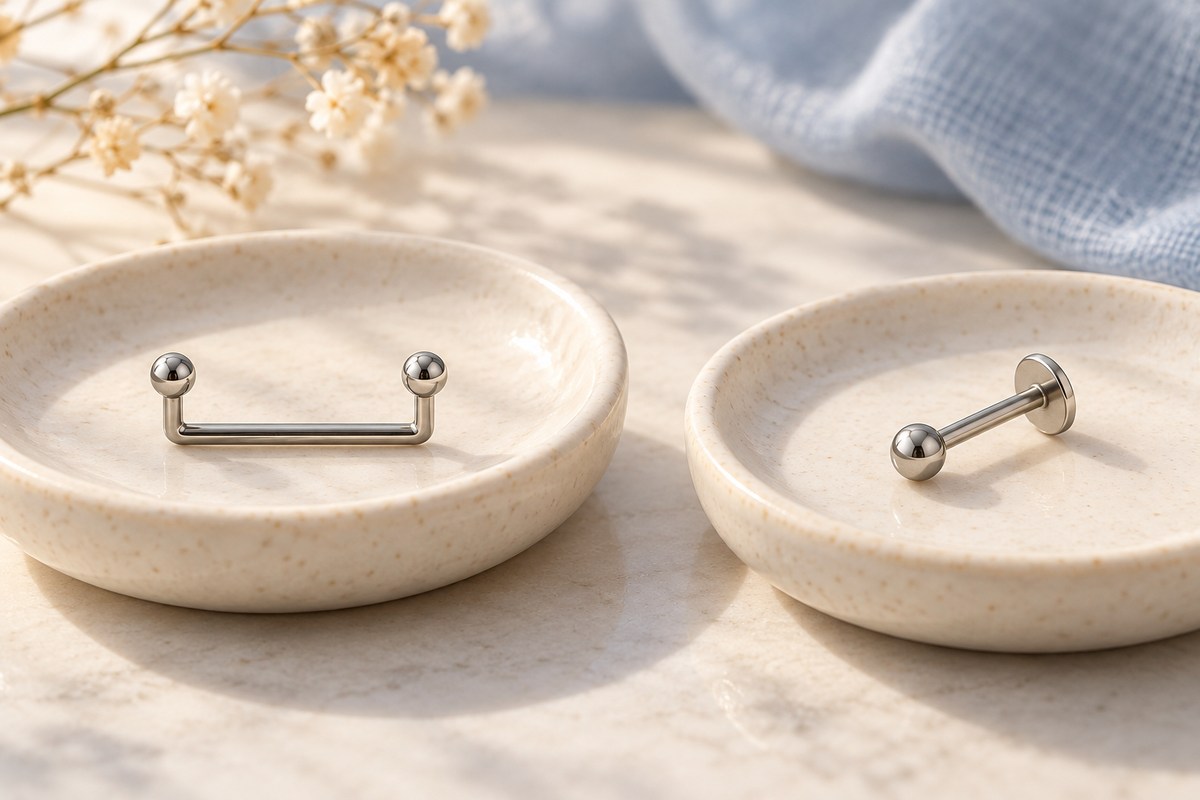
Learn how surface bars, labret studs and surface anchors differ, and what to confirm before buying jewelry for a piercing beside the tragus.
Vertical Helix vs Hidden Helix: Check the Jewelry Direction
Compare vertical and hidden helix descriptions, check what product photographs leave out, and read jewelry specifications for a fully healed piercing.