

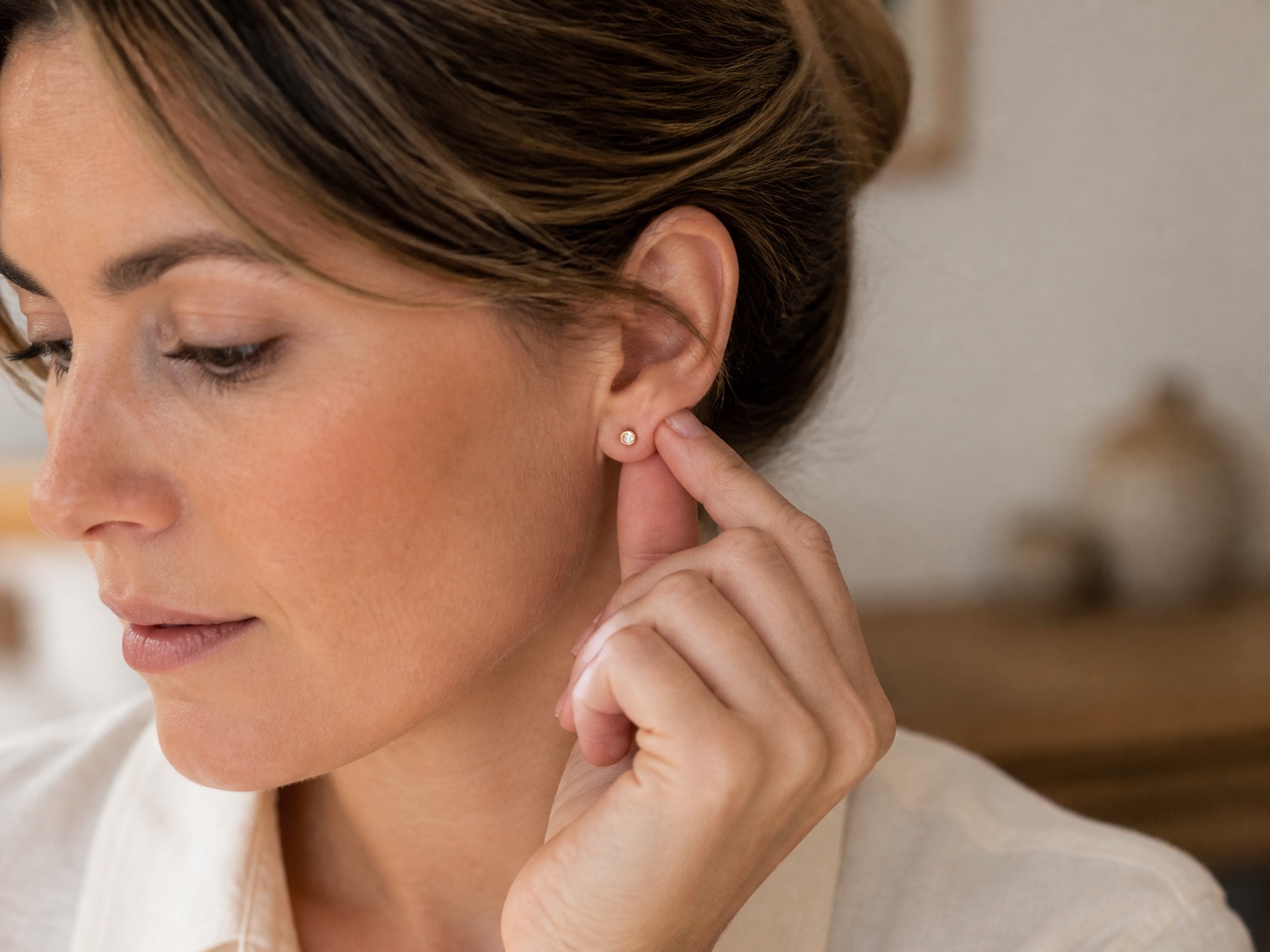
You put on a pair of earrings that looks perfect with your outfit. A few hours later, your ears start itching again. Maybe they feel warm or sore, and by the next morning the skin looks red or flaky. If this keeps happening with certain pairs, you may be asking yourself: am I allergic to my earrings?
Nickel allergy could be the reason, especially if the reaction shows up where the metal touches your skin and comes back with the same jewelry. Nickel is a common trigger of allergic contact dermatitis, and it often turns up in earrings and earring backs. Women are diagnosed with nickel allergy more often, which may partly come down to greater exposure through pierced-ear jewelry.
Still, an uncomfortable piercing doesn’t automatically mean you’re allergic. A tight backing, a heavy earring, product buildup, friction, or an infection can feel surprisingly similar. The timing, the exact spot, and the jewelry material can help you sort out what may be going on.
If you already know that some metals bother your ears, start with our guide to the best earrings for sensitive ears and the materials that actually work.
Key Takeaways
- Nickel allergy usually causes an itchy, red, dry, or bumpy rash where metal touches the skin.
- A reaction may begin hours or a couple of days after exposure, so the cause is not always obvious immediately.
- Women may encounter nickel more often through earrings and other pierced jewelry.
- Removing the suspected jewelry and avoiding repeated exposure is the most important first step.
- Material names matter, but specific composition, plating, and the metal in the post and backing matter too.
- A dermatologist can use patch testing when the cause remains uncertain.
What Is a Nickel Allergy?
A nickel allergy is a type of allergic contact dermatitis. Once your immune system becomes sensitive to nickel, your skin can react the next time it touches the metal. It usually shows up as a local skin reaction, not the sudden sneezing or breathing symptoms many people associate with allergies.
Nickel can turn up in earring posts and backs, necklaces, watchbands, clothing fasteners, keys, electronics, and plenty of other everyday objects. Jewelry is a common source because it can sit against your skin for hours. An earring post also passes straight through the piercing channel.
The Mayo Clinic explains that once a nickel allergy develops, avoiding nickel is the most reliable way to prevent another reaction. You can treat the symptoms, but the rash may come back when your skin meets nickel again.
DermNet’s nickel allergy overview covers the everyday places nickel can hide. It also explains how patch testing can identify nickel as a contact allergen when you’re not sure what’s causing the reaction.
Why Are Earring Reactions So Common in Women?
Women are not simply born more sensitive to jewelry. Exposure matters. Women are more likely to have pierced ears, may wear earrings for longer stretches, and may switch between more pairs. That creates more chances for nickel-containing metal to touch the skin.
A piercing also gives several parts of an earring direct contact with your skin. The post, backing, and decorative front may all be made from different metals. So a pair sold as “gold” can still have a base-metal post or backing that causes trouble. A tiny exposed area may be enough when it rests against the same spot for hours.
Common Symptoms of an Earring or Nickel Allergy
Symptoms usually show up on or close to the skin that touched the earring. You may notice them within hours, although they can take a day or two to become obvious.
Watch for signs such as:
- Itching around the piercing or earlobe
- Redness or a change in skin color
- Small bumps or a rash
- Dry, flaky, cracked, or thickened skin
- A burning or tender feeling
- Blisters or weeping skin in a stronger reaction
The repeat pattern is often the most helpful clue. If one pair leaves your ears itchy and red every time while another feels fine, the metal or coating in that first pair deserves a closer look.
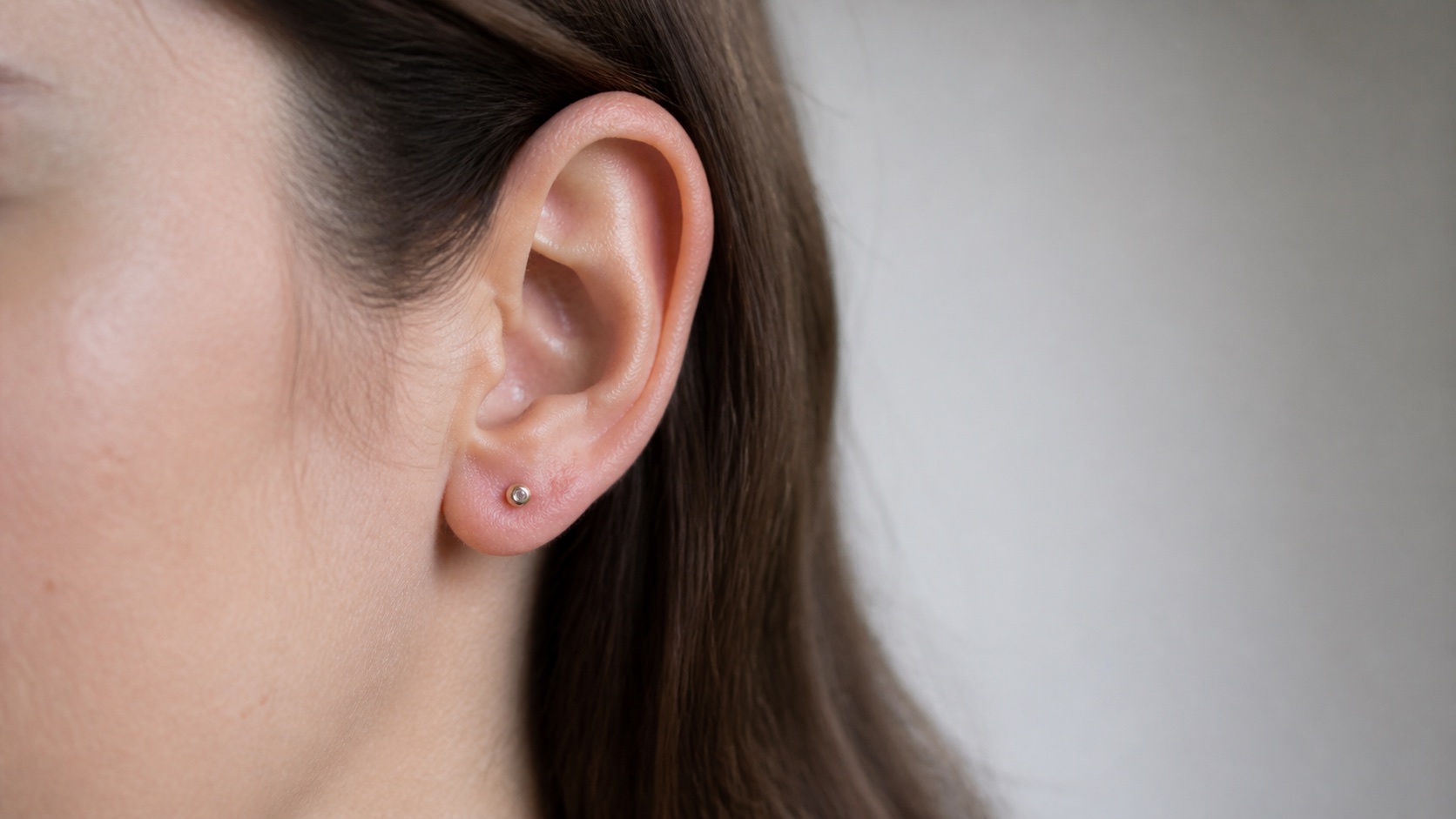
Nickel Allergy vs. Irritation vs. Possible Infection
An earlobe can become uncomfortable for several reasons. The comparison below can help you spot a pattern, but it isn’t a substitute for an examination if symptoms are severe or keep getting worse.
| Possible Cause | What It May Feel or Look Like | Typical Pattern | Practical Next Step |
|---|---|---|---|
| Nickel or metal allergy | Itching, redness, bumps, dryness, flaking, or a burning rash | Appears where the metal touches and often returns with the same pair | Remove the suspected earrings and avoid that material while the skin settles |
| Pressure or friction | Soreness, an indentation, or tenderness without a widespread itchy rash | Worse with tight backs, heavy earrings, sleeping in jewelry, or movement | Loosen or remove the jewelry and choose lighter, better-fitting earrings |
| Product buildup or irritation | Mild itching, residue, odor, or discomfort around the post and backing | More likely after sweat, hair products, makeup, or long wear without cleaning | Clean healed-piercing jewelry gently and let it dry completely before reuse |
| Possible infection | Increasing pain, warmth, swelling, pus, spreading redness, or fever | May worsen instead of improving after the jewelry is removed | Seek medical advice promptly, especially if symptoms are spreading or severe |
If you need a more detailed response plan, read what causes an allergic reaction to earrings and what to do right away.
What to Do If You Think Your Earrings Are Causing a Reaction
1. Remove the Suspected Pair
If the piercing is healed, take out the pair that seems to cause the reaction. Keeping it in can leave the skin inflamed and make the trigger harder to identify. If the piercing is new, very swollen, or the jewelry looks embedded, don’t force it out. Ask a qualified piercer or healthcare professional for guidance.
2. Keep the Area Gentle
Be gentle with the area. Skip scrubbing, perfume, harsh antiseptics, and unnecessary touching. Wash your hands first, then follow the right care routine for a healed or fresh piercing. If buildup might be part of the problem, use our guide to the best way to clean earrings safely.
3. Check Every Metal Part
Don’t judge an earring by the decorative front alone. Check the post, backing, hinge, clasp, and plating too. They may have a different composition, and a coating can wear down over time to reveal the metal underneath.
4. Notice the Timing
Make a quick note of the pair you wore, how long you wore it, and when the symptoms started. That small habit can reveal a repeat pattern that is easy to miss when you change earrings often.
5. Consider Patch Testing
If the reactions continue or you cannot pin down the trigger, a dermatologist or allergy professional may suggest patch testing. The test places small amounts of common contact allergens on the skin and checks the area over several days. It can help separate a nickel allergy from reactions to other metals, fragrances, adhesives, or skin products.
The American Academy of Dermatology advises people with a known nickel allergy to avoid objects that contain nickel and to choose jewelry carefully.
Which Earring Materials May Be Better for Sensitive Ears?
“Hypoallergenic” can be a useful starting point, but it doesn’t tell you the full story. Check the actual metal and grade, the plating details, and the materials used for the post and backing.
Product labels can be confusing. Our guide to nickel-free versus hypoallergenic earrings explains what each term tells you and what it leaves out.
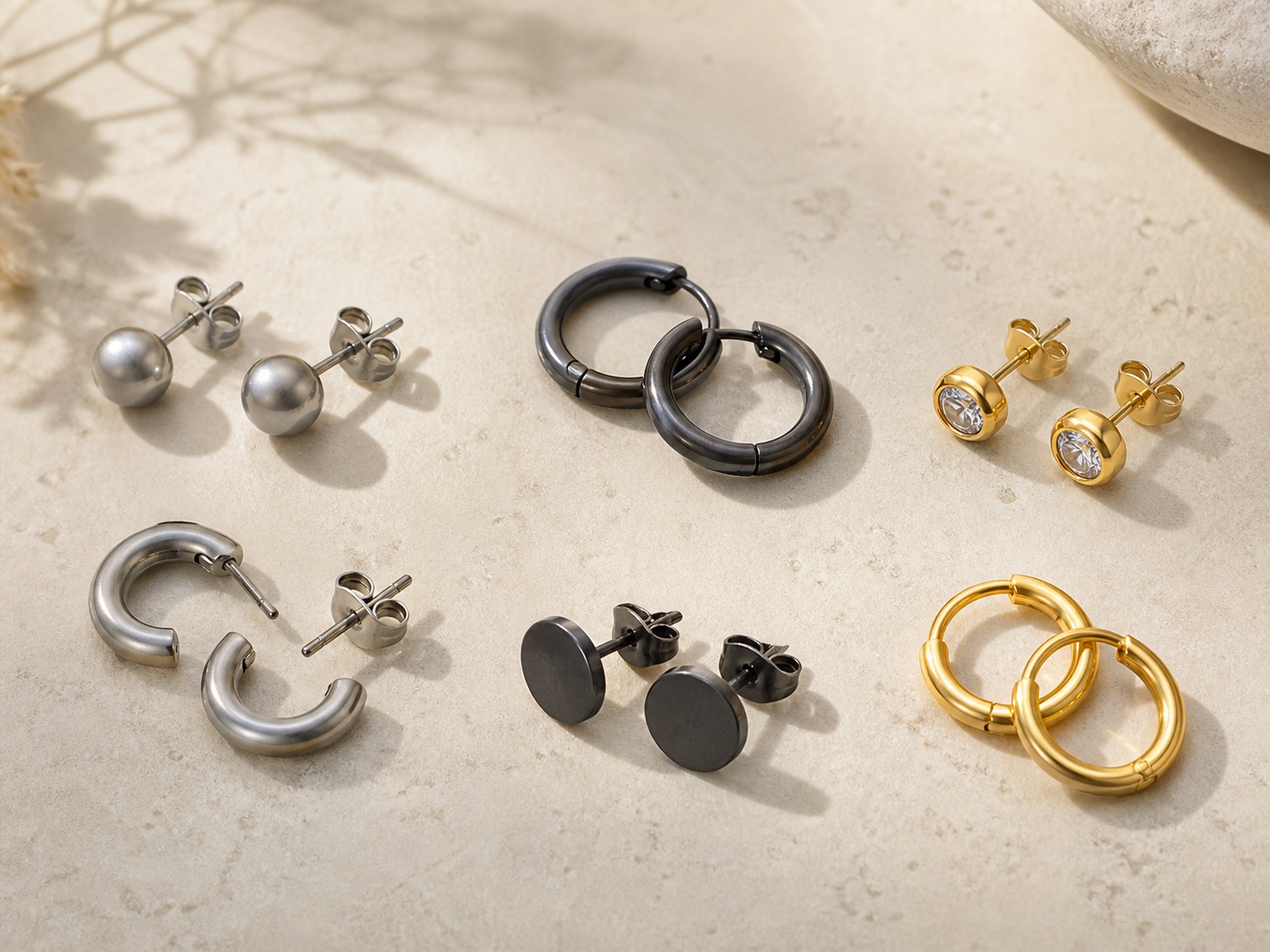
| Material | Why It May Be a Better Choice | What to Check Before Buying |
|---|---|---|
| Implant-grade titanium | Lightweight, corrosion-resistant, and commonly chosen for sensitive or healing piercings | Look for a clearly stated implant-grade specification rather than the word “titanium” alone |
| Niobium | A nickel-free elemental metal that is often well tolerated in body jewelry | Confirm that the wearable post and backing are also niobium |
| Platinum | Dense, durable, and generally used at high purity | Check the alloy composition and hallmark because platinum jewelry is not always pure |
| High-karat nickel-free yellow gold | Higher-karat yellow gold contains more gold and may use fewer reactive alloy metals | Ask whether the alloy is nickel-free; avoid assuming color alone proves composition |
| Nickel-free surgical-grade stainless steel | Durable and accessible when the grade and nickel-release performance are appropriate | Stainless steel can contain nickel, so verify the grade and supplier information |
| Sterling silver | Often comfortable for healed piercings when the alloy is nickel-free | Confirm the alloy and avoid wearing tarnished or damaged pieces in irritated piercings |
| Plated or mystery metal | May look attractive and feel fine at first | Plating can wear through and the base metal may be unknown; use extra caution if you react easily |
For a closer look at grades and material claims, read whether titanium is hypoallergenic for sensitive ears. The Association of Professional Piercers’ jewelry standards list the titanium, steel, niobium, and gold specifications considered appropriate for initial piercings.
If titanium tends to feel best in your ears, you can explore our titanium earrings for sensitive ears.
How to Shop for Earrings When Nickel Is a Concern
A useful product page should tell you more than “skin-friendly” or “hypoallergenic.” Before you buy, check for:
- The exact material and grade
- The material used in the post and backing
- Whether a gold color comes from solid gold, PVD coating, or conventional plating
- Whether the seller can document material composition
- A smooth finish without rough edges
- A comfortable backing that does not pinch the earlobe
- A return policy in case your ears still react
You can also browse by the style you find comfortable: flat-back earrings, stud earrings, or hoops and huggies.
If you want to compare specific titanium options, look at the F136 titanium Celestial Sunburst flat-back stud, the G23 titanium Graduated Zircon Arc flat back, and the G23 titanium seamless clicker hoop.
If you wear earrings every day, the shape matters as well as the metal. Lightweight styles and flat backs can reduce pressure and snagging. You still need the wearable parts to be made from a material your skin can tolerate.
Common Mistakes to Avoid
It is easy to assume that a gold-colored earring is solid gold, but color only tells you how the piece looks. It doesn’t tell you what is underneath. People also tend to focus on the pretty front and forget the post and backing, even though those parts stay closest to the piercing.
Clear nail polish isn’t a permanent answer. The coating can chip or wear away and expose the metal again. It can also make the jewelry harder to clean.
Try not to test the same pair again while your skin is already irritated. If those earrings keep causing a reaction, give your ears time to settle and replace the suspected material instead of wearing through the discomfort.
Final Thoughts
If certain earrings leave your ears itchy, red, dry, or sore, nickel or another metal may be the reason. Pay attention to where the reaction appears and whether it comes back with the same pair. Those two clues can tell you a lot.
Start by removing the suspected pair and treating the area gently. Then check the full material details before choosing a replacement. If the reaction keeps returning, patch testing can give you a clearer answer than trying pair after pair.
At Sensitiveearrings, we do not think women should have to choose between earrings they love and ears that feel comfortable. Clear material information and honest product details make it much easier to find both.
Frequently Asked Questions
How do I know if I am allergic to my earrings?
An itchy, red, dry, or bumpy rash where the earring touches your skin can point to a metal allergy, especially if it returns with the same pair. A dermatologist’s patch test is the clearest way to identify the specific contact allergen.
How quickly can a nickel allergy appear after wearing earrings?
You may notice a reaction within hours, or it may take a day or two to show up. That delay makes it easy to miss the connection between the rash and the earrings you wore.
Can I suddenly become allergic to earrings I wore before?
Yes. A contact allergy can develop after repeated exposure, so earrings that once felt fine may bother you later. Plating can also wear down and expose a different base metal.
Are titanium earrings good for a nickel allergy?
Clearly specified implant-grade titanium is widely used for sensitive and healing piercings. Check the whole wearable piece, including the post and backing, to make sure it matches the stated material.
Will cleaning earrings stop a nickel allergy?
Cleaning removes sweat, oil, and product buildup, but it can’t remove nickel from the metal. If nickel is causing the reaction, switching to a more suitable material is the more reliable long-term step.

Related posts

Flat Back vs Butterfly Back Earrings for Sensitive Ears: Comfort, Fit, and Care
Compare flat back and butterfly back earrings for sensitive ears, including pressure, fit, cleaning, nickel exposure, and healing-piercing limits.

Ear Piercing Irritation, Allergy, or Infection? A Guide for Sensitive Ears
Learn how to compare normal healing, pressure irritation, metal allergy, and warning signs of a possible ear-piercing infection.
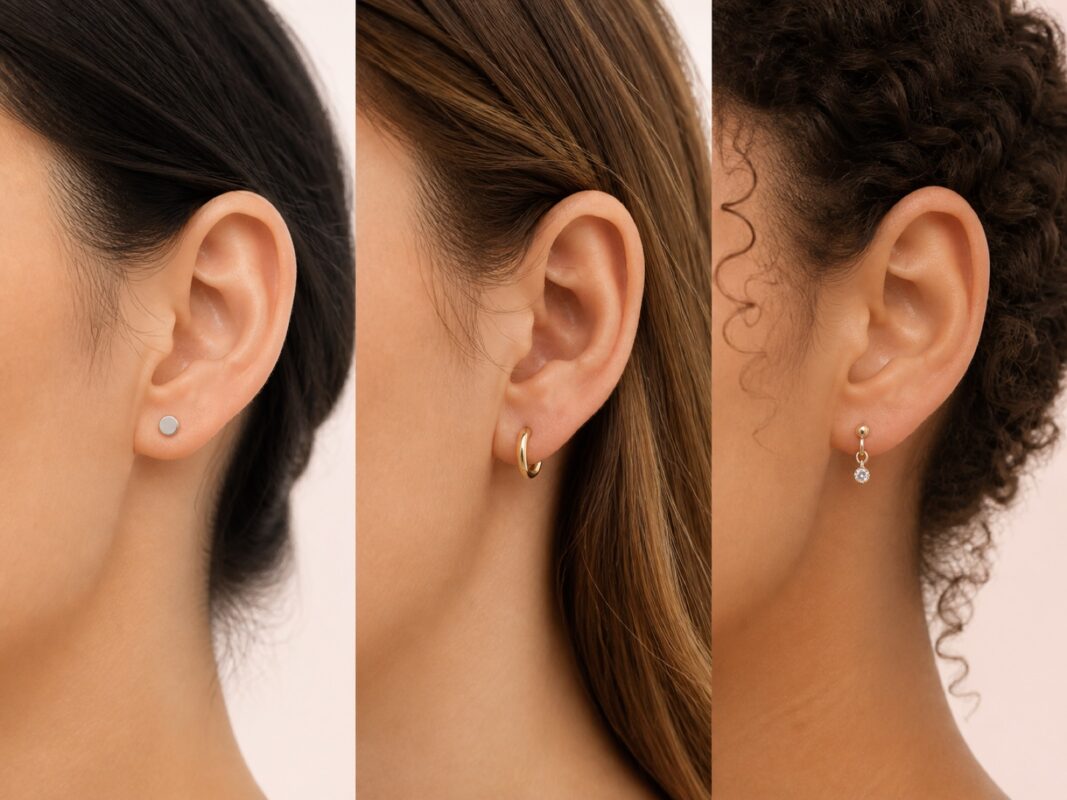
Which Earrings Fit Your Ear Shape? A Comfort Guide for Sensitive Ears
Learn how earlobe size, piercing position, post length, hoop diameter, backing style and material affect how earrings fit and feel on sensitive ears.
5 thoughts on “Am I Allergic to My Earrings? A Women’s Guide to Nickel Allergy”