

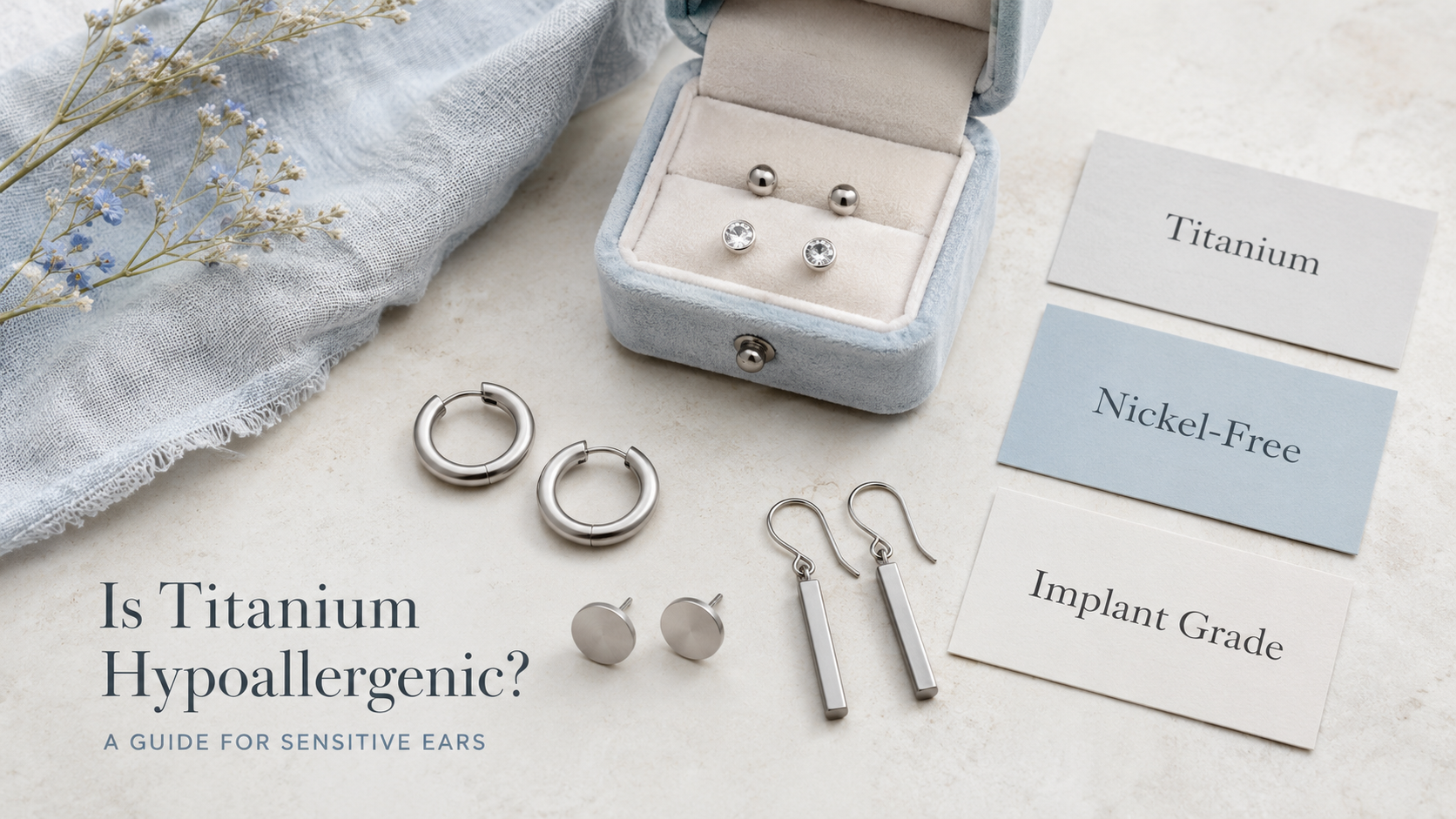
If you have sensitive ears, you probably already know how frustrating jewelry shopping can be. A pair of earrings might look perfect online, sound safe in the description, and still leave your ears itchy, sore, or irritated after only a few hours.
So, is titanium hypoallergenic?
Yes — titanium is genuinely hypoallergenic, and it is one of the best metals you can choose for sensitive ears. It is nickel-free, highly biocompatible, corrosion-resistant, and widely trusted for body jewelry and medical use. That is why titanium earrings are such a popular option for people with metal sensitivities, fresh piercings, and ears that react badly to lower quality metals.
If you are trying to find earrings that actually feel good to wear, titanium is one of the safest places to start.

What “Hypoallergenic” Means in Jewelry
The word hypoallergenic usually means a product is less likely to trigger an allergic reaction. But in jewelry, that word alone is not enough. A brand can say something is hypoallergenic without clearly telling you what the metal actually is.
That is why material details matter so much. For sensitive ears, the safest approach is to look past the label and focus on the actual material used in the post, backing, and body of the jewelry. This matters even more because nickel remains one of the most common causes of jewelry-related skin reactions. Mayo Clinic specifically recommends looking for jewelry made from metals such as titanium, surgical-grade stainless steel, and certain higher-karat yellow gold options when trying to avoid nickel-related reactions.
So “hypoallergenic” is a helpful starting point, but solid titanium is much more meaningful than a vague claim
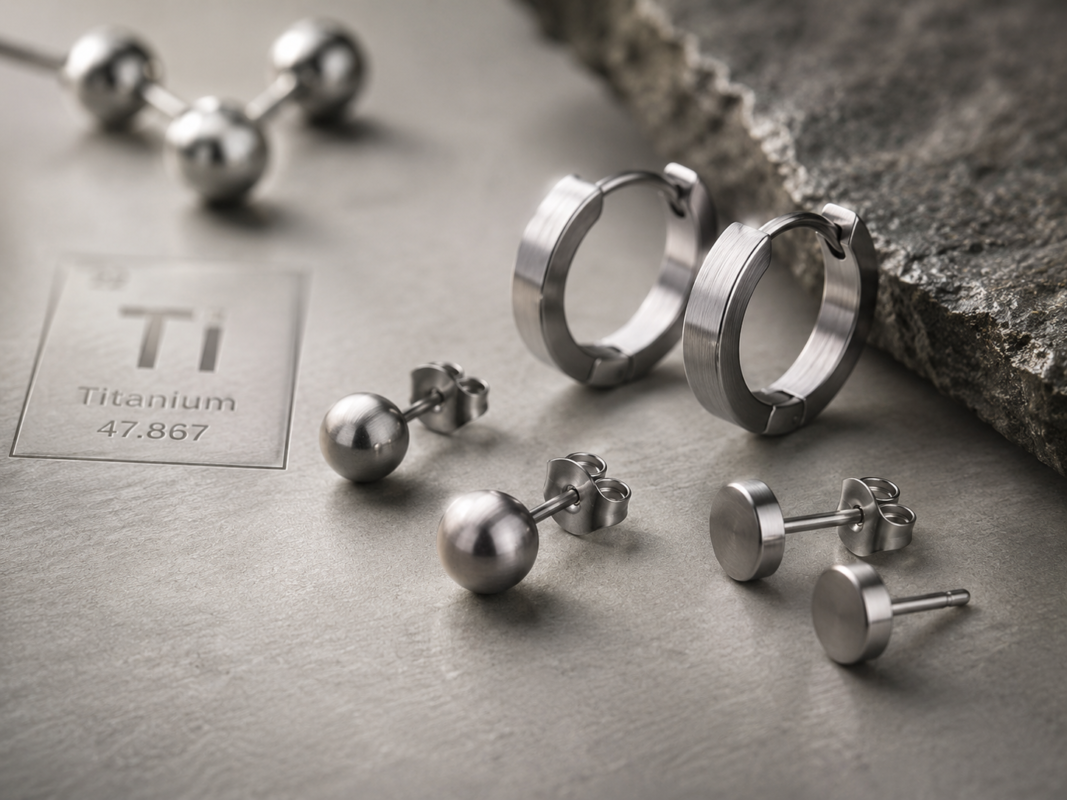
Why Titanium Is Considered Hypoallergenic
Titanium stands out because it is nickel-free, highly stable, and extremely resistant to corrosion. The APP describes titanium as lightweight and ideal for people concerned about nickel sensitivity, and notes that it can be anodized without affecting safety.
That stability matters. Titanium forms a protective oxide layer that helps resist corrosion and wear, so it is far less likely to break down against sweat, moisture, or everyday skin contact than lower quality metals. It is also highly biocompatible, which is why titanium is used in medical implants and professional body jewelry. APP guidance and procedure materials repeatedly point to implant-grade titanium as appropriate for initial piercing jewelry and for safer long-term wear.
That does not mean true titanium sensitivity is impossible, but it is considered rare. A frequently cited clinical study estimated titanium allergy prevalence at about 0.6% in dental implant patients, which is low relative to many other metal sensitivity concerns.

Why Titanium Earrings Are So Popular for Sensitive Ears
People with sensitive ears are not just looking for pretty earrings. They are looking for earrings that do not sting, itch, swell, or make them regret wearing jewelry.
That is exactly why titanium earrings are so popular. They are usually:
- lightweight
- nickel-free
- durable
- resistant to tarnish and corrosion
- suitable for long wear
- widely trusted for piercings and sensitive skin
Mayo Clinic notes that some jewelry can cause allergic reactions, especially jewelry made of nickel, which is why materials like titanium are often recommended as alternatives for people trying to reduce reactions.
For many shoppers, titanium is the first material that finally feels comfortable.
What Kind of Titanium Is Best?
Not all titanium jewelry is described the same way, and this part matters a lot.
If you are shopping for titanium earrings for sensitive ears, the best wording to look for is:
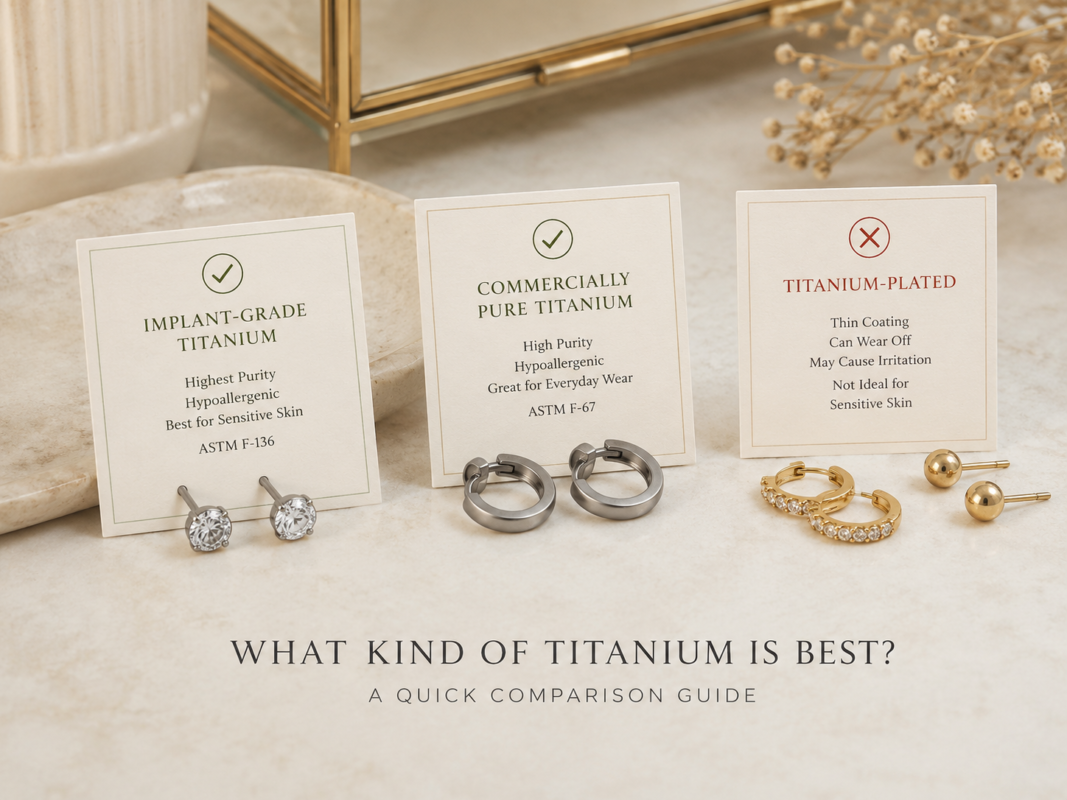
Implant-Grade Titanium
The APP recommends implant-certified titanium, including ASTM F-136 OrISO 5832-3, for body jewelry. This is one of the best options for people with sensitive ears and for initial piercings.
Commercially Pure Titanium
APP also lists ASTM F-67 commercially pure titanium as an excellent option.
What to Avoid
Avoid pieces described only as titanium-coated or titanium-plated. Those are not the same as solid titanium. If the outer layer wears down, the base metal underneath may be something your skin does not tolerate well.
So if your ears are highly reactive, the best wording is:
- solid titanium
- implant-grade titanium
- ASTM F-136
- ASTM F-67
Titanium vs Surgical Steel for Sensitive Ears
This is one of the most common comparisons.
Surgical steel can work well for many people, and Mayo Clinic includes surgical-grade stainless steel among the materials that may be less likely to trigger allergic reactions. But titanium is usually the safer choice for very sensitive ears because it is nickel-free, while even some surgical stainless steel alloys may still involve nickel.
APP explains that only certain steel grades are considered appropriately biocompatible for body jewelry, while titanium is explicitly highlighted as ideal for people with nickel sensitivity concerns.
So the simple version is:
- Surgical steel: can work for many people
- Titanium: usually the safer option for very reactive ears
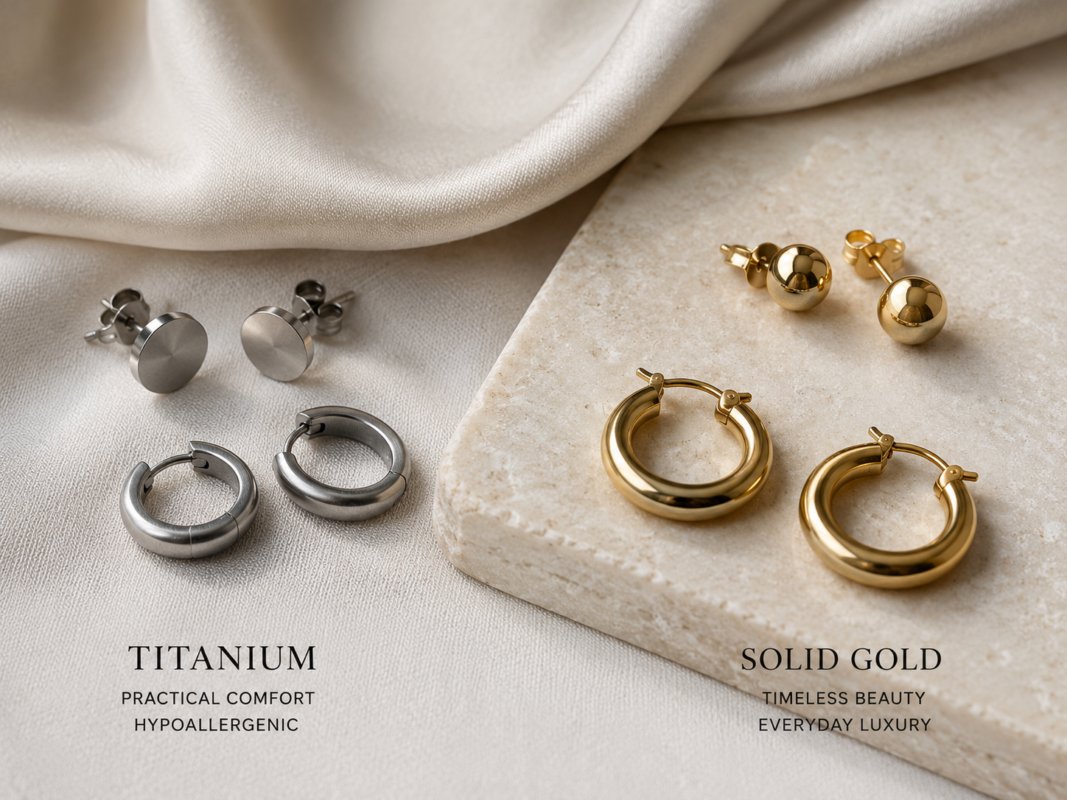
Titanium vs Gold for Sensitive Ears
Gold can also be a good choice, but it depends heavily on the exact type of gold.
APP states that 14k or higher gold may be appropriate for initial piercings only if it is nickel- and cadmium-free and alloyed for biocompatibility. It also makes clear that gold-plated, gold-filled, and gold overlay/vermeil jewelry are not acceptable for fresh piercings because the coating can wear away and expose the underlying base metal.
This is where titanium often has the advantage. With real titanium, the material is straightforward. With gold, especially cheaper gold-tone jewelry, the alloy mix or base metal may be less clear.
So if you want:
- a more luxurious look, solid gold can be great
- a safer, simpler, lower-risk option, titanium is usually easier to trust
If your ears still react to certain jewelry, use our guide to earring allergy symptoms and nickel exposure before assuming titanium itself is the cause.
Can You Still React to Titanium?
Most people tolerate titanium extremely well, but a few things can still go wrong.
Sometimes what seems like a titanium reaction is actually:
- irritation from poor fit
- friction from rough finishing
- pressure from tight backing
- over-cleaning
- aftercare mistakes
- jewelry that is only titanium-plated, not solid titanium
True titanium hypersensitivity appears to be uncommon, but it has been reported in medical literature. That is why it is important to buy from brands that clearly identify the grade of titanium and use high-quality finishing.
If you are having symptoms like increasing pain, discharge, spreading redness, or fever, that is more concerning for infection or another issue and should not be treated like a simple jewelry preference problem. Mayo Clinic highlights pain, swelling, redness, and pus-like discharge as warning signs of piercing complications.
How to Shop for Titanium Earrings the Smart Way
If you want genuinely safe titanium jewelry, use a stricter checklist.
Green Flags
- implant-grade titanium
- ASTM F-136
- ASTM F-67
- solid titanium
- nickel-free
- clear product specifications
- brands focused on sensitive ears
Red Flags
- titanium-coated
- titanium-plated
- vague “metal alloy” descriptions
- no mention of post material
- no material standards listed
- unclear jewelry specs
This is also consistent with Mayo Clinic’s advice to choose studios and sellers that can provide documentation of metal content for piercing jewelry.

Final Thoughts
So, is titanium hypoallergenic?
Yes. Titanium is one of the most hypoallergenic metals available for earrings, and one of the safest choices for sensitive ears. It is nickel-free, corrosion-resistant, lightweight, and widely trusted in both medical and piercing settings. APP guidance specifically supports implant-grade and commercially pure titanium as appropriate body jewelry materials, especially for people concerned about nickel sensitivity.
If your ears react to plated jewelry, mystery alloys, or lower quality metals, titanium is often the best material to try next. It is simple, reliable, and much easier to trust than vague marketing terms.
At Sensitiveearrings, that is exactly the kind of material worth highlighting: earrings that are comfortable, well-made, and genuinely better for sensitive ears.
Is titanium hypoallergenic for sensitive ears?
Yes. Titanium is widely considered hypoallergenic and is one of the safest metals for sensitive ears. APP specifically recommends implant-certified titanium and commercially pure titanium for body jewelry.
Is titanium better than surgical steel for sensitive ears?
For many people, yes. Titanium is usually the safer option because it is nickel-free and highly biocompatible, while some stainless steel options may still involve nickel.
Can titanium earrings irritate your ears?
Most people tolerate titanium very well. If irritation happens, the issue may be poor fit, rough finish, bad aftercare, or jewelry that is not actually solid implant-grade titanium.
Is titanium good for new piercings?
Yes. APP identifies implant-grade titanium and commercially pure titanium as appropriate materials for initial piercing jewelry.
What type of titanium is best for earrings?
Implant-grade titanium such as ASTM F-136 and commercially pure titanium such as ASTM F-67 are among the best options.

Related posts

Niobium vs Titanium Earrings for Sensitive Ears: A Practical Comparison
Compare niobium and titanium earrings for sensitive ears, including material standards, weight, anodized color, nickel exposure, fit, and buying checks.

Flat Back vs Butterfly Back Earrings for Sensitive Ears: Comfort, Fit, and Care
Compare flat back and butterfly back earrings for sensitive ears, including pressure, fit, cleaning, nickel exposure, and healing-piercing limits.

Can You Sleep in Earrings? A Comfort Guide for Sensitive Ears
Can you sleep in earrings? Learn how healing status, backing, post length, pressure, and titanium evidence affect overnight comfort for sensitive ears.
One thought on “Is Titanium Hypoallergenic? Why It’s One of the Best Metals for Sensitive Ears”