

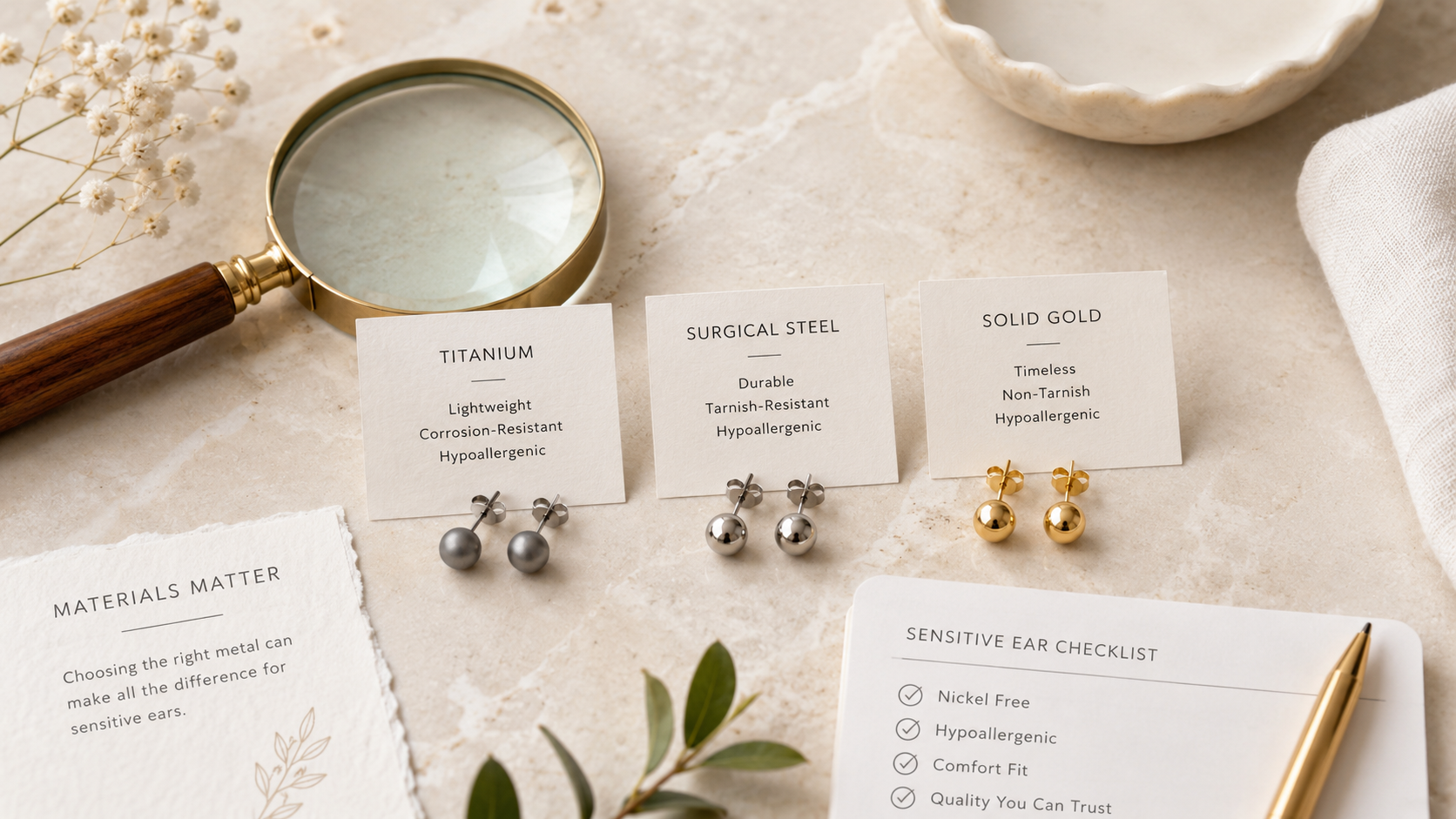
If you have sensitive ears, you have probably seen both of these labels while shopping: nickel free and hypoallergenic. They sound similar, and a lot of people use them like they mean the same thing. But they are not always identical.
The short answer is this: nickel free jewelry is hypoallergenic for many people, but not for everyone. Nickel is one of the most common causes of allergic contact dermatitis, and jewelry is a frequent trigger, especially earrings and body-piercing jewelry.
If your ears get itchy, red, sore, or flaky after wearing earrings, avoiding nickel is often the best first step. But if your ears still react after switching to nickel free jewelry, there may be another metal or material issue involved. Mayo Clinic notes that nickel allergy is a common immune reaction to nickel, while the American Academy of Dermatology explains that jewelry is one of the most common exposure sources.
If you are trying to shop smarter for sensitive ears, this guide explains what “nickel free” actually means, how it compares to “hypoallergenic,” and which materials are usually the safest.

What Does “Nickel Free” Actually Mean?
“Nickel free” sounds simple, but in practice it is not always as precise as shoppers expect. In the U.S., terms like “nickel free” and “hypoallergenic” are not tightly standardized consumer jewelry labels in the way many people assume, which is why material transparency matters so much. A label can be helpful, but it is still better to know the actual metal used in the post, backing, and base material. This caution is also consistent with dermatology guidance that emphasizes identifying and avoiding the specific trigger behind contact dermatitis.
So if a product only says “nickel free” without explaining whether it is titanium, surgical steel, gold, or something else, you still do not have the full picture.
That does not mean the label is useless. It usually means the brand is trying to avoid the most common jewelry allergen. It just should not be the only thing you rely on.
External source mentions to support this section:
- American Academy of Dermatology on nickel allergy
- Mayo Clinic on contact dermatitis and allergen identification
Why Nickel Causes So Many Reactions
Nickel gets so much attention because it is one of the most common causes of allergic contact dermatitis. The American Academy of Dermatology says nickel allergy is very common, and Mayo Clinic specifically associates nickel allergy with earrings and other body-piercing jewelry.
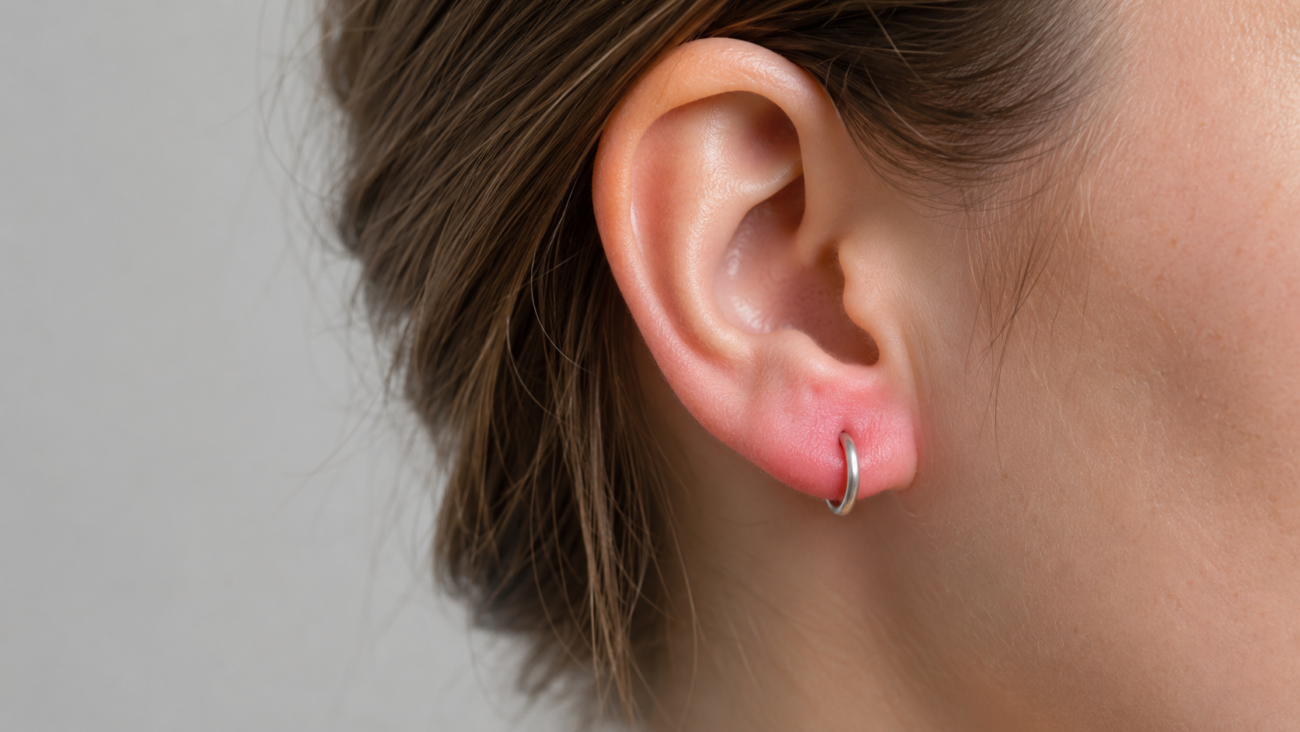
When nickel sits against the skin for long periods, especially around a piercing, it can trigger an immune response. That reaction may look like:
- itching
- redness
- rash-like irritation
- dryness or flaky skin
- swelling
- bumps where the metal touches the skin
Those symptoms overlap strongly with the classic signs of contact dermatitis described by Mayo Clinic.
This is also why someone can wear the same type of jewelry for a long time and then suddenly start reacting later. Nickel sensitivity can develop over time with repeated exposure.
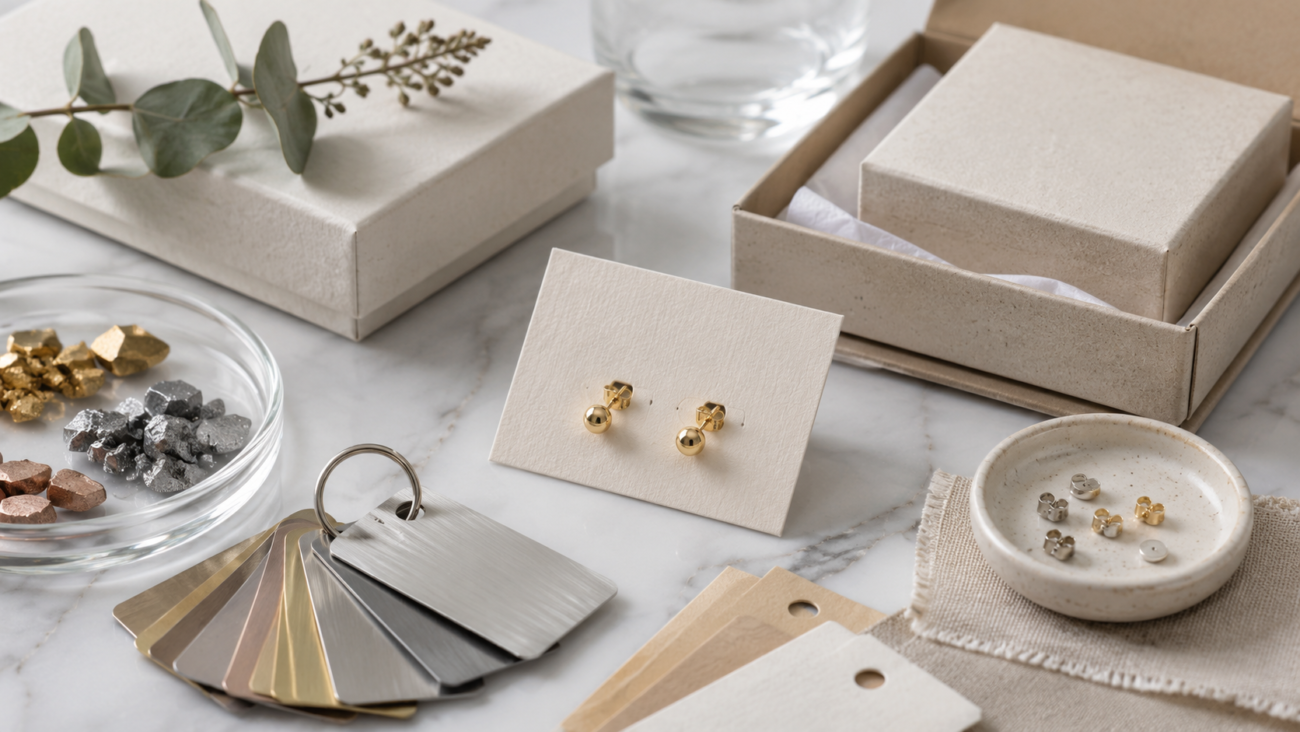
So, Is Nickel Free Hypoallergenic?
For many people, yes.
If nickel is the main reason your ears react, then nickel free jewelry is often enough to make a huge difference. That is exactly why “nickel free” is usually a smart first filter for people shopping for earrings for sensitive ears.
But “hypoallergenic” is broader. It means a product is less likely to trigger an allergic reaction. Nickel free helps with that, but it does not automatically guarantee that every sensitive ear will tolerate it.
Some people still react to other metals in the alloy, such as cobalt, copper, or zinc. The American Academy of Dermatology notes that people with contact allergies may need to identify the exact trigger, and Mayo Clinic notes that patch testing can help diagnose the culprit in allergic contact dermatitis.
So the practical answer is:
- Nickel free removes one major risk
- Hypoallergenic means lower overall likelihood of irritation
- The safest choice is still jewelry with clear material details
Why Some Sensitive Ears Still React to Nickel Free Jewelry
If you switched to nickel free earrings and your ears still got irritated, that does not necessarily mean the label was fake. It may mean nickel was not your only trigger.
A few common reasons include:
Other Metals in the Alloy
Nickel may be absent, but the jewelry may still contain another metal your skin does not like.
Poor Quality Finishing
Rough posts, bad plating, or poorly finished backs can physically irritate the skin.
Misleading Product Labels
Some labels sound safe without explaining what the jewelry is actually made from.
Sweat and Moisture
Heat, sweat, and friction can make metal irritation worse. Nickel allergy symptoms and contact dermatitis often get more noticeable with prolonged contact and exposure.
If your skin is highly reactive, the solution is usually to stop guessing and move toward metals with a stronger track record for sensitive ears.
Best Metals for Sensitive Ears
If you want a more reliable answer than vague labels, focus on the actual material.
Titanium
Titanium is one of the best choices for sensitive ears because it is highly biocompatible, lightweight, and widely used in medical applications. It is often the safest place to start if your ears react to almost everything.
Surgical-Grade Stainless Steel
Mayo Clinic lists surgical-grade stainless steel among materials that may be less likely to cause reactions in people with nickel allergy. It works well for many people, although extremely reactive skin may still prefer titanium.
Solid Gold (14k and Above)
Mayo Clinic and the American Academy of Dermatology both point to higher-karat yellow gold as a safer option for people who are avoiding nickel exposure. Plated gold is not the same as solid gold, so that difference matters.
Platinum
Platinum is another premium option often recommended as a lower-reactivity metal.
Sterling Silver
Sterling silver works for some people, but not for everyone. The alloy matters, and lower-quality pieces may still cause irritation.
What to Avoid If You Have Sensitive Ears
If your ears are easily irritated, these are the biggest red flags:
- “Hypoallergenic alloy” with no explanation
- “Gold tone” or “silver tone” with no metal details
- Cheap plated earrings
- Mystery base metals
- No mention of what the post is made from
- No care instructions or material specs
This matters because the post is the part that sits inside the piercing. Even if the decorative front looks safe, the post and backing are what matter most for comfort.
How to Shop Smarter for Sensitive Ears
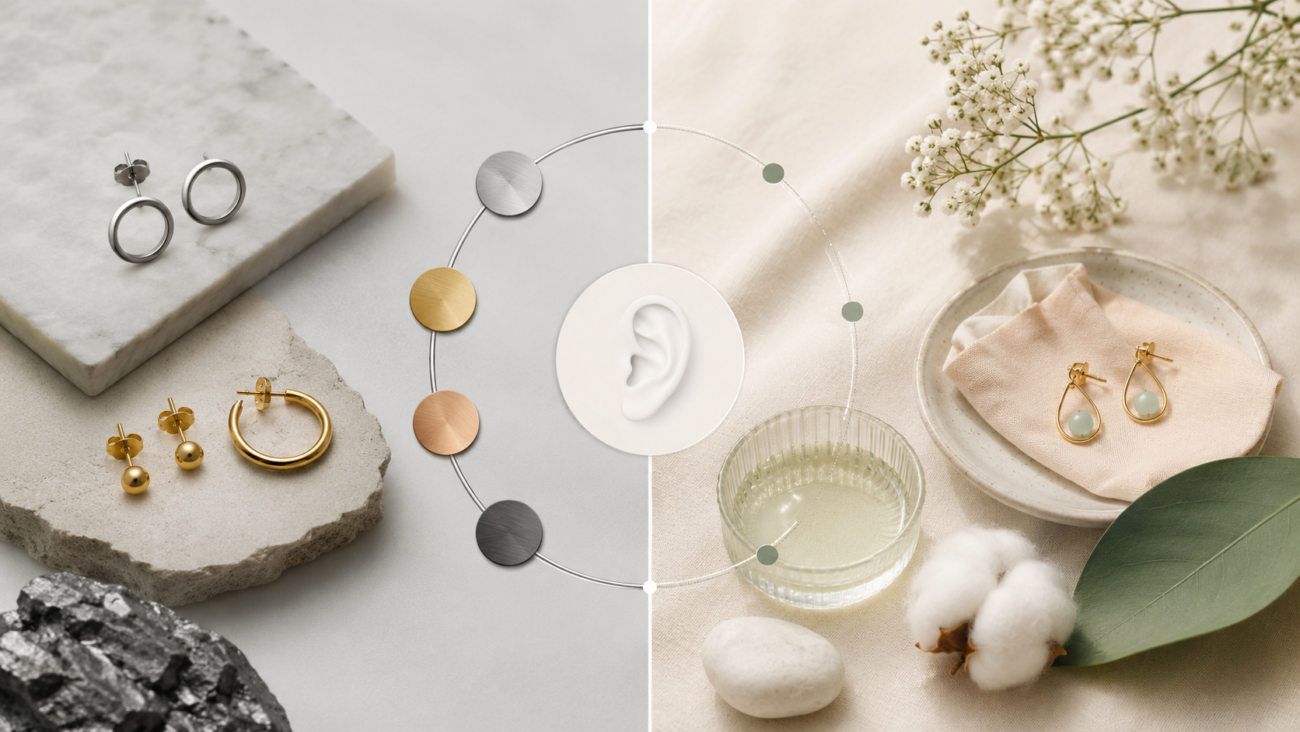
A better shopping checklist looks like this:
Green Flags
- Exact material listed
- Titanium, surgical steel, or solid gold
- Clear nickel-free claim plus real specs
- Brands that focus on sensitive ears
- Smooth posts and well-finished backs
Red Flags
- Vague wording only
- No material info
- Fashion jewelry with no metal details
- Very cheap pricing with luxury claims
- Heavy reliance on plating with no base metal explanation
The American Academy of Dermatology and Mayo Clinic both reinforce the same underlying principle: the best long-term strategy is identifying and avoiding the actual allergen instead of relying on guesswork.
Final Thoughts
So, is nickel free hypoallergenic?
For many people, yes. Nickel free jewelry is often much safer because nickel is one of the biggest reasons earrings cause irritation in the first place. But if your ears are extremely sensitive, “nickel free” alone may not be enough. You need to know the full material and choose metals with a better track record for sensitive skin.
The easiest way to shop with more confidence is to go beyond labels and look for materials like titanium, surgical-grade stainless steel, and solid 14k+ gold. Once you know what your ears tolerate, shopping gets much easier.
At Sensitiveearrings, that is the whole point: less guessing, better materials, and earrings your skin can actually live with.
Is nickel free always hypoallergenic?
Not always, but it is usually safer for many people because nickel is such a common trigger for jewelry-related contact dermatitis.
Why do my ears still react to nickel free earrings?
You may be reacting to another metal, poor finishing, or a low-quality alloy rather than nickel alone. Patch testing may help identify the real trigger.
What is the best metal for sensitive ears?
Titanium is often the safest starting point, with surgical-grade stainless steel and solid higher-karat yellow gold also being common options.
Are gold-plated earrings nickel free?
Not necessarily. The outer layer may be gold, but the base metal underneath may still contain nickel or other irritating metals.
Is hypoallergenic the same as nickel free?
No. Nickel free refers specifically to nickel, while hypoallergenic is a broader claim about reduced likelihood of irritation.


Related posts
How to Choose Earrings for Your Face Shape: A Simple Guide for Sensitive Ears
Choosing earrings should feel fun, not confusing. But once you start hearing things like “round faces need long drops” or “square faces...

Allergic Reaction to Earrings: What Causes It and What to Do Right Away
You put on a pair of earrings, they look perfect, and then a few hours later your ears start itching. Maybe they turn red. Maybe they f...
Best Earrings for Sensitive Ears: Safe Materials That Actually Work
If you have sensitive ears, buying earrings can feel way more complicated than it should be. Something looks cute online, the reviews s...
One thought on “Is Nickel Free Hypoallergenic? What Sensitive Ears Need to Know”