

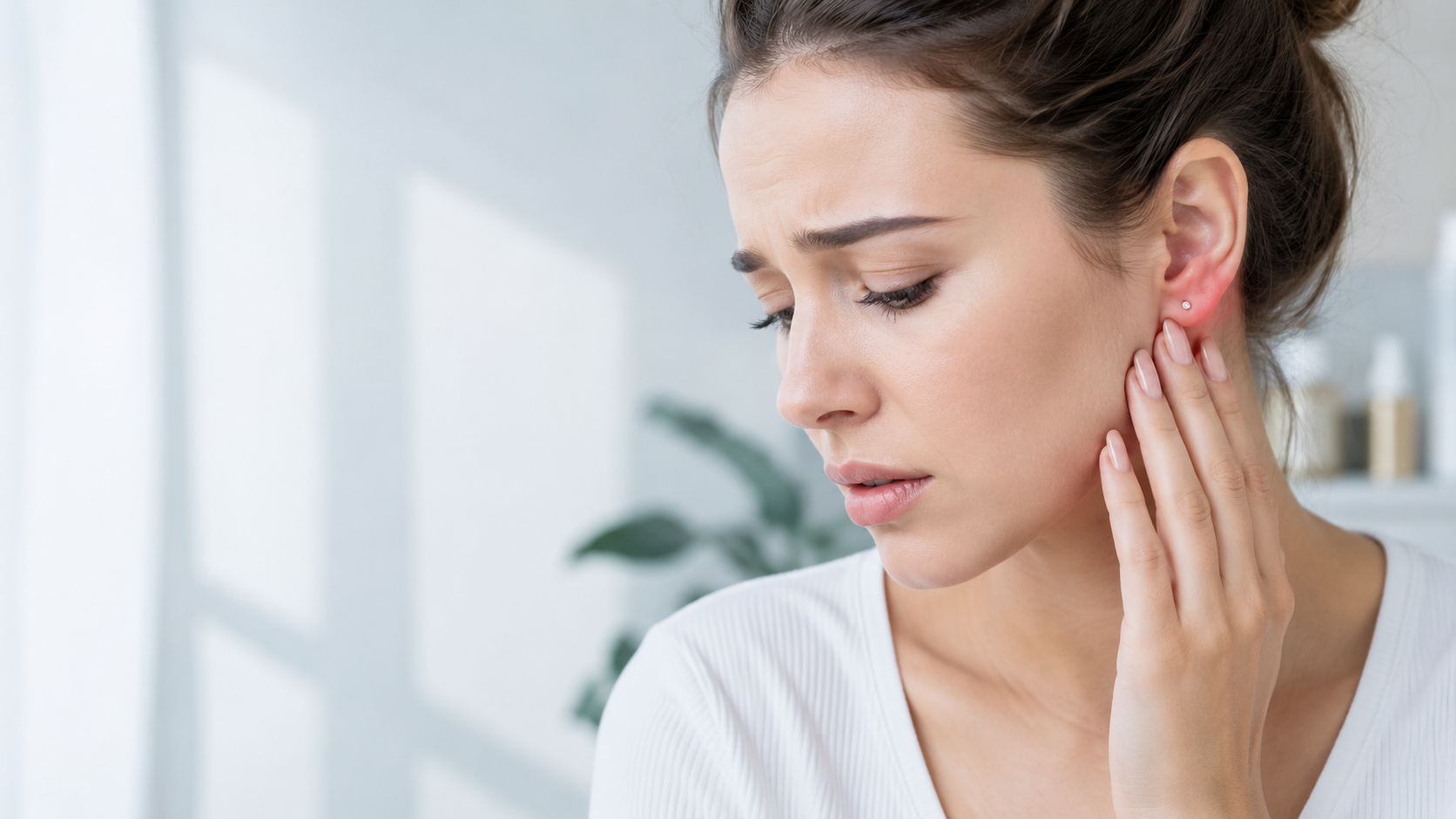
You put on a pair of earrings, they look perfect, and then a few hours later your ears start itching. Maybe they turn red. Maybe they feel warm, sore, or a little swollen. It is annoying, uncomfortable, and honestly confusing when the earrings seemed fine at first.
In many cases, an allergic reaction to earrings is caused by nickel allergy, which Mayo Clinic describes as a common cause of allergic contact dermatitis, and the American Academy of Dermatology notes that jewelry containing nickel is a frequent trigger.
The good news is that once you know what is happening, it gets much easier to manage. Most earring allergies improve when you remove the irritating metal, calm the skin, and switch to better materials going forward.
This guide breaks down what an earring allergy looks like, how to tell it apart from an infection, what to do immediately, and which earrings are safer for sensitive ears.
Pssst…Check out our hypoallergenic hoop collectionfor implant-grade titanium, surgical stainless steel, and pure gold super-safe jewelry.
Key Takeaways
- An allergic reaction to earrings is often caused by nickel, the most common metal allergen in jewelry.
- Common symptoms include itching, redness, rash, swelling, dryness, or flaky skin where the metal touches the ear.
- The first step is to remove the earrings and avoid further contact with the suspected metal.
- Pus, worsening pain, spreading redness, heat, or fever may point to infection rather than a simple allergy and should be medically evaluated.
- Safer choices for many people with sensitive ears include titanium, surgical-grade stainless steel, platinum, and higher-karat yellow gold, though individual tolerance varies.
What Does an Allergic Reaction to Earrings Look Like?
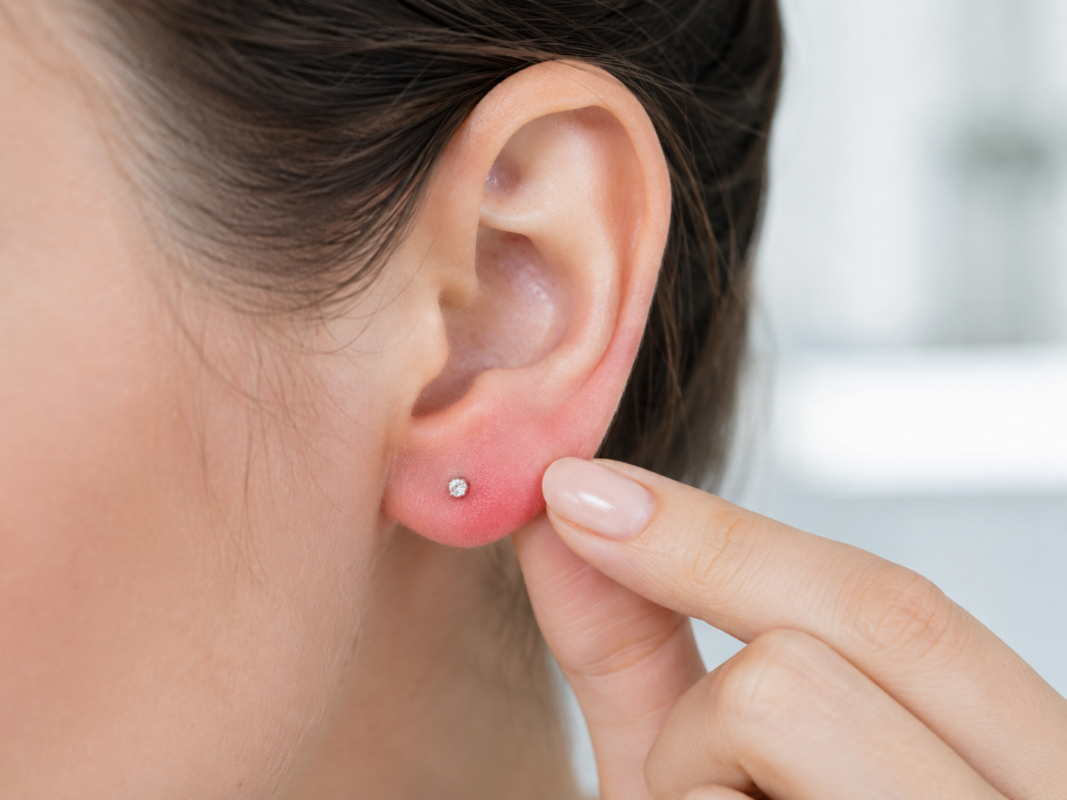
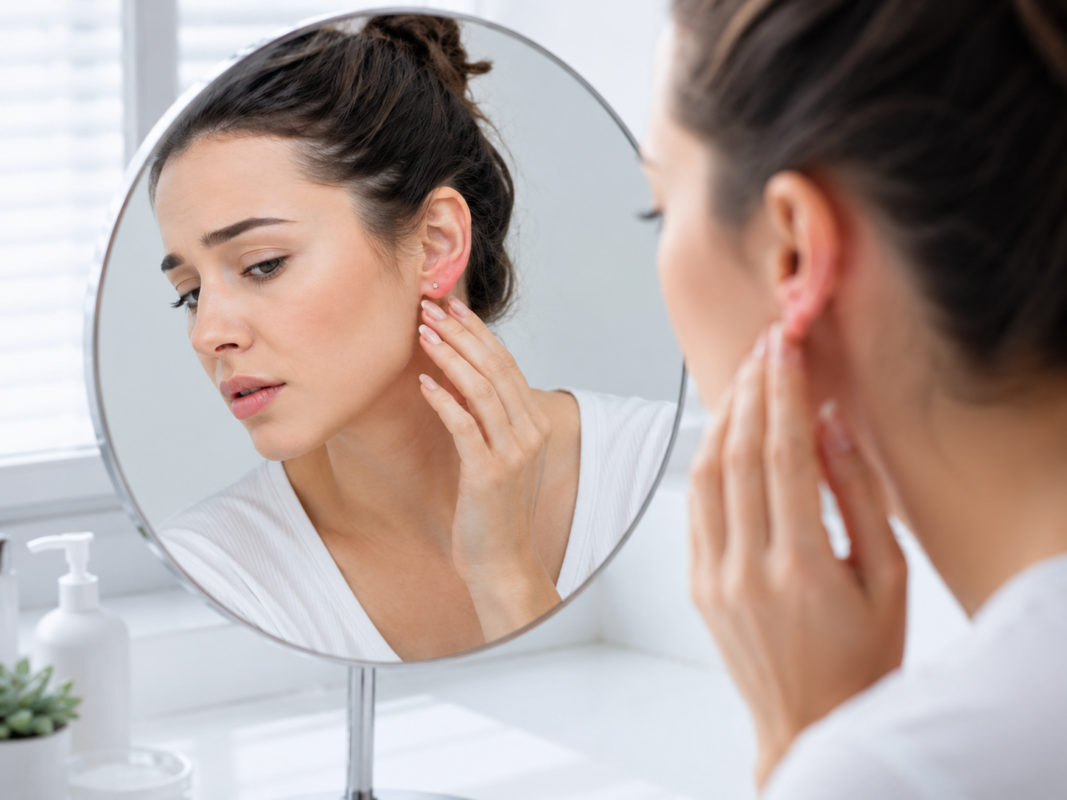
Most people notice the reaction right where the earring touches the skin. The ear may itch first, then become red or irritated. Some people get dry, flaky skin or a rash around the piercing hole or backing. Others notice swelling, soreness, or tiny bumps.
This is usually a form of allergic contact dermatitis, which is how the skin reacts after touching a triggering substance such as nickel. Mayo Clinic lists rash, itching, redness, dry skin, bumps, and swelling among typical contact dermatitis symptoms.
Sometimes the reaction starts quickly. Sometimes it seems to appear “out of nowhere” after wearing the same type of earrings many times. That can happen because nickel allergy can develop after repeated exposure. The body essentially becomes sensitized over time.
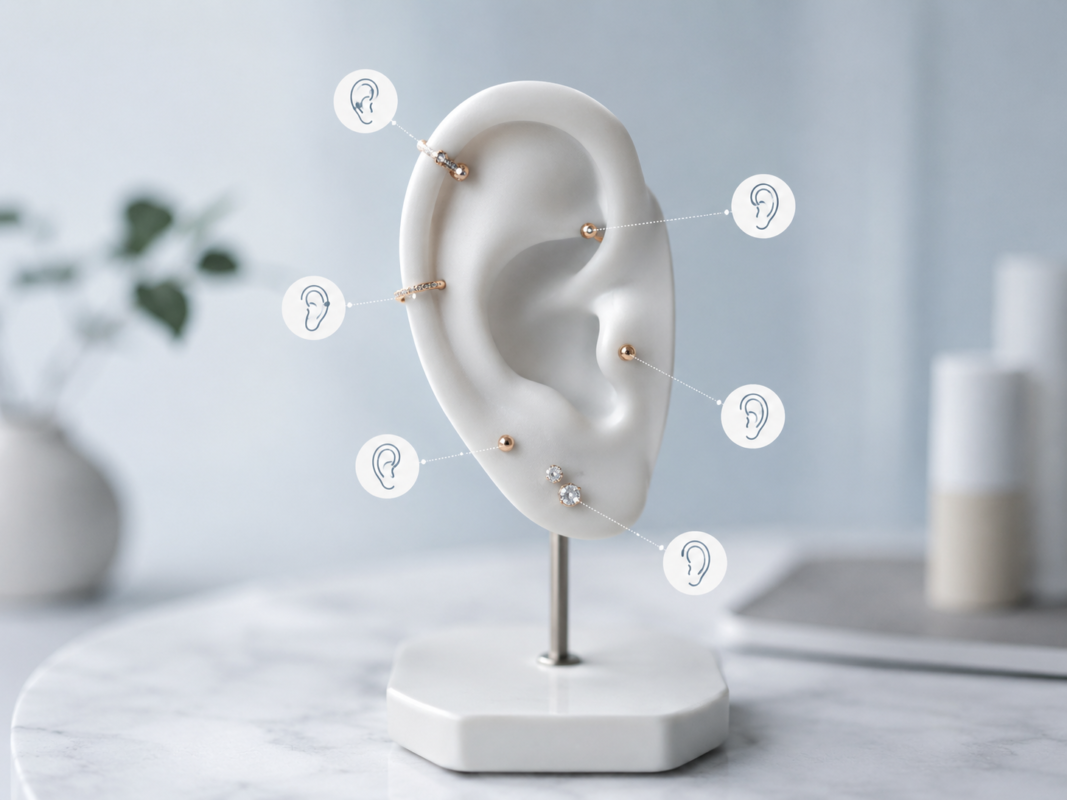
If the same pair repeatedly causes itching, redness, or soreness, our women’s guide to nickel allergy and earring reactions can help you compare the pattern with pressure, irritation, and possible infection.
Why Nickel Is Usually the Problem
If your ears react badly to earrings, nickel is the first thing to suspect. The American Academy of Dermatology says it is common to develop nickel allergy from jewelry, and Mayo Clinic notes that nickel is a common cause of allergic skin reactions.
Nickel often hides in places people do not expect:
- fashion jewelry
- plated earrings
- cheap posts and backs
- mixed metal alloys
- some stainless steel jewelry that is not clearly specified
This is why an earring may be advertised as “cute,” “gold-tone,” or even “hypoallergenic,” but still irritate sensitive ears if the post or base metal contains nickel.
Allergy or Infection: How to Tell the Difference
This is one of the most important parts.
An allergy usually causes:
- itching
- rash-like irritation
- dry or flaky skin
- redness where the metal touches
- discomfort that improves after removing the earrings
An infection is more likely if you notice:
- worsening pain
- obvious warmth
- thick discharge or pus
- redness spreading beyond the piercing area
- fever or feeling unwell
Medical aftercare guidance recommends taking symptoms like heat, significant pain, worsening swelling, and discharge seriously, especially in a healing piercing.
If you are not sure, do not guess for too long. When symptoms are getting worse rather than better, it is safer to have them checked.
What to Do Right Away If Your Earrings Cause a Reaction
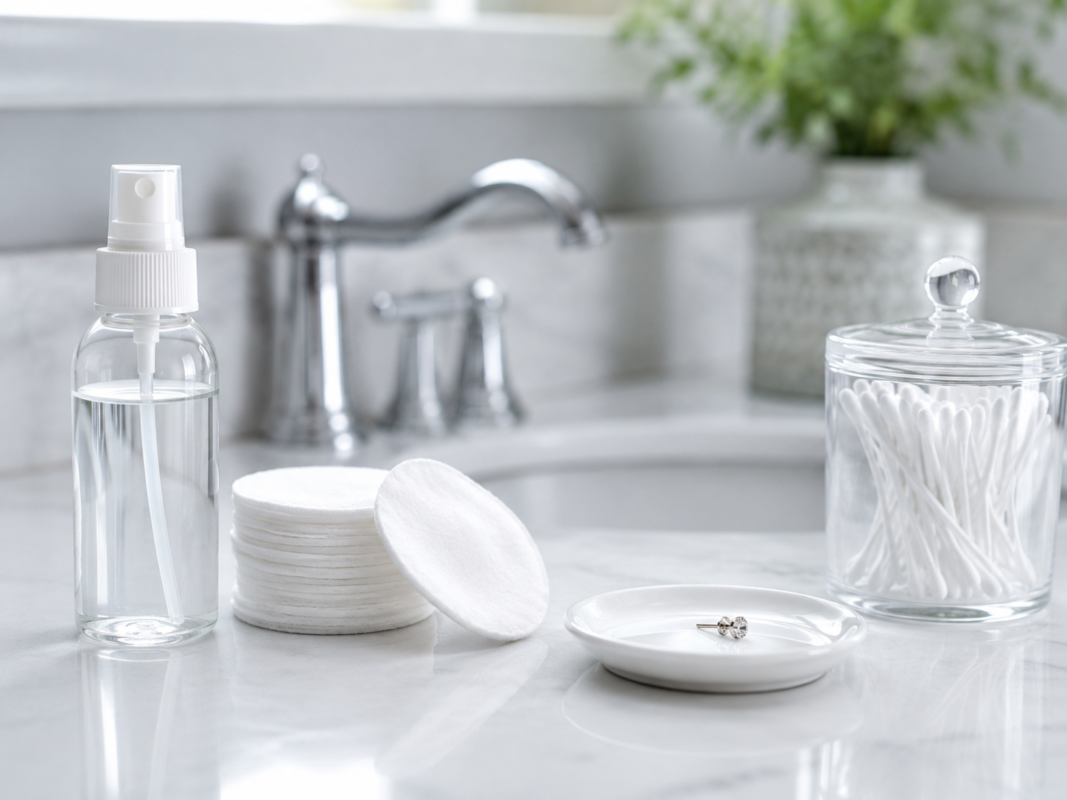
The first thing to do is simple: take the earrings out if they are the likely cause and the piercing is already healed. Mayo Clinic’s treatment guidance for nickel allergy starts with avoiding contact with the metal.
Then:
- gently wash the area with mild soap and water
- pat dry with a clean cloth
- avoid scratching
- avoid perfume, hair products, and makeup near the irritated area
- give your ears a break until the skin calms down
If you have a new or healing piercing, aftercare is different. The Association of Professional Piercers recommends sterile saline wound wash and specifically advises against alcohol, hydrogen peroxide, iodine, and other harsh products because they can irritate tissue and delay healing.
A cool compress can help with comfort, but if swelling, pain, or drainage worsen, you should stop self-treating and get medical advice.
Can You Suddenly Become Allergic to Earrings You Used to Wear?
Yes. That is one of the frustrating things about nickel allergy.
You may wear certain earrings for months or years with no issue, and then suddenly your skin starts reacting. That does not mean you are imagining it. Nickel sensitization can build over time with repeated exposure. Once that allergy develops, future reactions can happen more easily.
So if your ears are suddenly itchy from earrings you used to tolerate, the metal may still be the problem.
Best Earrings for Sensitive Ears and Nickel Allergy
If you want to avoid another reaction, material matters more than style.
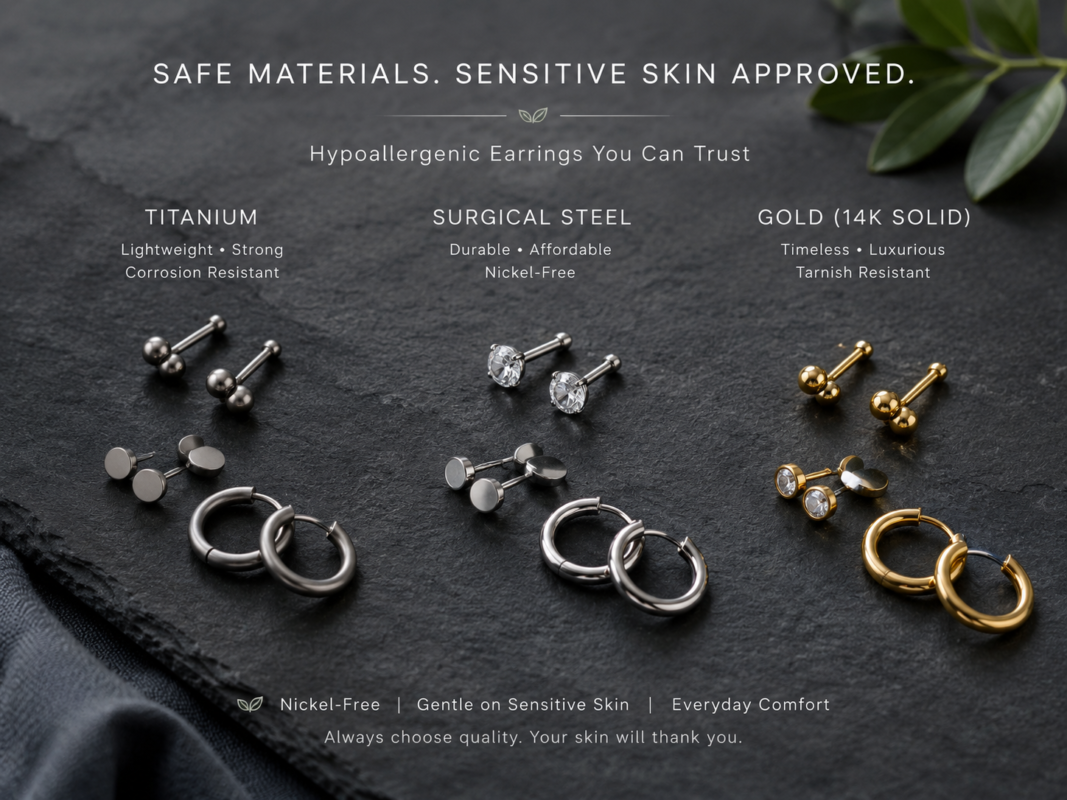
Mayo Clinic and the American Academy of Dermatology both recommend choosing jewelry made from less reactive materials, including titanium, surgical-grade stainless steel, platinum, sterling silver, and higher-karat yellow gold.
For many people with sensitive ears, the safest options are:
Titanium
Titanium is widely considered one of the best choices for sensitive ears because it is highly biocompatible and commonly used in medical settings. It is lightweight, durable, and a strong choice for people with nickel sensitivity.
Surgical-Grade Stainless Steel
This can work well for some people, but quality matters. It is better to choose clearly specified surgical-grade material from a brand that is transparent about what the posts are made from. Mayo Clinic lists surgical-grade stainless steel among materials less likely to trigger allergy.
Solid Yellow Gold
Higher-karat yellow gold, especially 18k and above, is often better tolerated than lower-quality gold-tone or plated jewelry. Mayo Clinic and AAD both include higher-karat gold among safer jewelry choices.
Platinum
Platinum is another lower-reactivity option often recommended for people avoiding nickel exposure.
Earrings That Often Cause Problems
If your ears are reactive, be cautious with:
- plated earrings
- mystery metals
- low-cost fashion jewelry
- “gold-tone” earrings with no material details
- jewelry labeled “hypoallergenic” without actual specs
The biggest red flag is not knowing what the post is made from. The post is the part going through your ear, so it matters most.
How to Prevent Earring Allergies Going Forward
Once your ears calm down, prevention becomes much easier than treatment.
A few habits help:
- choose nickel-free or clearly specified hypoallergenic earrings
- clean earrings regularly
- avoid wearing irritating metals for long periods
- remove earrings if your ears start itching
- do not wear questionable jewelry in fresh piercings
- buy from brands that clearly list post material and base metal
If you have highly reactive ears, patch testing with a clinician may also help confirm whether nickel is the main trigger. Mayo Clinic notes patch testing as part of diagnosis for nickel allergy and contact dermatitis.
Why This Matters for Sensitiveearrings
For a site like Sensitiveearrings, this topic is not just educational. It directly connects to what your customer is already dealing with: they want earrings that look good, but they are tired of itching, redness, swelling, and wasting money on jewelry they cannot wear.
So your content should always reinforce this message:
Safe earrings start with safe materials.
Not better marketing. Not nicer plating. Not trendier product photos.
Materials first.
That is exactly why shoppers with sensitive ears look for nickel-free, hypoallergenic earrings instead of guessing.
Final Thoughts
An allergic reaction to earrings is common, and nickel is usually the reason. The good thing is that once you recognize the pattern, you can act quickly: remove the earrings, calm the skin, avoid harsh products, and switch to better materials.
If the reaction seems severe, painful, or infected, get it checked. But for many people, the long-term fix is straightforward: stop wearing metals that trigger your ears and start wearing earrings designed for sensitive skin.
At Sensitiveearrings, that is the standard. Earrings should feel good, wear well, and never leave your ears angry.
What causes an allergic reaction to earrings?
The most common cause is nickel, which can trigger allergic contact dermatitis in people who are sensitive to it.
How do I know if I am allergic to my earrings?
Common signs include itching, redness, swelling, rash-like irritation, dryness, or flaky skin where the earrings touch your ear.
Should I take earrings out if my ears are reacting?
If the piercing is healed and the earrings seem to be causing the reaction, removing them is usually the first step because treatment starts with avoiding the metal trigger.
Can I use alcohol or hydrogen peroxide on a new piercing reaction?
For a healing piercing, professional piercing aftercare guidance says to avoid alcohol, hydrogen peroxide, and other harsh products because they can irritate tissue and delay healing.


Related posts

Flat Back vs Butterfly Back Earrings for Sensitive Ears: Comfort, Fit, and Care
Compare flat back and butterfly back earrings for sensitive ears, including pressure, fit, cleaning, nickel exposure, and healing-piercing limits.

Ear Piercing Irritation, Allergy, or Infection? A Guide for Sensitive Ears
Learn how to compare normal healing, pressure irritation, metal allergy, and warning signs of a possible ear-piercing infection.
Which Earrings Fit Your Ear Shape? A Comfort Guide for Sensitive Ears
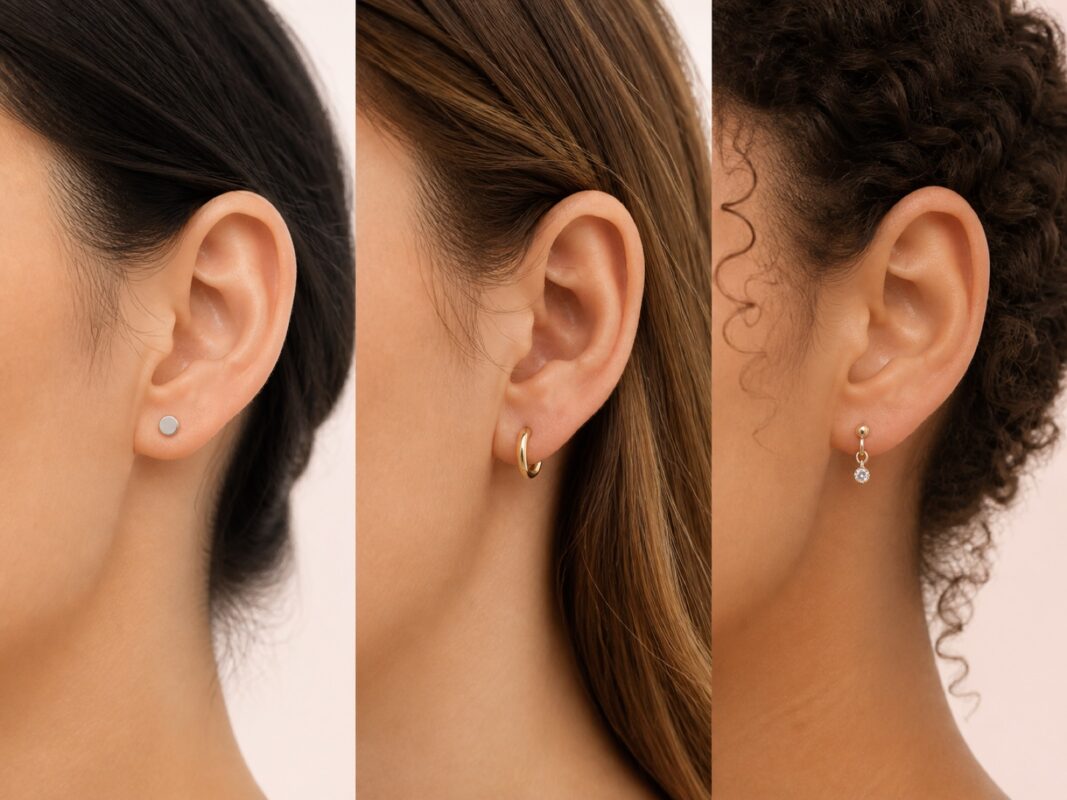
Learn how earlobe size, piercing position, post length, hoop diameter, backing style and material affect how earrings fit and feel on sensitive ears.
2 thoughts on “Allergic Reaction to Earrings: What Causes It and What to Do Right Away”