

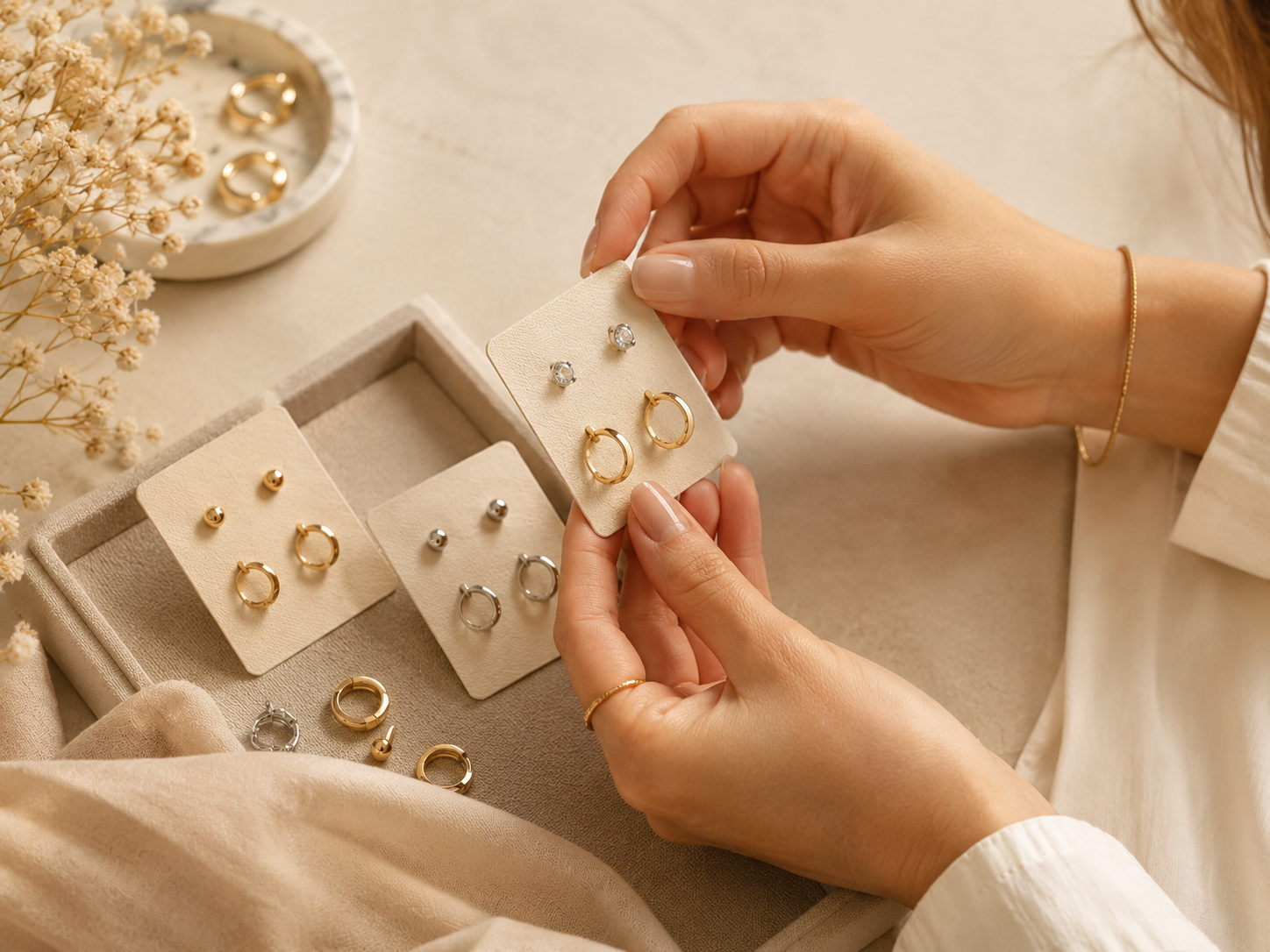
If you have sensitive ears, buying earrings can feel way more complicated than it should be. Something looks cute online, the reviews seem fine, you put them on… and then a few hours later your ears are itchy, red, sore, or swollen.
So what are the best earrings for sensitive ears?
Honestly, the safest earrings for sensitive ears are usually made from implant grade titanium, surgical steel, solid gold, or other clearly labeled nickel free materials. The biggest thing to avoid is vague material descriptions, especially when a brand says “hypoallergenic” without actually telling you what the earrings are made of.
If you’ve ever dealt with irritation from cheap earrings, you’re definitely not alone. Sensitive ears are incredibly common, and the problem usually isn’t the style of the earring. It’s the material touching your skin.
Let’s break down which earrings are safest, which metals are risky, and how to shop for hypoallergenic earrings without guessing
If you recently got pierced, check our ear piercing healing timeline before changing your earrings.
Key Takeaways
- The best earrings for sensitive ears are usually made from implant grade titanium, surgical steel, and high quality nickel free metals.
- Nickel is one of the most common causes of earring irritation and allergic reactions.
- Gold plated earrings are not always safe for sensitive ears because the base metal underneath matters just as much as the outer layer.
- Solid gold can be a good option, but the karat level and alloy still matter.
- The most reliable hypoallergenic earrings come from brands that clearly list their material specifications.
Why Sensitive Ears React to Earrings
When earrings irritate your ears, it usually comes down to one of two things: metal sensitivity or friction.
The biggest issue for most people is metal sensitivity, especially to nickel. Nickel is commonly used in lower cost jewelry alloys, and even a small amount can trigger redness, itching, flaking, swelling, or tenderness around the piercing hole.
Sweat, moisture, and daily wear can make things worse. If the earring coating starts to wear down, the metal underneath may begin touching your skin directly. That’s when many people suddenly notice a reaction, even if the earrings seemed fine at first.
Poor finishing can also cause problems. Rough posts, sharp edges, or low quality backing components can irritate already sensitive ears even more.
What Makes an Earring Hypoallergenic?
The word “hypoallergenic” sounds reassuring, but it doesn’t always tell you enough. Some brands use it loosely, even when the material details are unclear.
A truly good pair of hypoallergenic earrings should have:
- A skin-safe base material
- Little to no nickel
- Smooth posts and well-finished edges
- Reliable plating or coating if plated
- Clear, transparent material specs
The best hypoallergenic earrings are not just about what’s on the outside. They’re about the full material construction.
Best Hypoallergenic Earring Materials for Sensitive Ears
| Material | Good for Sensitive Ears? | Why It Works | Things to Watch Out For |
| Implant Grade Titanium | Yes, excellent | Extremely biocompatible, lightweight, nickel free in high quality forms | Make sure it is clearly labeled implant grade |
| Surgical Steel | Usually yes | Durable, widely used, safer than cheap alloy metals | Not all steel is the same, quality matters |
| Solid Gold (14k+) | Usually yes | High gold content can be comfortable for many people | White gold and lower karat alloys may still contain reactive metals |
| Sterling Silver | Sometimes | Can work well for some people if nickel free | Tarnish and mixed alloys may cause issues for very sensitive skin |
| Gold Filled | Often better than plated | Thicker gold layer than plating, more durable | Still depends on the base metal |
| Gold Plated | Sometimes, but risky | Can be okay briefly if high quality and nickel free | Once plating wears down, the base metal may irritate skin |
| Brass / Cheap Alloy | Usually no | Inexpensive and common in fashion jewelry | Often contains reactive metals that trigger irritation |
Is Titanium the Best Option for Sensitive Ears?
For many people, yes.
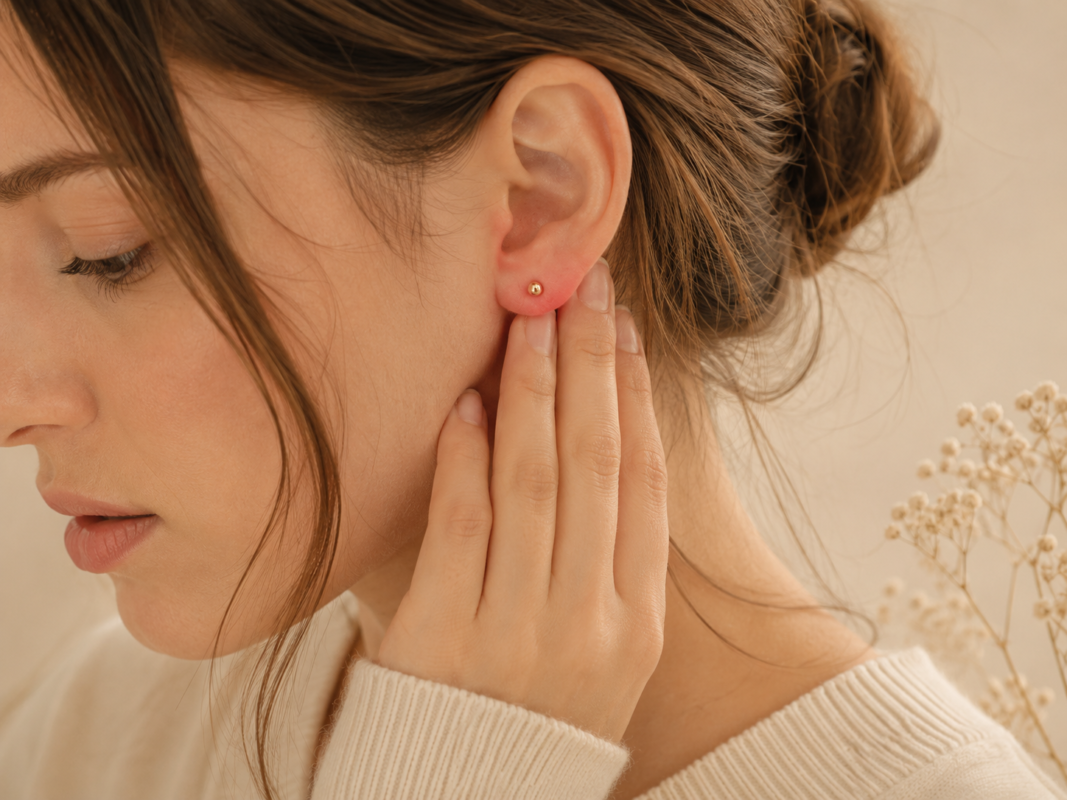
Titanium earrings are often considered one of the best choices for sensitive ears because titanium is highly biocompatible. That means the body is less likely to react to it. It’s also lightweight, durable, and comfortable for long wear.
If someone has struggled with irritation from fashion jewelry, titanium is often the safest material to try next. It is especially popular for first piercings and for people who already know they react badly to mixed metals.
For a hypoallergenic jewelry brand, titanium is one of the strongest materials to build trust around because shoppers with sensitive ears are already looking for it.
Are Surgical Steel Earrings Safe?
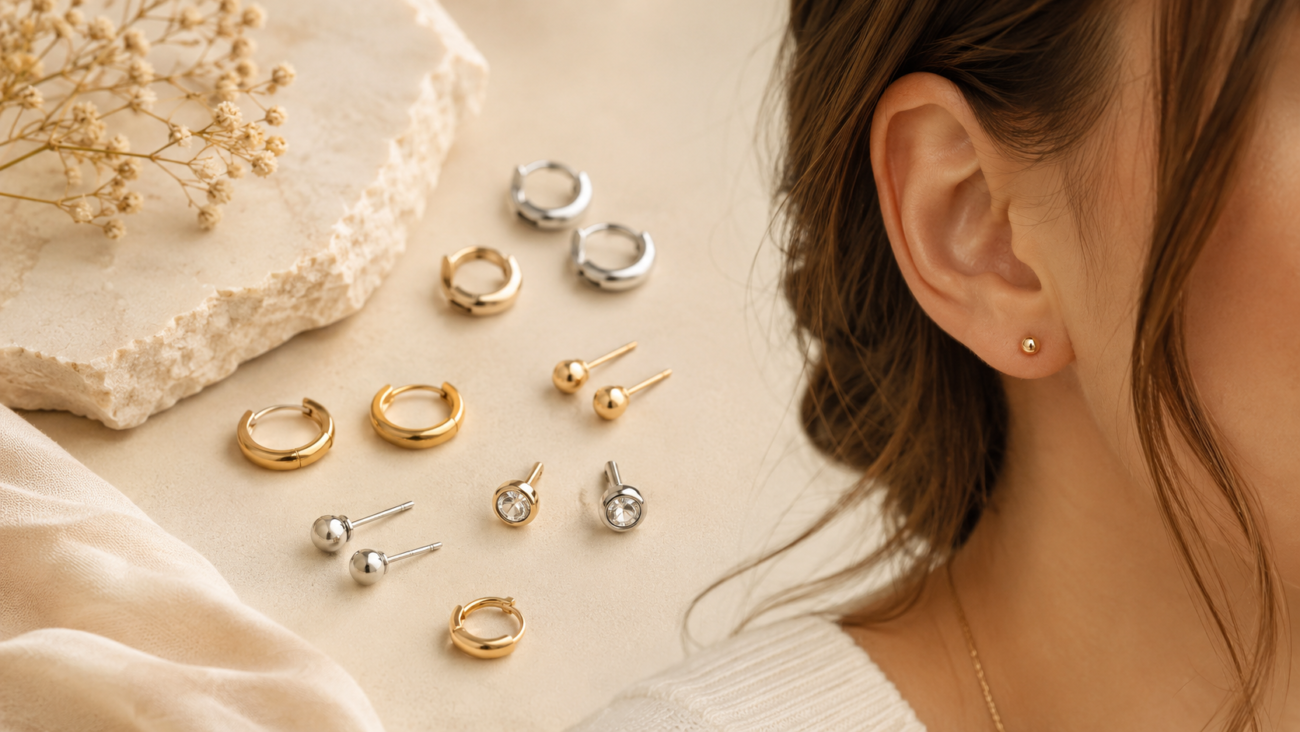
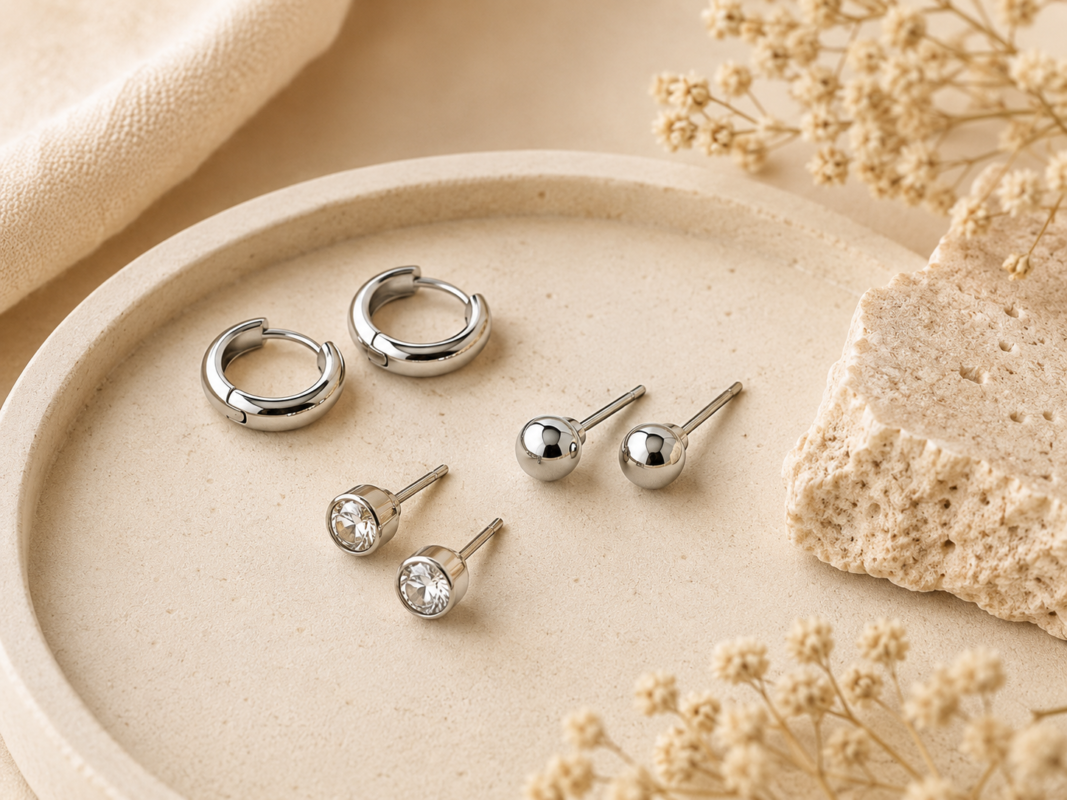
Surgical steel earrings are a popular option for sensitive ears, and for many people they work very well. They’re strong, practical, and usually much safer than low quality plated earrings or mystery alloys.
That said, not all steel is the same. Some people with very strong sensitivities still prefer titanium because it tends to be even more skin-friendly. But in general, high quality surgical steel earrings are a solid everyday choice for people who want comfort, durability, and a clean modern look.
What About Gold Earrings for Sensitive Ears?
Gold can be a good option, but this is where people get confused.
Pure gold is generally very skin-friendly. The problem is that most jewelry is not pure gold. Many gold earrings are made with alloys, and those alloys may include metals that sensitive ears don’t like.
Solid 14k or higher gold is usually a better option than cheap gold plated earrings, especially if the brand is transparent about the material composition. Gold filled jewelry can also be a better choice than gold plated because the gold layer is thicker and lasts longer.
Gold plated earrings can sometimes work at first, but they are often less reliable for very sensitive ears because the layer of gold can wear away over time. Once that happens, the base metal underneath becomes the real issue.
Earrings Materials to Avoid If You Have Sensitive Ears
If your ears are easily irritated, there are certain materials and descriptions that should make you cautious.
Be careful with:
- Earrings labeled only as “alloy”
- Cheap costume jewelry
- Unclear “gold tone” or “silver tone” descriptions
- Gold plated jewelry with no base metal information
- Products that say “hypoallergenic” but give no specs
- Very low-cost earrings with no mention of nickel free materials
If a brand doesn’t clearly explain what the posts are made from, that’s usually a red flag.
How to Choose the Best Earrings for Sensitive Ears
Shopping for earrings for sensitive ears gets much easier when you know what to look for.
Green Flags
- Implant grade titanium
- Surgical steel with clear material labeling
- Nickel free claims backed by full specs
- Solid gold or high quality gold filled options
- Smooth posts and clean finishing
- Brands that specialize in hypoallergenic earrings
Red Flags
- No material details
- “Fashion alloy” wording
- Cheap plated jewelry with vague descriptions
- No mention of nickel free construction
- No care instructions at all
The best earrings for sensitive ears are usually not the ones with the fanciest marketing. They’re the ones with the clearest material transparency.
Everyday Earring Styles That Work Well for Sensitive Ears
If you have sensitive ears, the style matters a little, but the material matters most. That said, some styles are easier to wear daily.
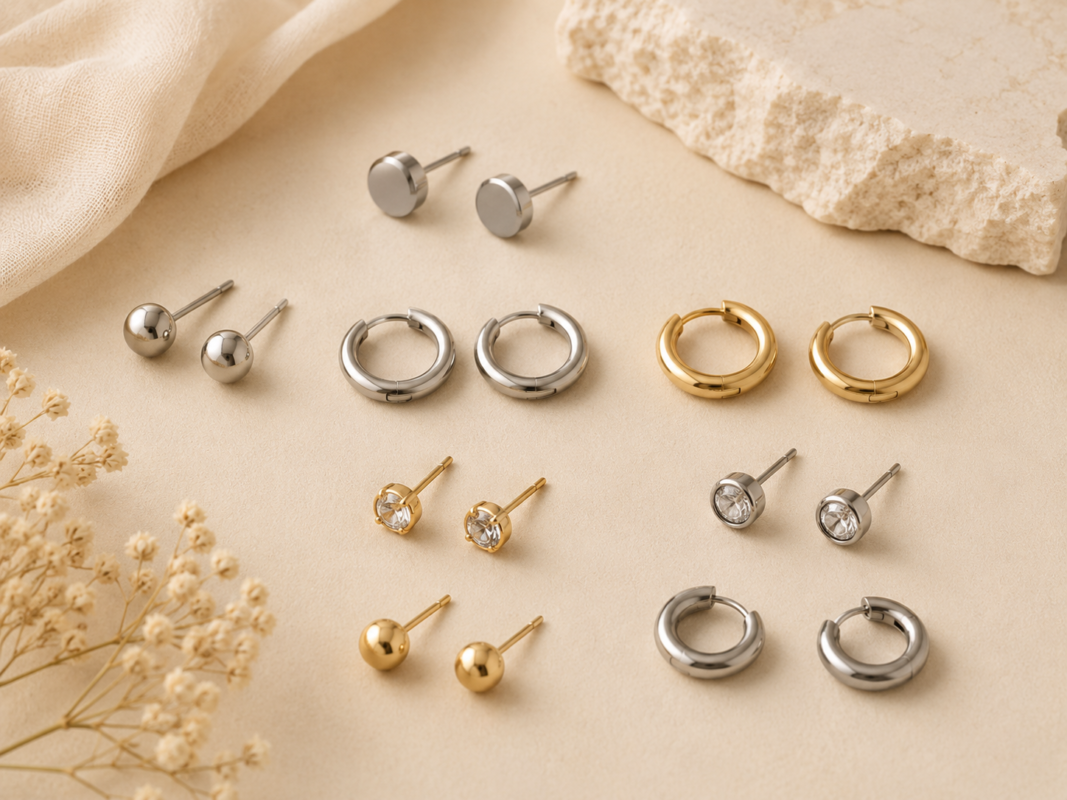
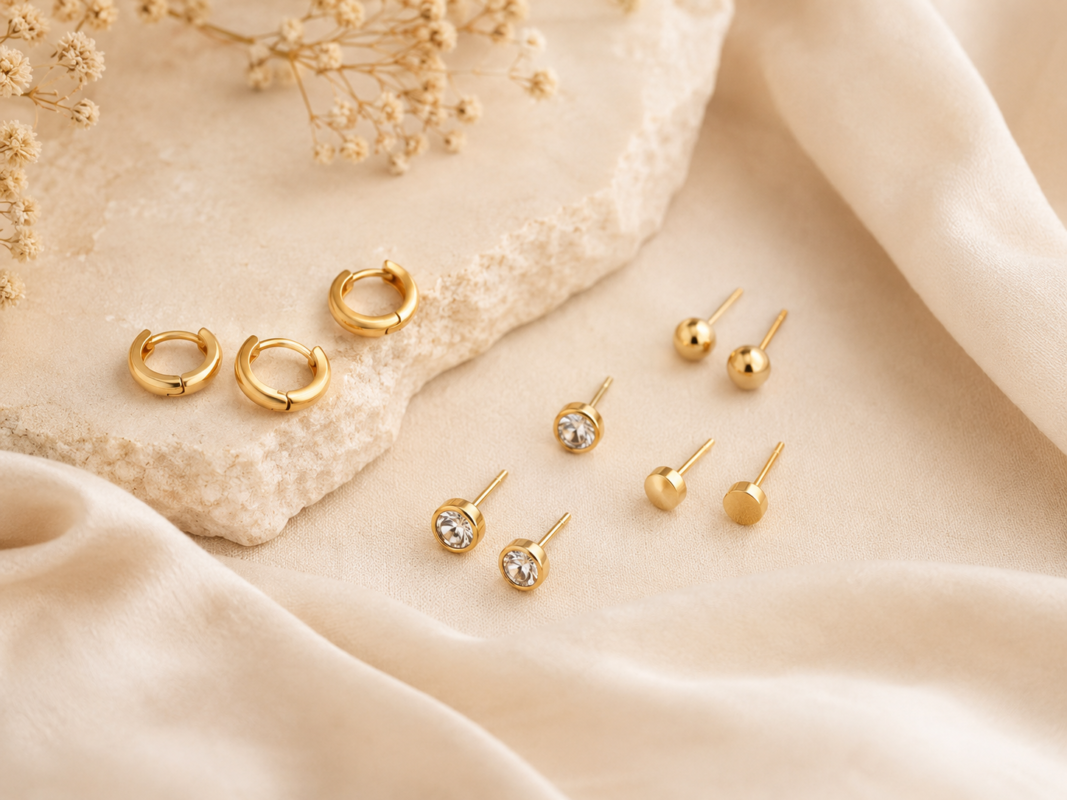
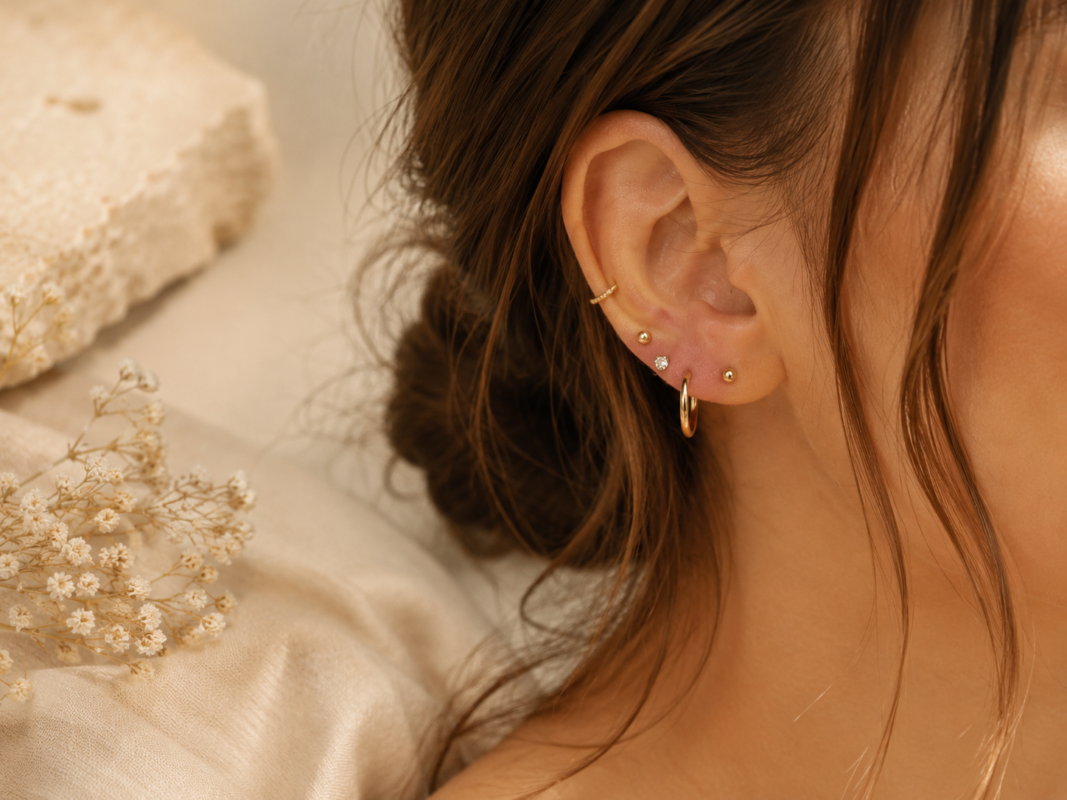
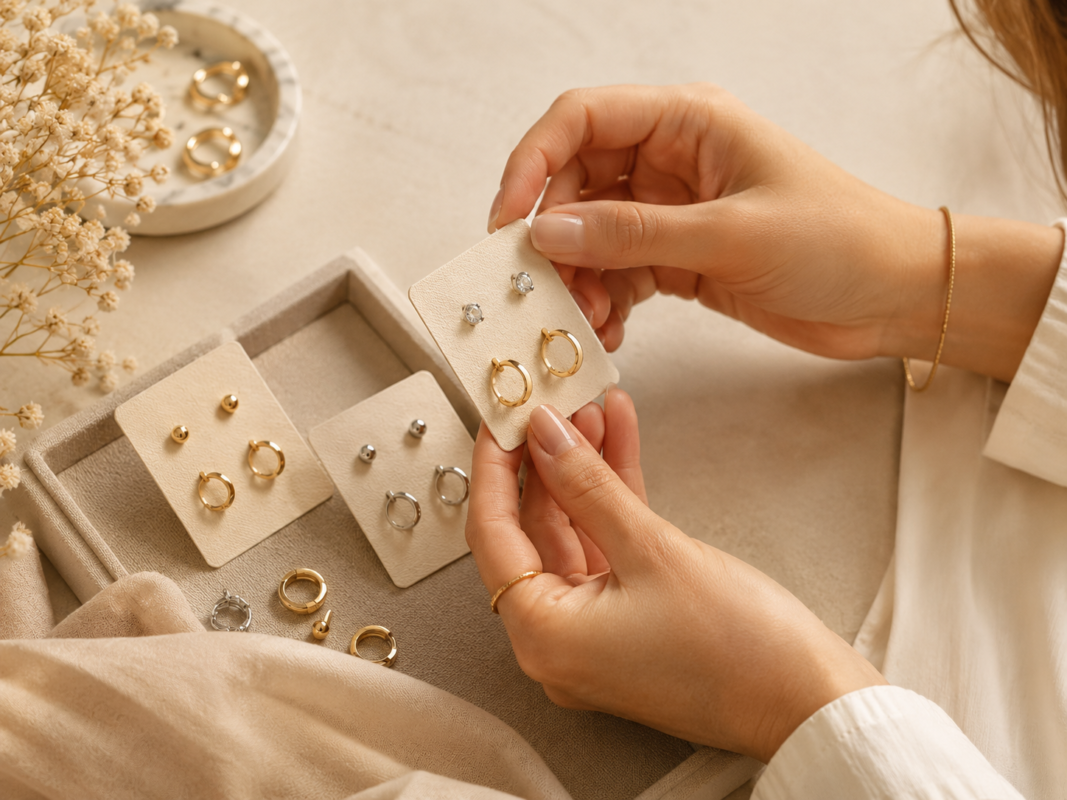
Stud earrings are often the easiest starting point because they’re simple, lightweight, and less likely to pull on the piercing. Small hoops can also work beautifully when made from titanium or surgical steel. Huggie earrings are another good option if they are lightweight and well finished.
The key is choosing styles that don’t combine a safe post with a questionable decorative part. For example, some earrings use a better post metal but attach lower quality materials elsewhere. That can still cause irritation if those parts touch your skin.
A Quick Care Tip for Sensitive Ears
Even safe earrings need proper care.
To keep your ears comfortable:
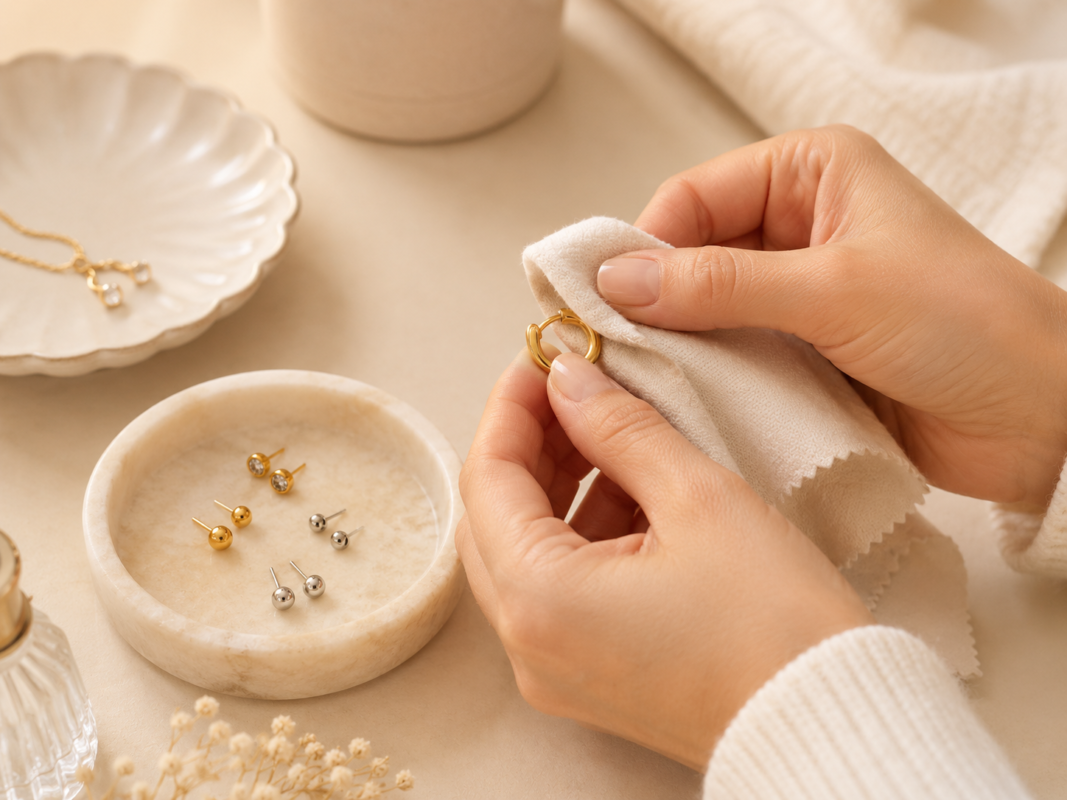
- Clean your earrings regularly
- Wipe them down after wearing
- Avoid wearing them in water if they are plated
- Remove them if your ears feel irritated
- Store them in a dry place
- Avoid rough backings or damaged posts
Sometimes irritation is made worse not only by the material, but by buildup, moisture, or worn surfaces.
The Bottom Line
The best earrings for sensitive ears are the ones made from safe, clearly labeled materials. Implant grade titanium is one of the most reliable choices, followed by high quality surgical steel, solid gold, and certain nickel free options.
If your ears are reactive, the most important thing is not to rely on vague words like “hypoallergenic” alone. Always check what the earrings are actually made from. The base metal, the finish, and the overall quality all matter.
At Sensitiveearrings, we believe you should never have to choose between comfort and style. Sensitive ears deserve earrings that look beautiful, feel good, and are made with materials you can actually trust.
FAQ
What are the best earrings for sensitive ears?
The best earrings for sensitive ears are usually implant grade titanium, surgical steel, and clearly labeled nickel free earrings.
Are gold plated earrings safe for sensitive ears?
Sometimes, but not always. Gold plated earrings may still irritate sensitive ears if the base metal underneath is reactive.
Is titanium better than surgical steel for sensitive ears?
For many people, yes. Titanium is often considered the safest and most biocompatible option for very sensitive skin.
What metal causes the most earring irritation?
Nickel is one of the most common causes of irritation and allergic reactions in earrings.
Are sterling silver earrings hypoallergenic?
Some are, but not all. It depends on the alloy and whether the silver is truly nickel free.

Related posts
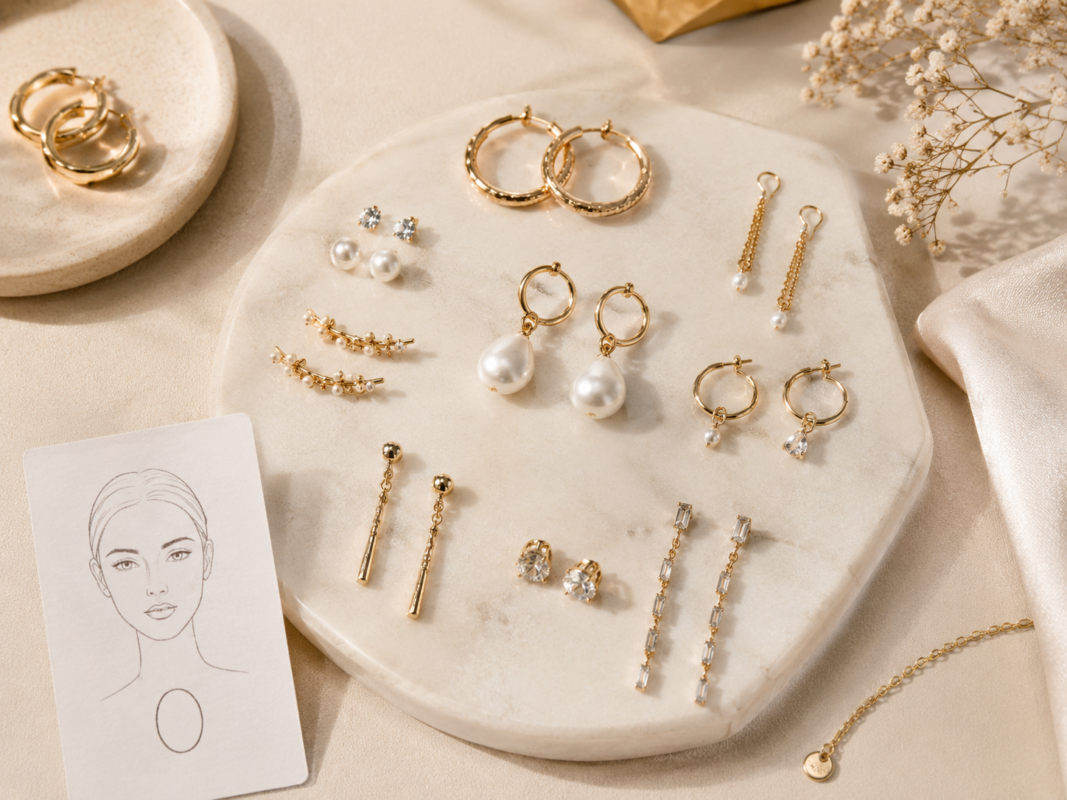
How to Choose Earrings for Your Face Shape: A Simple Guide for Sensitive Ears
Choosing earrings should feel fun, not confusing. But once you start hearing things like “round faces need long drops” or “square faces...
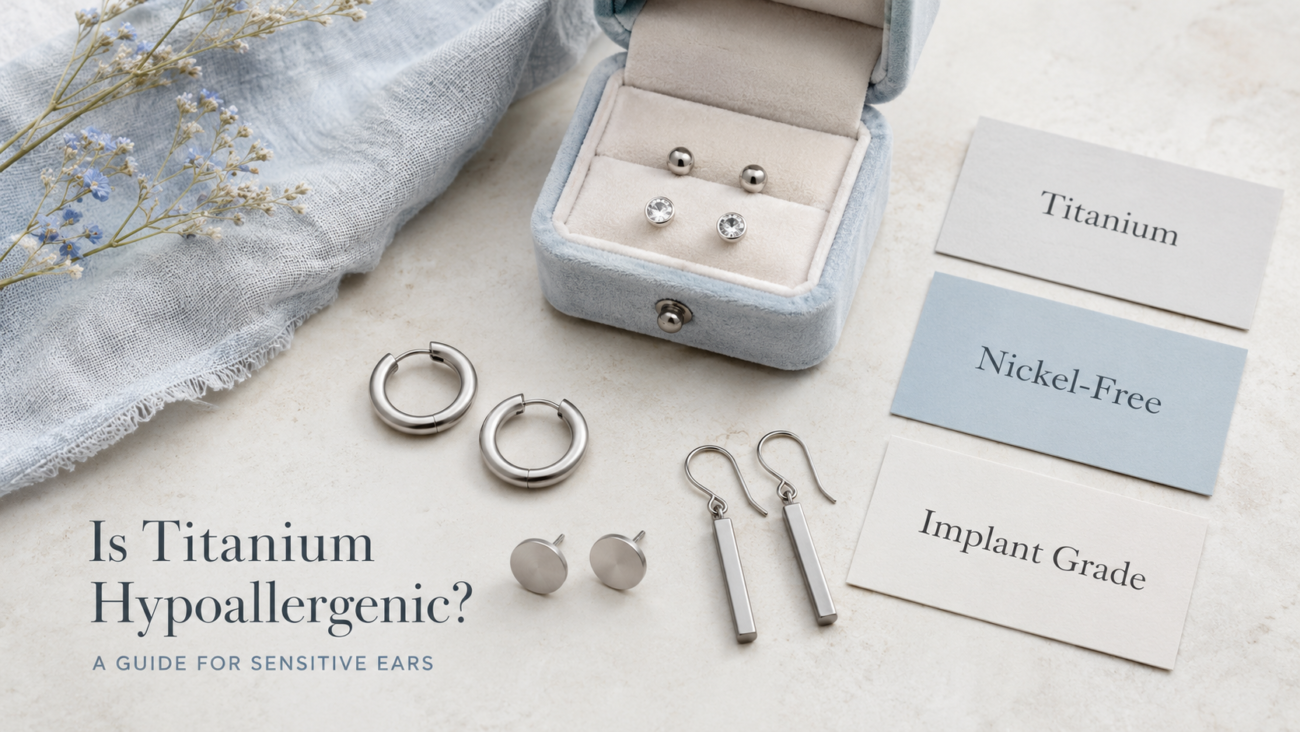
Is Titanium Hypoallergenic? Why It’s One of the Best Metals for Sensitive Ears
If you have sensitive ears, you probably already know how frustrating jewelry shopping can be. A pair of earrings might look perfect on...
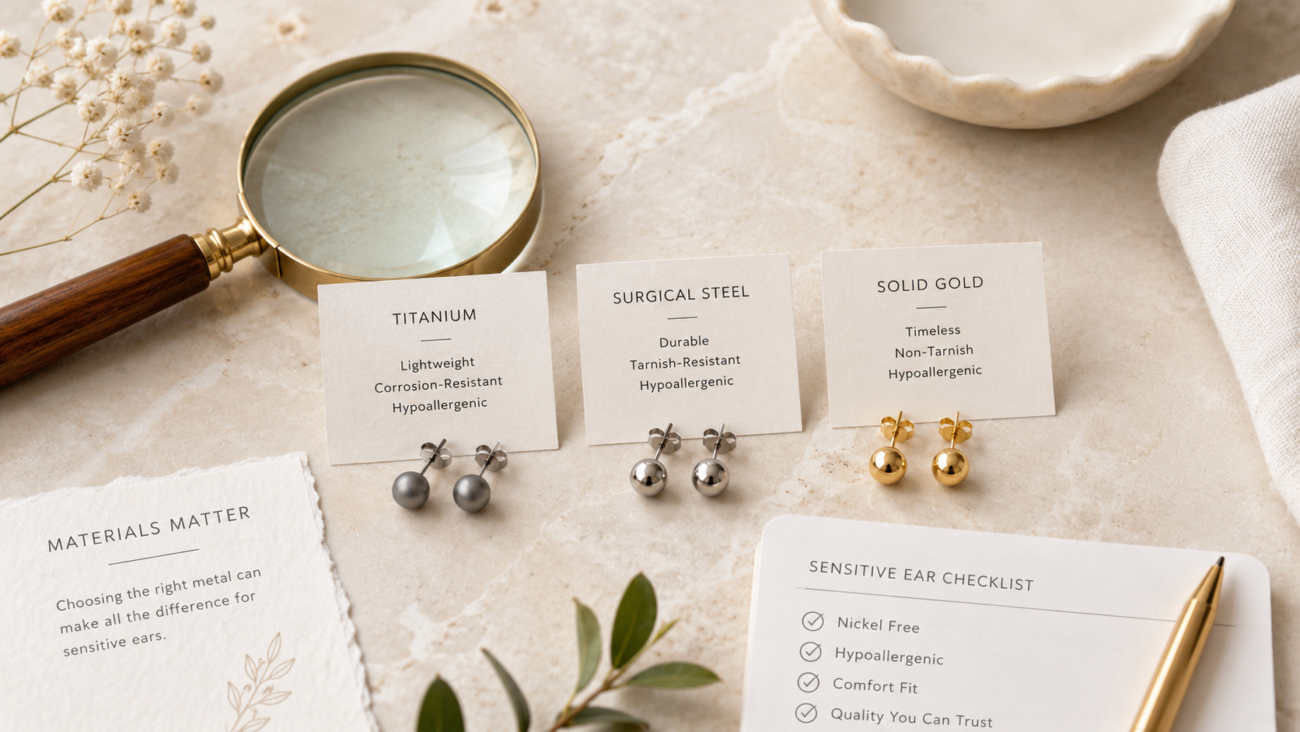
Is Nickel Free Hypoallergenic? What Sensitive Ears Need to Know
If you have sensitive ears, you have probably seen both of these labels while shopping: nickel free and hypoallergenic. They sound simi...
6 thoughts on “Best Earrings for Sensitive Ears: Safe Materials That Actually Work”